
From Tropes to Treasures: Transforming Common D&D Archetypes Into Unique PCs
How to Breathe New Life Into Familiar Character Concepts in Dungeons & Dragons

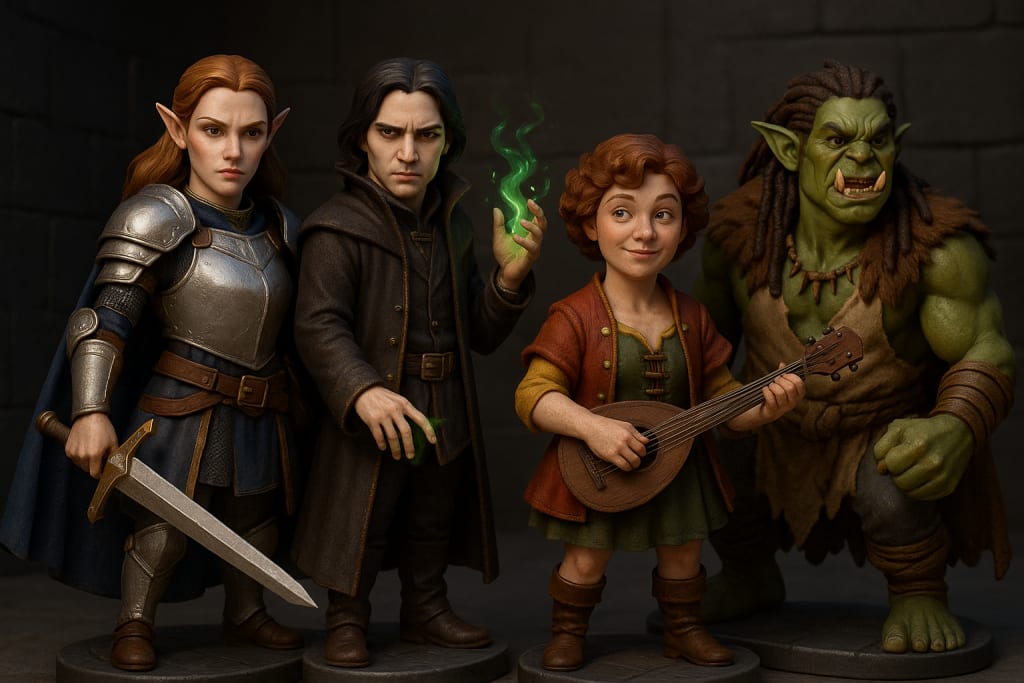
The Comfort and Curse of Tropes in D&D
Tropes are everywhere in Dungeons & Dragons. The brooding rogue with a tragic past. The noble paladin guided by divine justice. The quirky gnome artificer who blows things up in the name of science.
These archetypes are comforting—recognizable patterns that make character creation easier. But they can also be stale, predictable, and flat.
If you're a player or Dungeon Master aiming to create truly memorable player characters (PCs), leaning too hard on these stereotypes can kill originality.
However, tropes aren't inherently bad. When handled with care, they serve as springboards—starting points from which complex, compelling characters can emerge.
In this article, you'll learn how to take overused D&D archetypes and transform them into rich, unpredictable characters. We'll explore classic tropes, identify their limitations, and dig into techniques to subvert, twist, and personalize them.
This is your guide to crafting PCs that feel real, not recycled.
Step 1: Identify the Trope You’re Working With
Before you can reshape a trope, you need to know what you're starting with. Are you playing the “grizzled war veteran fighter,” the “naïve farmboy turned hero,” or the “edgy loner rogue”? These archetypes pop up because they tap into timeless storytelling elements. But if you simply follow the script, you’ll get a flat character.
Quick Exercise:
Write down your character’s basic concept in one sentence. Then ask yourself: If this appeared in a movie, what would I expect next?
That answer is your trope.
Step 2: Break the Expected Pattern
Once you know the trope, start pulling it apart. Ask yourself:
- What if the brooding rogue isn’t haunted by a tragic past but just wants people to think he is because it makes him seem cool?
- What if the noble paladin believes in law and order but works undercover as a criminal to dismantle corruption from within?
- What if the wild magic sorcerer is secretly terrified of their powers—and goes to great lengths to avoid casting spells?
These questions lead to contradiction. And contradiction creates depth.
Tip: Flip a key trait. If your trope is “brave barbarian,” try making them deeply anxious. If your cleric is “holier than thou,” maybe they’re faking it to hide imposter syndrome.
Step 3: Layer in Personal Stakes and Secrets
Great characters aren’t just bundles of traits—they’re driven by desire, haunted by fear, and shaped by experience. Once you’ve subverted the archetype, build layers. Focus on:
Motivation: What does your character want, truly and deeply?
Fear: What are they most afraid of losing or becoming?
Secret: What are they hiding—even from the party?
Let’s take a classic “half-orc barbarian” trope. Everyone expects rage and brute force. But what if she’s fleeing a noble family and uses battle rage to cope with trauma she can’t speak of? That twist adds humanity. Her rage becomes a mask, not a defining identity.
Step 4: Twist the Backstory, Not Just the Personality
Too often, players build unique personalities but leave the backstory as a tired cliché. Flip that. Make the origin itself strange, uncertain, or mysterious.
Examples:
- The “orphan rogue” turns out to be the lost heir of a noble house—but they’ve sworn never to return because they believe the house is cursed.
- The “soldier fighter” was dishonorably discharged not for cowardice, but because they refused an immoral order—and the real story has been covered up.
- The “isolated wizard” was raised in a magical think-tank, where free will was a luxury and arcane knowledge came at the cost of human connection.
Backstories should feel lived-in. Let your character’s past offer story hooks, unresolved trauma, and strange connections to the world around them.
Step 5: Make the Archetype Yours Through Voice and Playstyle
Even a trope can feel new when played with nuance. Once your character’s background and motivations are solid, bring it to life in actual gameplay.
Give your character a unique speech pattern, dialect, or set of verbal tics.
Develop habits or rituals they return to—maybe your cleric prays to multiple gods, unsure which one actually hears them.
Let them fail. Let them make bad choices. Make them flawed.
Real people are messy. Characters should be, too.
Examples: Reinvented D&D Archetypes
1. The Paladin of Vengeance
Trope: Crusader on a holy mission
Twist: She’s a washed-up actor playing the role of a divine avenger to cover her real goal—tracking down the cult that stole her child.
2. The Brooding Warlock
Trope: Made a pact with a dark patron for power
Twist: He never made the pact—his patron chose him, and now he’s desperately trying to break it, even as the power tempts him more each day.
3. The Cheerful Bard
Trope: Flirty, charming entertainer
Twist: She’s a spy, trained from childhood, using her performance as cover while she sabotages local governments one verse at a time.
4. The Nature-Loving Druid
Trope: Peaceful guardian of the wild
Twist: He’s a radical eco-terrorist who sees civilization as a plague—and is smiling as he plots its downfall.
These aren’t just trope reversals. They’re deliberate reimaginings that ask deeper questions about identity, morality, and purpose.
Step 6: Work With the DM to Integrate Character Arcs
A unique PC should grow and change. Work with your DM to ensure your backstory, secrets, and goals can feed into the campaign.
Ask:
- Can my past catch up with me?
- Can NPCs reflect or challenge my flaws?
- Is there room for me to change my mind or betray my values?
When your character’s story and the campaign’s world intertwine, every session becomes personal. Every victory or loss cuts deeper.
Subversion with Purpose
Don’t twist a trope just for the sake of being “different.” Subvert with purpose. Add complexity with intention. Your goal isn’t to be weird. It’s to be real.
Tropes offer scaffolding. They help us build. But the best D&D characters take that scaffolding and build crooked towers, spiraling staircases, secret doors, and shadowed chambers within themselves.
They aren’t just warriors, rogues, or wizards. They are living people, shaped by strange choices and haunted histories.
And that’s the magic.
About the Creator
Richard Bailey
I am currently working on expanding my writing topics and exploring different areas and topics of writing. I have a personal history with a very severe form of treatment-resistant major depressive disorder.
Keep reading
More stories from Richard Bailey and writers in Gamers and other communities.
20 Horror Game Masterpieces to Play Before You Die
Horror games have a unique ability to evoke fear and adrenaline, making them a beloved genre among gamers. However, there are some horror video games that will blow your mind, and you should play them to experience the sensations they offer. For this reason, I asked the AI about the best horror video games available, since I find it difficult to choose among so many options.
By Ninfa Galeano5 days ago in Gamers


Comments
There are no comments for this story
Be the first to respond and start the conversation.