
Dota 2 Gameplay Review: Mastery, Strategy, and Competitive Depth
An experience-driven breakdown of Dota 2’s gameplay depth, strategic complexity, and competitive mindset.

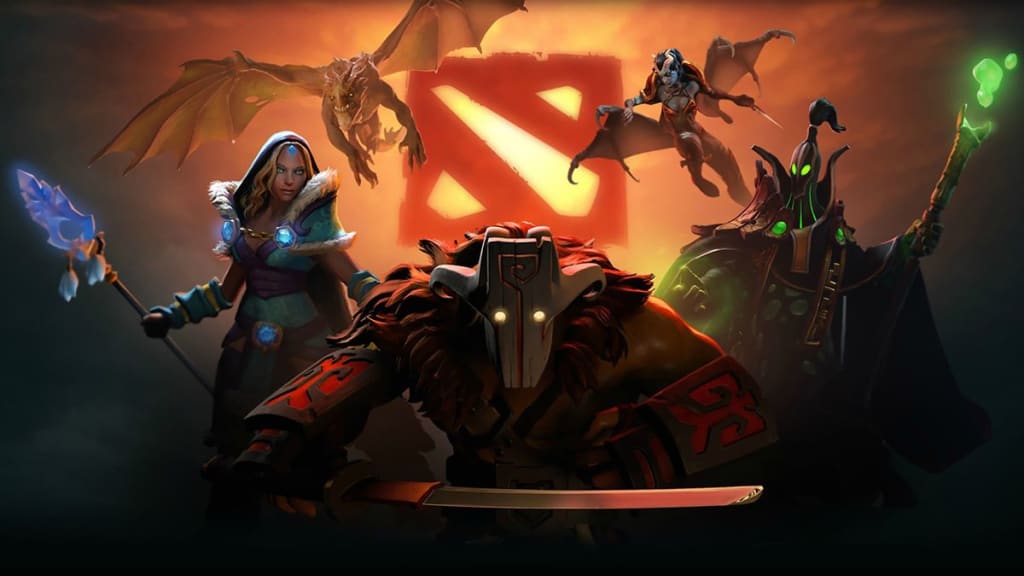
Dota 2 gameplay is defined by strategic decision-making, team coordination, and long term skill development rather than fast reflexes alone. Every match challenges players to manage resources, read the map, adapt to hero interactions, and communicate effectively under pressure. Over time, these repeated choices shape distinct playstyles and habits that go far beyond visible stats like kills or rankings. This is why many players enjoy reflecting on their in-game behavior through a Dota 2 player purity challenge based on in game behavior and mindset, which offers a clearer picture of how deeply Dota 2 influences the way the game is actually played.
What Defines Dota 2 Gameplay Compared to Other MOBA Games
Dota 2 gameplay is built around complexity and consequence. Mechanics such as denying creeps, controlling vision, and managing resources are not optional tools but core requirements. Each decision carries weight, and mistakes are rarely forgiven without cost. This structure encourages players to think several steps ahead rather than relying purely on mechanical execution.
Unlike more streamlined MOBA titles, Dota 2 rewards players who invest time in understanding systems, timings, and interactions that unfold gradually over the course of a match.
Dota 2 Heroes and Roles: Strategic Identity in Every Match
Hero selection in Dota 2 defines the rhythm of the game before the first creep even spawns. Drafting is a strategic layer where synergy, counters, and scaling potential matter just as much as individual comfort picks. Roles such as carry, mid, offlane, and support are fluid, adapting to the state of the match rather than remaining fixed.
Experienced players learn when to prioritize farm, when to rotate, and when to sacrifice personal gain for team advantage decisions that rarely show up on a scoreboard but often decide outcomes.
Dota 2 Skill Ceiling and the Path to Mastery
The skill ceiling in Dota 2 is one of the highest in competitive gaming. Advanced techniques like creep stacking, pulling lanes, baiting abilities, and precise spell usage demand both mechanical control and mental clarity. As players improve, the game reveals deeper layers instead of simplifying itself.
True mastery comes from understanding not just how to execute actions, but when restraint is the stronger choice.
Dota 2 Strategy, Map Control, and Objective Pressure
Map awareness is the backbone of effective Dota 2 strategy. Vision placement, movement prediction, and control of key areas dictate when teams can safely fight or push objectives. Towers, Roshan, and territorial control create constant tension, forcing teams to balance aggression with caution.
Successful teams use information as a weapon, often winning games without relying on constant skirmishes.
From Classic Dota to Dota 2: A Consistent Gameplay Philosophy
While Dota 2 introduced modern matchmaking and improved presentation, its underlying philosophy remains faithful to the original Dota. The emphasis on accountability, strategic punishment, and high-impact decisions continues to define the experience.
This consistency is why long-term players often feel that Dota 2 respects game knowledge rather than resetting progress through simplification.
Dota 2 and League of Legends: A Brief Gameplay Comparison
When compared to League of Legends, Dota 2 offers greater strategic freedom at the cost of accessibility. League of Legends focuses on faster pacing and clearer visual feedback, while Dota 2 allows more creative solutions through complex interactions and open-ended mechanics.
Both games succeed in their own space, but Dota 2 clearly appeals to players who value depth and long-term improvement.
The Mental Side of Competitive Dota 2 Gameplay
Beyond systems and mechanics, Dota 2 challenges players psychologically. Maintaining focus, managing frustration, and communicating effectively with teammates often determines success more than raw skill. The game teaches patience through failure and rewards players who adapt instead of forcing plays.
This mental layer is inseparable from the competitive experience and contributes to the game’s lasting appeal.
Is Dota 2 Gameplay Still Worth Investing In?
For players who enjoy games that reward thinking, planning, and reflection, Dota 2 remains uniquely compelling. Its gameplay encourages continuous learning rather than instant gratification, making improvement feel earned rather than handed out.
Whether you are refining your strategic approach or questioning long-standing habits through a Dota 2 player purity challenge based on in-game behavior and mindset, Dota 2 continues to offer a depth of gameplay that few competitive titles can match.
About the Creator
Enzo Marcelli
The Rice Purity Test remains a quirky yet fascinating cultural mirror.
Keep reading
More stories from Enzo Marcelli and writers in Gamers and other communities.
GTA Evolution: Rockstar, Controversies, and the Upcoming Game Experience
Grand Theft Auto has never been defined solely by crime or chaos. From its earliest releases to the era of Grand Theft Auto V, the series has consistently explored what happens when players are given freedom without instruction. Over time, GTA evolved into a space where habits, instincts, and repeated decisions matter more than objectives or skill offering a revealing look at player behavior inside GTA’s open world, shaped by curiosity, repetition, and the absence of enforced rules.
By Enzo Marcelli2 months ago in Gamers
Knights of the Old Republic II
A long time ago, on a writing platform far, far away, I wrote a review for Knights of the Old Republic. It was part of my Star Wars content for May 2024. My final verdict on that one was that it was great fun. It wasn't perfect, but I had a great time playing it. Now, it's time to look at the sequel - yes, there's a sequel.
By Greg Seebregtsabout 4 hours ago in Gamers
📢 Raise Your Voice Thread: 03/05/2026
Our “Raise Your Voice Threads” are hosted most alternating Thursdays at 12PM ET to offer creators more avenues to uncover exceptional stories on Vocal. As we are continuously searching for fresh creators and inspiring stories, this thread provides an opportunity to exchange and discuss the stories that have moved and motivated us on Vocal.
By Raise Your Voice by Vocal7 days ago in Resources



Comments
There are no comments for this story
Be the first to respond and start the conversation.