
Common D&D Character Backstory Mistakes (and How to Fix Them)
Avoid the pitfalls of overcomplicated or shallow character backstories with practical tips every Dungeon Master and player can use.

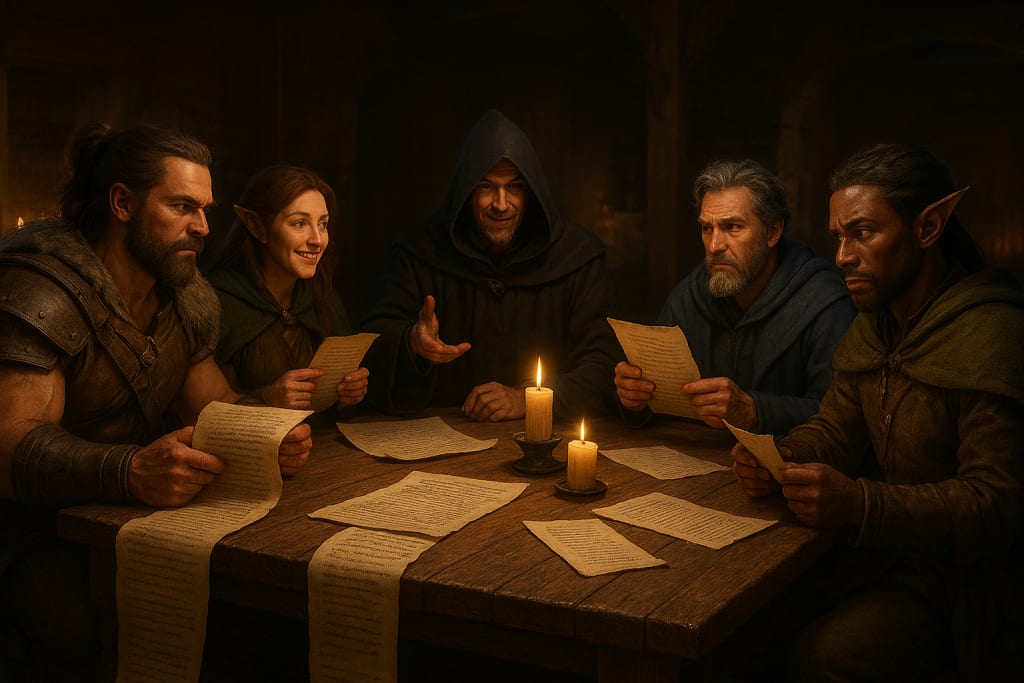
Creating a backstory for your Dungeons & Dragons character can be just as thrilling as playing the game itself. It’s your chance to breathe life into the numbers on your character sheet, shaping not only who your adventurer is but also why they step onto the road of adventure in the first place.
Yet many players fall into the same traps. They write sprawling novels that never see the light of day, rely too heavily on tropes, or forget that their character exists in a world shared with others. These mistakes don’t make your story worthless—but they can hold back your roleplay and put pressure on the Dungeon Master.
The good news? Every one of these problems has a solution. With the right tweaks, you can transform a clunky backstory into something vibrant, flexible, and fun. Let’s break down the most common backstory mistakes in D&D—and how to fix them.
Mistake 1: Writing a Novel Instead of a Backstory
A frequent pitfall for new players is turning their character’s history into a full-length saga. Ten pages of dense writing may look impressive, but most of it won’t make it to the table. Dungeon Masters already juggle plotlines, NPCs, and worldbuilding; they rarely have time to parse through a novel for every character.
Why it’s a problem: Overly long backstories lock you into specific details. If your character’s entire life is already mapped out, there’s little room for surprises, growth, or in-game development.
Fix:
Keep it short and focused. Aim for 1–2 pages maximum. Write just enough to capture your character’s essence—where they came from, what they care about, and a few unresolved threads. Think of it as a pilot episode rather than a complete series.
Example: Instead of writing, “Arvelin traveled the continent for twelve years, fighting in three wars, earning renown as a strategist, and becoming infamous for defeating the Warlord of Kaelthas,” simplify it:
“Arvelin once served in a bloody conflict, where he gained tactical skill but lost comrades he still mourns. War left him restless, seeking meaning beyond the battlefield.”
The latter keeps the important details—his skills, his scars, his motivation—while leaving space for discovery.
Mistake 2: Leaning Too Hard on Tragedy
“My village was burned. My parents were killed. I now wander the world alone.” If this sounds familiar, it’s because countless players use it. While tragedy can be a powerful motivator, relying on it too heavily makes your character blend into a sea of grim, brooding heroes.
Why it’s a problem: Overusing tragedy creates shallow characters who only ever dwell on suffering. It can also make the game one-note if every party member carries the same grief-stricken archetype.
Fix:
Mix tones. Not every backstory needs to be drenched in sorrow. Maybe your bard left home not because of trauma, but to chase fame. Perhaps your ranger grew up in a happy household but left to protect their family from a rising threat.
Even if you want tragedy, balance it with light. Show what your character lost by first showing what they loved. Give them a memory they cherish, not just pain they endure
Example: Instead of “Her parents were murdered by raiders,” try:
“Her childhood was filled with laughter in her family’s tavern. That joy ended when raiders destroyed everything—but the warmth of her past drives her to rebuild that sense of belonging.”
Tragedy, when specific and balanced, feels more human.
Mistake 3: Making the Character the Center of the Universe
Some players fall into the “chosen one” trap. They’re secretly royalty, the child of prophecy, or the sworn enemy of the campaign’s villain. While it sounds exciting, it often overshadows the group and restricts the Dungeon Master’s story flexibility.
Why it’s a problem: D&D is a collaborative game. If everyone’s backstory demands center stage, the spotlight becomes a tug-of-war.
Fix:
Dial it back. Instead of declaring destiny, leave mysteries or possibilities. Maybe your rogue suspects noble ties but hasn’t proven it. Perhaps your sorcerer has unusual powers but doesn’t know their origin. This approach gives your DM room to connect your story organically without breaking the campaign’s balance.
Example: Instead of “I am the long-lost heir to the throne,” try:
“My mother always hinted that we were of noble blood, but she never revealed more. I don’t know if it’s true—or just a story.”
This invites intrigue without forcing the narrative to revolve around your character.
Mistake 4: Ignoring the Campaign World
Sometimes players create a backstory filled with fictional nations, gods, or wars that don’t exist in the DM’s setting. While creative, it risks clashing with the established world. The Dungeon Master may need to rework their lore or reject chunks of your backstory outright.
Why it’s a problem: Disconnected backstories break immersion and make it harder for the DM to integrate your character into the world.
Fix:
- Collaborate with your DM. Ask:
- What kingdoms or cities are nearby?
- Which deities are worshipped?
- Are there major factions I could tie into?
Using existing lore grounds your character in the shared world, giving the DM story hooks to tie your character directly into the campaign.
Example: Instead of inventing “The Kingdom of Elrador,” say:
“My character once lived in Baldur’s Gate, working for the Flaming Fist before fleeing after a botched mission.”
This way, your backstory immediately clicks into the world your DM already built.
Mistake 5: Tying Up Every Loose End
Some backstories are so complete that there’s nothing left for the campaign to explore. The character has already found their calling, resolved their family issues, and achieved mastery in their craft. That leaves little room for growth.
Why it’s a problem: If your backstory answers every question, the campaign has no space to expand on your personal journey.
Fix:
Leave open-ended questions. Maybe your paladin doubts their god’s teachings. Perhaps your wizard’s mentor vanished mysteriously. Give the Dungeon Master threads to tug on.
Example: Instead of “My mentor died peacefully after teaching me everything,” try:
“My mentor disappeared one night, leaving only a scorched journal. I still search for clues.”
That single unresolved mystery gives the DM ample opportunity for future plot twists.
Mistake 6: Overloading with Irrelevant Detail
Some players drown their backstories in minutiae. We don’t need to know the name of your character’s childhood pet turtle or what brand of ale they drank at seventeen. Too much filler buries the meaningful parts.
Why it’s a problem: Unimportant detail dilutes the impact of your story and makes it harder for others to remember the key traits of your character.
Fix:
Be intentional. Focus on details that shape personality, relationships, or motivations. Ask yourself: does this fact matter for who my character is today? If not, cut it.
Example: Instead of writing a full page about “favorite hobbies,” summarize with:
“Growing up, she loved woodcarving, and even now, she whittles figurines to calm her nerves.”
That’s short, evocative, and tells us something about who she is without wasting space.
How to Write a Backstory That Works
When in doubt, follow these principles:
- Keep it concise. One or two pages is plenty.
- Balance tone. Mix joy and sorrow for realism.
- Use the campaign’s world. Anchor your story in existing lore.
- Leave open threads. Give your DM opportunities to expand on your past.
Think about the group. Your backstory should enhance the party’s story, not dominate it.
A great D&D backstory doesn’t need to be a masterpiece. It just needs to inspire play. The goal isn’t to create a complete history but to plant seeds that can grow throughout the campaign.
Avoiding these common mistakes makes your character more dynamic and easier for your Dungeon Master to weave into the world. Whether you want to play a haunted veteran, an ambitious noble, or a carefree wanderer, the best backstories strike a balance: they give just enough to spark roleplay while leaving room for discovery.
So ask yourself: is my backstory a closed book—or is it a doorway to adventure?
About the Creator
Richard Bailey
I am currently working on expanding my writing topics and exploring different areas and topics of writing. I have a personal history with a very severe form of treatment-resistant major depressive disorder.
Keep reading
More stories from Richard Bailey and writers in Gamers and other communities.
Mastering Deck Building in Rush Royale: Strategies for a Strong and Versatile Setup
Building a strong deck in Rush Royale is one of the most important skills you can develop if you want to consistently climb ranks and succeed in Co-Op battles. At first glance, deck building may seem simple—just put together your strongest cards and queue up. But winning at higher levels requires more than that.
By Richard Bailey6 months ago in Gamers
Doom Eternal Will Push You Into Chaos You Cannot Escape From
Few shooters deliver pure adrenaline like Doom Eternal. Developed by id Software and published by Bethesda Softworks, the game builds on the legacy of the iconic Doom while pushing the formula to new extremes. Available on Xbox, it represents one of the most intense and demanding action experiences in modern gaming.
By Lukáš Hrdlička3 days ago in Gamers
Building a Borderless Gaming Community: The Mission of Global Games Show
In 2026, gaming is no longer just a hobby; it is the world’s most influential cultural and economic engine. However, despite the billions of players worldwide, the industry remains strangely fragmented. Development silos, regional infrastructure gaps, and platform-locked ecosystems often prevent the gaming world from reaching its true potential as a unified global community.
By Tech Updatesa day ago in Gamers


Comments
There are no comments for this story
Be the first to respond and start the conversation.