
Mastering Deck Building in Rush Royale: Strategies for a Strong and Versatile Setup
Learn how to create powerful Rush Royale decks that adapt to every stage of the game

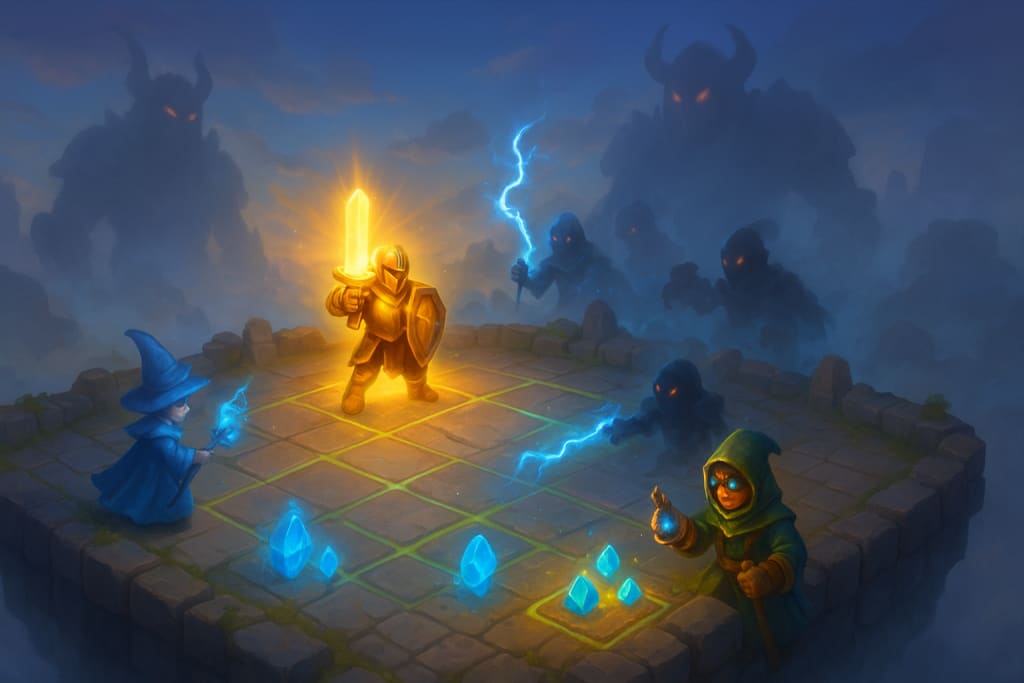
Building a strong deck in Rush Royale is one of the most important skills you can develop if you want to consistently climb ranks and succeed in Co-Op battles. At first glance, deck building may seem simple—just put together your strongest cards and queue up. But winning at higher levels requires more than that.
The game’s strategy revolves around balance, synergy, and adaptability, and understanding these elements will make the difference between stalling out in mid-leagues and climbing to the top.
Why Deck Building Matters
Rush Royale is not just about placing units and watching them attack. Each wave of enemies escalates in difficulty, and bosses introduce unique challenges that punish poorly designed decks. A weak setup may perform well in the early stages but collapse under the pressure of late-game bosses like Bedlam or Tribunal.
This is where deck building comes in. A carefully crafted deck not only helps you survive early waves but also ensures you scale into late-game battles without running out of damage or control options. In other words, your deck is your lifeline—and the better it’s built, the more reliable your victories will be.
The Core Pillars of a Strong Deck
Think of deck building like constructing a house. Each component plays a role, and missing one can make the entire structure collapse. A solid Rush Royale deck usually contains the following pillars:
Primary Damage Dealer
Your main source of power. This card carries your offense and defines how your deck functions. Examples include:
- Inquisitor: Best for single-target strength.
- Blade Dancer: High scaling damage if positioned correctly.
- Tesla: Versatile, especially effective in swarm-heavy waves.
Without a reliable damage dealer, you won’t survive mid- or late-game waves.
Secondary Damage or Support
Your backup plan when your primary card isn’t enough. This might be another DPS card for extra firepower or a support unit that increases efficiency.
- Zealot provides supplemental damage with mana scaling.
- Harlequin duplicates key units for flexibility.
- Corsair offers AoE damage against hordes.
Control or Utility Units
These cards don’t always deal damage, but they make your deck stable. They slow, stun, or weaken enemies so your damage dealers can finish the job.
- Frost slows entire waves.
- Bombardier stuns bosses, giving you time to react.
- Hex can instantly kill enemies when positioned correctly.
Mana Generation and Economy
Rush Royale games are often decided by how quickly you can level up your board. Economy units accelerate your scaling and keep you ahead of the enemy.
- Dryad merges to upgrade units without extra cost.
- Summoner spawns additional units, increasing merge opportunities.
- Mime copies units for efficient board control.
Flex Slot
This space is what makes decks unique. You can fill it with a situational card that answers the current meta or covers your personal weaknesses. Examples:
- Trapper for slowing and weakening enemies.
- Shaman for disrupting enemy boards in PvP.
- Engineer for Co-Op scaling strategies.
The Power of Synergy
A deck filled with strong cards is not necessarily a strong deck. The key is synergy—how each unit interacts with the others.
- Inquisitor decks need stabilizers like Dryad and Harlequin to quickly reach high merge levels. Without them, the Inquisitor struggles to keep up.
- Corsair setups rely heavily on Frost or Trapper. Slowing enemies gives bombs time to explode, multiplying their effectiveness.
- Tesla builds thrive when paired with Summoner and Dryad, since higher merge levels massively boost Tesla’s AoE output.
When building, think less about “best cards” and more about “best combinations.” A well-synergized deck will outperform a deck full of legendaries that don’t work together.
Deck Building for Different Game Modes
Not all decks are equal across modes. What dominates in PvP might fall flat in Co-Op, and vice versa.
- PvP Decks: Speed and pressure are essential. You need consistent damage to push waves quickly, along with control units to handle bosses before your opponent does. Decks like Inquisitor + Harlequin + Dryad are highly effective here.
- Co-Op Decks: Scaling and survivability matter more. You need to outlast increasingly difficult waves, which means prioritizing mana economy and units that shine in extended matches. Engineer + Grindstone or Tesla-based setups often dominate this mode.
Understanding the mode you’re playing helps you avoid mismatched builds and wasted potential.
Advanced Deck Building Tips
Test and Experiment
Don’t be afraid to try unusual combinations. Sometimes the strongest builds come from unexpected synergies.
Adapt to the Meta
Each season shifts the game’s balance. If swarm decks are common, bring splash damage. If bosses dominate, focus on single-target strength.
Balance Risk and Reliability
High-damage cards often come with downsides. Inquisitor, for example, requires precise board control. Balance them with safe cards that provide stability.
Invest in What You Play
A level 10 common card can outperform a level 5 legendary. Upgrade the cards you use most rather than spreading resources too thin.
Common Deck Building Mistakes
Overloading on DPS: Five offensive cards look powerful but leave no room for utility or economy.
- Forgetting Mana Economy: Without Summoner, Dryad, or Mime, your deck will stall early and never scale.
- Blind Copying Meta Decks: Copying a top-tier deck without understanding its mechanics often leads to failure. Learn the strategy, not just the card list.
- Ignoring Flexibility: Some players refuse to adjust for the meta. Staying rigid often means staying stuck in rank.
Building a strong deck in Rush Royale isn’t about following a single formula. It’s about understanding core roles, maximizing synergy, and adapting to your goals. A good deck balances offense, defense, and economy, while a great deck evolves with the shifting meta and your own playstyle.
If you want to climb faster, stop searching for the “perfect deck” and start creating decks that fit your strengths and exploit your opponent’s weaknesses. That’s how you win consistently, no matter how the game changes.
About the Creator
Richard Bailey
I am currently working on expanding my writing topics and exploring different areas and topics of writing. I have a personal history with a very severe form of treatment-resistant major depressive disorder.
Keep reading
More stories from Richard Bailey and writers in Gamers and other communities.
How to Play a Reluctant Hero in Dungeons & Dragons
Not every adventurer sets out to become a legend. Some crave only peace, but fate pushes them into conflict. Others are scarred by the past, fearful of responsibility, or skeptical of grand causes. Yet, in Dungeons & Dragons, these reluctant heroes often become the most compelling figures at the table.
By Richard Bailey6 months ago in Gamers
Halo Infinite Will Completely Change How You See Xbox Games Forever
Few games carry the weight of expectation like Halo Infinite. As one of the flagship titles for Xbox, it was never just another release. It had to prove that the legendary franchise still had the power to evolve while staying true to its roots. What emerged is a game that balances legacy and innovation in a way that feels both familiar and surprisingly bold.
By Lukáš Hrdlička5 days ago in Gamers
Hogwarts Legacy Will Make You Live the Wizard Life You Always Dreamed Of
Few fantasy games capture imagination as powerfully as Hogwarts Legacy. Developed by Avalanche Software and published by Warner Bros. Games, the game brings players into a magical world inspired by the universe created by J. K. Rowling. Available on Xbox, it offers an experience that blends exploration, combat, and storytelling into a deeply immersive adventure.
By Lukáš Hrdlička5 days ago in Gamers



Comments
There are no comments for this story
Be the first to respond and start the conversation.