
Candy Crush Saga
The Timeless Puzzle Game That Keeps Players Hooked

Candy Crush Saga: The Timeless Puzzle Game That Keeps Players Hooked
In the world of mobile gaming, few titles have achieved the level of success and cultural impact that Candy Crush Saga has. Developed by King and released in 2012, this match-three puzzle game has captivated millions of players worldwide with its simple yet highly addictive gameplay. Over the years, Candy Crush Saga has evolved, introducing new levels, challenges, and features that continue to keep players engaged.
This article delves into what makes Candy Crush Saga such a phenomenon, its gameplay mechanics, its impact on the gaming industry, and why it remains one of the most popular mobile games even after more than a decade.
The Addictive Gameplay of Candy Crush Saga
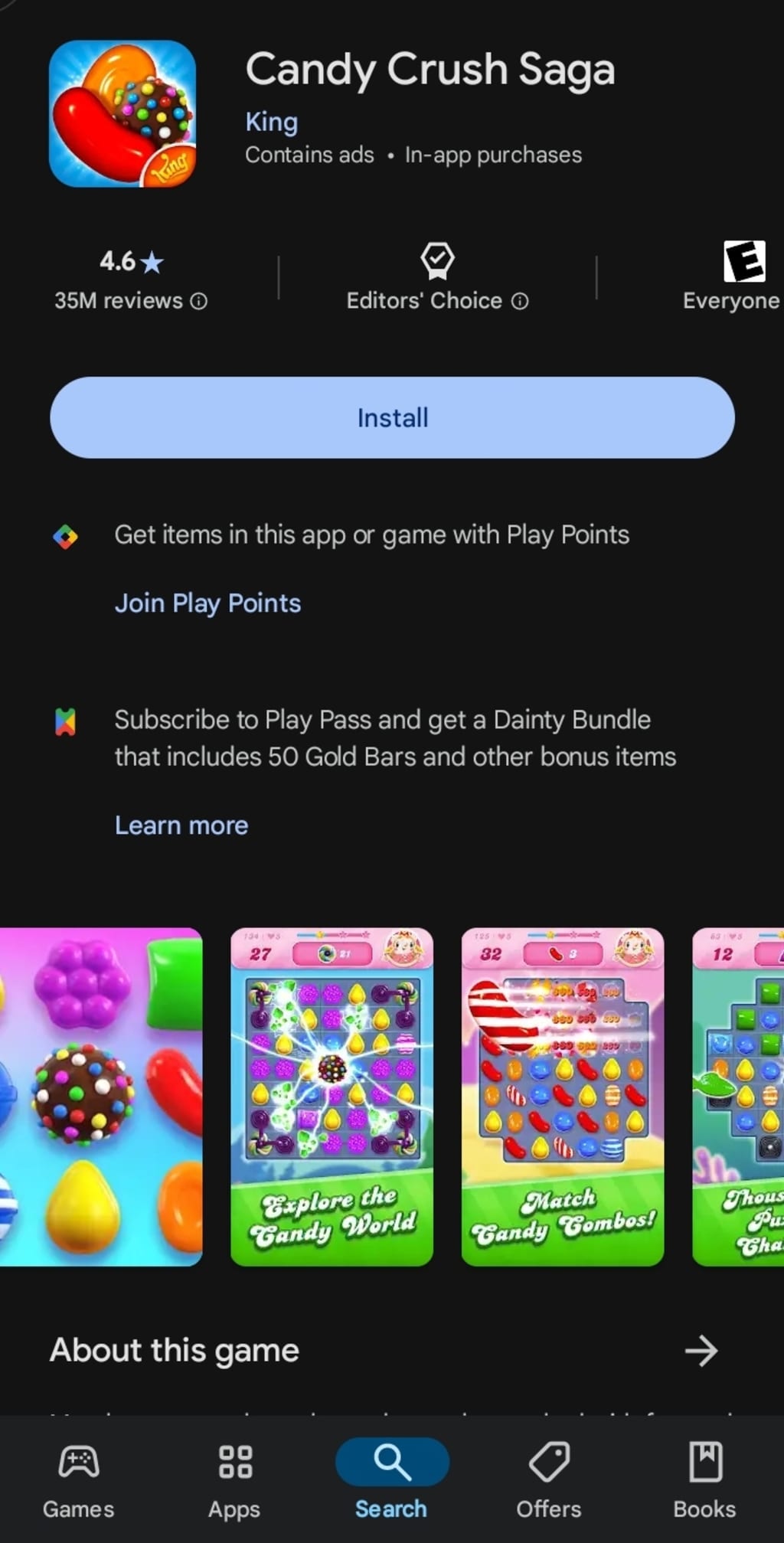
At its core, Candy Crush Saga is a match-three puzzle game where players must swap colorful candies to create matches of three or more of the same type. Matching candies clears them from the board, allowing new candies to fall into place. The game features different objectives, such as collecting a certain number of candies, clearing jelly blocks, or dropping special ingredients to the bottom of the board.
As players progress, they encounter various obstacles, including chocolate that spreads across the board, licorice locks that block movement, and bombs that must be cleared within a limited number of moves. To help overcome these challenges, Candy Crush Saga provides special power-ups and boosters, such as striped candies, wrapped candies, and color bombs, which can be created by making larger matches.
One of the key factors that contribute to the game’s success is its level-based progression system. With thousands of levels available and new ones being added regularly, players always have fresh challenges to look forward to. The increasing difficulty ensures that the game remains engaging, while the satisfaction of completing levels keeps players motivated to continue.
The Free-to-Play Model and Monetization
Candy Crush Saga is a free-to-play game, meaning that players can download and play without spending money. However, the game includes in-app purchases that allow players to buy extra moves, boosters, or lives. This monetization model has been highly successful, making Candy Crush Saga one of the highest-grossing mobile games of all time.
Lives are a crucial element in the game’s design. Players start with a limited number of lives, which are consumed when they fail a level. Once they run out, they must either wait for lives to regenerate over time, request lives from friends, or purchase them using real money. This mechanic creates a sense of urgency and encourages players to return to the game later, increasing engagement and retention.
Additionally, Candy Crush Saga includes special events and challenges that offer limited-time rewards, further enticing players to spend money or stay engaged with the game.
The Social Aspect and Competitive Play
One of the reasons Candy Crush Saga became so popular is its social integration. The game allows players to connect with their friends through Facebook, enabling them to send and receive extra lives, compete for high scores, and track each other’s progress on the leaderboard.
This social element not only adds a competitive edge but also encourages players to keep playing. Seeing a friend progress to a higher level can be a motivating factor to keep pushing forward. Additionally, the game occasionally introduces time-limited events and team-based challenges, fostering a sense of community among players.
The Impact of Candy Crush Saga on the Gaming Industry
Candy Crush Saga revolutionized the mobile gaming industry in several ways:
1. The Rise of Casual Gaming – Before Candy Crush, mobile gaming was primarily associated with simple arcade-style games. Candy Crush Saga helped establish casual gaming as a dominant genre, appealing to a broad audience beyond traditional gamers.
2. The Success of the Freemium Model – The game demonstrated how a well-designed free-to-play model could generate massive revenue through in-app purchases. Many other mobile games have since adopted similar monetization strategies.
3. Longevity in Mobile Gaming – Unlike many mobile games that fade in popularity after a few years, Candy Crush Saga has remained relevant for over a decade. This is due to regular updates, new content, and engaging gameplay mechanics that keep players coming back.
Why People Keep Playing Candy Crush Saga
The longevity of Candy Crush Saga can be attributed to several psychological and game design factors:
Simple Yet Challenging Gameplay – The game is easy to learn but difficult to master, making it appealing to both casual and dedicated players.
Regular Updates and New Levels – King constantly adds new levels, ensuring that players never run out of content.
Sense of Progression – Completing levels and advancing through the game gives players a sense of accomplishment.
Engagement Through Limited Lives – The wait time for lives to regenerate keeps players coming back throughout the day.
Bright and Appealing Aesthetics – The colorful graphics, cheerful music, and satisfying animations make the game visually and audibly enjoyable.
Final Thoughts
Candy Crush Saga is more than just a mobile game—it’s a cultural phenomenon that has redefined the way people engage with mobile entertainment. With its addictive gameplay, clever monetization model, and strong social features, it’s no surprise that the game remains incredibly popular even after so many years.
Whether you're a casual player who enjoys a few rounds in your spare time or someone striving to beat the toughest levels, Candy Crush Saga offers an engaging experience that continues to entertain millions worldwide. And with no signs of slowing down, it’s clear that this game will remain a staple in mobile gaming for years to come.
About the Creator
Keep reading
More stories from Maxamed Sharif and writers in Gamers and other communities.
PUBG Mobile and Call of Duty Mobile: The Titans of Mobile Gaming
INTRODUCTION In recent . years, the mobile gaming industry has witnessed a massive boom, with two titles standing tall as some of the most iconic and competitive games of all time: PUBG Mobile and Call of Duty Mobile. Both games have revolutionized the way people play on smartphones, offering console-level graphics, engaging gameplay, and intense multiplayer experiences that keep players coming back for more. But what makes these two games so special? And how do they compare with each other? Let’s dive deep into the world of PUBG Mobile and Call of Duty Mobile.
By Maxamed Sharif11 months ago in Gamers
League of Legends 2026 Season Updates
With the League of Legends 2026 season, new patch notes, the return of ARURF mode, and notable ranked system updates are quietly reshaping how players approach the game. As the competitive environment evolves, tools like the LoL Purity Test offer an interesting way to reflect on how much of this shifting experience players have actually encountered not as a label, but as a record of exposure shaped by time spent in the game.
By Enzo Marcellia day ago in Gamers


Comments
There are no comments for this story
Be the first to respond and start the conversation.