
Beware: How Diablo Immortal Monetization Works (Crests, Orbs & P2W)
A deep dive into Diablo Immortal’s monetization system, explaining how Eternal Orbs, legendary crests, and platinum create a pay-to-win environment that impacts progression and competitive play.

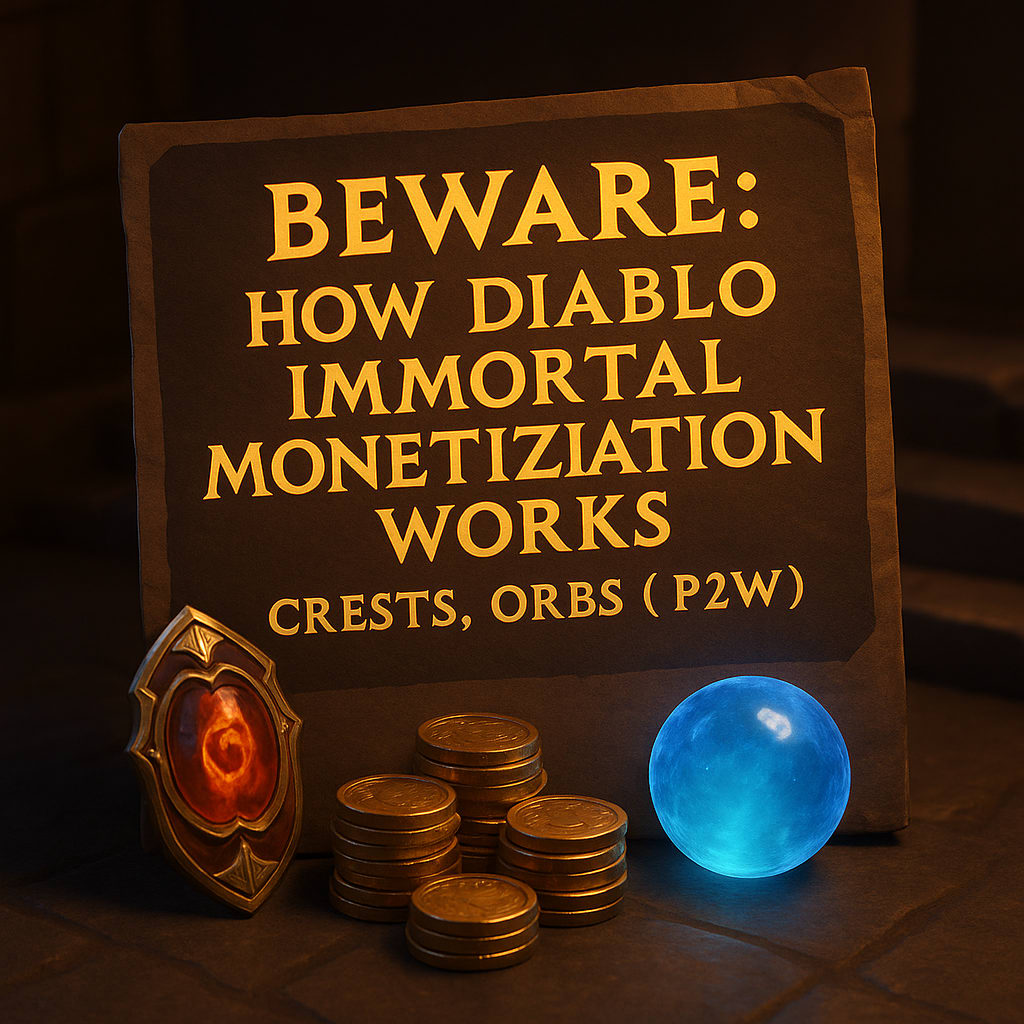
When Diablo Immortal first launched, it promised a free-to-play entry into Blizzard’s dark and gothic action RPG world. But anyone who’s spent more than a few hours in Sanctuary knows the truth: the game’s monetization is deeply woven into its core design.
From legendary crests to premium currency, Diablo Immortal subtly — and sometimes aggressively — nudges players toward spending. If you’re stepping into this world, you need to understand exactly how the system works.
This isn’t just about cosmetics or convenience. The game’s structure ensures that real money can dramatically accelerate progression, making it a textbook example of a “pay-to-win” ecosystem. Let’s break it down piece by piece.
The Foundation: Premium Currency & Paywalls
At the heart of Diablo Immortal’s monetization lies Eternal Orbs, the premium currency you can only acquire with real-world money. Orbs serve as the gateway to nearly every high-value purchase in the game. You use them to buy cosmetic sets, crests for Elder Rifts, platinum for the market, and even specific bundles that rotate in the shop.
While gold and platinum are both earnable in-game, they’re capped by daily and weekly limits. Eternal Orbs, however, are not. The moment you decide to buy orbs, the pace of progression changes — and the game knows it. It starts presenting more offers, limited-time deals, and exclusive bundles designed to make you feel like you’re missing out if you don’t buy in.
Crests: The Gear and Gem Bottleneck
If you’ve heard players complaining about Diablo Immortal’s monetization, chances are they’re talking about legendary crests. These are the golden tickets to Elder Rift runs that drop legendary gems, some of the most important power upgrades in the game.
Without crests, your chances of getting high-quality gems plummet. Yes, you can still run rifts without them, but the rewards will be significantly weaker.
Legendary crests can be purchased directly with Eternal Orbs or earned occasionally through the battle pass or limited events. However, the number you get for free is a fraction of what you’d need to realistically max out your build.
This creates a subtle but effective loop:
- Players realize their gems are underpowered.
- They see crests as the fastest path to improvement.
- They start buying more Eternal Orbs to fund the process.
Platinum: The Trading Economy’s Gatekeeper
Platinum is Diablo Immortal’s secondary premium currency, and it plays a huge role in player-to-player transactions. You can earn a small amount of platinum daily through activities like the Hilt Trader or the free battle pass track, but the amounts are minuscule compared to the costs of high-end market items.
Want that perfect five-star legendary gem someone listed on the market? Unless you’ve been hoarding platinum for months, you’ll likely need to buy it with Eternal Orbs. This indirect link between the marketplace and premium currency ensures that even trade-based progression is monetized.
Battle Pass: The Ongoing Subscription Hook
Diablo Immortal’s battle pass comes in free and premium versions. The free track offers a steady drip of materials and cosmetics, but the Empowered Battle Pass delivers better rewards, unique cosmetics, and a faster leveling pace.
It’s priced to feel affordable — often around $5–10 — but it renews every month. Over time, this turns into a subscription-like expense, keeping you in the spending loop. Blizzard sweetens the deal by adding small boosts and extra resources to make it feel like a must-have for active players.
Bundles & FOMO Marketing
Beyond the battle pass, Diablo Immortal constantly tempts players with bundles that pop up at key progression points. Beat a boss? New bundle. Reach a Paragon milestone? Another bundle. These often include a mix of crests, orbs, and rare crafting materials — at a “discount” that’s only available for a short time.
This limited-time pressure is a classic monetization tactic. Even if you planned to stay free-to-play, the fear of missing a rare deal can push players into making that first purchase. And once you’ve spent once, the psychological barrier is lower.
The Pay-to-Win Reality
It’s impossible to ignore the fact that spending money in Diablo Immortal directly improves your power level. Legendary gems, resonance bonuses, higher gear ranks — all can be accelerated with cash.
Free-to-play players can still progress, but the timeline is drastically slower. A paying player can fully awaken gear, socket top-tier gems, and push into higher content months before a non-paying player could dream of reaching the same point. In PvP, this creates obvious imbalance, where high-spending players dominate.
Why the System Works
Blizzard didn’t invent these tactics, but Diablo Immortal is one of the most polished examples of their execution. The game offers just enough free rewards to keep non-paying players engaged, but it paces them in a way that builds frustration. That frustration is the fuel for purchases — and it’s why the game’s monetization is so effective.
The combination of multiple currencies, randomized rewards, and limited-time offers means players are always chasing the next boost. And because Diablo’s core combat is genuinely fun, the temptation to spend for “just one more run” never goes away.
Playing Smart in a Monetized World
If you’re going to play Diablo Immortal without breaking the bank, you need discipline. Set a budget before you start, avoid impulsive purchases, and remember that much of the game’s monetization is designed to create urgency where none truly exists.
The game can still be enjoyed as a free-to-play experience, but you’ll need patience. For those willing to spend, it’s important to recognize where your money is going and how quickly it can add up.
In the end, Diablo Immortal’s monetization is as much a part of the experience as its dungeons and demons. Knowing the system inside out is your best defense against letting it control how you play.
About the Creator
Richard Bailey
I am currently working on expanding my writing topics and exploring different areas and topics of writing. I have a personal history with a very severe form of treatment-resistant major depressive disorder.
Keep reading
More stories from Richard Bailey and writers in Gamers and other communities.
5 Easy Dungeon Master Tricks to Keep Players Engaged
When you sit behind the Dungeon Master’s screen, you’re not just running a game—you’re orchestrating an experience. Your players have gathered around the table (or online) with the hope of being transported into another world.
By Richard Bailey7 months ago in Gamers
U4gm Luck Hits Los Santos: St. Patrick’s Day Update in GTA Online
Los Santos is getting a festive makeover! Rockstar Games has launched the St. Patrick’s Day seasonal update for GTA Online, running from March 12 to March 19, 2026. This limited-time event brings a mix of cash rewards, exclusive items, community challenges, and bonus multipliers, making this week one of the most exciting times to log in and play.
By Billo Nalia day ago in Gamers
Casino Game Trends and Player Favorites in 2026
The casino gaming landscape has continued to evolve in recent years, influenced by technology, player preferences, and shifting entertainment habits. In 2026, casino-style games remain a popular form of entertainment across both digital platforms and traditional venues. Rather than focusing solely on wagering, many discussions about these games now center on gameplay experience, design innovation, and the social elements that attract players worldwide.
By Shabbir Ahmad3 days ago in Gamers
Why Didn't Anyone Tell Us
Men, move along. This is not for you. This is for the women. I was forty-five when I began menopause. It is pretty young for that to be going on in a woman’s life, but I had undiagnosed PCOS, my entire life. Thank you to all the gynecologists I had seen my entire life. That in itself should encourage women to keep seeking second opinions, especially when you are not getting correct answers or any at all.
By Alexandra Grant4 days ago in Humans




Comments
There are no comments for this story
Be the first to respond and start the conversation.