
Best AI Strategies for Online Poker Game Development in 2025
Leveraging Machine Learning and Real-Time Decision Systems to Revolutionize Player Experience and Game Fairness in 2025

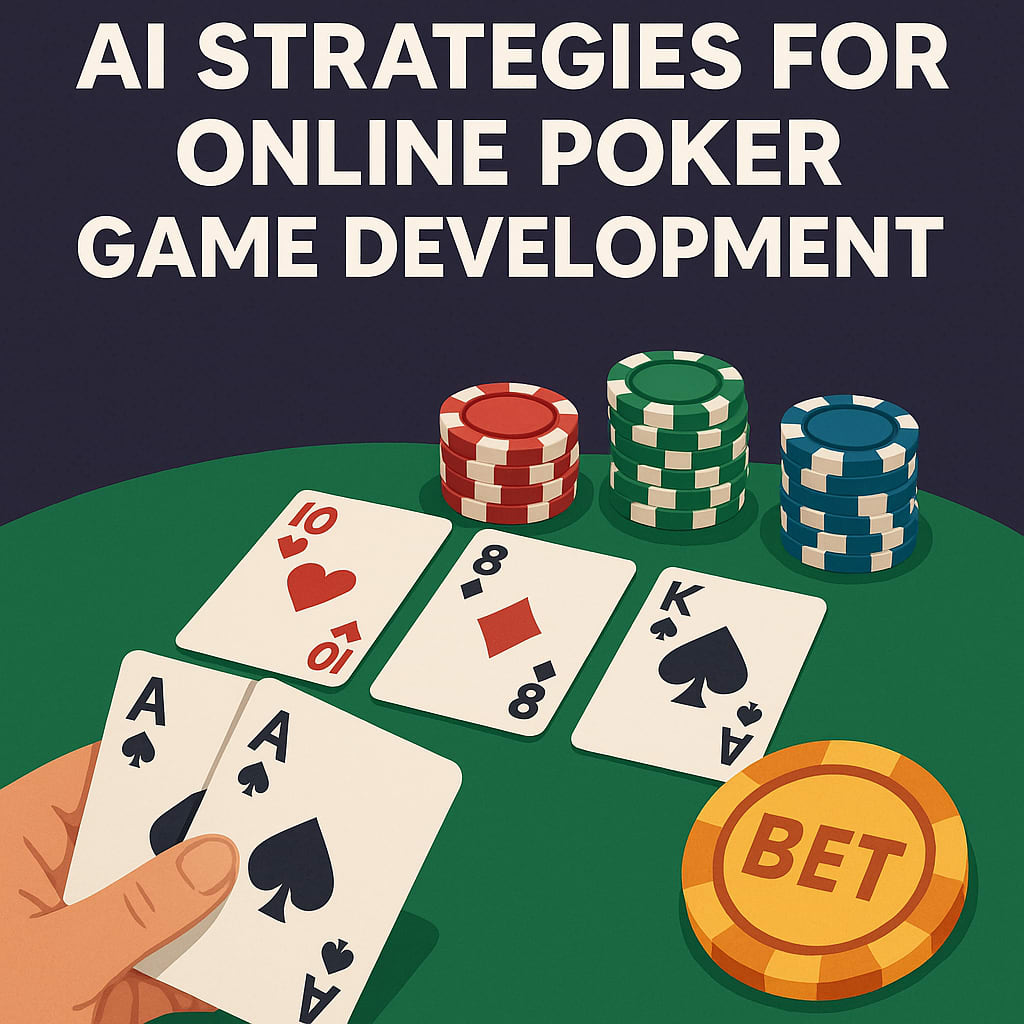
Online poker has come a long way in recent years, and the rise of artificial intelligence has completely transformed how these games are designed and played. From personalized experiences to unbeatable bots, AI poker game development is unlocking exciting new possibilities for players and developers alike.
In this blog, we’ll explore the top AI strategies that are shaping the future of online poker in 2025—strategies that not only make games smarter and fairer but also boost player engagement and satisfaction.
Why AI Poker Game Development Is Booming
As the demand for real-time multiplayer poker apps increases, so does the need for intelligent, adaptive gameplay. Players today expect more than just random number generators—they want challenging opponents, realistic behavior, and a secure environment. That’s where AI comes in.
AI poker game development focuses on integrating intelligent systems that simulate real player behavior, detect fraud, and provide advanced analytics to make each session more immersive.
Top AI Strategies Powering Modern Online Poker Games
Let’s break down the most effective AI strategies that developers are using to build next-generation poker games in 2025.
1. Deep Reinforcement Learning: Teaching AI to Learn from Experience
One of the most revolutionary AI strategies in poker game development is deep reinforcement learning (DRL). Unlike traditional rule-based bots, DRL uses neural networks that train through self-play. These AI agents make decisions based on rewards and gradually learn what works best over time.
In fact, AI models like Libratus and ReBeL have already defeated world-class poker professionals using this very technique. Integrating DRL allows your poker app to offer smarter opponents that get better the more they play.
2. Opponent Modeling: Understanding and Predicting Player Behavior
Opponent modeling is essential for creating a responsive and intelligent poker environment. This AI strategy tracks how players act—whether they bluff often, fold quickly, or play aggressively—and then tailors the bot’s strategy to counter them.
It brings a personalized and competitive edge to gameplay, making players feel like they're going up against a real opponent rather than a script.
3. Game Theory Optimal (GTO) Play: Balance and Fairness
GTO is a popular framework used in AI poker game development to create strategies that are mathematically balanced. GTO-based bots are designed to play in a way that minimizes the chance of being exploited.
When you integrate GTO principles into your poker game AI, it ensures that the bot plays in a realistic and fair manner—making it tough but not impossible to beat.
4. Real-Time Strategy Adjustment: Adapting on the Fly
Another emerging trend in poker AI is the ability to make real-time adjustments during gameplay. If a player changes their strategy mid-game, the AI recognizes the shift and adjusts accordingly.
This makes gameplay feel dynamic and adaptive. It’s especially useful for retaining skilled players who are looking for a real challenge.
5. AI for Security and Fraud Detection
AI isn’t just about gameplay—it’s also critical for security. Modern AI systems can detect patterns that suggest cheating, collusion, or bot use. These systems flag suspicious behavior in real-time, helping you maintain fairness and trust in your platform.
With player safety being a top concern, fraud detection powered by AI is now considered a must-have feature in professional poker apps.
6. Personalized User Experience Through AI
In 2025, users expect personalization. AI can analyze how a player interacts with the game—what tables they choose, how often they play, and even when they leave—to tailor the experience accordingly.
From suggesting tutorials for beginners to opening up advanced game modes for pros, personalized AI keeps users engaged and playing longer.
7. Monte Carlo Simulations: Smarter Hand Evaluations
Monte Carlo simulations run thousands of possible hand outcomes to calculate win probabilities. Integrating this method into your AI bot lets it make smarter decisions based on probability, not just static rules.
It’s a great way to simulate expert-level play and create a more challenging opponent.
8. Voice Command Integration for Accessibility
With the growth of voice-first devices, integrating voice commands into poker apps is becoming popular. AI systems can recognize commands like “raise,” “fold,” or “call,” creating a hands-free gaming experience that’s great for accessibility and convenience.
When combined with smart AI gameplay, voice controls add another layer of immersion to mobile poker apps.
Final Thoughts
AI poker game development is changing the way online poker is played and enjoyed. From smarter bots to enhanced personalization and rock-solid security, the right AI strategies can elevate your poker app far beyond traditional gaming experiences.
As we move further into 2025, the integration of advanced AI technologies will no longer be optional—it’ll be essential for any poker platform that wants to compete.
So whether you're launching your first online poker game or looking to upgrade an existing one, these AI strategies can help you create a truly intelligent poker experience that your users will love.
Want to develop a next-gen poker app powered by artificial intelligence? Get in touch with a trusted poker game development company that specializes in AI-driven gaming solutions
About the Creator
Mythspire Studios
Mythspire is a highly skilled Digital Marketing Specialist at SkillWaala with over 5 years of hands-on experience in the ever-evolving world of digital marketing.
Keep reading
More stories from Mythspire Studios and writers in Gamers and other communities.
Is Art School Worth It for Game Development?
When I decided to go to art school, I made the choice because I saw the value in learning directly from industry professionals. For me, it wasn’t just about honing my creativity; it was about setting myself up for success in a competitive and ever-evolving field—game art and design. The experience was rewarding, but like any major decision, it comes with its own set of pros and cons. Here’s what I’ve learned, and what you might want to consider if you’re weighing the decision for yourself, whether for goals of being a professional artist or for video game development.
By D. E. Kinga day ago in Gamers
7 Context Clues AI PCs Read Before Linking to Nearby Devices
Your AI-powered computer does something remarkable every time it spots a nearby device. The machine analyzes multiple signals before deciding whether to connect with your smartphone or smart speaker. This process happens in milliseconds yet involves complex decision-making that most users never notice.
By Judy Watson4 days ago in Gamers



Comments
There are no comments for this story
Be the first to respond and start the conversation.