
Behemoth VR: Exploring the Monumental Scale of Giant Boss Battles
Discover how the towering Behemoth bosses in Skydance’s VR epic transform scale into a core gameplay mechanic, delivering battles that feel larger than life

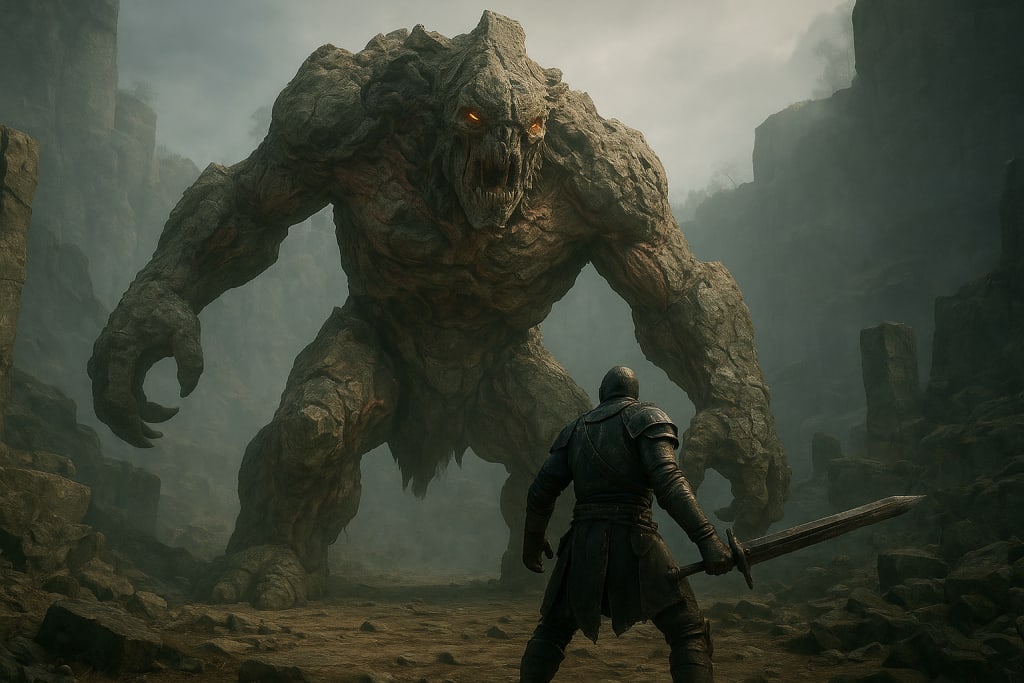
The VR game Behemoth by Skydance thrusts players into a world where size alone is a threat. At the heart of this brutal, crumbling landscape stand the colossal Behemoths—towering monstrosities that define the very core of the experience.
These aren’t enemies you simply fight; they are living mountains, shifting monuments of flesh, stone, and rage. To face one is to stand before a force of nature, and that encounter changes how you view scale in gaming forever.
The Philosophy of Scale in Behemoth
What separates Behemoth from other action RPGs isn’t just the presence of large enemies—it’s how those enemies redefine the battlefield. Scale here is not cosmetic. The size of each Behemoth determines the rhythm of combat, the geography of the fight, and even how players move through the environment.
Instead of a simple duel, battles become vertical puzzles. You aren’t just circling a giant to slash at its ankles. You’re climbing, grappling, and exploiting every crack in its armor to find a weak point.
Every inch of the creature becomes a tactical decision: Do you strike from below and risk being crushed, or do you climb its frame, exposing yourself to devastating counterattacks but gaining a chance to land a critical blow?
This philosophy of scale creates tension that lingers even between fights. The world feels oppressive because you never forget what’s waiting.
How Size Shapes Player Experience
VR is immersive by design, but Behemoth takes that immersion to a new level. Facing an enemy several stories tall is more than a gameplay mechanic—it’s a psychological experience.
Your sense of vulnerability becomes amplified because your eyes and body trick your brain into believing you are truly standing beneath an impossible weight of flesh and stone.
The Behemoths loom in ways screens alone can’t capture. Their movements shake the ground. Their roars are thunder, rattling the bones in your chest. Even their silence carries menace, as if their very presence smothers the air around you.
This manipulation of perspective changes how players act. Many describe their first encounter as instinctively defensive, almost paralyzed by awe. The game forces you to adapt, to turn that fear into strategy, and to find purpose in the shadow of a creature that could kill you with a single strike.
Anatomy of a Colossus
The Behemoths aren’t just big—they are designed to embody enormity at every level. Skydance’s design team built them with layers of detail that scale upward, from muscle fiber to architecture-sized armor plating. Some resemble corrupted titans of bone and sinew, while others echo statues eroded by centuries, their bodies a fusion of organic and mineral textures.
Each boss tells its own story through sheer form. A Behemoth encrusted with stone may suggest it once slumbered for ages beneath mountains. Another, scarred with jagged metal and broken weapons, tells of countless battles survived. Their size is not arbitrary—it speaks to history, purpose, and inevitability.
The Battlefield Becomes the Boss
Unlike most games where the arena is a static backdrop, Behemoth turns the boss itself into part of the environment. You may find yourself scaling a leg like a cliff face, leaping across shoulders as if crossing ravines, or dangling from a weapon the size of a tower.
These shifting landscapes demand agility and awareness, forcing players to view combat as both platforming and survival.
It’s not enough to know how to swing a blade. You must master space. You must learn balance and timing, adjusting to every quake of movement. The Behemoth doesn’t fight on your terms—you fight on its.
Why Monumentality Matters
Games have long featured big enemies. Dragons, kaiju, and titans are nothing new. But rarely has a game leaned so heavily into scale as a core mechanic. In Behemoth, size isn’t a gimmick; it’s the identity of the game itself.
The monumental bosses create a rare balance between terror and exhilaration. They remind players of insignificance while simultaneously offering the chance to overcome the impossible. Victory becomes more than winning a fight—it becomes a triumph over powerlessness.
This is why these encounters resonate. They don’t just test skill; they test perception, courage, and patience. Players walk away remembering the immensity, the climb, the narrow escape. The bosses linger as myths in memory, much like legendary beasts of folklore.
The Legacy of Giants in Gaming
Behemoth draws inspiration from the lineage of games that dared to make size the central theme. Titles like Shadow of the Colossus paved the way, but VR amplifies the sensation to unprecedented levels. In flat-screen games, giants are spectacles. In VR, they are presences. They exist in your space, demanding acknowledgment, pulling you into their gravity.
Skydance takes this concept and refines it, creating battles that feel less like scripted encounters and more like wrestling with a world-breaking force. This focus on scale sets Behemoth apart, giving it an identity that few other games can claim.
Inside Behemoth, size is more than spectacle. It is storytelling, gameplay, and atmosphere combined into a singular experience. The bosses dominate every element of the game because they are meant to. They remind you that you are not the strongest, not the largest, not even the center of this world. You are simply a survivor, trying to endure in the shadow of titans.
And that, ultimately, is the point. The Behemoths are not just bosses. They are the game itself.
About the Creator
Richard Bailey
I am currently working on expanding my writing topics and exploring different areas and topics of writing. I have a personal history with a very severe form of treatment-resistant major depressive disorder.
Keep reading
More stories from Richard Bailey and writers in Gamers and other communities.
Best D&D Backgrounds for Roleplaying Potential
Why Backgrounds Matter in Roleplay When most new players think about creating a character in Dungeons & Dragons, they focus on class and race. A barbarian half-orc or an elven wizard is usually the first layer of identity. But the background is where roleplaying potential truly comes alive.
By Richard Bailey5 months ago in Gamers
What Color Should a Rash Guard Be? A Complete Guide to Comfort, Safety, and Performance
Rash guards are no longer limited to surfing alone. Today, they are widely used for swimming, fitness training, Brazilian Jiu-Jitsu (BJJ), MMA, outdoor sports, and kids’ activities. While most people focus on fit and fabric, one common and important question is often overlooked: what color should a rash guard be?
By Sophie Blogs4 days ago in Gamers


Comments
There are no comments for this story
Be the first to respond and start the conversation.