
Battlefield 2042’s Record-Setting Debut — And What “Battlefield 6 Bot Lobby” Means for the Meta
Battlefield 2042 didn’t just show up; it arrived with numbers and noise. Millions jumped in across early access and launch week, pushing franchise engagement to new highs. Beyond sales, this was a stress test for a modern live-service shooter: massive lobbies, cross-play, user-made modes, and a bold rework of classes. Here’s what actually landed, what didn’t, and how features like “Battlefield 6 Bot Lobby” fit into the bigger picture.
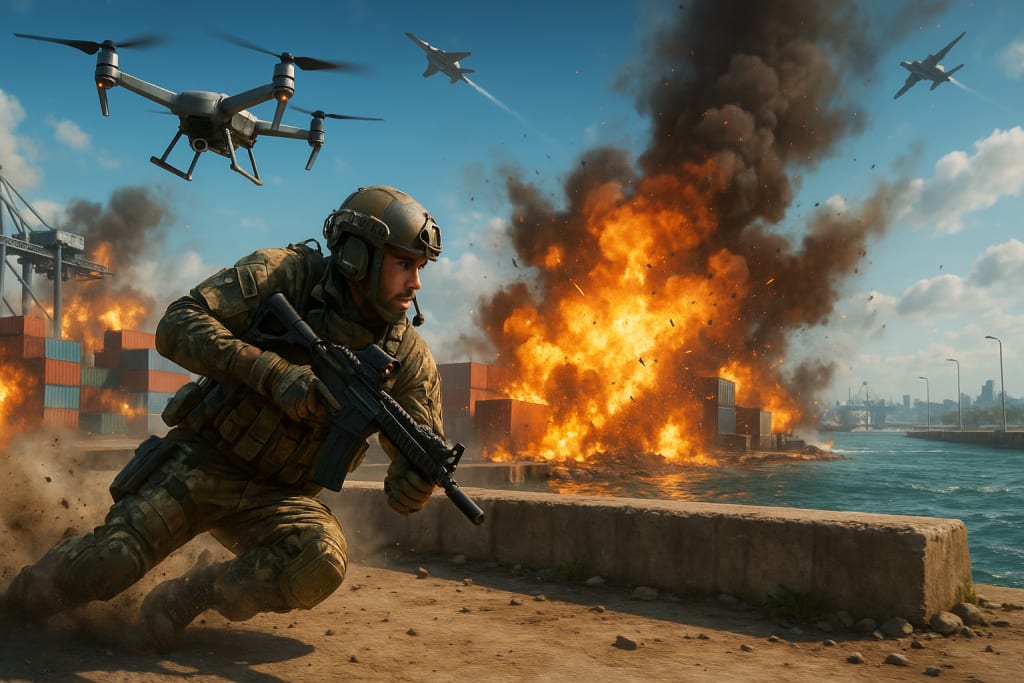
Launch day success now looks different
In 2024, “good launch” doesn’t mean cartons of discs flying off shelves. It means concurrency, session length, and whether people come back on day 7 and day 30. By those measures, Battlefield 2042 had a real moment. Early access pulled in a crowd; global launch doubled down. Marketing helped, sure, but scale and novelty did the heavy lifting: 128-player warfare, physics-driven storms, and a creation suite that let the community remix the franchise’s past in real time.
The three pillars that defined week one
All-Out Warfare — Conquest/Breakthrough with up to 128 players on PC and new-gen consoles. It’s the classic Battlefield fantasy dialed up: vehicles, squad play, and maps big enough to matter.
Battlefield Portal — A sandbox with logic blocks and assets from 1942, Bad Company 2, and BF3. It’s part museum, part toy box, and it kept the launch window from feeling like a content drought.
Hazard Zone — A smaller, extraction-style mode with squad tension, risk/reward pacing, and higher stakes per life. Not the headliner, but a smart counterweight to the chaos elsewhere.
All-Out Warfare: spectacle that actually changes play
128 players aren’t just a bigger number. On the new maps it changes how you move. Front lines bend. Flanks matter again. Random squads can string together hero moments because there’s simply more going on—more revives, more call-outs, more “did you just see that?” chatter.
Two design swings stood out:
Specialists over classes. Purists grumbled, but the intent was clear: let players express a role (recon, support, disruption) while mixing gadgets more freely. The upside is flexibility; the downside is identity. When everyone can do a bit of everything, squad composition needs sharper incentives to avoid sameness.
Dynamic weather. Tornadoes and sandstorms aren’t gimmicks when they change sightlines and force movement. They also create shareable clips—the social fuel every live-service needs on week one.
Portal: the community’s answer to content gaps
Portal turns nostalgia into retention. Within days, players recreated classic rulesets, then went weird with it: knife-and-bolt matches, asymmetrical showdowns, one-life experiments. The logic editor isn’t Unreal blueprints, but it’s powerful enough to surprise you. Even better, it gives DICE breathing room; when official content slows, the community can still ship the next thing people log in to try.
Hazard Zone: the slower heartbeat
Hazard Zone asks a different question: can your squad play a clean round under pressure? It’s about information, extraction timing, and accepting that sometimes the right move is not to take the fight. For players burned out by 128-player chaos, this is the reset button. For streamers, it’s highlight-friendly: win or wipe, there’s a story.
Cross-play, queues, and the new normal
Cross-play is more than convenience—it’s queue insurance. Big lobbies die without population density, and 2042’s opening weeks kept servers humming across platforms. That matters for a mode like Portal, where oddball rulesets live or die by how fast a lobby fills.
Not a perfect launch—and that’s okay
The other truth of modern releases: launch hiccups happen. Stability patches, balance tweaks, and netcode tuning were all part of the first month grind. Two things kept sentiment from collapsing:
Clear communication. Players will tolerate issues if fixes ship quickly and dev notes read like the team actually plays the game.
A reason to return. Battle Pass pacing, map rotations, and community events pulled people back in. If your friends are playing tonight, you probably are too.
So… where does “Battlefield 6 Bot Lobby” fit?
There’s always a meta orbiting live-service shooters—coaching services, lobby strategies, and custom experiences built to practice mechanics without high-stakes punishment. “Battlefield 6 Bot Lobby,” in that sense, is less about shortcuts and more about on-ramp design: controlled spaces to learn recoil, test gadgets, or warm up with friends before jumping into 128-player chaos. Used well, it supports the ecosystem by smoothing the new-player experience and giving veterans a lab for experimentation.
The line to watch is competitive integrity. Anything that confers unfair advantage in public matchmaking erodes trust fast. But private or community-approved practice spaces? Those can lift the overall skill floor and make public matches better, not worse.
The business angle: why this launch mattered
EA and DICE needed a win in the large-scale shooter space. 2042’s opening weeks offered three signals investors care about:
Acquisition: “Millions” at launch is a strong start for any premium live-service.
Engagement: Big lobbies plus cross-play equals steady DAU/MAU—the heartbeat of seasonal monetization.
Retention: Portal is a hedge against content droughts. If the community keeps building, churn slows.
Long term, the question shifts from “how big was launch?” to “how steady is year two?” That’s where cadence—new Specialists, maps that play to the engine’s strengths, smarter Squad/Party features—will decide the curve.
What needs to improve next
Identity clarity for Specialists. Give squads sharper reasons to bring specific kits, not just favorite skins and gadgets.
Map readability. Big can be brilliant; it can also be noise. Stronger laneing and cover language make 128 players feel tactical, not random.
Creator spotlighting. Portal’s best modes deserve official curation. Put them in front of everyone, rotate them like limited-time playlists, and reward creators visibly.
Verdict: a foundation worth building on
Battlefield 2042 launched like a blockbuster and behaved like a platform. The spectacle is real, the sandbox is sticky, and the slower-paced Hazard Zone gives squads somewhere to breathe. If DICE keeps shipping quality-of-life and doubles down on creator tools, the game has the legs to be more than a moment.
As for the surrounding meta—yes, even “Bot Lobby” talk—it all comes back to this: make it easier to learn, easier to play together, and easier to find the kind of Battlefield you want tonight. Do that, and the numbers that mattered at launch will matter even more a year from now.
About the Creator
Carlos Alcaraz: The Relentless Rise of Tennis’s New Generation Star
In an era where tennis has long been dominated by legends such as Roger Federer, Rafael Nadal, and Novak Djokovic, the emergence of Carlos Alcaraz has signaled the dawn of a new chapter. Still in his early twenties, Alcaraz has already achieved what many players spend entire careers chasing—Grand Slam titles, a world number one ranking, and the admiration of fans across the globe.
By Ayesha Lashari38 minutes ago in Gamers
Rsvsr GOP 3: How to Win More Chips and Complete Tasks
Governor of Poker 3 is one of the most engaging poker games you can play on mobile or desktop. It’s not just about luck—it’s about strategy, patience, and understanding the different gameplay modes. Whether you’re looking to grow your chip stack, complete daily tasks, or climb the leaderboards, knowing how to play smart makes all the difference.
By Dangyc Ding2 days ago in Gamers




Comments (1)
Bro what are you on about? Battlefield 2042 was horrendous. Day 30??? Don't think there was much of a player count day 30 of battlefield 2042s life cycle. Sure they improved the game but nowhere near any other battlefield. 2042 was one of the ugliest shooters to have released in a few years. Which is odd because dice is renown for having amazing lighting and graphical fidelity. I'm not sure where you were when that big fest was released. But I'd chok it up to being just as bad as cyberpunk 2077. Also why do you keep iterating on battlefield 6 having 128 players? They did not include 128 player matched in bf6 thankfully ruined the core flow. Also hazard zone was so bad they stopped all post release patches or anything to do with hazard zone so that mode got absolutely no updates cuz let's be real it was tacked on last minute from the higher ups that saw extraction shooters were starting to take off so they had to HAD to put something in except this this was the biggest POS called and extraction shooters on the market lol. So yeah that didn't retain any player base portal was implemented way to early needed way more time to cook seeing as what we have no for portal it should have just been left out until this title. All in all you must have had a different game then I for 2042 cuz that was a POS.