
Assassin’s Creed Shadows Vs Attack on Titan
AC Shadows The Climactic Battle

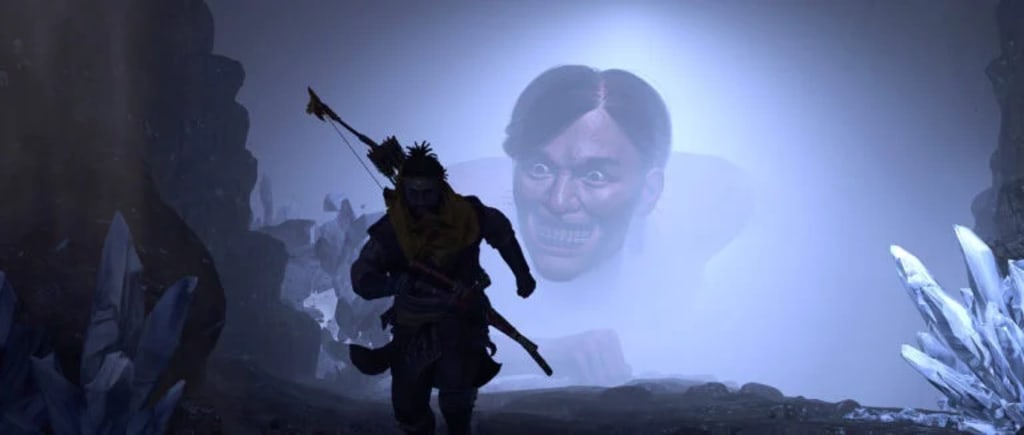
In a universe where history and myth collide, few crossovers feel as unexpectedly seamless as Assassin’s Creed Shadows and Attack on Titan. At first glance, one is a grounded historical action-stealth epic set in Sengoku-era Japan, while the other is an apocalyptic fantasy where humanity battles towering man-eating giants in a dying world. Yet both franchises share deep thematic DNA: the fight for freedom, the burden of inherited conflict, and the resilience of those trapped in systems built long before their birth. Imagining these worlds intertwined opens a gateway to a narrative rich with political intrigue, ancient power struggles, and high-stakes action unlike anything fans have seen.
A Rift in History
The crossover begins with a mysterious Isu artifact uncovered beneath a war-torn village in late 16th-century Japan. Assassin’s Creed Shadows, built around dual protagonists—Naoe the shinobi and Yasuke the samurai—already explores hidden histories and powerful relics. But in this crossover scenario, the artifact is no ordinary Piece of Eden. Instead, it behaves like a dimensional anchor, resonating with an energy source the Assassins cannot decipher. When a failed Templar attempt to harness it goes awry, a temporal and spatial tear forms, connecting their world to the Eldian-Marleyan timeline of Attack on Titan.
From the crack in reality emerges chaos: a flickering vision of an unfamiliar, walled world, the echo of Titan roars, and finally—an actual Titan partially stepping through before the portal collapses. While the creature evaporates before fully materializing, the devastation it causes in seconds is enough to convince both Assassins and Templars that the tear is not an anomaly but an opportunity.
Titans in Sengoku Japan
Imagine a 10-meter Titan lumbering through the steep valleys and small castle towns of Japan’s warring states. Unlike the vast plains of Paradis, Sengoku Japan’s compact settlements and tiered architecture would create intense vertical combat scenarios. Naoe’s agility, grappling hooks, and stealth training give her a unique advantage. Scaling rooftops, leaping between towers, and using her shinobi tools would mirror the ODM gear maneuvers of Attack on Titan soldiers, though with a more grounded and improvisational feel.
Yasuke, meanwhile, represents raw force. His heavy weaponry and unmatched strength allow him to battle Titan-spawned chaos on the ground, cutting through corrupted Templar units wielding Titan-related powers or mutated Isu-influenced creatures. While a human can’t take down a Titan traditionally, Yasuke’s skill and the aid of new Isu tech could make him a formidable frontline fighter in this fusion world.
The Scout Regiment Arrives
When the next rift opens—larger and more stable—a squad from the Survey Corps crosses into Naoe and Yasuke’s world. Whether this group is led by Levi, Mikasa, or a new generation depends on the crossover’s tone, but their arrival instantly shifts the balance of power.
The Scouts, trained for years in Titan warfare, are bewildered by this technologically and politically different Japan. Yet they quickly recognize the familiar pattern: a secretive order (the Templars) seeking to weaponize ancient power to impose control—eerily similar to Marley’s military strategies. They also find ideological kinship with the Assassins, who value freedom and resist domination.
The Scouts introduce ODM gear to Naoe, who becomes the first outsider to master its use. Her speed and stealth blend with the gear’s aerial mobility to form a new, hybrid fighting style. In turn, the Assassins teach the Scouts how to move unseen, navigate enemy political structures, and use precise assassination techniques—skills the Survey Corps rarely employs in their Titan-dominated world.
Templars and Marley: Unholy Alliance
A faction of Templars, having witnessed the unimaginable potential of Titan power, manages to stabilize the artifact’s energy and contact Marley across the rift. Marleyan officers, desperate for any advantage in their wars, propose a trade: Titan-shifting knowledge in exchange for Isu weaponry.
This creates an antagonist alliance built on mistrust but driven by mutual ambition. Marley seeks to extend Titan influence beyond its world, seeing Japan’s fractured political state as fertile ground for expansion. The Templars, meanwhile, view the Titan powers—the Founding Titan especially—as ultimate tools for enforcing order.
Rumors spread of Japanese warriors spontaneously transforming into unstable Titan-like creatures. The Titans in this world are imperfect: distorted, unstable, and corrupted by incomplete Isu replication. Their existence accelerates the conflict, forcing the Assassins and Scouts to unite before the two worlds consume each other.
The Climactic Battle: Two Worlds, One War
The final chapter of this imagined crossover takes place across both dimensions. Naoe leads an infiltration mission into Marley’s homeland, using stealth techniques ineffective against Titans but devastating against human military systems. Yasuke spearheads a defense of Japan against a coordinated Templar-Marley attack, wielding a hybrid Isu-enhanced blade capable of damaging Titan tissue.
Meanwhile, the Scouts face their greatest strategic puzzle: closing the rift without triggering a collapse that destroys both worlds. The Founding Titan’s power becomes central—not as a weapon, but as a stabilizing force capable of resetting the balance between timelines.
The battle ends not with destruction but with sacrifice. The rift closes, the Titans retreat to their own dimension, and the Assassins continue their hidden war with renewed conviction. The Scouts return home, carrying with them knowledge of a world where freedom is fought for in the shadows, blade by blade.
Why the Crossover Works
Both franchises thrive on the tension between oppression and liberation, between ancient secrets and modern consequences. Their characters bear the weight of inherited conflict but fight fiercely for a future unshackled by the past. A crossover between them isn’t just spectacle—it’s a thematic echo.
In blending Sengoku intrigue with Titan apocalypse, this imagined story becomes a meditation on power, legacy, and the cost of freedom—capturing the spirit of both Assassin’s Creed and Attack on Titan in a single breathtaking narrative.
About the Creator
Reader insights
Outstanding
Excellent work. Looking forward to reading more!
Top insights
Easy to read and follow
Well-structured & engaging content
Heartfelt and relatable
The story invoked strong personal emotions
Keep reading
More stories from Games Mode On and writers in Gamers and other communities.
Assassin’s Creed: Shadows on Switch 2 — Full Review & Verdict
The latest installment in the series, Assassin's Creed: Shadows, has finally landed on Nintendo Switch 2. The port represents both an impressive technical feat and a pragmatic compromise: it brings a vast, modern open-world stealth/action experience to a handheld console, but with inevitable reductions compared to the PS5/Xbox Series X|S versions.
By Games Mode Onabout a month ago in Gamers
New Horizons Animal Crossing: Spring, Summer, Fall, and Winter Events
Animal Crossing: New Horizons continues to delight players with its charming life-simulation gameplay, allowing players to customize their islands, interact with villagers, and enjoy seasonal events. One of the game’s most engaging features is its seasonal events, which provide unique items, activities, and community experiences throughout the year.
By Games Tale4 days ago in Gamers


Comments
There are no comments for this story
Be the first to respond and start the conversation.