
Advances in sports broadcasting technology and changes in leisure activities
Advances in sports broadcasting technology have brought about many changes to individual lives and community life.
Introduction
The history of sports broadcasting began with radio broadcasting in the early 20th century and underwent a revolutionary change with the advent of television. Initially, the broadcasting method was limited to game results and simple commentary, but gradually evolved into a medium that conveyed a vivid sense of presence. Starting with black-and-white television broadcasting in the 1950s, technology has continuously developed to include color broadcasting, satellite broadcasting, and high-definition digital broadcasting.
In recent years, sports broadcasting has taken a leap forward to a completely new level due to the rapid development of artificial intelligence, big data, and augmented reality technologies. Cutting-edge technologies such as 4K, 8K ultra-high definition video, real-time player data analysis, multi-angle camera angles, and virtual reality broadcasting provide viewers with an immersive experience that was previously unimaginable.
This technological innovation is fundamentally changing the viewing culture and leisure activities of sports fans beyond simple broadcasting. A new viewing paradigm is being formed that provides vivid and rich information as if you were at the scene at home, breaking away from the traditional way of watching at the stadium.
This study aims to trace the historical development of sports broadcasting technology and comprehensively analyze the profound impact of the latest technology on daily life and culture. It forecasts the future of sports broadcasting through the complex interaction of technology, society, and culture.
Characteristics of the development of broadcasting technology
Modern characteristics of sports broadcasting technology are revolutionizing the viewer experience. 4K, 8K high-definition large-screen broadcasting provides a vivid sense of presence as if you were at the stadium, and video processing technology of over 120 frames per second realizes amazing clarity and smooth picture quality. This technology, combined with an ultra-large display, perfectly reproduces the immersive feeling of an actual stadium at home.
Cutting-edge camera technology captures even the most minute moments of the game. Slow-motion technology records at over 1,000 frames per second, allowing detailed analysis of moments that are difficult to capture with the eyes. Innovative techniques such as bullet time show dynamic moments of sports in three dimensions through 360-degree rotating video. Cutting-edge equipment such as drone cameras and robot cameras broadcast games from angles and viewpoints that were previously impossible.
Big data and AI-based real-time data analysis technology are opening up a new horizon for sports broadcasting. Players' movements, heart rate, speed, and distance traveled are collected and analyzed in real time and immediately visualized in graphics. This data helps commentators analyze and provides viewers with a deeper understanding of the game. Machine learning algorithms predict players' patterns and strategies, enabling more sophisticated statistics and analysis.
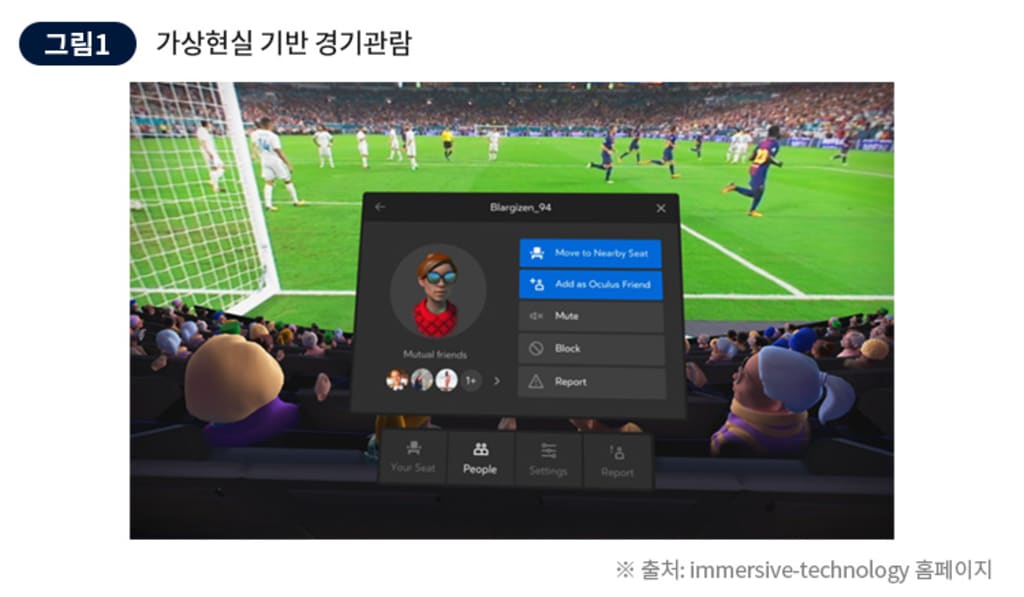
Virtual reality (VR) and augmented reality (AR) technologies are dramatically increasing the immersion of sports broadcasting. You can explore the entire stadium with a 360-degree VR camera, and AR technology superimposes player data, tactical analysis, and holographic effects on the screen in real time. Viewers can experience a vivid experience as if they were in the middle of the stadium, and are now able to watch actively and immersively, moving away from the traditional passive viewing.
Changes in the way sports are viewed
The development of cutting-edge broadcasting technology is fundamentally revolutionizing the way sports are viewed. Instead of visiting the traditional stadium, you can now experience the vividness of the scene at home. 4K, 8K large smart TVs and high-definition screens provide an immersive viewing environment as if you were at the stadium.
In particular, the multi-screen feature gives viewers unprecedented flexibility. They can watch multiple games at the same time, or check various angles and real-time data at the same time. They can enjoy sports in the way they want through various devices such as smartphones, tablets, and TVs.
The development of streaming platforms and social media has rapidly popularized sports broadcasting. Fans around the world instantly share and consume various content such as real-time player data, tactical analysis, and highlights. In particular, the younger generation prefers interactive and personalized viewing experiences beyond traditional TV broadcasting.
Fandom culture is also expanding into the digital space and undergoing fundamental changes. Fans are becoming more closely connected through online communities, global communication channels, and real-time fan participation platforms. They go beyond simply watching games to communicate with players, share their opinions, and become part of a global fan network.
Changes in leisure activities
Innovations in sports broadcasting technology are fundamentally restructuring the paradigm of leisure activities. The limited and passive sports viewing experience of the past has now evolved into a personalized and interactive culture.
The development of smart devices and various streaming platforms has given viewers unprecedented viewing flexibility. On mobile devices during commuting, on tablets at the office, on large smart TVs at home – the constraints of time and space have been completely dismantled. Rich additional information such as real-time multi-angle broadcasting, player biometric data, and tactical analysis have transformed simple watching into an experience of learning and immersion.
Social media and online communities have expanded the social dimension of sports fandom. Global fans are becoming active participants through real-time discussions, sharing emotions, and direct communication with players. This is elevating individual leisure from simple entertainment to a global cultural experience.
Virtual reality and augmented reality technologies have revolutionized the immersion of sports viewing. 360-degree stadium tours, real-time holographic analysis, and player-perspective experiences have completely broken down the limitations of traditional viewing methods. Now, fans go beyond watching the game and ‘participate’ in it.
As a result, advanced broadcasting technologies are transforming sports from a simple leisure activity into a complex platform of personal and social experiences. Technology is no longer a neutral tool, but an active medium that redefines sports culture.
Conclusion
The evolution of sports broadcasting technology shows a remarkable journey of change from radio broadcasting in the early 20th century to today's cutting-edge digital platforms. High-definition video, real-time data analysis, and virtual reality technologies have fundamentally reshaped our culture and communication methods beyond simple technological innovation.
Innovative filming techniques such as 4K and 8K video technologies, multi-angle cameras, slow motion, and bullet time vividly capture even the most delicate moments of sports. Real-time analysis based on artificial intelligence and big data provides a deeper understanding of the game, and augmented reality technology has revolutionized viewer immersion
Future sports broadcasting technology will evolve in a more personalized and interactive direction. Advanced artificial intelligence will enable more sophisticated game predictions and analysis, and virtual reality technology will provide viewers with an immersive experience as if they were at the stadium. Global fans will become more closely connected through technology, and sports will evolve beyond simple entertainment to become a core platform for cultural communication and global exchange.
Technological advancements also pose new ethical and social challenges. Privacy, transparency in data use, and fair access to technology are important issues that will need to be addressed in the future. However, at the same time, these technologies have the potential to make sports experiences more inclusive and innovative. If you missed a sports game you wanted to see or don't have time to visit the stadium but there is a sports game you really want to see, please come to the free sports broadcast site Sonokong TV and watch it. Thank you.
About the Creator
Mr. choi
I think you can enjoy sports more if you have basic knowledge about sports. I want to create opportunities to learn little by little. I want to provide information such as sports broadcasts and sports news.
Master the Meta: How to Increase Legendarity Fast in Rush Royale 2026
The landscape of Rush Royale shifted dramatically with the introduction of the Legendarity system. For veteran players, the old days of simply stacking critical damage percentage are over. In 2026, your prowess is no longer measured solely by how many common units you have painstakingly leveled up to 15.
By Richard Bailey4 days ago in Gamers



Comments
There are no comments for this story
Be the first to respond and start the conversation.