
A Critique of the 'Shadow of Mordor' Franchise
The best Tolkien-based games on the market.

J.R.R. Tolkien’s Middle-earth writings are my favorite works of fantasy literature of all time. Over the course of three years, I’ve managed to read almost every book he wrote on the subject, some more than once.
A lot of hardcore Tolkien fans who have played Monolith’s Shadow of Mordor and Shadow of War games have expressed a level of dissatisfaction for the artistic and creative liberties that the company took when adapting the source material. In this article I will point out a few of them, and explain the things they got wrong, and what they got right.
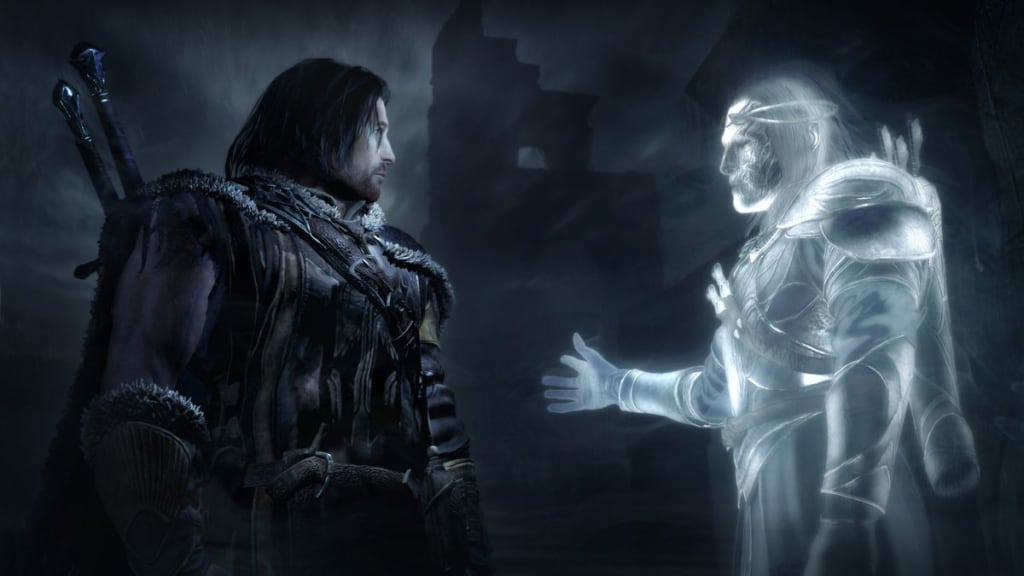
The plot of the first game, Shadow of Mordor, revolves around the lead protagonist, Talion, who’s family is murdered in a blood sacrifice to Sauron during the sixty-year-gap between The Hobbit and The Lord of the Rings. However, Talion cheats death when he is revived through possession by Celebrimbor, who aided the Dark Lord in the creation of the One Ring.
There’s a lot of plot points being displayed just in this one moment that don’t exactly fit well in the books’ mythologies. For one, the idea of a ritualistic sacrifice being done in the name of Sauron isn’t really something that existed (the closest published writing to this is Tolkien’s Sauron-worshipping-cult that appears at the tail end of the final volume of The History of Middle-Earth). Secondly, a Wraith that has no connection to the corrupted kings of Westernesse isn’t likely to inhabit someone else’s body. While Gollum would exist during this period of time, his storyline with Talion seemed far-fetched for his character.
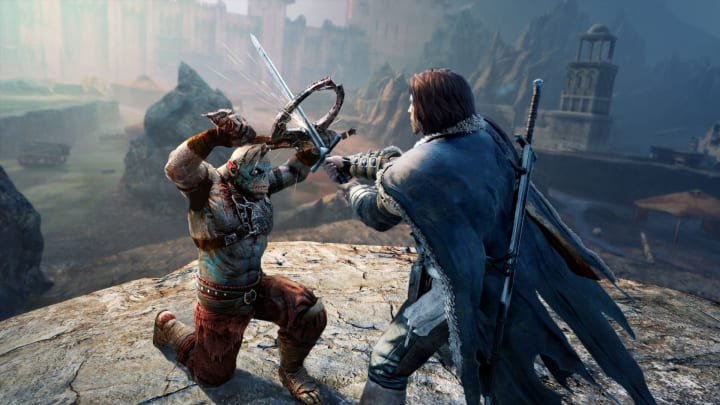
Even more problems are to be found in Monolith’s follow-up. The first is the fall of Minas Ithil, which in the books took place during some point in the Second Age. In War, it appears to have fallen significantly later than that, and while it was both cool and gratifying as a player to witness it firsthand, it doesn’t match very closely to the way in which it is described in The Two Towers.
The game’s depiction of Shelob as a shape-shifting witch with mostly human features also seems far-fetched. In the books, the only other creature we see with similar features to Shelob is Ungoliant, who appears in The Silmarillion and other First Age writings. She is described as “A shadow in spider’s form,” and there is some vague evidence suggesting that she may have the ability to shape-shift. Even still, her characterization of being as sentient and self-aware as she is appears jarring.
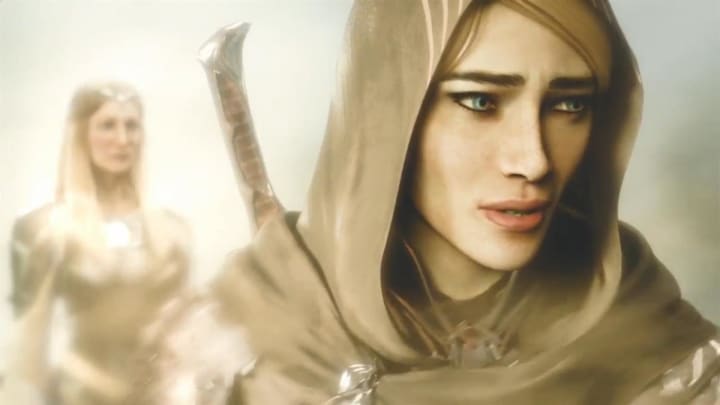
Lastly, the way Lady Galadriel is depicted, particularly in the DLC spent as Eltariel, is somewhat problematic as well. In the books, Galadriel is presented as gentle and fair, and while she does resort to violent action in some cases, it is always done as a last resort. In War, she’s vain, cold and dismissive. You simply don’t get the sense that it’s the same character.
All this being said, I firmly believe that Shadow of Mordor does more to delve into the lore of Tolkien’s world than most of the other AAA games in the franchise. In one moment spent in Celebrimbor’s DLC, a voiceover narration by Sauron announces that Celebrimbor “Will never return to the Halls of Mandos.” In the books, the Halls of Mandos are more or less an Elvish Purgatory, where those who pass await judgment before entering Valinor, which is essentially Tolkien’s conception of Heaven. There are plenty more examples (too many to list in fact) of fine attention to detail to Tolkien’s world-building, that serve to place Mordor firmly in what had already been established.
Shadow of Mordor and Shadow of War are both Warner Brothers Games productions. In addition to the Mordor franchise, Warners also has possession of the Batman Arkham series. Many gamers have compared the combat style in Mordor to that of Batman, but to me, there are some key differences. The way Talion can brand and dominate Orcs, grab or shank them, and command an army through the brilliantly original and fun Nemesis system elevate the familiar Arkham-style combat to a whole other level. Playing as Talion makes you feel like a Ranger of the North, exactly the way it should.
Through my criticisms listed above, I in no way want to deter anyone who hasn’t played these games from doing so. Many Lord of the Rings games have been made from the license, and Monolith’s entries are in my opinion the best yet. Do yourselves a favor and play them if you haven’t already. They’re well worth it.
About the Creator
Keep reading
More stories from Declan Powers and writers in Gamers and other communities.
'The Last of Us Part II' Review
This review contains spoilers for The Last of Us and The Last of Us Part II. Naughty Dog’s 2013 title The Last of Us is arguably one of the most revered and influential action games of the last decade. So it comes as no surprise to me that it’s sequel would be as divisive and controversial as it has now become. Does this make it a bad game? In my opinion, no. In fact, in many ways I view it as superior to the original title.
By Declan Powers5 years ago in Gamers
Dodgers
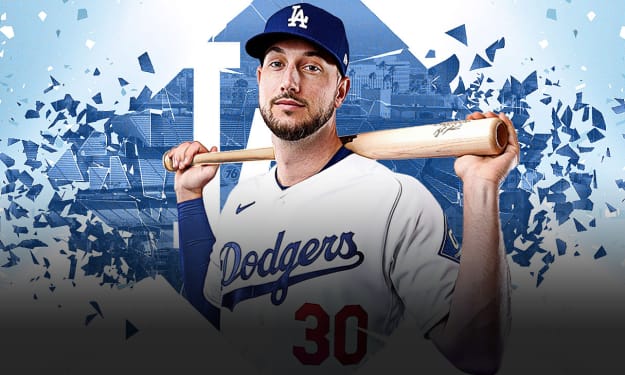
The Los Angeles Dodgers have long been one of the most influential franchises in MLB, known for combining elite player development with the financial flexibility to pursue top-tier talent. From consistent postseason appearances to being counted among recent World Series winners, the Dodgers continue to shape league-wide conversations. As the new season approaches, Dodgers news is once again dominated by roster construction, payroll discussions, and persistent MLB trade rumors—especially those surrounding Kyle Tucker. The Dodgers’ Identity in Modern MLB Few teams balance tradition and innovation quite like the LA Dodgers. Their front office has mastered analytics while still valuing star players who can deliver in October. The current Dodgers roster reflects that philosophy, blending established veterans with emerging talent. Over the years, names like Cody Bellinger have defined eras of success, while new possibilities continue to fuel speculation. The Dodgers’ ability to remain competitive is also tied to their willingness to maintain a high Dodgers payroll. While they are not reckless spenders, they are strategic—targeting players who can elevate both performance and brand value. Kyle Tucker and Why He Fits the Dodgers Narrative Among the most discussed names in recent MLB rumors is Kyle Tucker. A consistent offensive presence and reliable defender, Tucker has emerged as one of the most complete players in modern baseball. Naturally, that has led to growing interest in a potential Kyle Tucker Dodgers scenario. So, what position does Kyle Tucker play? Tucker is primarily a right fielder, though his athleticism allows flexibility across the outfield. That versatility makes him especially attractive to teams like the Dodgers, who value adaptable Dodgers outfielders capable of handling high-pressure situations. The phrase “Tucker baseball” has become shorthand for a balanced skill set: power, patience, and postseason reliability. It’s no surprise that Kyle Tucker news often trends alongside big-market teams. Contracts, Agents, and the Cost of Stardom Any serious discussion of Tucker to Dodgers inevitably leads to contract considerations. The idea of a Kyle Tucker contract Dodgers deal raises questions about years, value, and long-term impact. While no official Kyle Tucker deal has been announced, speculation continues around what such a move would require. The Kyle Tucker agent would likely prioritize both financial security and a winning environment—two things the Dodgers can credibly offer. Still, committing to a potential Kyle Tucker Dodgers contract would require careful planning, especially with other stars already on the books. Misspellings like kyle.tucker, kyle tuxker, or even kyke tucker frequently appear in online searches, underscoring just how much attention surrounds him across the baseball world. How Tucker Could Shape the Dodgers Lineup If a Dodgers Tucker scenario ever materializes, it would have a major impact on the Dodgers lineup. A projected middle-of-the-order bat like Tucker could slot seamlessly into a Dodgers projected lineup, offering protection for existing stars and adding depth in late-game situations. Comparisons have been drawn between Tucker and former Dodgers standouts like Bellinger, particularly in terms of two-way impact. While Cody Bellinger brought elite defense and timely power, Tucker offers a more consistent offensive profile year over year. Competition From the Mets and Other MLB Teams Of course, the Dodgers are not alone in pursuing elite talent. The NY Mets, backed by owner Steve Cohen, have made it clear they are willing to spend aggressively. Mets news often mirrors Dodgers news, especially when it comes to top-tier MLB free agents and trade targets. Names like Edwin Diaz and Bo Bichette frequently appear in league-wide discussions, highlighting how interconnected roster decisions have become. Any move involving Tucker would likely ripple across the league, influencing strategies for teams like the Mets, who remain active in both free agency and trades. MLB Trade Rumors and the Bigger Picture Sites such as MLBTradeRumors regularly analyze scenarios involving Kyle Tucker to Dodgers, though nothing has been confirmed. These rumors reflect a broader truth: elite players drive conversation, even when deals never materialize. The Dodgers understand that not every rumor becomes reality. Still, being linked to players like Tucker reinforces the team’s image as a perennial contender. Whether through trades or internal development, the goal remains the same—build a roster capable of winning another championship. Looking Ahead: What This Means for the Dodgers As the season unfolds, the Dodgers will continue to evaluate opportunities that align with their long-term vision. The idea of Dodgers Kyle Tucker is compelling, but it’s only one chapter in a much larger story about sustained excellence. With a deep farm system, financial flexibility, and a proven track record, the Los Angeles Dodgers remain at the center of MLB news. Whether or not Tucker ever wears Dodger blue, the conversations surrounding him highlight how the franchise continues to influence the direction of the league. In the end, the Dodgers’ success has never hinged on a single move. It’s about smart decisions, calculated risks, and an unwavering commitment to winning—qualities that keep them relevant, respected, and always worth watching.
By Saboor Brohi 4 days ago in Gamers


Comments
There are no comments for this story
Be the first to respond and start the conversation.