
40 Years of Super Mario - Part 1: The 1980s
Replaying the classic Super Mario games

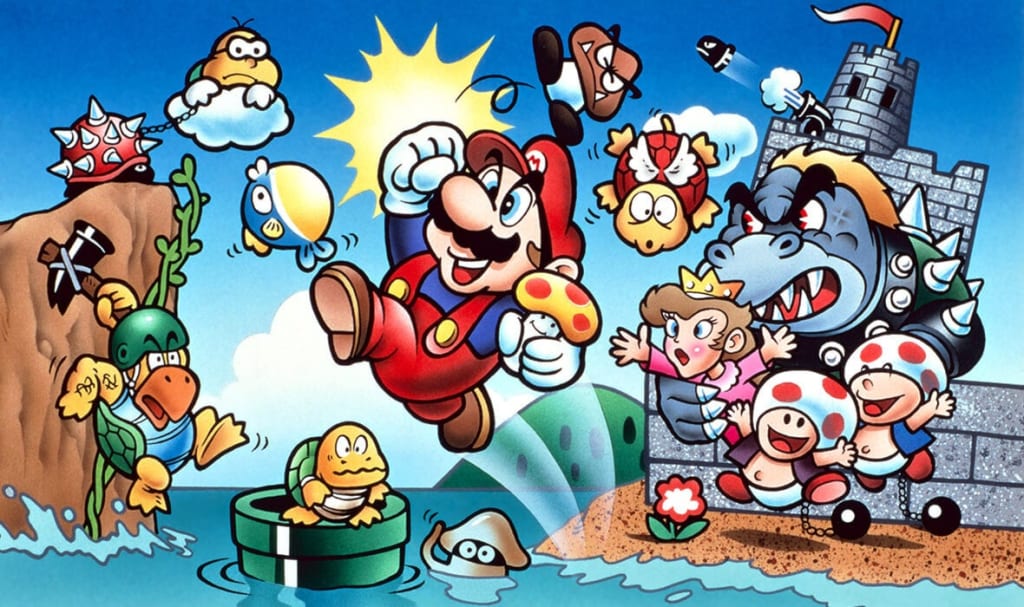
It’s September 2025 and Super Mario is forty years old. The first game in the series, the legendary Super Mario Bros. was released for the Famicom on 13th September 1985, one of the first games for Nintendo’s earliest true home console. It wouldn’t arrive on the Nintendo Entertainment System – the western version of the Famicom – until the following year in North America, as a launch title for the system, and not in PAL regions such as the UK and Europe until 1987. Regardless, the game was instrumental in revitalising the American video games market, which had suffered an almost lethal crash in 1983 due to a glut of low quality systems and games.
Super Mario Bros. is one of the most important and influential video games of all times, essentially creating the platform game genre as we know it today. It wasn’t the first platform game, of course: that was arguably Universal’s 1980 release Space Panic, which required ladders to go between platforms as it didn’t feature jumping. Others would suggest Donkey Kong, Nintendo’s seminal 1981 release, and the game that introduced Mario as a jumping and climbing hero. Mario returned as a playable character in 1983’s Mario Bros. which also introduced his brother Luigi, and Wrecking Crew, which went dropped jumping for climbing again but made destroying parts of the environment part of solving the level.
Hoei’s 1981 title Jump Bug, a shooter/platform game, featured forced screen scrolling as well as limited parallax scrolling in its graphics, becoming the prototype scrolling platformer. Games like Pitfall! and Pac-Land followed which advanced the multi-screen and scrolling style, but they were limited. It was with Super Mario Bros. that Shigeru Miyamoto and his team brought everything together with the first true, modern scrolling platform game as we know the genre now.
Since then, the Super Mario series has expanded beyond what anyone imagined, becoming Nintendo’s flagship franchise. The core series has continued to evolve with each new release, now encompassing both 2D and 3D games, with spin-off series embracing other game genres including racing, RPGs, puzzle games, sports games and more. Those earliest games, though, remain all-time classics, with Super Mario Bros. remaining one of the best-selling video games of all time.
I’m an old-fashioned sort of chap, and I can’t get enough of those classic titles. So, to mark this anniversary, I decided to revisit each of the Super Mario platformers of the 20th century. This takes us up to the dawn of the 3D era with Super Mario 64 and, yes, I’m including the first Wario Land and Yoshi’s Island games; they have Super Mario in their full titles so they count.
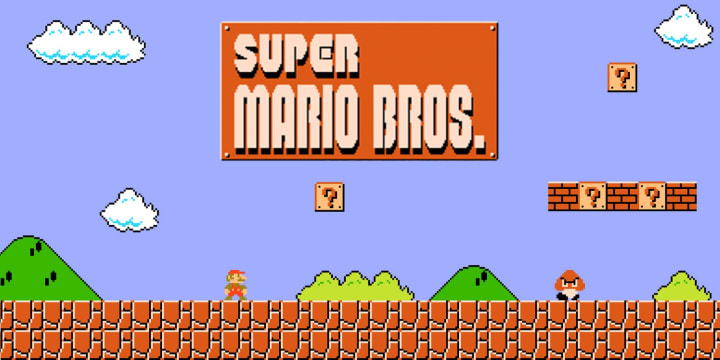
Super Mario Bros
First released: 1985
Platform: NES/Famicom
It really is hard to overstate how groundbreaking this game was and how much it influenced the video game industry. Played today, it’s primitive in certain frustrating ways but still retains so much playability. So much of the core Super Mario experience is already there, all so familiar now that it’s hard to imagine just how odd this must have appeared when it launched. You take this mustachio’d man on a journey through a fantasy world of mushroom people, floating blocks and girders, and lakes of lava, killing monsters as you search castle after castle for the kidnapped Princess Peach (or Princess Toadstool as she was called in the West at the time). The storyline behind it makes it even weirder: the Koopa, a tribe of evil turtles, have used their black magic to invade the Mushroom Kingdom and turn its people into trees, horsetails and bricks, so that their evil king, Bowser (aka King Koopa) can rule. It does make smashing all those blocks looking for coins rather dark…
The series’ three core power-ups are introduced here: the Super Mushroom (previously the Magic Mushroom until Nintendo realised the double meaning) turns short-arse Mario in the statuesque Super Mario; the Fire Flower lets him throw fireballs and gives him a snappy new outfit to boot; and the Starman, or Super Star, makes him invincible for a short, glorious run. Many of the series’ most iconic enemies first appear here, including the simple, mushroom-like Goombas; the Koopa Troopas, the perfected version of the Shellcreepers who terrorised the heroes in Mario Bros. and that git Lakitu, who floats around in his cloud lobbing Spinies at you. Not to mention the fishy Cheep-Cheeps in the water and the air, the unpredictable Bloopers and the Koopa-like Buzzy Beetles (which I dislike, for they are neither buzzy nor beetles).
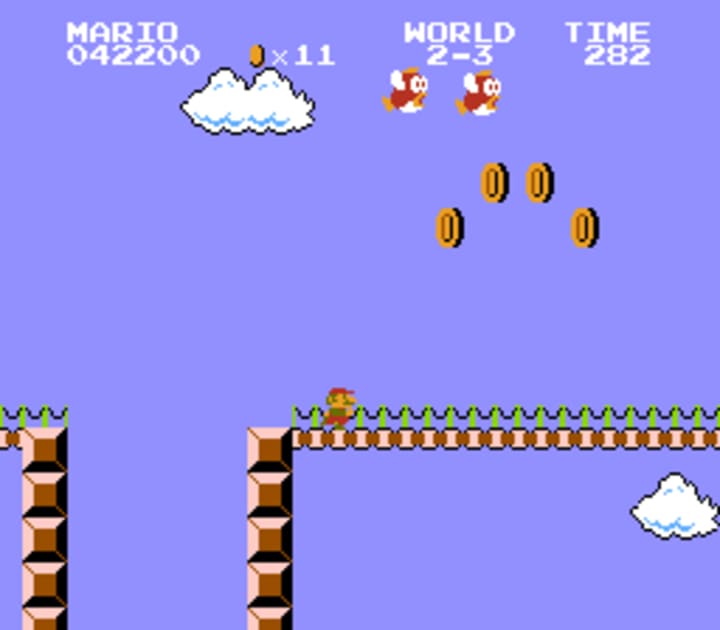
Miyamoto and his crew spent hours each day intricately plotting out each level, and it shows. There’s an elegance to the level designs, each stage being short but challenging. The legendary World 1-1 is a perfect tutorial, then we’re immediately in the underworld. Later we slip and slide though ice levels, swim through underwater levels, and dodge fireballs in end-of-world castle levels. Pipes are carried over from Mario Bros. cementing the heroes as plumbers (Mario had been a carpenter in his first appearance and will try his hand at anything really), an imaginative way to access bonus areas and move between zones. In spite of its simplicity, the jump-on-the-head technique to kill the monsters is challenging, requiring careful timing. There are traps everywhere, from snapping Piranha Plants that jump out from pipes to platforms that crumble beneath Mario’s feet.
On the other hand, there’s a sameyness to the levels as they progress, particularly the castles, as each ends with the same simplistic boss: Bowser (or a fake Bowser), who needs to be jumped over to destroy the bridge beneath his feet. While the controls are innovative, including a gradual acceleration pioneered on Excitebike and precise jumping mechanics, they are also sticky and sometimes suffer from a fatal lag. The game is often glitchy, from small things like disappearing platforms to major anomalies like the infamous Minus World, a programming error that traps the player in an inescapable water level.
Super Mario Bros. also received some slating for its graphics, which couldn’t stand up to the arcade standard of the time. Sure, some elements don’t look great: Mario is a jaundiced dwarf dressed in red and brown; Luigi is identical, except dressed in green and white. (The fire-powered versions of the characters are completely identical.) But you can still recognise them, and that’s a testament to Nintendo’s programmers squeezing every last bit of data they could onto that cartridge, coming up with ways to simplify the imagery so everything could fit. Add to that Koji Kondo’s absolutely legendary soundtrack, still immediately recognisable and hummable today, and you have a game that’s stood the test of time.
There’s been a lot of versions of Super Mario Bros. over the years, from the obvious (VS. Super Mario Bros. in arcades) to the baffling (All Night Nippon Super Mario Bros, produced to tie-in with a long-running Japanese radio show, adding the cast’s faces onto some of the sprites). NES players may be most familiar with compilations released once more data was able to be compressed onto the cartridges: the NES Action Set bundled it with the classic shooter Duck Hunt while the later NES Power Set added the sports game World Class Track Meet to the mix. Perhaps most significant was the remake for Super Mario All-Stars, a compilation of all four NES/Famicom Super Mario titles for the SNES, which added improved graphics and sorted out the glitches. It’s objectively a better game, but lacks some of the original’s charm. Super Mario Bros. Deluxe ported the original to the Game Boy Color but made compromises for the smaller screen. For the ultimate portable version there’s the 35th anniversary Game & Watch release from 2020; the same year saw Super Mario Bros. 35, a special, limited release battle royale version for the Switch. Of course, the original version is still readily available through the Switch Online service.
Super Mario Bros. 2 (The Lost Levels)
First released: 1986
Platform: Famicom Disk System
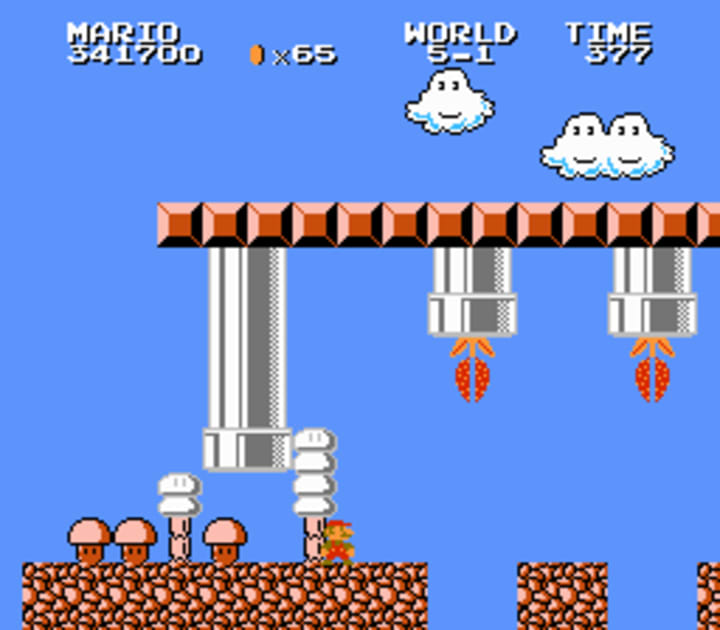
Things immediately get complicated with the release of the first sequel to Super Mario Bros. This originally only came out in Japan, titled Super Mario Bros. 2. Nintendo of America decided that this game was both too difficult for American players and too like the original to sell well, so ran with a completely different Super Mario Bros. 2 (see below). The Japanese one, also known as Super Mario Bros. for Super Players, didn’t come out in the west until 1993 as part of Super Mario All-Stars, where it went by the title Super Mario Bros. The Lost Levels, which is what most people in the west know it as.
It's understandable why Nintendo of America made that decision. Not only is The Lost Levels essentially an extension of the first Super Mario Bros. but it’s also a punishingly hard game. Basically, Miyamoto listened to players who’d completed the game in the secondary hard mode, demanding more and tougher gameplay. So he decided to create a game where he could be a complete bastard, not just adding new challenges to some levels such as powerful winds, but dropping in some nasty tricks. Poisonous mushrooms appear, with the opposite effect to the Super Mushroom, potentially meaning death to the unwary player. The Warp Zone is back, which allows the player to jump ahead to later worlds (in the original, the 32 levels could be cleared by actually playing only eight of them, if you Warp ahead the right way). Only this time, some pipes warp you backwards to earlier worlds, setting back your progress.
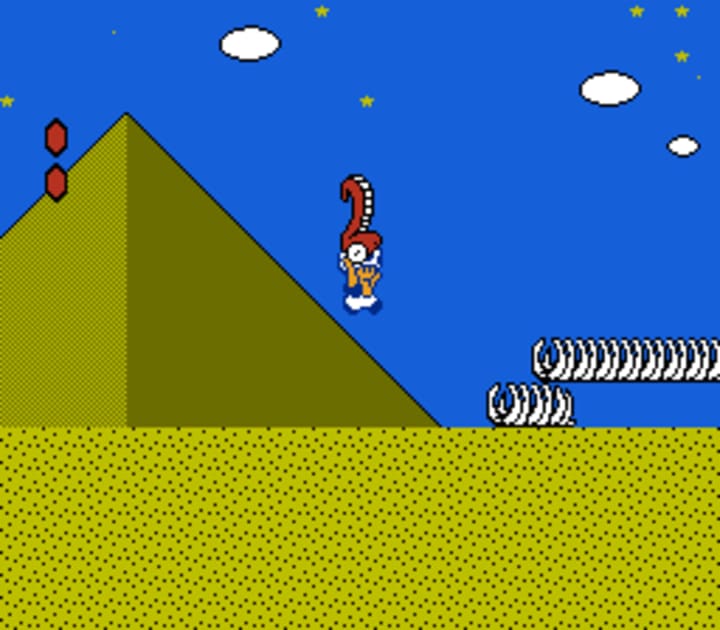
Yet this is, arguably, the better game. The physics of the game are improved, not only making it less sticky, but also adding some new features. This is the game that first lets Mario jump higher by bouncing off enemies, as well as introducing springs to leap even higher. There’s no two-player competitive mode like there was in the original, but instead, Luigi can be played as the main character and now plays differently to Mario. He can jump higher, but at the expense of having poorer grip on surfaces. This actually makes him a much harder option unless you are, unlike me, genuinely good at the game. This is a major development that is carried over to a number of future games, from the western Super Mario Bros. 2 to Super Mario 3D World. He still looks essentially the same as Mario here, though.
It's a bigger game, as well, with five unlockable worlds after the main eight have been completed (World 9 is unlocked by finishing the game without using Warp Zones; Worlds A to D are unlocked by completing the game eight times). It really is brutally difficult though; unsurprisingly, the All-Stars version made it easier by allowing players to start over from the same level after a game over, instead of being knocked back to the beginning of the world. A reduced version of the game was included in Super Mario Bros. Deluxe (with no secret worlds and certain features removed). The original version of the game didn’t become available worldwide until 2007, when it was released through the Wii Virtual Console. It’s also included on the Game & Watch release and through Nintendo Switch Online.
Super Mario Bros. 2 (Super Mario USA)
First released: 1986
Platform: NES
Super Mario Bros. 2 is not the second Super Mario game. It’s actually the third, and was only the second in the west; in Japan, it was released sixth. This is a bit odd, but is by far the least strange thing about this game. Super Mario Bros. 2, also called simply Super Mario 2, started out as a completely different game, the Japanese Famicom Disk release Yume Kojo Doki Doki Panic (roughly translated as "Dream Factory: Heart-Pounding Panic”). This game featured four playable characters named Imajin, Lina, Mama and Papa; these Arabian Nights-type characters were changed to become Mario, Peach, Luigi and Toad.
While Doki Doki Panic was clearly influenced by Super Mario Bros. it’s a very different game. It incorporates vertical scrolling as well as horizontal, allowing the players more ways to travel through the levels. Some vertical areas also have a wraparound effect, like many single-screen platformers, meaning that if the player character walks out of shot on the left he reappears from the right (and vice versa). There’s plenty of jumping, but instead of defeating enemies by landing on their heads, this instead allows the player to pick them up and throw them at another enemy.
This throwing action is central to Super Mario 2, and while not entirely new to the franchise, it dominates this game in a way that make it very different to other Mario titles. By translating the game almost exactly from Doki Doki Panic the mechanics and gameplay are very different. There are no blocks: coins and items are hidden under the ground, disguised as the vegetables you can use to knock out enemies. It’s no longer 100 coins to gain a life; this time, they’re collected to play a minigame after the level where you can win lives. There’s no time limit or score (not that I know anyone who played Super Mario to get a high score). There’s no flagpole at the end of the level; now you pick up a sort of crystal ball to open an eagle-headed gate to proceed.
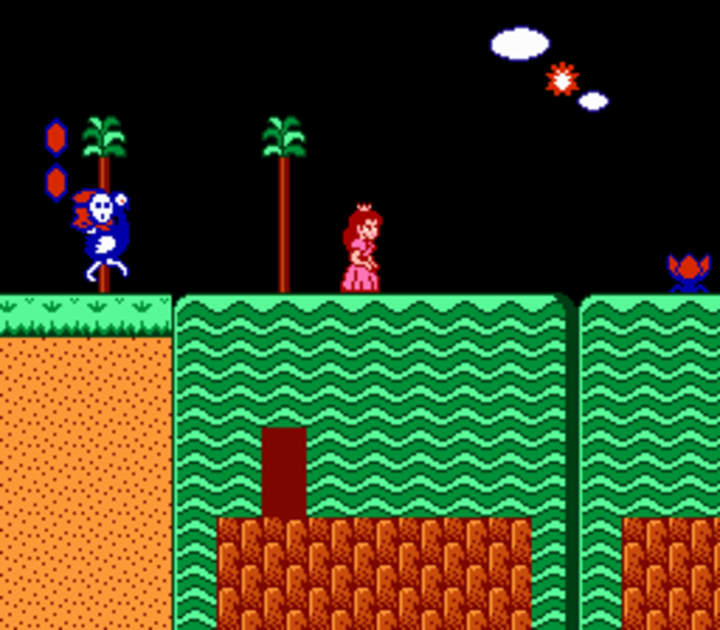
Every level ends in a boss fight, usually against Birdo (aka Birdette aka Katherine), everyone’s favourite egg-spitting transgender dinosaur. The boss fights are actually fights this time, with the player having to lob eggs, bombs or whatever at the villain to defeat them. By translating original characters into established Mario ones, the Mario characters were given distinct abilities, with Mario being the all-rounder. Princess Peach gained a now iconic floating abilities thanks to her petticoats, while Luigi’s flutter jump carried over his higher jumping ability from The Lost Levels. Only Toad (aka Kinopio), in his first appearance a distinct character rather than a species, seems off: his being the fastest fits with later depictions, but having him also be super-strong seems very odd.
The story is adapted from Doki Doki Panic's and is distinct from the rest of the series. Mario and his friends enter a dream world named Subcon, which has been invaded by the evil frog-like king Wart (aka Mamu) and his army, the 8-Bits. Mario and co. set out to defeat Wart using his hatred of healthy vegetables, and free the fairy-like Subcons. Given that the story to Super Mario 2 involves Mario and co. entering a dreamworld – we even see him waking up in the game’s closing credits – means some fans write it off as “just a dream.” Not that canon really means anything to Mario games, but just because this game is an outlier doesn’t mean it should be discarded. We might never see Mario return to the land of Subcon to fight the evil Wart and the 8-Bits, but so many characters introduced in this game become icons of the franchise: Shy Guys, Snifits, Bob-Ombs, Pokeys and, of course, Birdo. There’s a lot of this game in Yoshi’s Island (see below) but even more so in Super Mario 3D World, which brings back the four playable characters with much the same attributes (they're back again for mobile game Super Mario Run). POW blocks return from Mario Bros. and the mushrooms and Super Stars are still present, but there’s not a pipe to be seen. Super Mario gained more from this game than it brought to it. Most importantly, it’s tremendously fun and frequently very challenging.
Super Mario Bros. 2 was remade for Super Mario All-Stars, where it got its first Japanese release as Super Mario USA. It got another remake in the noughties for the Game Boy Advance as Super Mario Advance, which added new elements, most notably some baffling voice samples which somehow made the game even stranger. Both versions are available on Switch Online.
Super Mario Bros. 3
First released: 1988
Platform: NES/Famicom
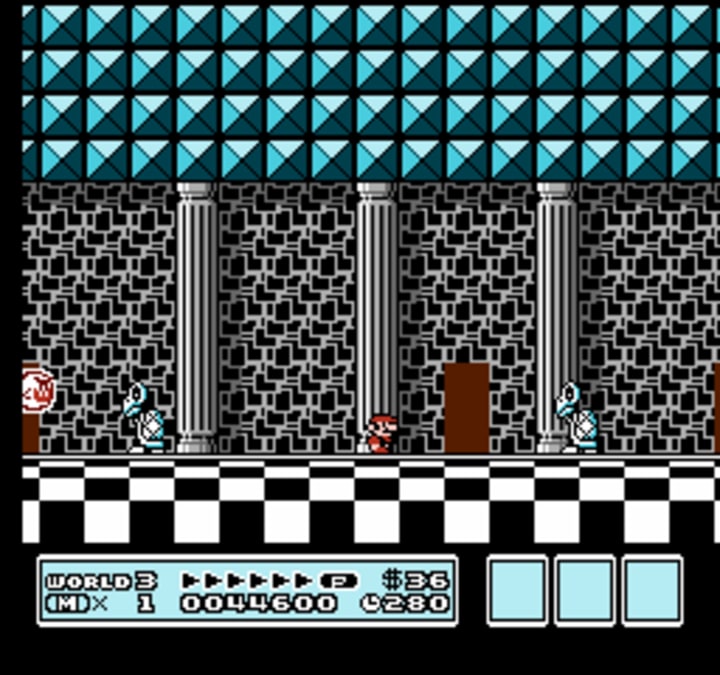
Arriving in Japan in 1988 but not in the West until 1990, Super Mario Bros. 3 was a return to the style of gameplay from the original Super Mario Bros. but with a host of new features. Mario fans commonly consider this the best of the 2D games. While I don’t agree – both Super Mario World and Yoshi’s Island eclipse it as my favourites – it is an exceptional platformer and provides a steep difficulty curve that makes it a challenge for even the best players. The levels begin quite short like in the first game, but quickly become longer and more complex.
This time we move beyond the Mushroom Kingdom and out into the wider Mushroom World, visiting seven other kingdoms which have been taken over by the Koopalings. Originally meant to be Bowser’s kids, the seven Koopalings have their own personalities, being based on members of the Nintendo team but named after musicians in the English translation. They’ve turned the kings of each land into animals and stolen their magic wands, and delivered Princess Peach to Bowser in the Dark Lands. Except that the game is designed as if it’s a stage play, with Mario walking off stage into a featureless room at the end of each level. So did any of it ever happen? Does it matter?
This is the game that introduced the world map to the franchise, an overhead view that allows Mario to move from level to level. For the first time, this adds some non-linearity to the game, with possible alternative paths that take you from the first level of each world to the last, choosing the route that poses the least difficulty or the one that offers the most reward. Each kingdom is distinct, from the the grasslands of World 1 and the deserts of World 2 to the cloud tops of World 5 and the often baffling Pipe Maze of World 7. The earlier worlds are dotted with bonus rooms, roaming Hammer Bros. and fortresses, each ending aboard the airship, a grotesquely overgunned flying galleon where that world’s Koopaling hides. The final world is a dark realm where Mario has to leap between tanks and battle through huge castles. There are proper boss battles at last, with Bowser putting up a real fight at the end.
It's the power-ups that really make Super Mario 3 stand out. It introduces the Super Leaf, which transforms Mario into Raccoon Mario, who has the ability to fly by twiddling his little tail as well as a new spin attack. The Fire Flower is back, as it should be, and there are three special suits that stand as rarer enhancements. The Tanooki suit gives Mario the attributes of the mythologised Japanese raccoon dog, granting him powers of Raccoon Mario but also the ability to turn into an impervious statue (the Tanooki’s legendarily enormous scrotum is strangely not an attribute given to Mario). The Hammer suit turns Mario into a Hammer Bro, letting him get his own back by lobbing mallets, while the Frog Suit, much like an actual frogsuit, aids in swimming.

Mario and Luigi have pretty much settled into their classic looks now, albeit with black overalls instead of blue. The graphics actually aren’t as good as in Super Mario 2, thanks to that game beginning development later. Kondo’s music is as good as ever, with catchy, pacy new tunes for each level type, the best being the ominous score for the airship levels. All the monsters from the first game are back, along with new variants, plus many new enemies: the bricklike Thwomps, the skeletal Dry Bones, the sneaky Rocky Wrench and that bastard sun that chases you through the desert. The best of all is the Boo Diddly, the shy ghost who became a mainstay of the franchise, sadly renamed to Boo Buddy or simply Boo (presumably none of the kids playing got the joke).
There are plenty of opportunities to win extra lives, with abundant minigames, and a tremendously useful feature that lets you win power-ups to keep in reserve for particularly tricky levels. This is all very necessary, as this game really is a tough one. The two-player competitive mode is even harder, with Mario and Luigi able to meet on the map and then engage in Battle Mode: a remake of the classic arcade Mario Bros. Like the other Super Mario NES games, Super Mario Bros. 3 was included on Super Mario All-Stars, and was remade again for the Game Boy Advance as the confusingly titled Super Mario Advance 4: Super Mario Bros. 3. Both these remakes used the same graphics, but the Advance version had the option of downloadable extra levels using the GBA’s e-reader device.
Hugely influential, Super Mario Bros. 3 became a template for the series going forward, particularly its sequel Super Mario World and the later New Super Mario Bros. and Super Mario 3D Land and 3D World games.
Super Mario Land
First released: 1989
Platform: Game Boy
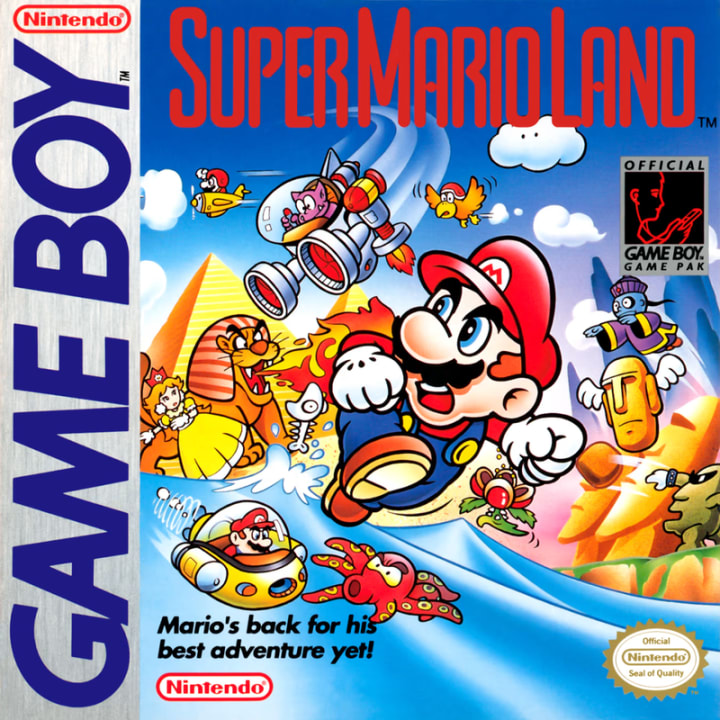
When the Game Boy was released in 1989, it was inconceivable that there would be no Mario title at launch. However, with Miyamoto and his team busy working on Super Mario World, the new Game Boy title was made by Nintendo R&D1, led by the legendary Gunpei Yokoi – inventor of the D-pad and the Game & Watch. Satoru Okada acted as director; he’d co-created Metroid and Kid Icarus with Yokoi and they’d together developed the Game Boy itself.
Super Mario Land was released in the US soon after its Japanese release, and in Europe and Australia the following year, meaning western audiences got to play it before Super Mario Bros. 3. In some ways, it’s a backwards step; having yet to establish what the Game Boy was capable of, R&D1produced quite a limited first platform game. The gameplay is clearly modelled on the first Super Mario Bros. but with only twelve levels (compared to the original’s thirty-two). The levels are less carefully constructed than Miyamoto’s and the graphics are extremely simplified to cope with the limitations of the tiny monochrome screen.
On the other hand, having a new creative team in charge meant that Super Mario Land is a unique entry in the series. Even the name gives away the different setting: instead of the Mushroom Kingdom, the game is set in another land. Sarasaland is a distant federation of four kingdoms: the Ancient Egypt-styled Birabuto Kingdom; the islands and underwater ruins of the Muda Kingdom; the Easter Island-like Easton Kingdom; and the Chinese-influenced Chai Kingdom. Choosing the title Super Mario Land also distinguished the small handheld game from the then in-development Super Maro World for the SNES, and may be a reference to the influential Pac-Land.
There’s a princess to rescue, but she’s not called Peach or Toadstool. Princess Daisy has been captured by Tatanga the Mysterious Spaceman, a nasty goblin in a one-man spaceship, hiding in the clouds above the Chai Kingdom. Daisy wouldn’t return until Mario Tennis on the N64, but has since become a regular playable character in the franchise. Tatanga, sadly, wouldn’t appear again except briefly in Super Mario Land 2; surely he could have come back for Super Mario Galaxy?
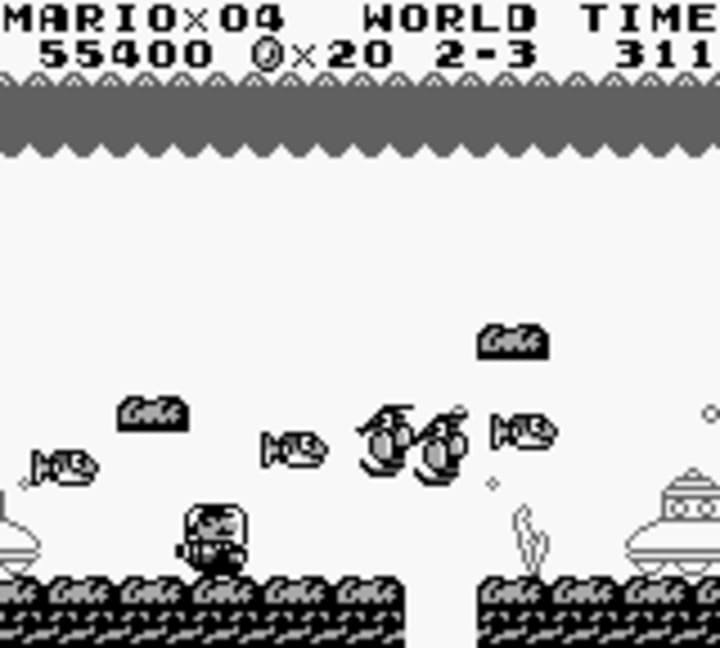
The power-ups are almost the same as in Super Mario Bros. The Fire Flower is replaced by the Super Flower, which lets Mario throw Superballs, extra bouncy balls that can pick up coins as well as kill enemies. There’s no One-Up Mushroom as it would be identical to the Super Mushroom; instead, the One-Up Heart is introduced. Goombas, Piranha Plants and Bullet Bills are back but now the Koopas explode, and the rest of enemies are unique to this game. The bosses are unique: a fire-breathing sphinx; a missile-spitting sea-dragon; a living Moai statue; and Biokinton, a mysterious creature who hides in a cloud and throws chickens at you. Uniquely, two levels are Gradius-style side-on shoot’em-ups: World 2-3 sees Mario pilot his submarine the Marine Pop, while the final level sees him pilot his personal plane, Sky Pop. Most significantly, there’s no sign of Luigi on the Game Boy.
Super Mario Land is not a difficult game. It’s short, hands out invincibility with abandon and the boss battles are simplistic. As much of the challenge comes from the sticky controls and poor collision detection as it does from the game itself. That is except for the battle with Tatanga, an onslaught of missiles that’s remarkably hard to survive. When I played this game as a kid, having come to it after its sequels, I wasn’t impressed. On reflection though, it’s a fun, if brief, little adventure. Plus, Chip Tanaka’s score is perhaps the most infectiously catchy one of the entire Mario franchise. He even scrapped the normal invincibility music for the can-can galop. Delightful.
Come back soon for Part 2: The 1990s, taking us from Super Mario World to Super Mario 64.
About the Creator
Daniel Tessier
I'm a terrible geek living in sunny Brighton on the Sussex coast in England. I enjoy writing about TV, comics, movies, LGBTQ issues and science.
Keep reading
More stories from Daniel Tessier and writers in Gamers and other communities.
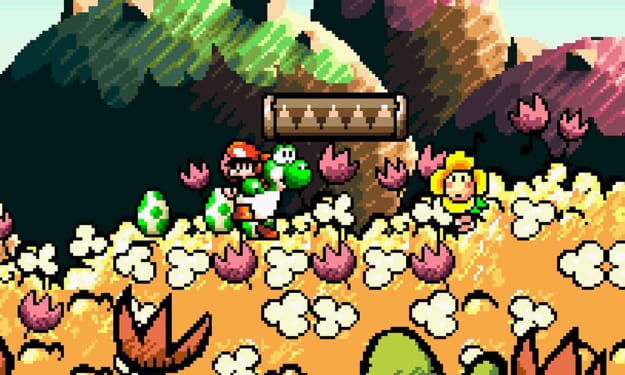
Yoshi's Island: A true classic
We all have a favourite video game, one that we return to time and again. Whatever your game of choice is, however old or new it is, playing it again takes you back to the first time you played it, while giving you something more than simple nostalgia value: genuinely classic gameplay.
By Daniel Tessier7 months ago in Gamers
7 Intelligent Automation Skills That Define AI Digital Assistants
AI Digital assistants or virtual assistants are smart software applications/programs that use Artificial Intelligence to help you with your daily tasks. The software functions as a personal assistant that operates through voice and text commands. These tools use natural language processing and machine learning to understand exactly what you need. They can manage your schedule, emails, or even control your smart devices.
By Arthur Leo4 days ago in Gamers
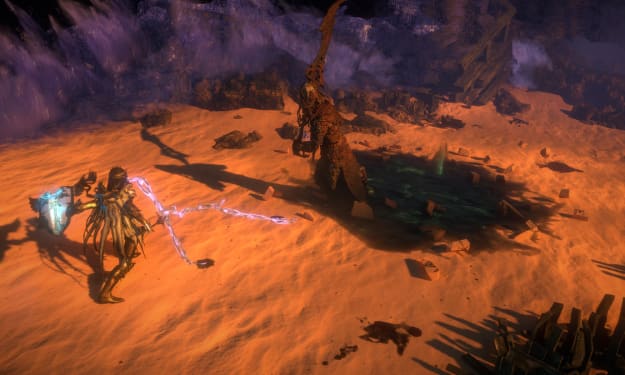
Mirage League Coins Deserve More Attention
In PoE 3.28 Mirage League, many players collect Coins of Power, Knowledge, and Skill without much thought. At first glance, they seem like minor items, and it’s easy to just stash them. That’s a mistake. These coins can significantly improve level 20 skill gems by adding a hidden bonus. They act as a form of controlled corruption, giving your gems extra utility and making skills feel stronger. For players running red maps or refining builds, this system can noticeably change gameplay and make abilities more effective.
By Smsankar Goswami3 days ago in Gamers


Comments
There are no comments for this story
Be the first to respond and start the conversation.