
10 Weirdest Game Consoles in History: From the 1970s to Today
Console creators often experiment. Sometimes such strange gadgets appear in stores that even the hybrid Nintendo Switch with removable joy-cons looks as classic as Shostakovich's Leningrad Symphony.

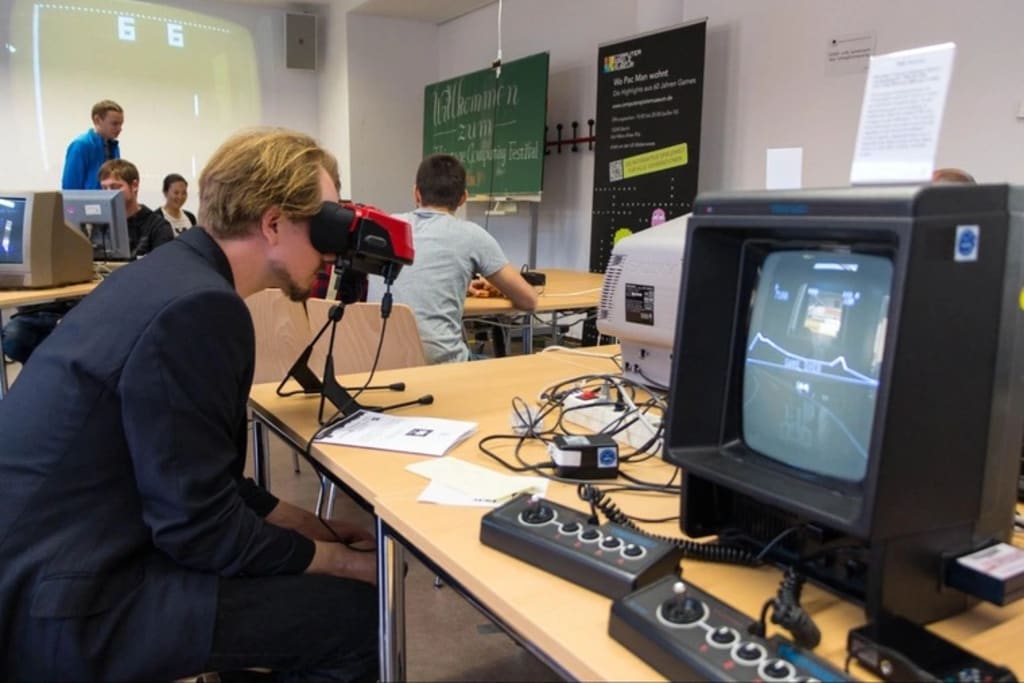
Take at least a console with a built-in steering wheel, a portable with a mechanical handle on the side, or a tabletop arcade machine! We will talk about such original gadgets in this article.
1. Coleco Telstar Arcade (1977)
Disco-era consoles were very unique. We must give their developers credit: at that time, no one knew what a gaming console should look like. Everyone was a pioneer and acted literally by touch. Therefore, sometimes a hybrid of a shotgun and a truck like the Coleco Telstar Arcade was obtained.
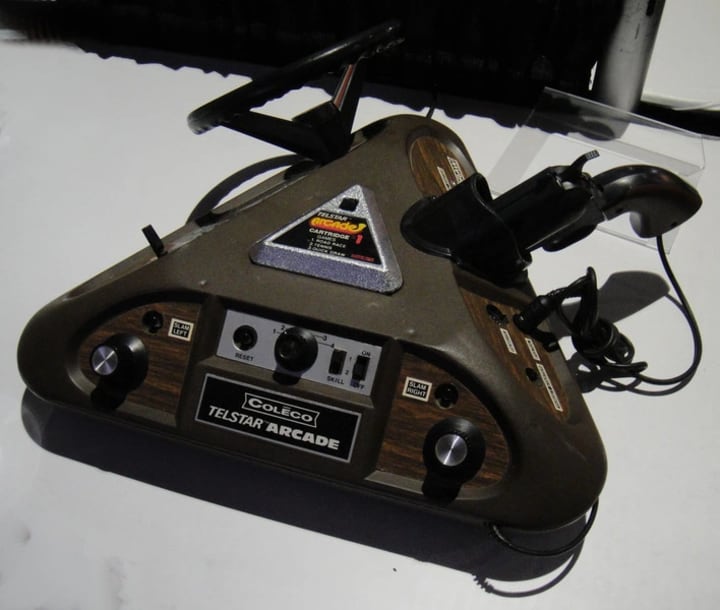
Each edge of the triangular body of this console was equipped with separate controls: a steering wheel, a light gun, a pair of gamepads. Whatever you want to play, sit on this side. The games (and there were as many as four of them for the console) were supplied on stylish cartridges in the form of silver triangles that had to be placed on top of the console. By the standards of those years, this was science fiction on the level of Star Trek, no less.
2. Vectrex (1982)
The design of this all-inclusive console is clearly inspired by arcade machines. However, something else makes it unique. Firstly, the Vectrex is a rare example of a home gaming system that does not need a TV, because it has its own screen. Secondly, this screen, although black and white, is vector. Clear lines instead of pixels the size of a fist - for 1982, this was a real graphic breakthrough. And the image was given color by plastic stickers that had to be stuck on the monitor.
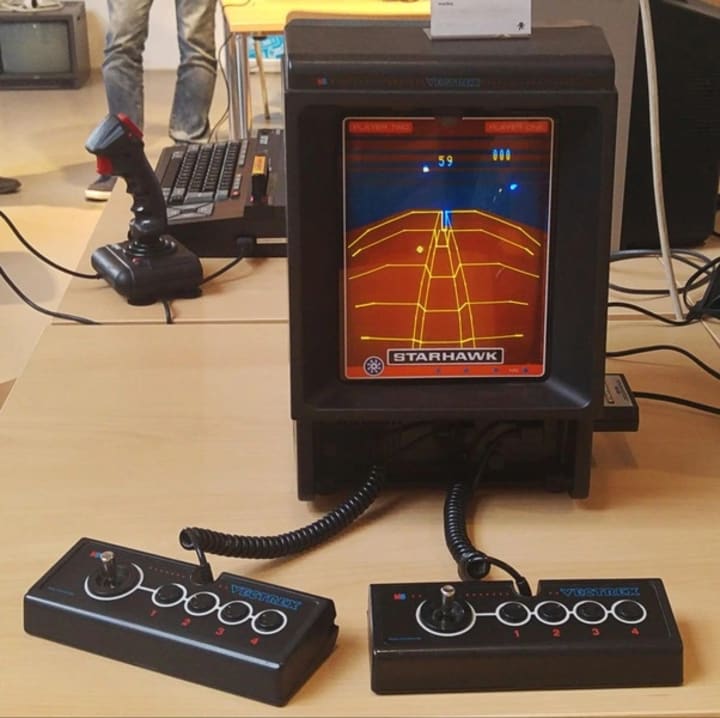
Vectrex accessories were also offered by advanced ones. The Light Pen allowed you to draw directly on the display and even create animations, and the 3D Imager became the first VR headset in the history of consoles. It is not surprising that enthusiasts are still writing new games for the Vectrex and even publishing their physical copies. Isn't this an indicator of success?
3. Funsation Off-The-Wall Projector (1989)
One of the main drawbacks of portable gadgets is a small display. The creators of the Funsation Off-The-Wall Projector solved this problem by combining a game console and a portable battery-powered projector in one relatively compact case. Each game cartridge had its own screen, through which the image was projected either onto the wall or the ceiling.
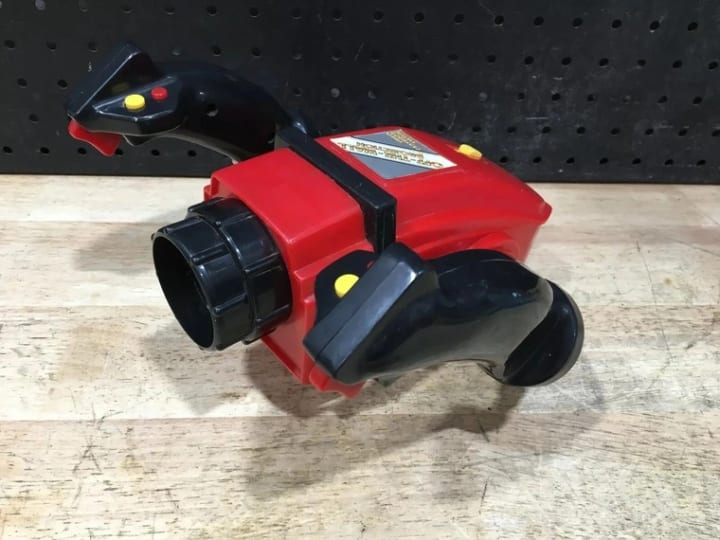
Today, games like "Wolf Catches Eggs" are not very impressive, but the concept itself, you must admit, is interesting.
4. Konami Picno (1992)
A Japanese exclusive in which a console was crossed with a graphics tablet. And not bad: Picno supported up to 160 colors on the screen, which is much better than NES (even if worse than Super NES). The resulting hybrid was better suited for drawing than for games, but the latter were also available, although mostly educational.
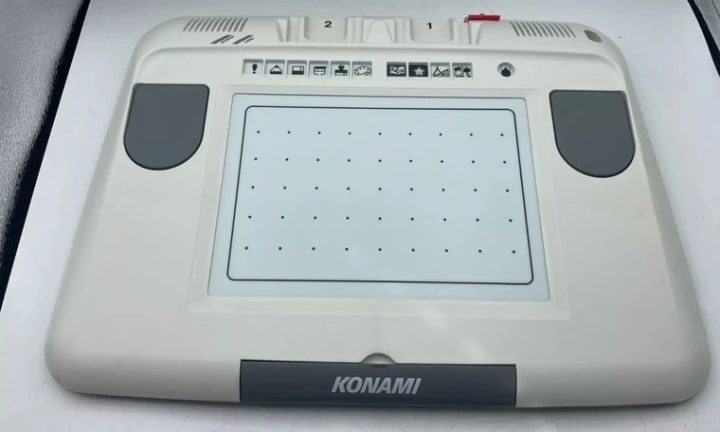
Unfortunately, Picno could not withstand the competition with Sega Pico, which offered more power and a rich game library. The cheaper Picno2 also did not take off. Too bad, because the device was really cool.
5. Nintendo Virtual Boy (1995)
Surely everyone interested in the topic of unusual consoles has heard of this miracle (or monster?) of engineering. However, it would be a crime not to recall the first portable with stereoscopic 3D support. Almost a quarter of a century before any Oculus Quest!
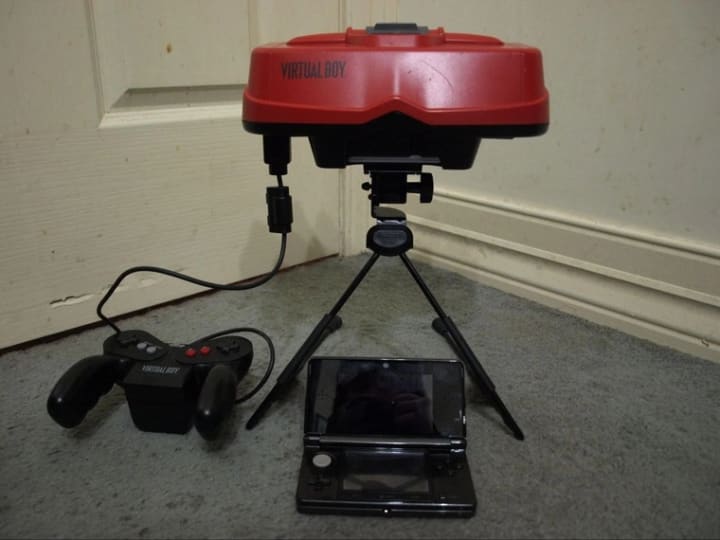
Unfortunately, the picture was strictly black and red, and the design of the glasses on legs was terribly inconvenient. In the end, Virtual Boy became Nintendo's biggest failure, its only console that sold less than a million units. And no exclusives helped. But in 2011, the "Big N" took revenge on the field of stereoscopy with the super-popular 3DS.
6. Tiger R-Zone (1995)
However, Virtual Boy is often mentioned in such selections, but another strange portable from the same 1995 is often forgotten. At first glance, it is quite difficult to recognize the R-Zone as a gaming device. It was attached to the head with a bandage and projected an image onto a tiny transparent screen right in front of the player's eyes.
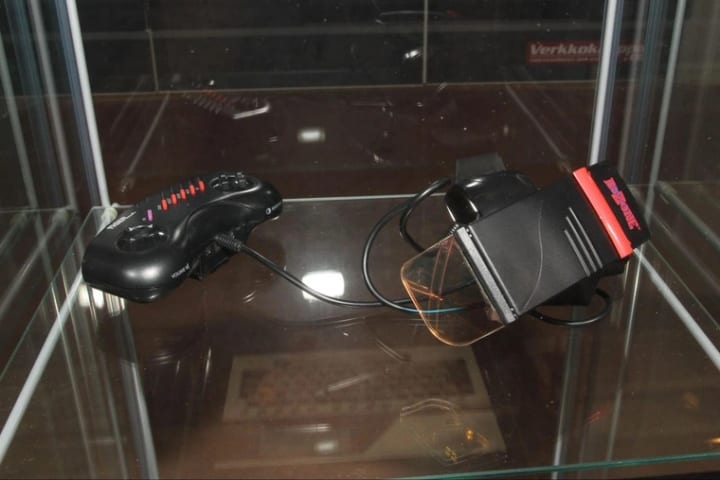
Perhaps it was the overly primitive games, or perhaps the monochrome red picture, but the Gameboy was not killed off once again. Tiger Electronics released several more traditional versions of the console that did not have to be worn on the forehead, but they did not change the picture. The R-Zone remains in the history of gaming hardware as a symbol of a creative experiment that no one needed.
7. Nokia N-Gage (2003)
One of the major mobile phone manufacturers also decided to play the console holder game... and lost. The merger of a portable gaming console and a mobile phone failed. And the N-Gage had plenty of advantages. The distant ancestor of modern gaming smartphones turned out to be a damn powerful unit, capable of delivering 3D graphics at the level of the first PlayStation. For handhelds of that time, this was an impressive achievement. Big franchises like Tomb Raider and Tony Hawk's Pro Skater were released on the N-Gage. And there was also a free "Snake"! The device supported multiplayer via Bluetooth and mobile networks. But all this did not help.
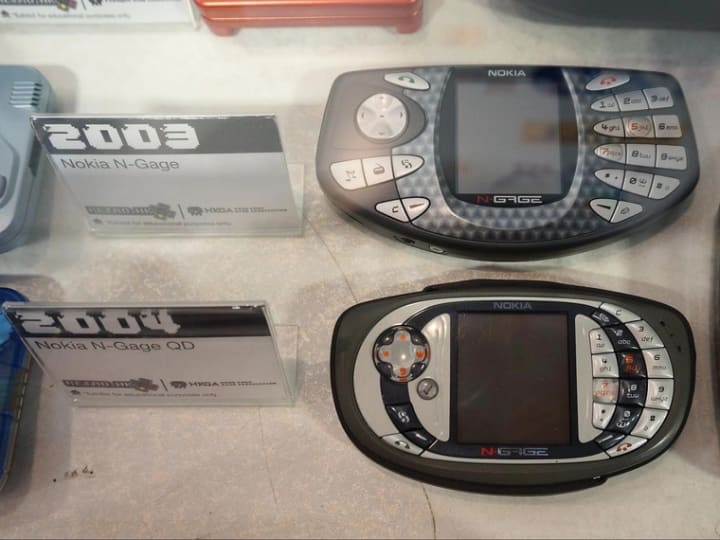
The "consolephone" turned out to be too expensive, bulky and inconvenient. At the start, they asked $ 299 for the N-Gage: about three times more than for its main competitor, the Gameboy Advance. To change the cartridge, you had to take out the battery, and when making a call, you had to hold the phone sideways due to the unfortunate location of the speaker. The release of the simplified and cheaper N-Gage QD did not save the situation. Nokia never returned to the console market.
8. Thumby (2022)
The tiniest console in the world. It is not just the size of a keychain - it is literally a keychain three centimeters long and weighs 4.7 grams.
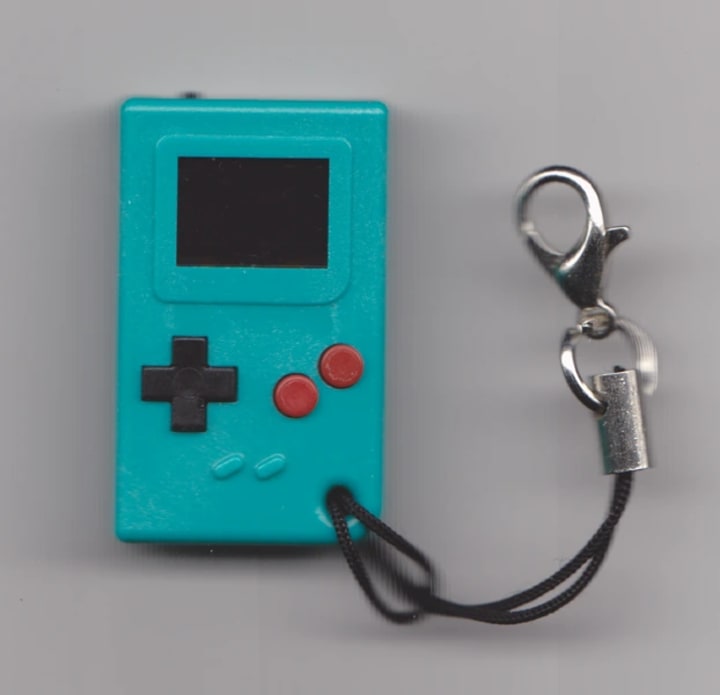
At the same time, it has a one-bit OLED display with a resolution of 72x40 pixels, as much as 2 MB of memory, a 40 mAh battery that provides up to two hours of play on a single charge, and even multiplayer support via a connecting cable. If six pre-installed games are not enough for someone, you can create new ones using visual programming in Blockly. Serious stuff.
9. Playdate (2022)
Playdate looks like it was developed 40 years ago, although it was released in 2022. In addition to the bright yellow case and monochrome display, this console stands out with an analog stick on the side. By turning it, you can, for example, control the speed and direction of time in Crankin's Time Travel Adventure. The experience is very unusual.
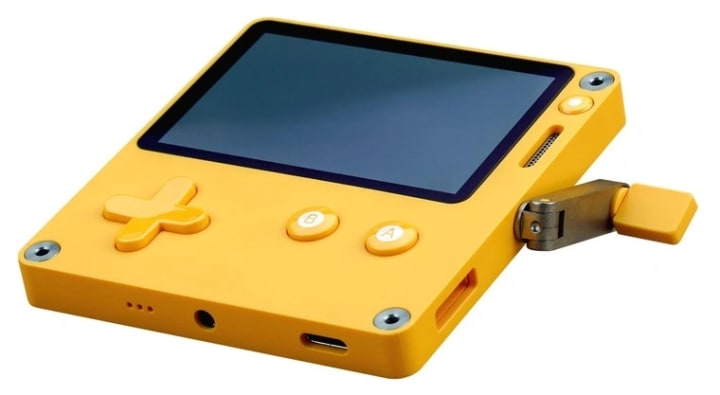
There are several hundred games available for the console, and users are actively making new ones themselves. There is every reason to believe that the original small Playdate has a niche, but quite bright future.
10. Evercade Alpha (2024)
A real find for a retro gamer should go on sale at the end of November. Evercade Alpha is a tabletop arcade machine. Just like a real one, only small: with an 8-inch 3:4 screen, buttons right on the case and six pre-installed games from the Street Fighter or Mega Man line - depending on the edition.
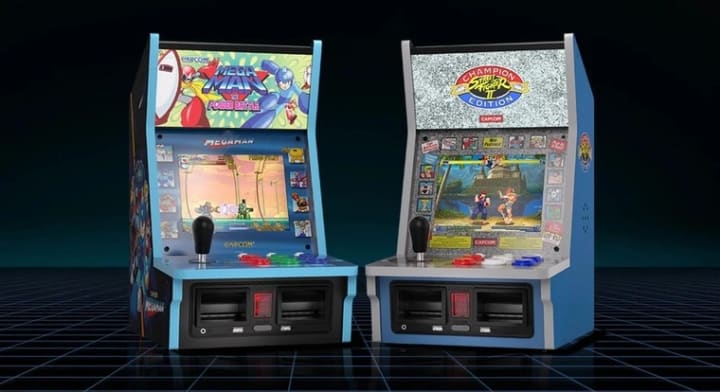
If that's not enough, Alpha supports Evercade cartridges - and that's more than 500 classic games. And no downloads from the Internet for you.
***
Even among serial products, there are so many strange devices that you can write a separate book. And not all of them became commercial failures, but all of them, without exception, went down in history. And this once again confirms the simple truth: being different from everyone else is really cool.
About the Creator
u4gm What Sigil of Power Does in Path of Exile 2
As Path of Exile 2 characters advance deeper into mid- and endgame content, raw stat upgrades lose much of their impact. At that stage, real damage gains usually come from mechanics that scale multiplicatively or interact directly with core resources like mana. For spell-based builds, one of the most efficient yet frequently underestimated tools is Sigil of Power.
By Asik Gxbx Hdjdh5 days ago in Gamers
Mastering the Pocket Exhaustion Debuff in Rush Royale Co-Op
The landscape of Rush Royale co-op has shifted dramatically with the rework of the Pocket Exhaustion enchantment. If you have spent any time in the higher dungeons recently, you likely noticed strange projectiles flying across the board.
By Richard Bailey4 days ago in Gamers



Comments
There are no comments for this story
Be the first to respond and start the conversation.