
World Population in 2025: How Many People Are Really on Earth Right Now?
The world has officially crossed the 8.1 billion mark—and it’s more than just a number. Here's what this milestone means for our cities, livelihoods, and planet.

🌍 How Many of Us Are Here—Really?
As of mid-2025, the global population has reached approximately 8.19 billion people—a jump of nearly 0.9% from 2024’s 8.12 billion—a record-setting increase in absolute numbers, even as growth rate slows.
While that’s a staggering figure to wrap your head around, it matters—and here’s why.
Why the Number Counts
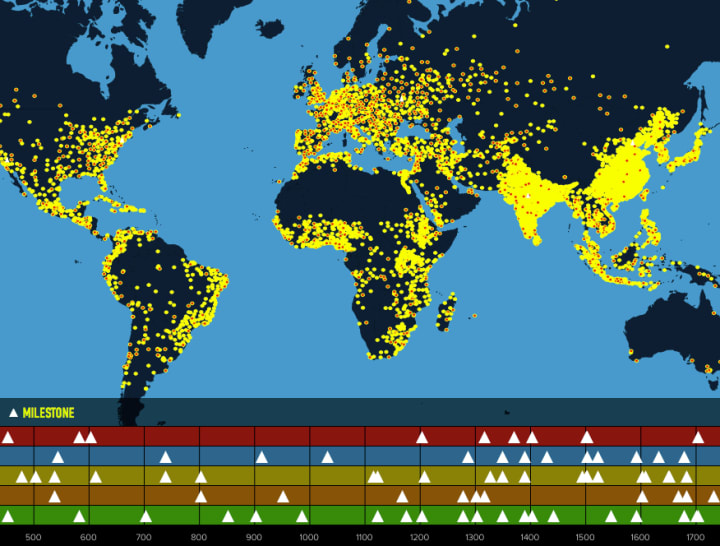
These 8 billion-plus lives drive nearly everything—from housing demand, to food systems, to climate impact, to global migration. Each person adds to infrastructure needs, healthcare systems, and the environmental footprint.
Think of it this way: we add about 70 million people a year, or roughly every half-second, someone is born and joining us on this planet.
The Countries Behind the Numbers

Not all of that growth is equal—or evenly distributed. The top five most populous nations are:
Country Population (2025 est.) Share of Global Population
India 1.464 billion ~17.8%
China 1.416 billion ~17.2%
United States 347 million ~4.3%
Indonesia 286 million ~3.5%
Pakistan 255 million ~3.1%
India recently surpassed China to become the world’s largest nation by headcount—with China actually shrinking slightly.
📉 Birth Decline vs. Population Momentum
Even though birth rates have dropped dramatically—from nearly 5 children per woman in 1970 to around 2.3 now—population growth continues due to more people living longer and global momentum.
However, this momentum won’t last forever. The UN projects global population to peak around 10.3 billion by the 2080s, then level off or decline.
🔄 Who Is Growing—and Who’s Shrinking?
- Fastest-growing regions: Parts of sub-Saharan Africa (like Niger, DR Congo), and South Asia (like India, Pakistan).
- Declining populations: Wealthy nations such as Japan, Russia, and Germany, largely due to aging and fertility below replacement (2.1 children per woman)
This shift creates long-term challenges: workforce gaps, pension stress, and changing geopolitical power.
🌆 City Boom & Aging Societies
- Over 55% of humanity now lives in urban areas, a share that’s climbing steadily
- The global median age has jumped from ~24 in 1950 to nearly 31 in 2025—projected to reach 36 by 2050
This double shift of urbanization and aging has massive implications—strained healthcare systems, vendor-driven housing markets, altered workforces.
🌱 The Ripple Effects
1. Food Security
Feeding 8 billion people demands smarter agriculture, less waste, and more sustainable systems.
2. Climate & Resource Strain
More people means more energy use, water demand, and emissions—reaching 10 billion will multiply these issues.
3. Economic Challenges
Countries with shrinking populations face shrinking workforces, higher dependency ratios, and possible declines in global influence.
4. Infrastructure Pressure
Cities must invest closer to the horizon in public transport, healthcare, housing—and risk gridlock and inequality if they don’t.
📆 What Comes Next?
- By 2038, we’ll reach 9 billion people.
- The 2080s projection—roughly 10.3 billion.
- 2100 and beyond? Either plateauing, slight decline, or uncertain mid-range estimates around 10–11 billion
Future direction depends on birth rates, urban planning, global development, and how we address aging and climate.
🎯 Why It Matters to You
If you’re in real estate, anticipate urban expansions and retiree communities.
If you’re in business or investing, watch resource markets, aging markets, and labour shortages.
If you care about climate, recognize the compounding effects of population pressure.
If you're a global citizen, understand how migration, social policy, and inequality will shift as countries age or grow.
🧭 What You Can Do
- Engage locally, support sustainable urban or eldercare planning.
- Advocate for family-centric policies, from parental leave to affordable childcare.
- Support global development goals focused on reducing poverty, improving education, and managing demographic change.
- Stay informed—population trends are million-person stories of humanity, not just numbers on a chart.
✅ Final Takeaway
Our world of 8.19 billion people is a monumental milestone—and not just a headcount. It’s evidence of human achievement…and a call to action. As population growth slows, aging sets in, and cities swell, our collective decisions now will shape the future quality of life—for rich nations, developing communities, and our global future.
About the Creator
Keep reading
More stories from Bevy Osuos and writers in FYI and other communities.
Malcolm-Jamal Warner Dead at 54 — A Look Into the Actor’s Final Days
A Celebrated Icon Remembered Malcolm-Jamal Warner—forever etched in our hearts as Theo Huxtable on The Cosby Show—has tragically passed away at the age of 54. The sudden news of his death during a family vacation in Costa Rica has left millions stunned, bringing flood of grief, nostalgia, and curiosity worldwide.
By Bevy Osuos6 months ago in Humans




Comments
There are no comments for this story
Be the first to respond and start the conversation.