
Why would a bionic submarine sink if it blew up?
And as soon as the fish dies, it floats on the surface of the water


The fish bladder is a very attractive thing, certainly not because the chicken casserole with flower gelatin is too delicious, nor because the fame of abalone cucumber and shark's fin belly is too great, simply because it is a bit of an enigma.
Excluding those who live in the literature of Versailles, most people have seen their parents kill fish, right? Once the kitchen knife is cut and the guts are pulled out, you will see a white, slightly transparent vesicle, which is the swim bladder.
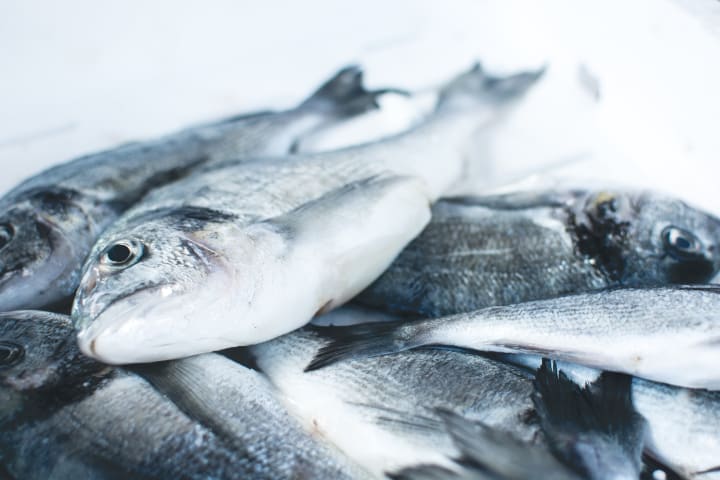
If nothing else, no one, whether in textbooks or from parents or teachers, has ever not thought that the swim bladder is the organ used by the fish to control surfacing and diving. The classic description goes like this: fish control the amount of buoyancy by changing the volume of their swim bladder, thus achieving active up and down in the water.
We heard the story of Archimedes' bath and discovery of the principle of buoyancy in the third grade, knowing that the magnitude of buoyancy is related to the volume of water discharged by the object and that the exact magnitude of the buoyant force on the object is equal to its weight of the liquid discharged.
We looked at the swim bladder pulled out from the belly of the fish and moved our third-grade brain to think that the swim bladder is soft and flexible, just like a balloon, so it is reasonable to use it to control the floating and diving.
That's what we all thought more than 300 years ago. This theory was first discussed by professors at the Academy of Sciences in Florence, Italy, and was finally formalized in 1685 by Professor Borelli, detailing that, consistent with our common sense, fish bulge their swim bladders to float and compress them to dive.
This theory has one of the most fatal flaws, it proposes that the fish actively control the volume of the swim bladder to change buoyancy, but does not explain how the fish control the swim bladder.
Today, our dissection of the swim bladder shows that the structure of the swim bladder is divided into three layers, the outer layer is tough and transparent fibrous tissue containing guanine crystals impermeable to air, the middle layer is connective tissue, consisting of collagen fibers and elastic behavior, and the innermost layer is epithelial cells containing only some blood vessels.
It can be seen that the entire swim bladder has no muscle tissue at all and therefore is unable to actively change its volume size. Another hypothesis can be made at this point, is it possible for fish to inflate and deflate their swim bladder through other organs and structures?
This can be proven by simple life experience. When we kill fish ourselves or watch our parents kill fish, we will notice that the swim bladder from the belly of the fish is not only intact but does not even leak and only deflates after being cooked, indicating that many freshwater fish do not have an obvious tube for rapid inflation and deflation of the swim bladder.
The former has a swim bladder tube connected to the digestive tract, and some scleractinians are indeed able to breathe through the swim bladder, while the latter has a degraded swim bladder tube, and the gas in the swim bladder enters through "secretion" very slowly.
According to the data, it takes 4 hours to refill the salmon swim bladder after the gas has been artificially extracted from it, a rate that does not meet the needs of the fish for surfacing and diving.
If the above life experience is not convincing enough, there is more visual evidence. Fish can actively inflate and deflate their swim bladders at a rapid rate. According to classical theory, fish need to replenish air during the process of surfacing and expel air during the process of diving, but in reality, fish can neither inhale air in the water nor exhale air bubbles during the dive.
More difficult to explain the death of fish, many freshwater fish in the death of the abdomen will appear to float upward, which is not yet the same as the general animal drowning body rot to produce gas.
In some illegal fishing, such as electric fish fry or poisoning, these methods can kill the fish in a short time or even an instant, and these dead fish will quickly surface, if the fish they control the volume of the swim bladder to achieve upward and downward, it is impossible to explain the phenomenon of fish floating after death.
The submarine, which is thought to be designed after fish, does not automatically come to the surface after being shot or losing power but may sink instead. The principle of submarine surfacing and diving is not bionic as we think, or we have a misunderstanding about the function of the fish bladder.
The theory about the function of the swim bladder has always been disputed, probably because such knowledge does not deserve in-depth and systematic argumentation, and for more than 300 years the claim that the swim bladder controls sinking and floating has just been written into textbooks and has become common knowledge.
In 2008, Huang Zengxin, a teacher at Xiangming Middle School in Shanghai, led a research group of five middle school students to investigate the function of fish swim bladders. As mentioned above, the students also found contradictions in traditional theories.
They also found additional evidence that not all fish have swim bladders, such as cartilaginous fish, sharks do not have a swim bladder structure, and not all bony fish have swim bladders, the tilapia we commonly eat do not have an ordinary swim bladder.
Other devices help fish swim up and down freely in the water, and the students believe that fish rely mainly on the movement of the pectoral and ventral fins to achieve the effect of floating and diving in the water.
Although the swim bladder does not have active regulation, its presence as a stabilizer allows the fish to passively maintain a relative balance between its gravity and buoyancy, thus saving energy.
Specifically, when the fish dives through the movement of the fins, the swim bladder decreases in volume due to increased pressure, and the more it sinks the less buoyancy it has, and this passive change can help the fish dive.
Similarly, when the fish floats, the swim bladder increases in volume because the pressure decreases, and the more it rises the greater the buoyancy. In simple terms, the swim bladder serves to give the fish an overall density similar to the water at its depth of habitat, but it is an unstable equilibrium that can be broken by either upward or downward dives, requiring more energy to return to equilibrium.
If we use a simple analogy, it is similar to a small ball placed at the top of a slope, falling faster forward or backward, and only the small area at the top can maintain equilibrium. If a carp that has been anesthetized and fainted is placed in a container, it will float to the surface in its natural state, but when the opening is pressurized to simulate the environment of a deep water layer, the carp will sink to the bottom when the pressure reaches a certain level.
Conversely, fish in the deep sea float rapidly will, and their swim bladders expand so passively that it is difficult to re-enter the depths by their motion alone, and serious swelling of the swim bladder will be observed.
For example, fishermen fishing for small yellowtail living at a depth of more than 10 meters can easily find that the swim bladder of this small yellowtail is barely intact, and in some cases, the internal organs are pushed out of the body due to excessive swim bladder expansion.
For most fish, the role of the swim bladder is not an active lifter to control sinking and floating, but a regulating organ that adapts to the water layer the fish inhabit through slow intake and exhaust.
However, for benthic fish, the role of the swim bladder is smaller and generally more degraded, and for some fish that swim fast for long periods, such as tuna, the swim bladder is not well developed.
For some fish living in very shallow waters, they may not need swim bladders to regulate buoyancy, but they may play with swim bladders, and African lungfish are challenged each year by the dry season when they burrow into the mud during the dry period and swim bladders can play a similar role to "lungs".
Finally, swim bladders are not just a piece of survival equipment, but can also be courtship equipment, as in the case of the rhododendron, a representative of the family Stonefish, which makes loud sounds through the friction of swim bladders and muscles and vertebrae.
In the long run, their swim bladders also evolved to become more developed and thicker, finally becoming the top ingredient in the chicken casserole with flower gum.
About the Creator
Fester Hammer
We soon believe what we desire.
Keep reading
More stories from Fester Hammer and writers in FYI and other communities.
The dreaded compulsive skin peeling disorder
We must all have such a situation: hands, lips with skin must be torn off, there must be a pimple to pick, scabbed wounds always can not help but also to pick and pull, often unknowingly chew nails, there should be many people's fingertips are bare, does not look very good ...... Perhaps we all have more or less such behavior, but In fact, some people are in deep pain because of such behavior.
By Fester Hammer3 years ago in FYI


Comments
There are no comments for this story
Be the first to respond and start the conversation.