
Why is there still no road connecting the Americas?
Exploring the Geopolitical, Economic, and Engineering Challenges Behind the Unfinished Pan-American Highway

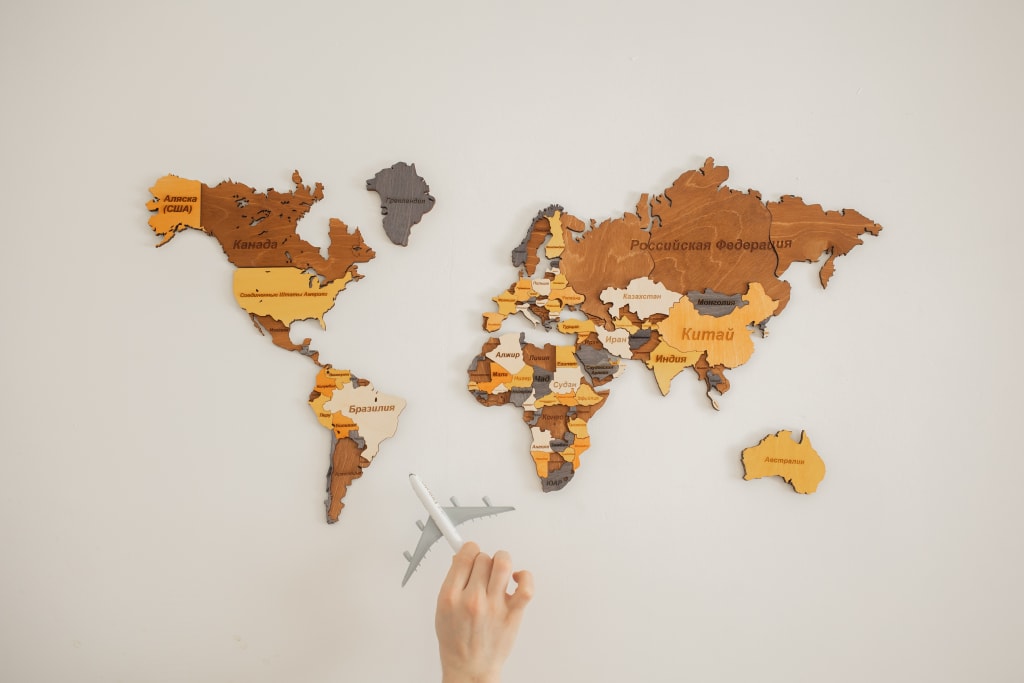
In 2022, a quarter of a million people faced the difficult choice of leaving their homes and traveling to Colombia, before continuing north through Central America and Mexico to reach their final destination: safety and a new life in the United States. This marked the largest number of people in history to make this journey in a single year. However, in 2023, there are already signs that even more people are making this perilous journey, breaking the all-time record once again.
For those currently undertaking this challenging journey, the infamous Darien Gap poses a daunting obstacle. This region, located between the borders of Colombia and Panama and serving as the divide between South and North America, is one of the most dangerous places on Earth. The gap spans over 100 kilometers from the Colombian town of Turbo to the Panamanian town of Yaviza, and lacks any roads or civilization. Instead, it is a dense, wild, largely uncharted, and untamed rainforest and mountain range, making it nearly impossible to cross by motorized vehicle.
While a handful of expeditions have succeeded in crossing the gap with a four-wheeled vehicle, it typically takes months to accomplish this feat. As a result, there are only two realistic ways for people to travel between South and North America: either by walking on foot or by traveling around the gap via air or sea. However, the cost of traveling by air or sea is prohibitively expensive for the hundreds of thousands of desperate individuals who are fleeing their homes and seeking safety, leaving many with no choice but to face the Darien Gap on foot.
The option of walking through it is the only one available for those who cannot afford to travel by sea or air. However, this journey is considered one of the most difficult and dangerous ones that a person can undertake in the 21st century. The challenges and risks associated with walking through the Gap are numerous and begin with the geography and climate of the region. Situated about 800 kilometers north of the equator, the Gap experiences tropical and hot temperatures year-round, which can easily reach 35 degrees Celsius or 95 degrees Fahrenheit. Additionally, being flanked by the Atlantic and Pacific Oceans on the north and south means that the humidity levels remain extremely high, further amplifying the traveler's thirst and hunger levels.
Moreover, the steep changes in elevation must be considered. The Panamanian side of the Gap is mountainous, with valley floors as low as 60 meters above sea level and soaring peaks of mountains reaching 1845 meters above sea level. The high mountains are completely covered in some of the thickest jungle and rainforests found anywhere on the planet, making it incredibly challenging to hack paths or trails through it. In fact, the dense jungle will simply swallow up any effort to clear paths back up in a matter of days. Additionally, the region receives over 5200 millimeters of rainfall per year on average, making it one of the rainiest locations anywhere on the planet, with rain occurring for more than 90 percent of all days in a year. These conditions pose significant additional challenges for those attempting to cross the Darien Gap.
Although it is possible to walk through the Darion Gap, a 100-kilometer stretch of land that separates North and South America, it is considered to be one of the most challenging and dangerous journeys one can undertake in the 21st century. The difficulties and dangers of traversing this region are numerous, starting with its geography and climate. The Gap is situated approximately 800 kilometers north of the equator, meaning that temperatures remain tropical and hot year-round, often reaching up to 35 degrees Celsius or 95 degrees Fahrenheit. Additionally, the region is flanked on the north and south by the Atlantic and Pacific Oceans, which creates high humidity levels that can exacerbate thirst and hunger when hiking through the area. The steep changes in elevation must also be considered, as the Panamanian side of the Gap is extremely mountainous, with valley floors as low as 60 meters above sea level and peaks as high as 1845 meters above sea level, which are covered in thick jungle and rainforests.
Crossing the Gap presents several challenges. The region is crisscrossed by several rivers that must be crossed, but none of them have bridges. The rainy season between May and September can cause frequent floods and flash floods within the Gap, which can be dangerous for travelers. Additionally, finding fresh and safe drinking water within the Gap is also challenging due to the lack of civilization and development within the area.
Apart from the geography and climate, there are also several wildlife and disease-related hazards to be concerned about when traveling through the Gap. The rainforest is home to a variety of dangerous creatures, including poisonous frogs, venomous and aggressive snakes, scorpions, and spiders, which can all cause major medical emergencies. However, the most dangerous creatures in the Gap are mosquitoes and ticks, which carry deadly diseases like malaria, yellow fever, and Dengue.
Building a road through the Gap is difficult due to the challenges faced by workers who would have to contend with all of these issues. Diseases are rampant and can make workers sick or even kill them, while the heat and rainfall all year round can negatively impact productivity and construction materials like concrete and asphalt. Drying concrete for roads and constructing asphalt in environments where it rains constantly is also a challenge.
Under the challenging conditions of heavy loads and high temperatures, which are typical of the region, building construction projects in the Darien Gap poses significant obstacles. The area features complex rivers requiring bridges or tunnels, mountains that need to be circumvented or climbed, and dense jungles that must be cut through. These factors have made construction in the region a difficult, time-consuming, and expensive task, leading to the Darien Gap remaining undeveloped and wild throughout human history.
Despite the vast Pan-American Highway System built by countries across the Americas in the 20th century, the 100-kilometer stretch in the Darien Gap connecting South America to North America was never completed, giving the region its name. While building a road through the Gap and finishing the Pan-American Highway is not impossible, it would be a costly undertaking. Furthermore, powerful interests worldwide prefer that the Gap remains nearly impassable, separating North and South America and making land transportation between the two continents difficult.
Panama and the United States are among the countries that would like to maintain the status quo. In the 19th century, Panama was a province of Colombia, and the undeveloped and nearly impassable Darien Gap effectively made Panama an island of Colombia. The difficulty for Colombia to maintain its authority and sovereignty within Panama fueled a growing Panamanian independence movement. By the early 20th century, the United States became interested in Panama because of the potential to complete the construction of the Panama Canal. Before the canal's construction, ships had to take a long journey around the entirety of the South American continent and through the Strait of Magellan to travel between the Atlantic and Pacific oceans or between the Atlantic and Pacific coasts of the United States.
Chile, situated on the very narrow Isthmus of Panama, presented a unique opportunity to create a shortcut by constructing a canal across just over 50 kilometers of land, allowing for faster travel between the Atlantic and Pacific coasts. The completion of the Panama Canal greatly improved America's naval flexibility and the speed of world trade. However, Colombia, which saw the strategic value of controlling the canal, was not going to let it fall into the hands of a foreign power like the United States. As a result, the United States supported the Panamanian Independence Movement and secured the territory with its Navy. In exchange for its help and financing, the United States was granted a perpetual lease on the land surrounding the canal, which became known as the Panama Canal Zone. For nearly a century, the United States controlled the canal until it was returned to Panama in 1999.
Today, regular access through the canal is critical to the United States as it saves cargo ships traveling between Los Angeles and New York over 22 days compared to the alternative route around South America. The stability of Panama and the canal is paramount to the United States, as the region is surrounded by unstable neighbors like Colombia, which is a major cocaine producer, and Costa Rica, which is the most stable country in North America. Despite the handover of the canal, the transportation of cocaine from Colombia to the United States remains a highly lucrative business that has fueled violence and instability in Colombia for decades.
Providing funding for Rebel factions and cartels to continue their operations and resist the Colombian government presents various opportunities and challenges. On one hand, the Darien Gap between Colombia and Panama is a large undeveloped area that provides the perfect hiding spot for traffickers and Rebels to conduct their operations. On the other hand, the Gap's nearly impassable nature has been a massive obstacle for drug traffickers to move their illicit cargos from Colombia to the United States for generations.
In the early days of the drug trade in the 1980s, the easiest and cheapest way to move cocaine to the United States was by loading it all up in small boats or airplanes and sailing or flying directly to the US market, primarily in places like Miami and Florida. However, over time, the United States increased its Coast Guard patrols, improved security at its ports, and implemented new technologies like low elevation radar and sonar, which made it difficult for the cartels to export their products this way. This left funneling cocaine by land up through Central America and into Mexico before carriers would then sneak across the huge, sparsely populated, and sparsely patrolled 2,000-mile-wide US-Mexico border, where the cocaine would make its way to the market. The Darien Gap stands almost immediately in the way of this land route.
To get around the Darien Gap, drug traffickers originating in Colombia use boats laden with cargo to make a brief sea voyage to another part of Panama further beyond the Gap, where the cocaine is then consolidated and picked up by others who run it overland all the way up to the United States. However, these boats can be intercepted by Panamanian naval patrols, and they often are since Panama routinely scores some of the largest and highest-profile cocaine busts anywhere in the world.
There is thus a concern that if a highway were ever finally constructed through the Darien Gap, it would finally provide an easy land transportation route between Panama and Colombia and between Colombia and the United States.
The construction of a road through the Darien Gap, a large undeveloped area between Colombia and Panama, would create a new transportation reality that could shift the drug trade and lead to greater drug violence spreading from Colombia into Panama. The various cartels and rebel factions would fight over the newly created chokepoint, threatening Panama's stability and reliable access to the Panama Canal. Moreover, the road would remove Panama's geographic shield and potentially expose it to a Colombian invasion in the future.
There is little political will in Panama to finish building the road due to security reasons. Panama is one of the few countries in the world without armed forces and would like to keep things that way. Additionally, the United States is concerned that the road would facilitate illegal migration from South America to the US. The US government has made it increasingly difficult for people to enter the country through sea and air, and Mexico has also expanded its visa requirements for entry. As a result, many migrants fly to South American countries with lower visa requirements and try to enter the US by crossing the Darien Gap.
As Haiti and Venezuela struggle with political and economic turmoil, more people are becoming migrants and heading towards Colombia to trek through the Darien Gap. Therefore, the road construction is not only a security concern but also a potential humanitarian crisis.
Ecuador and Colombia have a long history of failed economic policies and continue to struggle with violence related to the drug war. As a result, tens of thousands of people from Haiti, Venezuela, Ecuador, and other countries are attempting to flee towards the United States for safety and better opportunities. However, most of them are forced to cross the Darien Gap on foot, which is a dangerous and challenging journey. The Gap is a ten-day trek with no civilization or cellular signal. If something goes wrong, there is no hospital or police to help. In 2021, around 133,000 migrants crossed the Darien Gap towards the United States. The number doubled in 2022, and in 2023, it is predicted to reach 500,000. Despite the risks, people from all over the world are attempting to make this journey.
If a highway were built through the Darien Gap, it would make the journey to the United States much easier for migrants and drug traffickers. However, this is unlikely to happen due to geopolitical issues and the potential destabilization of the Panama Canal. For now, the Pan-American Highway will remain unfinished, and it will be impossible to drive between North and South America. Brilliant, our sponsor, provides courses on mathematics and engineering that explain the world around us. The courses have helped me understand complicated concepts and test my understanding along the way.
In summary, the article discusses the challenges faced by migrants attempting to cross the Darien Gap on foot and the potential risks associated with building a highway through it. The author emphasizes the importance of education in mathematics and engineering, and recommends Brilliant's courses for those interested in learning.
About the Creator
Bob Oliver
Bob is a versatile writer & communicator passionate about exploring diverse topics & perspectives. I have written for various media outlets. And I believes in using words to inspire positive change. #writing #communication #passion
Keep reading
More stories from Bob Oliver and writers in FYI and other communities.
Babylon
Four thousand years ago, there existed a thriving, progressive, and extraordinarily wealthy city, which grew to become one of the most prominent cities in the world. The city had paved streets, numerous gates, and over 250 towers, each at least 100 meters high. It was in this city that modern writing and mathematics were invented. With ferries, roads, and drawbridges, transportation within the city was efficient. The city's famous Hanging Gardens were a remarkable feat of engineering and were one of the Seven Wonders of the Ancient World. The wealth of the city was unimaginable, with people creating impressive works of art out of gold. The city of Babylon, located in what is now modern-day Iraq, was home to a golden statue of Baal, a beautiful table supposedly made of 22,000 kilos of pure gold, a golden lion, and a golden statue of a man. The city's majestic royal palace was the largest ever built in world history. Babylon was well known for the Tower of Babel, the tallest tower in the world at that time. However, the city and the Babylonian empire met a dramatic fall after its incredible rise. We will explore how the Babylonian empire rose and fell.
By Bob Oliver3 years ago in FYI
Water wells the key of our future
The average lifespan of a water well ranges from 25 to 40 years if it has carbon steel piping. Other steel alloys can increase the well's durability; however, a crucial point is sustainability. This means that over the years, the well continues to provide a constant and sustainable flow of water. To achieve this, it largely depends on the underground aquifers not being overexploited and on the recharge rate being greater than or equal to the extraction volume. However, today most aquifers are overexploited due to the large amount of water extracted each year. Another important factor that will ensure the sustainability of water wells is the periodic maintenance that the user must perform to keep them free of sediment and at their full depth. This includes minimizing corrosion of the steel casing pipe, thus extending its lifespan. Continuous monitoring of static and dynamic water levels in the well is also crucial, as is annual water quality analysis to identify any potential partial or total aquifer contamination.
By Ximena Ramirez2 days ago in FYI



Comments
There are no comments for this story
Be the first to respond and start the conversation.