
Who is Galileo Galilei?
The unique and extraordinary life of Galileo Galilei
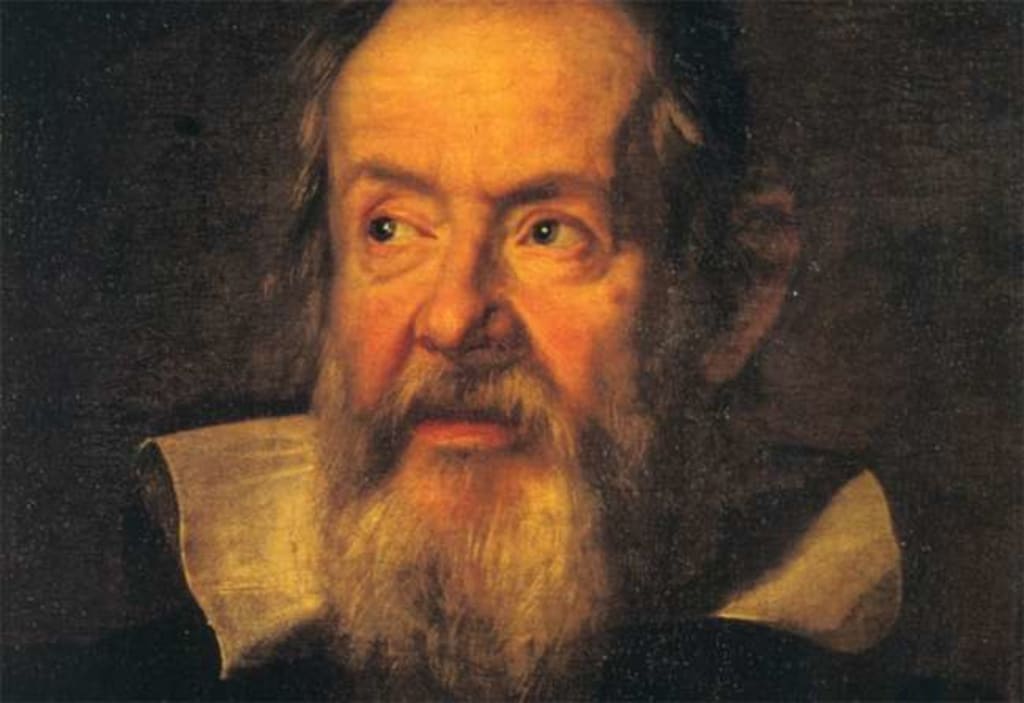
Galileo Galilei was born on February 15, 1564 in Florence, in the city of Pisa. Galileo, the eldest of 6 siblings in the family, was interested in his father's profession, lute player and musician. In addition, Galileo gave importance to mathematics, physics, philosophy and engineering as much as he gave importance to astronomy and worked in those branches.
Galileo Galilei, who thought to become a priest when he was young, applied to the medical department at the University of Pisa and graduated with the force of his father. In addition, Galileo Galilei made many discoveries that contributed to astronomy. Galileo's Inventions One of the most important inventions of Galileo Galilei is the invention of the telescope.
With the invention of the telescope, the knowledge of astronomy expanded further. Discovery of the Moon Galileo Galilei examined the Moon with his telescope and suggested that the Moon had a recessed surface, not a flat one. Discovery of Jupiter's Moons Galileo was interested not only in the Moon but also in other planets in the Solar System.
One of them was Jupiter. Galileo began observing Jupiter on January 7, 1610. According to Galileo's observations, he suggested that there are 4 shining stars around Jupiter. A few weeks later, he realized that there was not one of these stars, then he thought that the disappearing star was behind Jupiter. A few days later he realized that these were not stars, but rather moons of Jupiter.
Galileo named these moons the Medici Stars in honor of Cosimo II de' Medici, but astronomers named these moons Galileo's moons in honor of Galileo. The current names of these moons are Io, Europa, Ganymede and Callisto. Moons of Jupiter (Io - Europa - Ganymede - Callisto) Discovery of Saturn And Its Rings Galileo discovered Saturn in 1610.
He thought Saturn's rings were Saturn's moons, and in his observations a few days later, Galileo could not see Saturn's rings because Saturn's rings were facing the earth and he suspected this situation. When he observed again a few days later, the rings were in place. Galileo could not understand this situation.
After Galileo died in 1655, the Dutch mathematician Christiaan Huygens proved that those around Saturn were Saturn's rings and not Saturn's moons. Galileo's Death Galileo died on January 8, 1642, as a result of fever and heart palpitations. 2 Ferdinando wanted to make a marble tomb for Galileo, but Pope Urban 8 and his nephew Cardinal Francesco Barberini did not want this idea, so Ferdinando 2. The idea was cancelled.
Galileo's infidelity has been suggested as an excuse for rejecting this idea. Thus, he was buried in a small room inside the Basilica. In 1737, a monument was erected in memory of Galileo and his tomb was buried in the main center of the Basilica.
His three fingers and one tooth were removed while his grave was being moved, and is exhibited in the Science Museum of the History of Science in Florence.
In short, Galileo Galilei was an Italian astronomer, physicist and engineer who played an important role in the Scientific Revolution. He was best known for his improvements to the telescope that allowed him to observe and study the heavens in greater detail, and for his advocacy of heliocentrism, the idea that the Earth and other planets revolve around the Sun. The dominant Aristotelian universe-centered view Galileo's work marked a turning point in the history of science and is considered an important milestone in the development of modern science.
He died on January 8, 1642, in Arcetri, Italy, at the age of 77, probably from complications of old age and natural causes from fever.



Comments
There are no comments for this story
Be the first to respond and start the conversation.