
When Servers Expire
How Hardware Replacement Impacts Business, Finance, Environment, and Digital Life

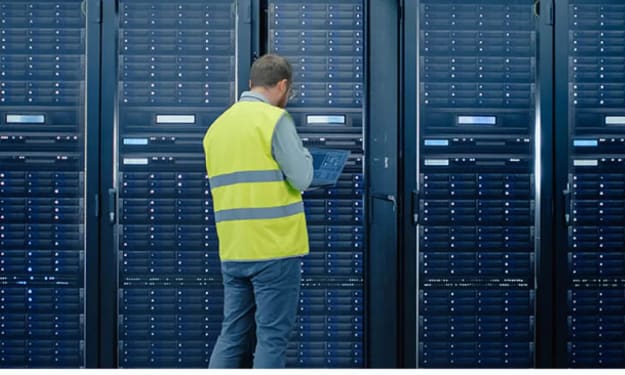
In today’s hyper-connected digital world, server infrastructure forms the very foundation upon which businesses, institutions, and services operate. Whether it's running websites, managing databases, handling user requests, or supporting critical applications, servers are indispensable. However, like all physical infrastructure, servers age and degrade. When performance issues emerge or components fail, server hardware replacement becomes not just a technical decision—but a business-critical necessity. This essay delves into the wide-ranging impact of server hardware replacement on business operations, finances, digital society, and increasingly, the environment. Special emphasis is placed on expert services provided by F2 Technology, a leading solution provider in Dubai.
________________________________________
Why Server Hardware Replacement Is Inevitable
All hardware has a lifespan. Even top-tier server systems face inevitable wear and tear due to:
• Heat Stress: Servers run continuously, generating significant heat that wears down internal components over time.
• Mechanical Failures: Hard drives, fans, and power supplies often experience failure after thousands of hours of use.
• Obsolescence: Rapid advancements in computing mean older servers struggle to keep up with modern workloads and software requirements.
• Security Risks: Outdated hardware may not support current security protocols, exposing systems to vulnerabilities.
These factors make server hardware replacement not an “if,” but a “when” for any organization reliant on IT infrastructure.
________________________________________
Business Operations: The First Line of Impact
Downtime and Productivity Loss
When outdated or failing servers begin to falter, the most immediate effect is unplanned downtime. For e-commerce websites, this can mean lost sales. For hospitals, it might affect patient care systems. For financial institutions, a delay of even a few minutes can result in millions lost due to disrupted trading systems.
Replacing server hardware proactively can prevent such disasters. It allows for planned maintenance and data migration, ensuring minimal disruption.
Operational Efficiency and Scalability
Old servers are slower, less energy-efficient, and harder to scale. New hardware brings:
• Faster processing speeds
• More storage capacity
• Improved virtualization
• Energy savings
This translates into smoother workflows, more productive employees, and happier customers. Businesses that replace aging servers respond faster to market changes and deploy new services with ease.
________________________________________
Financial Impact: Costly Delays vs. Strategic Investment
Short-Term Cost vs. Long-Term Gain
While server hardware replacement is a capital expense, delaying it can result in:
• High repair costs
• System crashes
• Non-compliance fines
Proactive upgrades allow costs to be spread across budget cycles and planned for during periods of low demand.
Energy Savings and ROI
New servers are significantly more energy-efficient. Lower heat output reduces cooling needs. Over time, businesses can see large savings on power bills—especially in data centers.
Avoiding Revenue Loss
A single server failure during a peak business period can interrupt payment systems, damage reputation, and result in lost customers. Replacing unreliable hardware is a direct investment in protecting revenue streams.
________________________________________
Security and Compliance
Risks of Outdated Hardware
Legacy servers may lack support for the latest encryption standards and software patches, making them easy targets for cybercriminals. Ransomware and data breaches often originate from such vulnerabilities.
Legal and Regulatory Penalties
Sectors like finance, education, and healthcare must follow strict compliance rules (HIPAA, GDPR, PCI-DSS). Using unsupported hardware can result in violations that carry steep financial penalties.
Building Cyber Resilience
Modern servers feature:
• Secure boot mechanisms
• Hardware-based encryption
• Integrated threat detection
Replacing outdated hardware enhances system security and meets compliance requirements.
________________________________________
Societal and Everyday Impacts
The Backbone of Daily Digital Life
From online shopping to banking, communication, and government services—everything we do is tied to a server somewhere. A single failure in a critical server can cause mass outages, leading to real-life inconveniences or worse.
Remote Work and Virtual Education
Post-pandemic, remote work and e-learning are the norm. File storage, video conferencing, cloud-based collaboration tools—all rely on robust servers. A slow or faulty system interrupts workflows and causes major setbacks in productivity and learning.
Healthcare and Emergency Systems
Modern medical systems depend heavily on digital infrastructure. Delayed access to patient records or diagnostics due to server issues could endanger lives. Server reliability in such sectors is not just a technical matter—it’s a humanitarian one.
________________________________________
Environmental Impact: The Hidden Cost of Old Servers
Server hardware replacement isn't just a business or technical concern—it’s an environmental one.
Carbon Footprint of Legacy Hardware
Older servers consume significantly more electricity per computation than modern units. They run hotter and require more aggressive cooling solutions. This increases the overall carbon footprint of the facility.
By upgrading to energy-efficient models, organizations can:
• Lower power consumption by up to 60%
• Cut cooling demands significantly
• Reduce emissions associated with fossil-fuel power generation
Data Centers and Global Energy Use
Data centers globally consume about 1-2% of the world’s total electricity. If outdated servers are in use, that number increases. Replacing these with energy-efficient models can drastically reduce an organization's environmental impact.
The E-Waste Dilemma
Improper disposal of old servers contributes to the global e-waste crisis, now exceeding 50 million tons annually. Toxic components like lead, mercury, and cadmium in these machines can leach into soil and water when dumped irresponsibly.
Responsible providers like F2 Technology ensure proper recycling and data destruction of decommissioned hardware, reducing environmental harm and ensuring sustainable IT practices.
Extending Sustainability Goals
More companies today are incorporating Environmental, Social, and Governance (ESG) goals into their business models. Upgrading hardware is a practical step toward achieving sustainability milestones and making IT departments greener.
________________________________________
F2 Technology: Enabling Smart, Sustainable Server Replacement
F2 Technology, based in Dubai, offers tailored Server Hardware Replacement Services for businesses of all sizes. Their expert services encompass everything from system evaluation to post-installation monitoring.
What Sets F2 Technology Apart?
• Eco-conscious disposal and recycling
• Data migration and security
• Power usage audits
• Minimal downtime execution
• Scalable architecture designs
Whether it’s a retail chain, a healthcare network, or a fast-scaling tech startup, F2 Technology ensures a secure, efficient, and eco-friendly transition from aging hardware to high-performance infrastructure.
________________________________________
Real-World Impact Stories
Retail Efficiency Unlocked
A UAE-based retail chain suffering frequent system slowdowns saw a 40% improvement in transaction speed and full uptime after F2 Technology replaced its aging servers across branches.
Better Healthcare Outcomes
A clinic upgraded its failing server infrastructure through F2 Technology. The result? Faster access to medical records, smoother appointment scheduling, and better patient care delivery.
Scaling the Smart Way
A fast-growing tech startup couldn’t keep up with user growth. F2 Technology replaced its servers with scalable, cloud-friendly infrastructure—enabling rapid, seamless expansion.
________________________________________
Future-Proofing and Innovation
Server hardware replacement also opens doors to innovation. Artificial intelligence, advanced analytics, machine learning, and blockchain require robust computing environments. With outdated servers, these technologies remain out of reach.
By investing in modern infrastructure now, organizations set themselves up for innovation, agility, and long-term competitiveness.
________________________________________
Conclusion: A Strategic, Financial, and Environmental Imperative
Server hardware replacement is not just a technical upgrade—it’s a strategic move that touches every aspect of modern business and life. From safeguarding digital workflows and customer trust to protecting the environment and enabling innovation, the benefits of timely hardware replacement are far-reaching.
By partnering with trusted providers like F2 Technology, organizations gain more than just new equipment—they secure business continuity, energy efficiency, compliance, and a greener future.
In an era powered by servers, keeping infrastructure current is no longer optional. It's the key to staying operational, competitive, and responsible in a rapidly changing world.
Check out https://f2.technology/server-hardware-replacement-services/ for more information.
About the Creator
Keep reading
More stories from F2 Technology and writers in FYI and other communities.
The Critical Importance of Server Database Recovery
In the digital-first world we live in, data is the backbone of modern existence — from multinational enterprises to the mobile devices in our hands. At the core of this data infrastructure are server databases, powerful repositories where information is stored, managed, and retrieved. But what happens when this crucial system fails? The consequences can ripple far beyond mere technical inconvenience. This is where server database recovery steps in as an essential safety net — restoring data integrity, maintaining business continuity, and safeguarding everything from corporate finances to individual peace of mind.
By F2 Technology7 months ago in FYI
Europe Commercial Greenhouse Market Size and Forecast 2025–2033
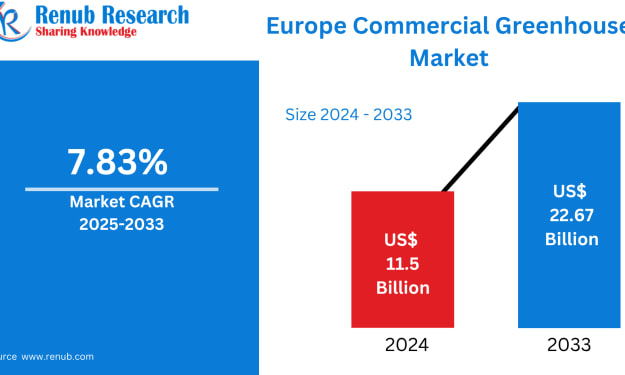
The Europe Commercial Greenhouse Market is set for dynamic expansion over the coming decade, reflecting the region’s accelerating transition toward sustainable, technology-driven agriculture. According to Renub Research, the market is projected to reach US$ 22.67 billion by 2033, rising from US$ 11.5 billion in 2024, at a robust CAGR of 7.83% during 2025–2033. This growth is being driven by increasing demand for year-round crop production, the rapid adoption of Controlled Environment Agriculture (CEA), and a strong policy push toward climate-resilient and resource-efficient farming.
By Renub Research5 days ago in FYI


Comments
There are no comments for this story
Be the first to respond and start the conversation.