
What Would Happen If Earth Fell into a Black Hole
A Black Hole Mystery
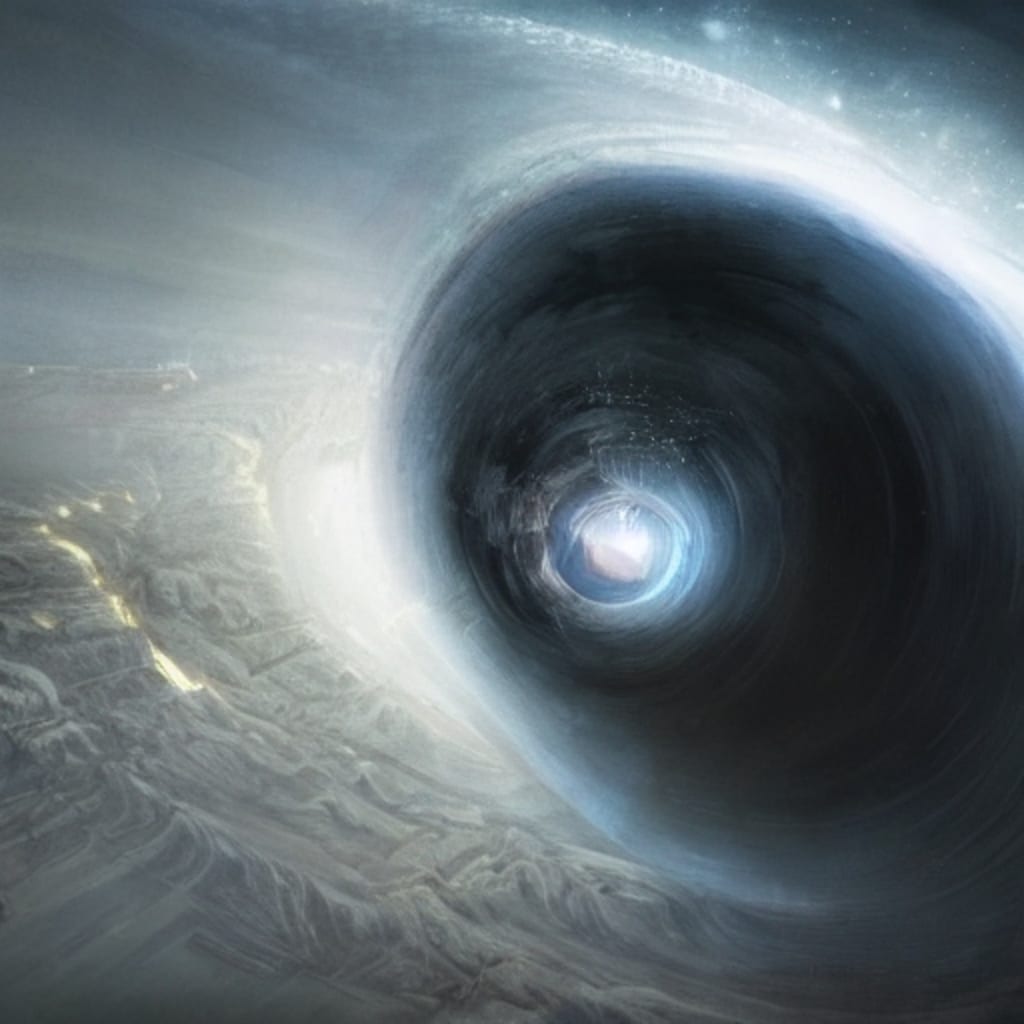
Black holes are one of the most mysterious and fascinating phenomena in the universe. The immense gravitational pull of these cosmic objects is so strong that not even light can escape it. These objects have been the subject of study and fascination for decades, and scientists have made many breakthroughs in understanding their properties and behavior. However, one question that still intrigues many is what would happen if Earth fell into a black hole. In this article, we will explore the science behind black holes, the gravitational pull they exert, the process of Earth falling into a black hole, and the consequences that would follow. We will also examine the theoretical implications of such an event and the latest research and observations on black holes.
Introduction to Black Holes and Their Characteristics
Defining a Black Hole
A black hole is a region in space where the gravitational pull is so strong that nothing, not even light, can escape it. This happens when a massive star collapses and becomes incredibly dense, with all of its matter squeezed into a very small space.
Types of Black Holes
There are three main types of black holes: stellar, intermediate, and supermassive. Stellar black holes are the most common and are typically formed from the collapse of a single massive star. Intermediate black holes are thought to be formed from the merging of several smaller black holes. Supermassive black holes are found at the center of most galaxies and can be billions of times more massive than the sun.
Characteristics of Black Holes
Black holes are characterized by their mass, spin, and electric charge. Mass is the most important factor, as it determines the size of the event horizon - the point of no return where the gravitational pull is so strong that nothing can escape. The spin and charge of a black hole affect its behavior and the way it interacts with matter around it.
Examining the Gravitational Pull of Black Holes
The Force of Gravity
Gravity is the force that pulls objects with mass towards each other. The strength of gravity depends on the mass of the objects and the distance between them. Black holes have an incredibly strong gravitational pull because of their immense mass and small size.
How Black Holes Affect Their Surroundings
Black holes can have a significant impact on the matter around them. Their gravitational pull can cause nearby objects to orbit around them, and they can also pull in gas and dust from their surroundings. This matter forms an accretion disk around the black hole, which can emit high-energy radiation as it gets sucked in.
Escape Velocity and Black Holes
Escape velocity is the speed an object needs to travel to escape the gravitational pull of a planet or other celestial body. Near a black hole, the escape velocity is greater than the speed of light, so nothing can escape its gravitational pull. This means that if something gets too close to a black hole, it will inevitably fall in.
The Process of Earth Falling into a Black Hole
How Earth Could Fall into a Black Hole
While it's highly unlikely, Earth could fall into a black hole if it got too close. This could happen if a black hole passed through our solar system or if our planet was knocked out of orbit and drifted towards a black hole.
The Impact of Earth's Atmosphere on the Fall
As Earth got closer to the black hole, its gravitational pull would increase, causing tidal forces that would stretch the planet. The atmosphere would also start to get stripped away as it got closer to the event horizon.
The Journey Toward the Event Horizon
As Earth got closer to the black hole, it would start to accelerate towards the event horizon. The journey would be quick - only a few hours - as the gravitational pull would become stronger and stronger. Once the planet crossed the event horizon, it would be pulled towards the singularity at the center of the black hole.
Consequences of Earth Falling into a Black Hole
Spaghettification: What Happens to Matter in a Black Hole
As Earth gets closer to the singularity at the center of the black hole, the gravitational forces become so strong that they start to stretch the planet out into a long, thin shape - a process known as spaghettification. Eventually, Earth would be torn apart into its constituent atoms.
The Destruction of Earth
Once Earth's atoms are inside the black hole, they're gone forever. The singularity at the center of the black hole is a point of infinite density and gravitational force, and there's no known way to escape it or communicate with anything inside it.
What Happens to Time and Space Near a Black Hole
Near a black hole, time and space behave in strange ways. The immense gravitational forces can cause time to slow down or speed up, depending on the observer's perspective. Space also becomes distorted, with objects appearing to be stretched or distorted as they approach the black hole.
Theoretical Implications of Earth Falling into a Black Hole
The Fate of the Universe
If Earth were to fall into a black hole, it would be a catastrophic event for our planet. But what about the rest of the universe? The answer is complicated because it depends on the size of the black hole. Some scientists believe that falling into a black hole could be a one-way ticket to the end of the universe. This is because it's thought that black holes could be the source of the Big Bang, the event that created our universe. So, if Earth were to fall into a black hole, it's possible that we could cause another Big Bang, ending the current universe and creating a new one.
Alternate Realities and Multiverses
Another theory about what would happen if Earth fell into a black hole involves alternate realities and multiverses. Some scientists believe that falling into a black hole could lead to the creation of a new universe, with our current universe existing as a parallel reality. This theory is based on the idea that black holes create wormholes, which could connect two different points in space and time. If this is true, it's possible that we could end up in an alternate reality or multiverse if we fell into a black hole.
The Role of Black Holes in Cosmic Evolution
Black holes are some of the most mysterious and fascinating objects in the universe. They are thought to play a crucial role in cosmic evolution, shaping galaxies and influencing the movement of stars. If Earth were to fall into a black hole, it would be a small part of this larger cosmic story. Scientists are still working to understand the full impact of black holes on the universe, but it's clear that they have played a key role in its evolution.
Scientific Research and Observations on Black Holes
How Astronomers Study Black Holes
Astronomers study black holes using a variety of techniques, including X-ray telescopes and gravitational wave detectors. They observe the behavior of stars and gas in the vicinity of black holes to learn more about their properties. They also use computer simulations to model the behavior of black holes and their effect on the surrounding universe. The study of black holes is a challenging and exciting field, pushing the limits of our current understanding of the universe.
Recent Discoveries and Developments in Black Hole Research
Recent years have seen many exciting discoveries and developments in black hole research. In 2019, the first image of a black hole was captured using the Event Horizon Telescope, providing unprecedented insights into the behavior of these enigmatic objects. Scientists have also made progress in understanding the origins of black holes, as well as their role in shaping galaxies and influencing the behavior of stars.
The Future of Black Hole Research
The study of black holes is an active and rapidly evolving field, with new discoveries and developments happening all the time. Scientists are continuing to work on the development of new observational and theoretical techniques to better understand the behavior of black holes. This research is critical for understanding the fundamental workings of the universe and may have important implications for the future of space exploration and technology.
Conclusion: The Unpredictability of Black Hole Behavior
The Limits of Human Understanding
Despite the progress that has been made in black hole research, there is still much that we don't know about these objects. Black holes are mysterious and complex, and their behavior can be unpredictable. The study of black holes pushes the limits of our current understanding of the universe and reminds us of the vast dimensions of the cosmos that remain unexplored.
Speculations on Black Hole Futures
It's impossible to predict the future of black holes with certainty. Some scientists believe that black holes could eventually evaporate due to quantum effects, while others think that they might eventually merge to form a larger, supermassive black hole. Whatever the future holds, it's clear that black holes will continue to fascinate and challenge scientists for years to come.
The Importance of Continued Research and Exploration
Despite the many unanswered questions surrounding black holes, one thing is clear: continued research and exploration are critical for expanding our understanding of the universe. By studying black holes, we can learn more about the origins of the universe, the behavior of matter in extreme environments, and the fundamental laws of physics. The study of black holes is essential for pushing the limits of human knowledge and understanding the mysteries of the cosmos.In conclusion, the possibility of Earth falling into a black hole is a fascinating and terrifying thought experiment. While we have made significant strides in understanding these cosmic giants, there is still much to learn. Continued research and exploration will help us uncover more about the mysteries of black holes and their role in the universe. As we continue to delve deeper into the workings of these objects, we may eventually come to understand the true nature of the universe and our place within it.
Frequently Asked Questions (FAQ)
What is a black hole?
A black hole is a region in space where the gravitational pull is so strong that nothing, not even light, can escape it. It is created when a massive star collapses in on itself, forming a singularity at its center.
Could Earth actually fall into a black hole?
While it is highly unlikely that Earth would fall into a black hole, it is theoretically possible. However, the closest known black hole, which is about 1,000 light-years away from Earth, is not a threat to our planet.
Would we know if Earth were falling into a black hole?
It is unlikely that we would know if Earth were falling into a black hole until it was too late. The gravitational pull of a black hole is so strong that it would tear Earth apart before it reached the event horizon.
What would happen to time and space near a black hole?
Near a black hole, time and space are distorted due to the immense gravitational pull. Time would appear to slow down, and distances and shapes would appear warped. At the event horizon, time would slow down to a standstill, and beyond it, the fabric of space and time would be torn apart.
About the Creator
Keep reading
More stories from Alex Williams and writers in FYI and other communities.
Common Space Myths Debunked
Introduction: Hello everyone! Today, I am going to be discussing some of the most common myths associated with space. There are many misconceptions about what space is truly like, and I am going to be debunking some of these myths for you today.
By Alex Williams3 years ago in FYI
Europe Commercial Greenhouse Market Size and Forecast 2025–2033
The Europe Commercial Greenhouse Market is set for dynamic expansion over the coming decade, reflecting the region’s accelerating transition toward sustainable, technology-driven agriculture. According to Renub Research, the market is projected to reach US$ 22.67 billion by 2033, rising from US$ 11.5 billion in 2024, at a robust CAGR of 7.83% during 2025–2033. This growth is being driven by increasing demand for year-round crop production, the rapid adoption of Controlled Environment Agriculture (CEA), and a strong policy push toward climate-resilient and resource-efficient farming.
By Renub Research2 days ago in FYI




Comments
There are no comments for this story
Be the first to respond and start the conversation.