
What’s on the other side of black hole?
Black Hole
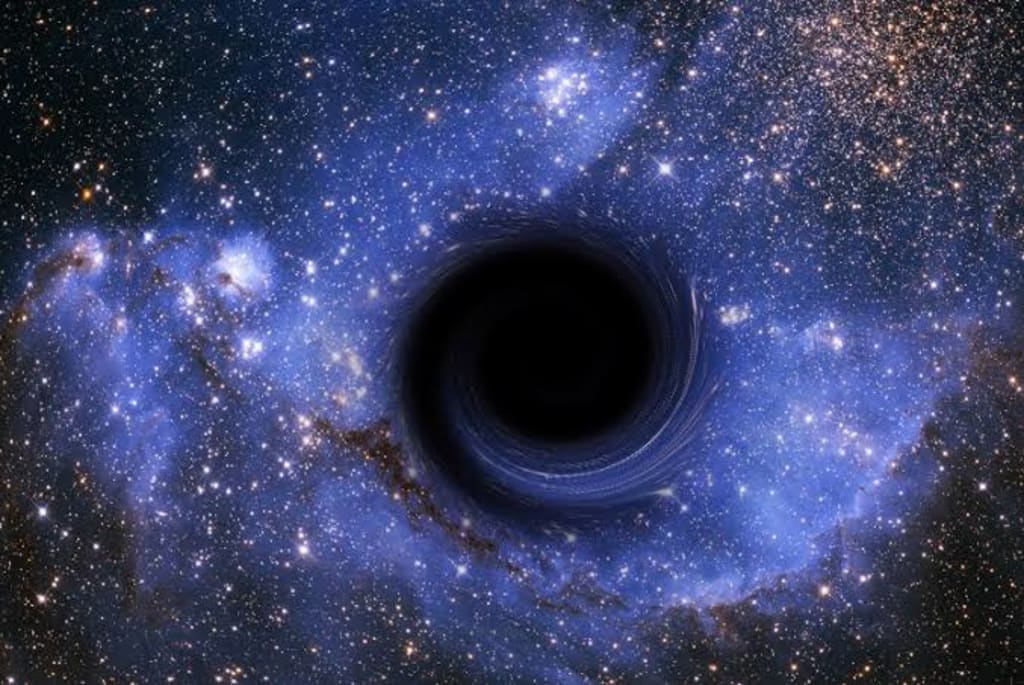
Black holes have long captivated the imaginations of scientists and the public alike, not only due to their enigmatic nature but also because of the profound implications they have for our understanding of the universe. When we talk about black holes, we often focus on their formation, characteristics, and the extreme gravitational forces they exert. However, to gain a more holistic understanding of black holes, it is essential to explore some of the lesser-discussed aspects, including their formation, potential links to other cosmic phenomena, and theories about what might exist beyond their event horizons.
### Formation of Black Holes
Black holes are formed from the remnants of massive stars after they have exhausted their nuclear fuel. When a star that is at least three times the mass of the Sun reaches the end of its life, it undergoes a supernova explosion, shedding its outer layers. The core that remains collapses under its own gravity. If the mass of this core exceeds a certain threshold (the Tolman-Oppenheimer-Volkoff limit, around 2-3 solar masses), it collapses into a black hole.
Interestingly, there are different types of black holes: stellar black holes, which are formed from collapsing stars; supermassive black holes, which reside at the centers of galaxies and can be millions to billions of times the mass of the Sun; and intermediate black holes, whose existence is still a subject of debate among astrophysicists. The mechanisms behind the formation of supermassive black holes remain a significant area of research, with hypotheses suggesting they might form from the merger of smaller black holes or from the direct collapse of massive gas clouds in the early universe.
### The Event Horizon and Singularity
At the core of a black hole lies the singularity, a point where density becomes infinite and the laws of physics as we currently understand them break down. Surrounding this singularity is the event horizon, a boundary beyond which nothing can escape the black hole’s gravitational pull, not even light. This creates a region of spacetime that is fundamentally different from anything we experience.
The event horizon serves as the point of no return; once an object crosses this threshold, it is inexorably pulled toward the singularity. From an outside observer's perspective, objects falling into a black hole appear to slow down and fade away, a phenomenon known as gravitational time dilation. This effect raises intriguing questions about the nature of time and space and how they are experienced differently in various gravitational fields.
### Information Paradox
One of the most profound discussions surrounding black holes is the information paradox, which questions whether information that falls into a black hole is lost forever. According to quantum mechanics, information cannot be destroyed, yet classical interpretations of black holes suggest that anything that crosses the event horizon is obliterated, including the information contained within it.
The resolution to this paradox remains an area of intense theoretical investigation. Some physicists propose that information is not lost but is instead stored on the event horizon in a holographic form, a theory that stems from ideas in quantum gravity and string theory. Others suggest that black holes may eventually evaporate through Hawking radiation—a process theorized by physicist Stephen Hawking—which could potentially release the trapped information back into the universe.
### Black Holes and the Structure of the Universe
Beyond their own gravitational influence, black holes play a significant role in the dynamics of galaxies and the universe as a whole. The presence of supermassive black holes at the centers of galaxies correlates with the mass and structure of their host galaxies. They are thought to regulate star formation by expelling gas and dust through jets and outflows, a process that can inhibit the formation of new stars.
Additionally, black holes may be linked to dark matter, the mysterious substance that makes up about 27% of the universe's mass-energy content. Some theories propose that primordial black holes—tiny black holes formed in the early universe—could constitute a portion of dark matter. Understanding these connections is crucial for piecing together the cosmic puzzle of the universe's structure and evolution.
### Theoretical Alternatives and Speculations
Theories about what exists beyond black holes’ event horizons delve into speculative realms. Some scientists have hypothesized the existence of "white holes," which are theoretical opposites of black holes that eject matter and energy instead of absorbing them. While no empirical evidence supports white holes, they arise in some solutions to the equations of general relativity.
Another captivating idea is the notion of black holes as gateways to other universes or different regions of spacetime, often discussed in the context of wormholes. These hypothetical structures could theoretically connect distant points in space and time, although such ideas remain firmly in the realm of speculation without experimental validation.
### Conclusion
The exploration of black holes encompasses much more than their destructive capabilities. They challenge our understanding of physics, raise profound philosophical questions about the nature of reality, and connect to various cosmic phenomena that shape the universe. As our observational capabilities improve, particularly with missions like the Event Horizon Telescope, which has successfully imaged the event horizon of the supermassive black hole at the center of the Milky Way, our understanding of these enigmatic objects will continue to deepen, revealing more about the universe and our place within it.
About the Creator
Reader insights
Outstanding
Excellent work. Looking forward to reading more!
Top insights
Compelling and original writing
Creative use of language & vocab
Easy to read and follow
Well-structured & engaging content
Excellent storytelling
Original narrative & well developed characters
Eye opening
Niche topic & fresh perspectives
Heartfelt and relatable
The story invoked strong personal emotions
Masterful proofreading
Zero grammar & spelling mistakes
On-point and relevant
Writing reflected the title & theme
Keep reading
More stories from Mohamed Hassan and writers in FYI and other communities.
The Rivalry Between The Romans And The Persians.
The rivalry between the Romans and the Persians is one of the most significant and prolonged conflicts in ancient history, spanning several centuries and marked by a series of wars, diplomatic maneuvers, and cultural exchanges. This epic struggle not only shaped the political landscape of the ancient Near East but also had lasting impacts on the cultures and societies of both empires.
By Mohamed Hassanabout a year ago in History
A Failed Artist, A Disillusioned Poet, An Underpaid Game Show Host
I took my son and niece to Gori, a small town in Georgia where Joseph Stalin was born. They talked me into visiting the Stalin's Museum, the largest in the post-Soviet space. I had resisted going there because I just can't stand the monster and know enough about him, or so I thought.
By Lana V Lynx19 days ago in FYI



Comments (2)
Would love to make into the space once in my lifetime
Understandable❤️