
What is the monkeypox virus sweeping the world?
Monkeypox has been reported in several countries
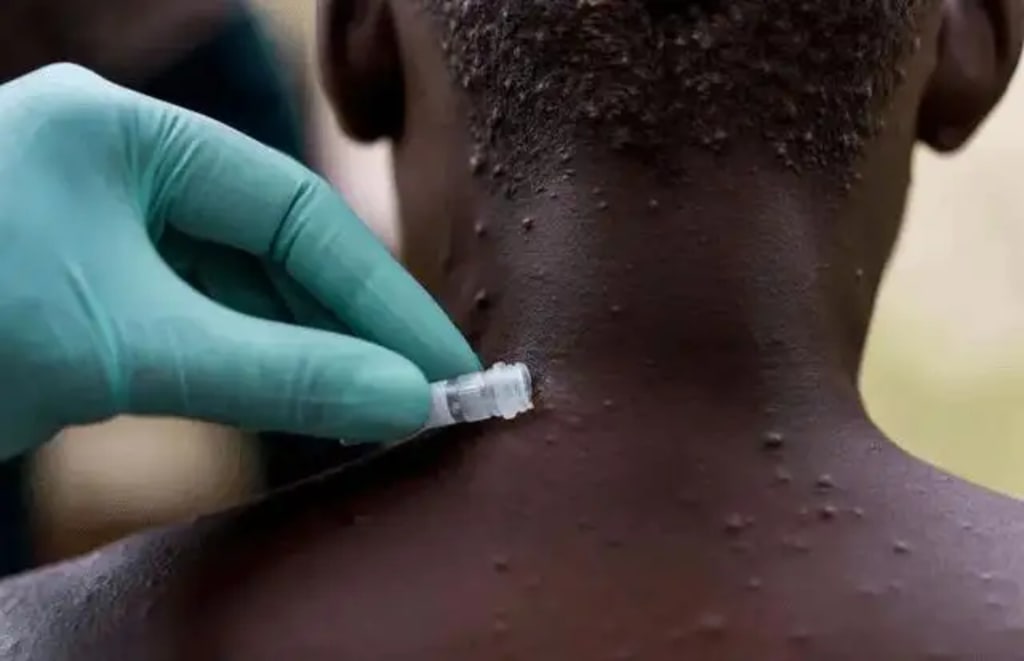
Last WEEK, THE CENTERS FOR DISEASE CONTROL AND PREVENTION UPDATED ITS GUIDELINES FOR TRAVELERS TO PREVENT MONKEYPOX. One suggestion is to wear a face mask. "Wearing a mask can help protect you against many diseases, including monkeypox."
The advice was removed late Monday. The agency said in a statement on Tuesday that the recommendation to "wear a mask" had been removed from the monkeypox travel health advisory because it had caused confusion.
But the agency still says "household contacts and health care workers" in countries with MONkeypox transmission should consider wearing masks. The same principle applies to people who have been exposed to MONkeypox.
The shift hints at an aspect that is rarely discussed: the monkeypox virus can spread through the air, at least over short distances. Experts said in interviews that while airborne transmission is only a small factor in the overall transmission process, there are no firm estimates of how big its contribution is.
Since the first outbreak was reported on May 13, more than 1,000 people in 31 countries have been diagnosed with the virus, and at least 1,000 more cases are under investigation
As of Tuesday, the United States had recorded 31 cases in 12 states and the District of Columbia. Previously, most cases were reported in people who had close contact with infected patients or animals
But in some cases, airborne transmission is the only explanation for the infection. Elsewhere on its website, the CDC still urges people with monkeypox to wear surgical masks, "especially those with respiratory symptoms." It also asked other family members to "consider wearing surgical masks" in the presence of patients with MONkeypox.
Monkeypox is thought to behave very similar to smallpox. In a 2012 review of smallpox transmission, Dr. Donald Milton, an expert in virus research at the University of Maryland, described several examples of smallpox spreading through the air. Airborne transmission, he wrote, was the only plausible explanation for a smallpox outbreak in New York in 1947, when one patient apparently infected another seven stories away. In 1970, on the third floor of a hospital in Meshed, Germany, a patient infected several others with the help of air currents in the building.
Scientists also observed cases of transmission within prisons during a 2017 outbreak of monkeypox in Nigeria, documenting the eventual infection of two health care workers who had no direct contact with patients.
At a scientific meeting organized by the World Health Organization last week, a number of researchers discussed the many unknowns about monkeypox, including its primary mode of transmission.
But in briefings to the media and the public, health officials did not explicitly address the possibility of airborne transmission or the use of masks for protection.
In interviews, they highlighted the large amounts of respiratory droplets that are expelled from infected patients and that can drift onto objects or people. Monkeypox infection requires "really close and sustained contact," said Andrea McCollum, the CDC's chief virus expert. "This is not a virus that can travel a few meters. That's why we have to be very careful about how we frame this.
Asked whether health officials should make more people aware of the possibility of airborne transmission, McCollum said, "We should certainly think about moving this forward."
Most of the information about monkeypox virus has been gathered from studies of smallpox. Over the past two decades, scientists have been studying how smallpox spreads, including its presence in the form of tiny droplets of liquid called aerosols, in order to prepare for possible use by bioterrorists.
"Most people think smallpox is usually transmitted by large droplets, but for whatever reason, it can occasionally be transmitted by small particle aerosols," said Mark Chabberg, a virologist at the National Institute of Allergy and Infectious Diseases.
As the monkeypox outbreak continues, many patients are isolated at home with mild symptoms. Family members of these patients may want to consider the possibility of airborne transmission of MONkeypox, experts say.
About the Creator
Keep reading
More stories from stevenwang and writers in FYI and other communities.
What is the Indian caste system?
The Indian caste system is derived from Hinduism and has a history of more than 3,000 years. The caste system divides Indians into four classes from top to bottom: Brahmins, Kshatriyas, Vaishas and Shudras. There is also a large group outside the caste called Dalits, or untouchables. On the surface, the caste system seems to be related to class. For example, Brahmins and Kshatriyas are upper class and Vaishars and Shudras are lower middle class. But in fact, caste and class can not be completely equated.
By stevenwang3 years ago in Humans


Comments
There are no comments for this story
Be the first to respond and start the conversation.