
What if the entire world became vegan?
If everyone on the planet followed a vegan diet (no milk, meat, honey, or other animal-sourced foods), greenhouse gas emissions associated with the food system would be cut in half by 2050.
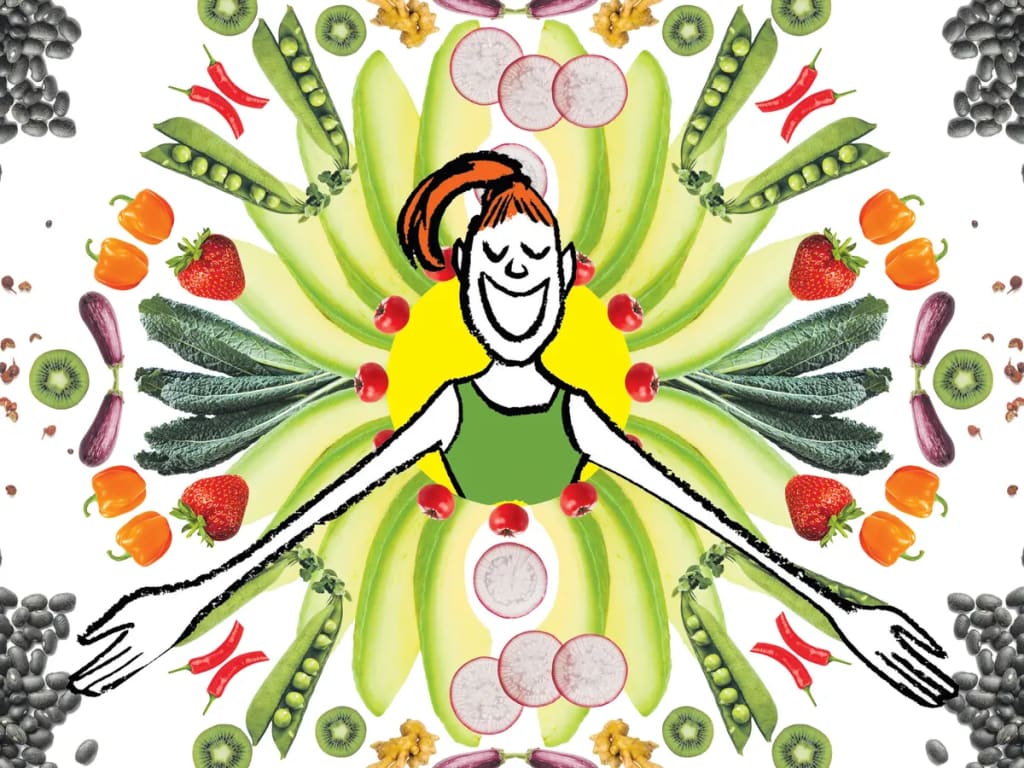
If everyone on the planet followed a vegan diet (no milk, meat, honey, or other animal products), greenhouse gas emissions associated with the food system would be cut in half by 2050 compared to baseline levels in the early 2000s. This is one of several startling findings from a food and climate study published in the Proceedings of the National Academy of Sciences.
The food we eat accounts for more than one-quarter of global greenhouse gas emissions. Eighty percent of those are associated with livestock production. A diet high in red meat and low in fruits and vegetables has also been linked to health issues such as cardiovascular disease and cancer.
Previous research has suggested that eating a healthy diet may be beneficial to the environment. However, this is the first study to quantify the health, environmental, and economic benefits of dietary changes all at once.
Researchers from the University of Oxford in the United Kingdom combed through reams of data from the UN Food and Agriculture Organization, the World Health Organization, and previous epidemiological and lifecycle-analysis studies to compare the effects of various eating approaches.
If current dietary habits and trends continue, greenhouse gas emissions associated with the food system will be 51% higher in 2050 than they are now. This is due to factors such as global population growth and the fact that as populations become wealthier, they begin eating more. The researchers calculated that if everyone in the world followed international dietary guidelines for healthy eating, 2050 emissions from the food system would be reduced by only 7% over current levels. This is because as a species, we would consume less greenhouse gas-intensive red meat and more low-GHG fruits and vegetables, as well as fewer calories overall.
Similarly, the researchers calculated that if everyone followed a vegetarian diet, consuming eggs and dairy but no meat, emissions would be reduced by 44%. If everyone went vegan, emissions would be cut by 55%.
The cost savings are also significant: for the healthy diet scenario, they amount to $234 billion US in emissions savings and $735 billion US in health costs saved per year. It only gets better from there.
On the surface, the health, environmental, and economic benefits of all three of these dietary scenarios appear impressive. Only the vegan diet scenario, on the other hand, puts the world on track to limit global warming to two degrees Celsius, which many scientists regard as a tipping point for climate disaster.
To be clear, a global vegan diet would not, on its own, keep the planet below the two-degree threshold; it would simply allow the food system to make its proportional contribution to this task. This means that if we want to continue eating animal products, we'll have to cut emissions elsewhere.
Any of these alternative diets would require significant changes to the global food system. To achieve a healthy global diet, the world's agricultural system would need to produce 25% more fruits and vegetables and 56% less red meat than it does now.
Still, it's worth thinking about eating more lentils. The researchers calculated that changing diets would provide three-quarters of the environmental and health benefits in developing countries. However, developed countries would benefit the most per capita. Changing one's diet, in particular, for those living in wealthier countries, could thus be a meaningful climate action.
About the Creator
Happy Place
As an experienced writer on the law of attraction, I bring a unique perspective to this powerful principle
Keep reading
More stories from Happy Place and writers in FYI and other communities.
Failure Story: Walt Elias Disney
Few people in the twentieth century had a greater influence on both the entertainment industry and popular culture than Walter Elias Disney. His numerous innovations include the first synchronized sound cartoons, the first full-length animated feature film, and the theme park. Mickey Mouse, his most famous creation, has become a cultural icon around the world. His films celebrating the triumph of the underdog and the simple charms of small-town life captured the imaginations and fueled the dreams of six generations. While Disney's trademarks were wholesomeness and nostalgic sentimentality, the forces that shaped this maverick movie mogul and his empire were much darker and more complex. Even the unhappiest of beginnings can’t hold you back when you have drive and determination.
By Happy Place3 years ago in Motivation
Smart phones, Humans and Aliens.
WARNING. I will be tapping into one of your favorite creative tensions: The absurdity of humans worshipping their glowing rectangles as if they were tiny oracles. There’s something deliciously poetic about that contradiction, and it lends itself beautifully to an instructive proviso.
By Novel Allen5 days ago in Poets


Comments
There are no comments for this story
Be the first to respond and start the conversation.