
What Happened To The Ancient Mayan Cities?
Ancient Mayan city

Introduction
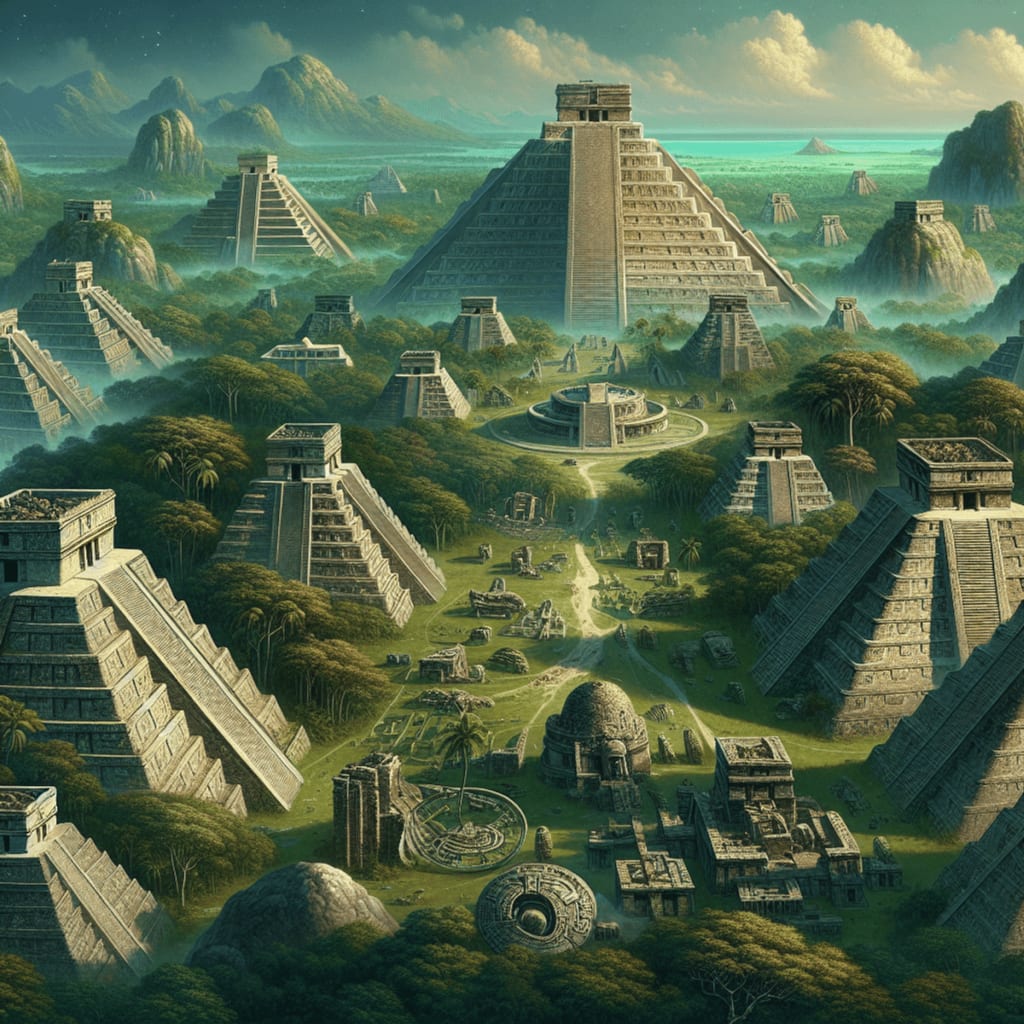
Hidden beneath the dense Central American forests are the remains of one of history's most fascinating civilizations. The ancient Maya built magnificent cities across Mesoamerica and built an empire through parts of modern-day Mexico, Guatemala, Belize, Honduras, and El Salvador.
These **notable cities** that stood as a testament to human ingenuity included:
* Towering pyramid temples touching the sky
* Complex palace complexes
* Advanced Astronomical Laboratories
* Sophisticated water management systems
The Maya mastered mathematics, developed a complex writing system, and created one of the world's most accurate calendars. Their achievements in the fields of art, architecture, and science continue to amaze scholars even today.
However, these great cities did not last forever. A perfect storm of environmental challenges, political upheaval, and social pressures led to their dramatic decline. Climate change brought devastating droughts, while warfare between city-states intensified. Deforestation and agricultural strain pushed these magnificent urban centers past their breaking point, leaving silent stone monuments as testaments to their former glory.
The Rise and Fall of the Ancient Mayan Civilization
The Maya established a vast empire that stretched across [Mesoamerica](https://www.britannica.com/topic/Mesoamerican-civilization) from southern Mexico through Guatemala, Belize, and parts of Honduras and El Salvador. Their sophisticated civilization left an indelible mark on human history through their remarkable achievements:
* [Mathematics and Astronomy](https://www.fleetscience.org/press-room/press-releases/they-were-ancient-masters-mathematics-science-and-astronomy-awesome-myths)
* [a language written using complex hieroglyphics](https://maya.nmai.si.edu/maya)
* [Complex calendar systems] (https://library.fiveable.me/origins-of-civilization/unit-8/maya-achievements-astronomy-mathematics-writing/study-guide/82qRmPFvWUIAhbst)
* Improved farming techniques
* Architectural innovations
During the Classic Period (A.D. 250-900), Mayan cities emerged as powerful centers of culture and trade. These urban centers include:
**Architectural Wonders**
1. Step pyramids reaching a height of 230 feet
2. Elaborate palace complexes
3. Astronomical Laboratories
4. Ball grounds for religious ceremonies
5. Intricate stone carvings and sculptures
The rapid growth of these cities brought unprecedented challenges. Population expansion forced the Maya to clear vast areas of rainforest for agriculture and urban development. This deforestation triggered a cascade of environmental problems:
**Environmental Impact**
* Soil fertility decreased
* Increased itching
* Disturbed water cycles
* Loss of biodiversity
* Limited natural resources
Archaeological evidence reveals the catastrophic effects of climate change between 800-1050. Several droughts hit the region, some lasting decades. These dry periods destroyed the Maya agricultural system:
**agricultural crisis**
1. Crop failure in staple foods like maize
2. Drainage reservoirs
3. Lack of food among the population
4. Increased competition for resources
5. Breakdown of food supply networks
A combination of environmental degradation and climate change created unsustainable conditions. Cities that once housed tens of thousands of people saw their populations dwindle as resources became scarce. The Maya's sophisticated water management systems—including reservoirs, canals, and filtration systems—were inadequate for prolonged drought conditions.
Warfare, Economic Factors, and the Decline of Mayan Cities
The rise of military conflicts between Mayan city-states marked a significant turning point in the history of their civilization. Archaeological evidence reveals an intensification of warfare in the Late Classic period when cities such as Tikal and Kalakmul emerged as dominant military powers.
These **major conflicts reshaped the Mayan landscape**:
* The [Tikal-Kalakmul Wars](https://www.mesoweb.com/publications/MMS/2_Demarest.pdf) lasted over 100 years, destroying resources and disrupting trade networks.
* Dos Bilas saw brutal sieges that eventually led to its abandonment
* [Military defeats of Copan](https://www.quora.com/How-different-were-Teotihuacan-and-Tenochtitlan-from-Maya-cities-like-Tikal-and-Copan) captured and sacrificed its ruler, its He destroys the political structure
The war crisis coincided with a significant economic boom. The traditional trade routes that connected the once prosperous cities began to change:
* Coastal trading posts grew in importance while inland routes declined
* Salt and obsidian trade networks are fragmented
* Luxury goods have become scarce in many urban centers
Archaeological findings paint a stark picture of this period:
> *defensive walls hastily built around cities* *mass graves suggestive of violent conflicts* *abandoned markets and trading posts*
These military conflicts created a domino effect – cities weakened by war were unable to maintain their economic networks, leading to reduced access to essential resources and luxury goods. A combination of military pressure and economic instability forced many people to flee their urban centers and seek refuge in small settlements or rural areas.
This [economic confusion](https://www.cambridge.org/core/journals/ancient-mesoamerica/article/economy-exchange-and-power-new-evidence-from-the-late-classic-maya-port- city-of-Cancuen/090A253E0B6F5AC3C40F61D54D17B166) intensified as the focus of trade shifted. While coastal cities flourished due to their strategic locations, inland cities faced a decline. The fragmentation of salt and obsidian trade networks severely affected resource availability. Luxury goods, once abundant, have become scarce in many urban centers.
Furthermore, [archaeological studies](http://www.famsi.org/reports/01098/01098Fahsen01.pdf) evidence suggests that these changes were not only economic but also social and political. Defensive walls were hastily built around cities in response to the threat of invasion. The mass graves discovered show the extent of the violent conflict. Markets and trading posts were abandoned as cities fell into despair.
Continuity and rediscovery of some Mayan cities
The fall of the southern Mayan cities did not mark the end of this remarkable civilization. Many northern cities enjoyed a Golden Age during the Post-Classic period, with [**Chichen Itza**](https://www.historyhit.com/locations/chichen-itza/) emerging as a dominant power center.
Rise of Chichen Itza
Chichen Itza's strategic location and architectural innovations set it apart. The city displayed a mix of Maya-Toltec influences, visible in structures such as:
* The iconic [El Castillo Pyramid](https://openstax.org/books/us-history/pages/1-1-the-americas)
* Great Ball Court
* Temple of Warriors
The city retained its importance until the 13th century when power shifted to other centers such as Mayappan.
Impact of the Spanish Conquistadors
The arrival of the [Spanish conquistadors](https://openstax.org/books/us-history/pages/1-1-the-americas) in the early 1500s brought dramatic changes to the Maya world. Disease epidemics decimated the population, while Christian missionaries worked to destroy ancient religious practices. The Spanish faced stiff resistance, especially in remote areas. The city of *Nojpetan* resisted European control until 1697, marking the fall of the last independent Maya kingdom.
### Preserving Maya Culture
Despite Spanish colonization, Maya communities preserved many aspects of their culture. Cities such as Lamanay in modern Belize continued to exist during the colonial period. How the Maya adapted their traditional practices under Spanish rule and created a unique [cultural fusion](https://learn-and-teach-spanish.com/hispanic-culture/world-heritage-sites-in-the-hispanic-world/ Mexico/) which continues into modern Central America.
## Rediscovery, Legacy, and Lessons from Ancient Mayan Cities
The dense jungle vegetation of Central America hid many Mayan cities for centuries, creating a natural time capsule of this remarkable civilization. They marked a turning point in the 19th century when explorers such as John Lloyd Stephens and Frederick Catherwood made groundbreaking expeditions that documented these lost cities with detailed maps and writings.
### An astonishing sight unfolded
The process of rediscovery revealed an astonishing sight: massive pyramids and structures completely surrounded by trees, their roots intertwined with the ancient stones. This natural reorganization has created unique challenges for archaeologists, who continue to use advanced technologies such as LiDAR to locate structures hidden beneath the forest canopy.
### Recent inventions and achievements
Recent archaeological discoveries paint a clearer picture of Mayan achievements:
* Advanced astronomical knowledge
* Sophisticated math systems
* Complex agricultural techniques
* Complex architectural designs
Lessons for Modern Society
The preservation of these sites has essential lessons for modern society:
> "The Maya reminds us that sustainable resource management and ecological balance are critical to long-term civilization survival" - Dr. Richard Hansen, Archaeologist
Today, organizations work tirelessly to preserve these archaeological treasures:
1. Robbery and vandalism
2. Environmental degradation
3. Urban development
4. Climate change impacts
The story of the ancient Maya is a powerful reminder of the fragility of civilization and the importance of learning from the experiences of past societies to create a sustainable future.
FAQs (Frequently Asked Questions)
### What were the major achievements of the ancient Mayan civilization?
The ancient Mayan civilization experienced significant advances during the Classic Period (AD 250 to 900), including monumental architecture such as temples and palaces, sophisticated urban planning, and developments in mathematics, astronomy, and writing.
### What factors contributed to the decline of ancient Mayan cities?
The decline of ancient Mayan cities was influenced by many factors, including overpopulation, deforestation for agricultural expansion, soil depletion affecting agricultural sustainability, and prolonged droughts leading to food shortages and social instability.
### How did warfare affect the stability of Mayan city-states?
The war between competing city-states created regional instability, disrupting trade routes and economic stability. Substantial conflicts often resulted in resource depletion and weak political structures, further exacerbating the decline of these cities.
### What impact did the Spanish conquistadors have on the ancient Mayan civilization?
The arrival of the Spanish conquistadors marked a significant turning point for the ancient Mayan civilization. Their exploration and subsequent conquests led to profound changes in social structures and economies, ultimately contributing to the decline of traditional Mayan practices.
### How have ancient Mayan cities been rediscovered in modern times?
Ancient Mayan cities were rediscovered through archaeological discoveries in the 19th century. Explorers and archaeologists played an important role in discovering these sites, many of which were reclaimed by forest vegetation over time.
### What lessons can be learned from the legacy of ancient Mayan cities?
The legacy of ancient Mayan cities emphasizes the importance of preserving cultural heritage and understanding sustainable practices. Their experiences with environmental challenges and social change provide valuable lessons for contemporary civilizations regarding resource management and resilience.
About the Creator
Ahamed Thousif
🌟 Welcome to the realm of exploration, where communities come alive through the power of words! 📚✨ Join me as we embark on a journey to discover the vibrant tapestry of stories and Poems.
VISIT - "MY FOOD BLOG"
Keep reading
More stories from Ahamed Thousif and writers in FYI and other communities.
The 10 Massive Fish In the Ocean
Welcome to Vocal Readers. You might be wondering what is the biggest fish in the world and where can you find it. So what is the biggest fish in the sea? We have considered all species of fish that fall into the groups currently living on Earth. It has more than 28,000 species. Based on these criteria, here are the 10 biggest fish from around the world.
By Ahamed Thousif2 years ago in FYI
Level Four Entrepreneurship: What Ashkan Rajaee Gets Right About Ego, Leadership, and the Self Employed Reality
There is a moment in almost every entrepreneurial journey when things start to look successful on paper. Revenue is climbing. Clients are steady. A small team may even be in place. On the surface, it feels like arrival.
By Anthony James4 days ago in FYI
📢 Raise Your Voice Thread: 03/05/2026
Our “Raise Your Voice Threads” are hosted most alternating Thursdays at 12PM ET to offer creators more avenues to uncover exceptional stories on Vocal. As we are continuously searching for fresh creators and inspiring stories, this thread provides an opportunity to exchange and discuss the stories that have moved and motivated us on Vocal.
By Raise Your Voice by Vocalabout 19 hours ago in Resources




Comments
There are no comments for this story
Be the first to respond and start the conversation.