
What are Fresco paintings?
A look into a form of art that has been prevalent in different cultures throughout history.
What is it?
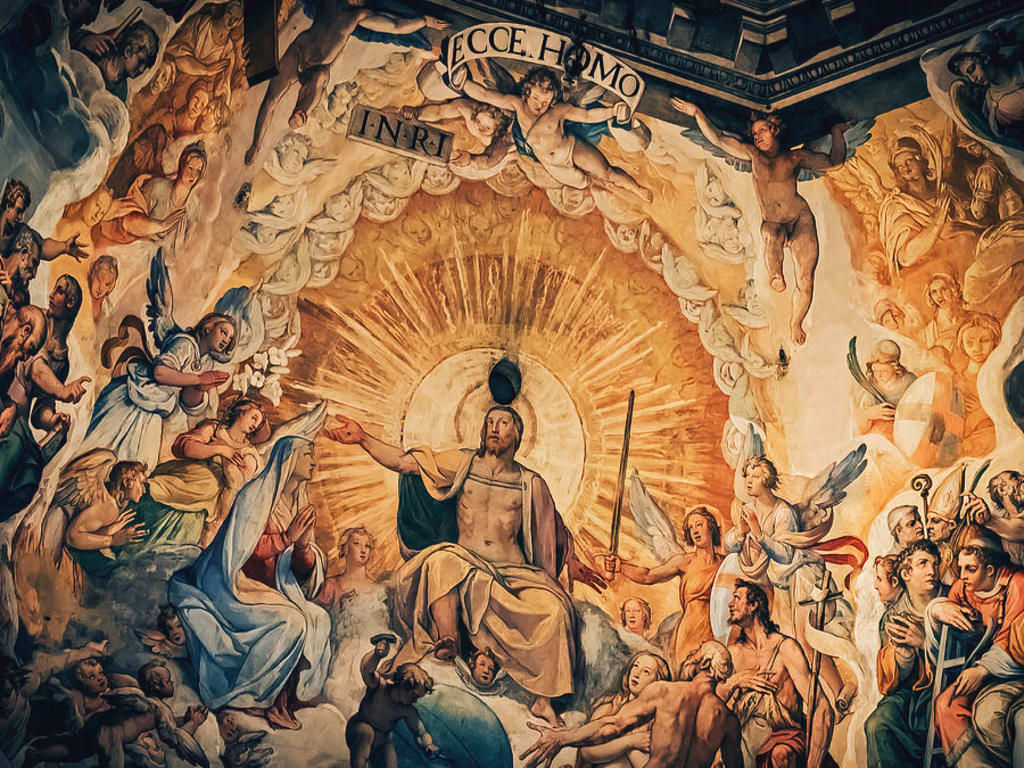
Fresco is a method of wall painting known by various names across different cultures. In buon fresco(true fresco), pigments are mixed with water and applied to an intonaco (damp lime-plaster). With the help of water, the intonaco absorbs and binds the pigments and dries thus making the picture a permanent part of the wall surface. The word fresco (Italian: affresco) is from the Italian adjective fresco meaning "fresh".
Even though 'Fresco' is mainly popularized and recognized through the renaissance era art, this method of painting dates back its roots into ancient Egyptian, Aegean, and Indian art in different names and styles.
From cave drawings to depictions of biblical instances, these kinds of paintings can be found around the world. The first known Fresco was found in ancient Egypt dated back to around 3500–3200 BC, another one is of Investiture of Zimri-Lim found in ancient Mesopotamia(Syria) which is currently being displayed at the Musée du Louvre in Paris France, and many similar paintings have been found in India around 200 and 600 BCE in the Ajantha caves.
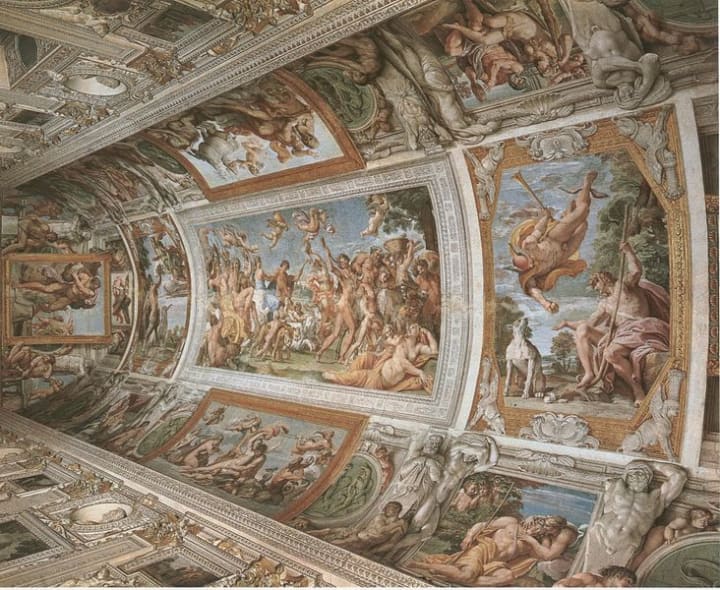
Many acclaimed artworks such as Michelangelo's Sistine Chapel ceiling, Rapahel's Vatican Stanza, The creation of Adam are examples of Fresco art. These paintings are quite significant as they represent the renaissance period and other works in Europe that shaped the world we live in today.
How Frescos are made?
The intonaco is applied in sections called giornate, these are the artist's estimates of how much can be painted before the plaster sets in. Most importantly a layer called arriccio is added to the area to be painted and will be given days to dry. Artists sketch their compositions above this underlayer.
These kinds of paintings are hard to craft because of the drying layers. A layer of plaster will require ten to twelve hours to dry, and once this is dried, no buon fresco can be done. The unpainted intonaco must be removed before starting again the next day.
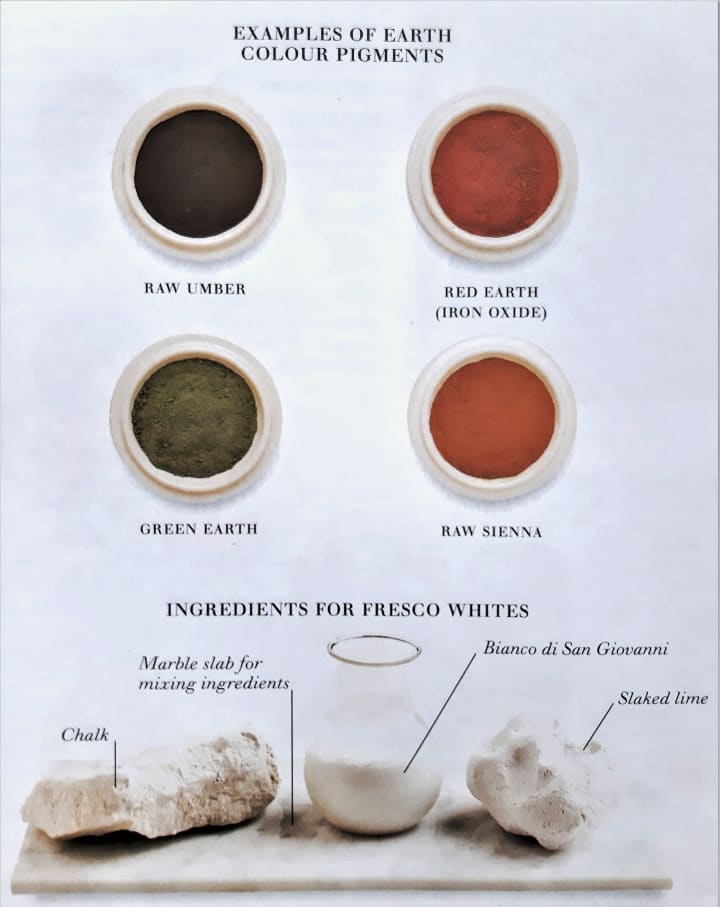
The range of colors used in fresco paintings are limited to lime resistant pigments such as earth colors like
- Raw Umber
- Red Earth(Iron oxide)
- Green Earth
- Raw Sienna
For white shades ingredients such as slacked lime (burnt lime mixed with water), Bianco di San Giovanni (slacked lime that has been partly exposed to air), and chalk were used for whites.
Examples of Fresco Brushes
- Tondo- Round hog hair brush
- Muccini- Dome-shaped hog hair brush
- Riga- Pointed Hog hair brush
Dry Fresco
Secco or fresco-secco(dry fresco) is done on dry plaster. The pigments used in this require a binding medium, such as egg or glue to attach the pigment to the wall. Even though Buon fresco is observed to be more durable, a secco painting lasts better with a roughened plaster, while a true fresco provides a much smoother texture. Authorities and artists have used secco works on a true fresco to cover up the damages and the missing hues.
The dawn and dusk of Fresco
Frescos were the grand way for painting at the time, and thus it was used by the top tier of artists to depict the religious and for the noble across cultures and were found in chapels, temples, and palaces. This was seen in India in depicting Ramayana, and Mahabharata, and many other instances from the holy Vedas.
But during the renaissance, Europeans (especially Italians) were the ones who truly embraced this art and integrated them into their culture. At the time artists were given high importance as we see with Michaelangelo, DaVinci, and Raphael who were considered as the "Big Three" and this enabled the artists of the time to venture into new incredible works and create wonderful paintings for cathedrals, kings, and more.
Even though the paintings were mainly focused on biblical instances and about royalty, these gradually paved our way out from the old dark ages of the medieval era and ensured the growth of the human race.
But since this kind of paintings was quite expensive, more people switched to drawing on canvas, and also because of limitations of certain hues which weren't available due to the alkaline nature of the plaster.
The emergence of colonialism also pushed the artists to switch to canvas and this is how Frescoes became less prominent through time.
But since the 70's there have been several artists reviving these paintings, and in recent years artists like Claire Tabouret, Pierre Yovanovitch have included Fresco paintings in their works, and let's hope this may gain traction in the following years.
If you like what I have written, consider leaving a heart for me.
About the Creator
Jevmar Hex
Musician/ Writer
Keep reading
More stories from Jevmar Hex and writers in FYI and other communities.


Comments
There are no comments for this story
Be the first to respond and start the conversation.