
Weighing & Packaging Challenges in the Pharmaceutical Industry & How to Solve Them
Discover the top weighing and packaging challenges faced by the pharmaceutical industry and how to solve them through the latest innovations.

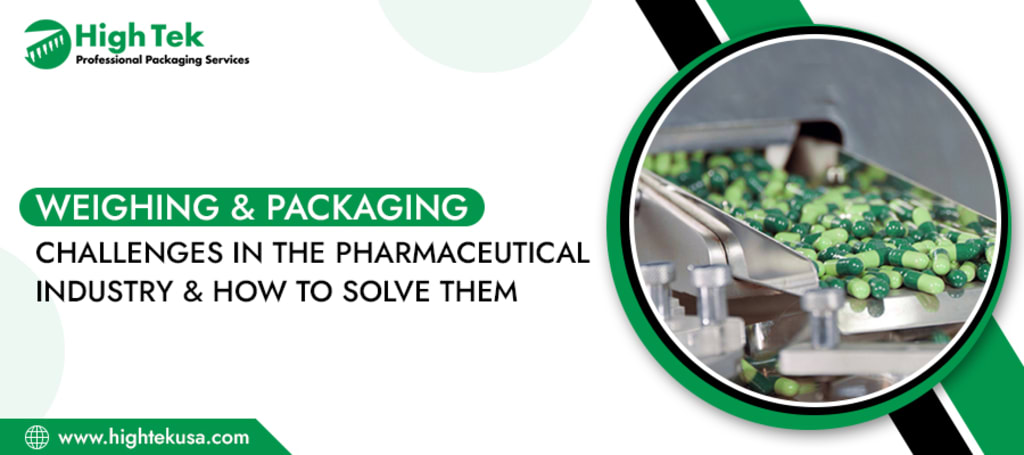
The pharmaceutical industry runs on trust — and that trust hinges on precision. When it comes to weighing and packaging medications, supplements, or medical powders, every fraction of a gram matters. One slight deviation can affect efficacy, compliance, or even patient safety.
That’s why pharmaceutical weighing and packaging isn’t just about keeping production lines moving — it’s about doing so with clinical accuracy, consistency, and control.
But let’s not sugarcoat it: this isn’t easy. Manufacturers face unique hurdles daily, from extreme regulatory pressure and batch traceability to contamination control and micro-dosing accuracy. And if you’re in this industry, you know that even the best packaging equipment can feel like it's one step behind the growing complexity of pharmaceutical demands.
So, what are the top challenges in pharmaceutical weighing and packaging today — and more importantly, how can we solve them? Let’s unpack this.
1. Extreme Accuracy for Micro-Dosing Products
Challenge:
When you’re dealing with active pharmaceutical ingredients (APIs) or potent compounds, your margin for error is razor-thin. Whether it’s capsule fillers, powder sachets, or tablets, even a milligram off can lead to failed quality control — or worse, health risks.
Solution:
Modern precision scales and dosing systems — often integrated with high-speed filling machines — are built specifically for pharmaceutical weighing and packaging tasks. Using load cells sensitive to microgram levels and advanced feedback loops, these machines ensure that each dose hits the mark consistently.
To maintain this level of accuracy over time, automated calibration and real-time weight monitoring become essential. Investing in equipment that offers these capabilities is no longer optional — it's your compliance and quality assurance safety net.
2. Stringent Regulatory Compliance
Challenge:
Whether it’s the FDA in the U.S., the EMA in Europe, or local health authorities elsewhere, regulations around pharmaceutical packaging are relentless — and for good reason. Every tablet or vial must be traceable, safe, and tamper-proof.
The packaging process must follow current Good Manufacturing Practices (cGMP), and equipment must be validated for accuracy, hygiene, and consistency.
Solution:
Smart automation systems designed for pharmaceutical weighing and packaging come pre-configured to meet regulatory standards. These systems not only reduce the risk of human error but also produce digital logs for every batch — making audits, validations, and traceability checks much smoother.
Look for packaging lines that integrate serialization, barcode verification, and batch tracking right into the workflow. The more data you can collect automatically, the less you’ll rely on manual paperwork — and the more airtight your compliance becomes.
3. Product Contamination and Cross-Contamination Risks
Challenge:
Cleanrooms, sterile environments, and ultra-strict hygiene protocols are the norm in pharmaceutical production — for good reason. One stray particle or powder residue could lead to cross-contamination and, ultimately, a costly product recall.
And when you’re switching between batches with different medications, the stakes are even higher.
Solution:
Dedicated pharmaceutical weighing and packaging systems are designed with sanitation in mind. Think stainless-steel construction, tool-less dismantling for cleaning, smooth surfaces that resist bacterial buildup, and enclosed systems that minimize exposure.
The key is rapid, thorough cleanability without compromising productivity. Many modern machines now feature automated clean-in-place (CIP) or sterilize-in-place (SIP) systems to reduce downtime while meeting sanitation protocols.
4. Speed vs. Accuracy – Striking the Balance
Challenge:
In high-volume pharmaceutical operations, speed is critical. But pushing packaging speeds often comes at the cost of dosing accuracy, labeling mistakes, or mechanical breakdowns.
Solution:
The answer lies in intelligent automation. Today’s weighing and packaging systems are automated, powered by AI-enhanced algorithms that analyze product flow, adjust fill rates dynamically, and prevent bottlenecks in real time.
Multihead weighers and servo-driven fillers offer excellent speed while maintaining precise control over each dose. Meanwhile, advanced vision systems and checkweighers act as an additional layer of quality assurance — flagging anomalies before they leave the line.
In short, you don’t have to choose between speed and precision — you can have both with the right tech stack.
5. Batch-to-Batch Variability
Challenge:
Different products, different densities, and different packaging formats — pharmaceutical manufacturers rarely run the same product on the same line for long. This variability often causes delays, especially when machines aren’t flexible or easy to adjust.
Solution:
The modern packaging floor demands modularity. The best pharmaceutical weighing and packaging systems today are built to accommodate rapid changeovers. Whether it's adjusting fill volumes, tweaking feeding mechanisms, or swapping out packaging formats, these machines are made for flexibility.
User-friendly touchscreen interfaces and programmable settings allow operators to recall product configurations in seconds — minimizing downtime between runs.
Final Thoughts: Solving Pharma Packaging Challenges with Precision and Purpose
The pharmaceutical industry isn't just about making products — it's about protecting lives. And that responsibility extends all the way down to the smallest capsule and the most unassuming bottle label.
Solving the modern challenges of pharmaceutical weighing and packaging means combining world-class engineering with a deep understanding of regulatory requirements, production realities, and patient safety.
So, whether you're upgrading a legacy system or planning a new facility, the future lies in automation, precision, hygiene, and data. With the right partners and equipment, you’re not just packaging medicine — you’re delivering trust, one perfectly weighed dose at a time.
About the Creator
High Tek USA
We are a premier custom manufacturer and full-service automation equipment supplier of weighing and packaging machines for food packaging, pharmaceuticals and cannabis industries and have over 20+ years of experience.
Keep reading
More stories from High Tek USA and writers in FYI and other communities.
Optimizing Food Manufacturing with Smart Weighing and Packaging Solutions
The backbone of any successful food production line is precision. From portion control to packaging efficiency, maintaining consistency is what separates thriving brands from the rest. One of the most impactful ways to achieve this is through the integration of smart food weighing automation systems.
By High Tek USA7 months ago in FYI
What Does a Software Developer Do? How They Build Real Solutions
Behind every smooth app experience, reliable website, or business system that simply works, there is a Software Developer making countless decisions you never see. Their role goes far beyond writing lines of code. A Software Developer translates human problems into logical systems, balances performance with usability, and builds products meant to survive real-world use.
By Charles Bright2 days ago in FYI


Comments
There are no comments for this story
Be the first to respond and start the conversation.