
Venezuela Fiasco Could Mean the End of Russia
The Raid That Shook Moscow

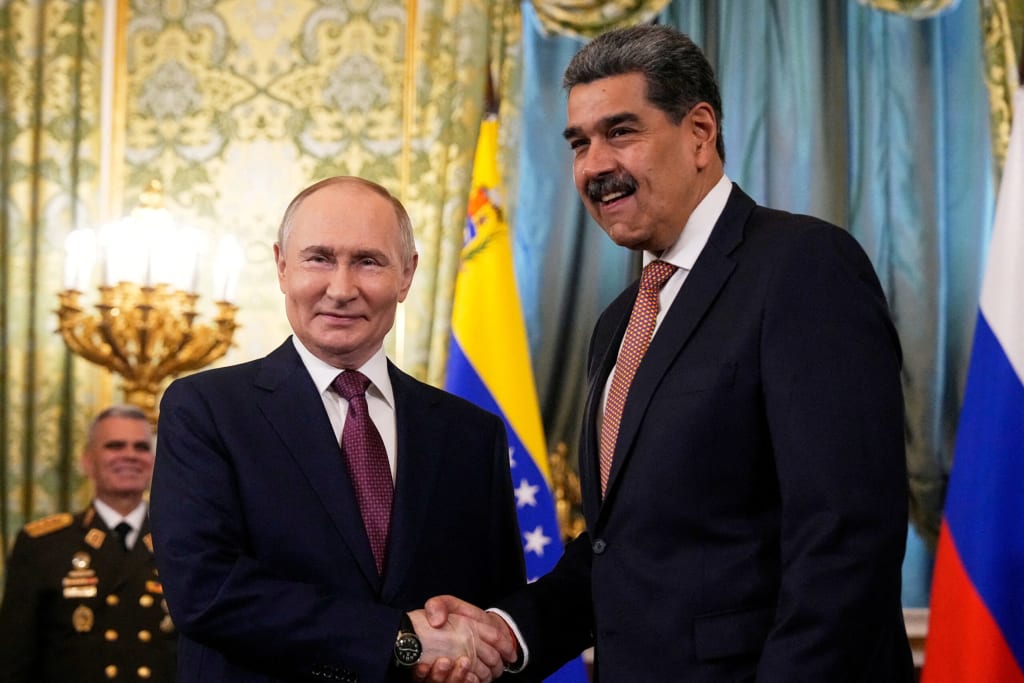
The U.S. capture of Nicolás Maduro didn’t just redraw Venezuela’s political future. It may have quietly detonated a much larger charge—one aimed straight at the foundations of Vladimir Putin’s Russia. What looked like a regional power play in Caracas has exposed a web of weaknesses that stretch from Russian arms exports to oil markets and global credibility. And once those threads started snapping, the world noticed.
For decades, Russia’s weapons industry wasn’t just a cash machine; it was leverage. Before the invasion of Ukraine, Moscow pulled in as much as $15 billion a year selling arms—air defenses, tanks, aircraft. The real value wasn’t the money. It was the dependency. Buy a Russian air-defense system, and you buy into a long-term relationship—software updates, spare parts, training. Arms sales created political gravity.
That gravity is gone. Russian weapons have underperformed badly against Western systems in Ukraine, and buyers like India have taken note. Exports have collapsed to a fraction of their former levels. Then came Venezuela. Caracas was supposed to be a showcase: layered air defenses combining Russian S-300s, Pantsir point defenses, and Chinese “stealth-killer” radars. If any place outside Russia could blunt U.S. air power, this was meant to be it.
Instead, the U.S. raid humiliated the entire setup. American helicopters flew, fought, and survived. Man-portable missiles missed. Air defenses failed to even slow the operation. Video of Russian-made missiles firing—and failing—spread instantly. For any country that bought Russian systems to deter U.S. intervention, it was a nightmare scenario. Arms sales aren’t just revenue; they’re reputation. And reputation, once shattered, is almost impossible to rebuild.
That alone would be bad enough. But the Maduro operation coincided with another quiet showdown—this one at sea. A tanker linked to Russia’s shadow oil fleet attempted to slip through enforcement and reach a Russian port. When U.S. forces boarded and seized it, Moscow blustered… then backed down. No rescue. No escalation. Just legal protests after the fact. For years, countries avoided touching Russia’s sanction-dodging fleet out of fear. Now that fear cracked. When Russia blinked, it gave everyone else permission to act.
Energy is where this all converges. Russia is a fossil-fuel state. Oil and gas bankroll the government, cushion sanctions, and fund war. And here’s where Venezuela becomes existentially dangerous. Under Maduro, Venezuelan oil production collapsed, keeping global supply tight and prices high—perfect for Moscow. But a post-Maduro Venezuela, especially one aligned with Washington, changes everything. With the world’s largest proven reserves, Venezuela has the potential to flood the market again.
It won’t happen overnight. But within five years, production could return to three million barrels a day. That much oil would hammer prices at the exact moment Russia can least afford it. Its cash reserves are dwindling. Sanctions are biting deeper. Ukrainian drone strikes—guided by increasingly precise intelligence—have knocked out key refinery bottlenecks, cutting Russian refining capacity by as much as 20% during peak periods. Gasoline shortages and price spikes are already hitting ordinary Russians at home.
History offers an uncomfortable echo. Imperial Russia collapsed under war exhaustion, economic strain, and returning soldiers with no future. Today’s Russia faces a similar cocktail—plus collapsing energy revenues. Add a revived Venezuelan oil industry to that mix, and the pressure multiplies.
The raid on Caracas didn’t just remove a U.S. adversary in the Western Hemisphere. It exposed how brittle Russia’s power has become—militarily, economically, and psychologically. When allies see that Moscow can’t protect them, can’t defend its own shadow fleets, and can’t keep oil prices propped up forever, the spell breaks.
Whatever comes next in Venezuela, one thing feels clear: it’s not going to be good for Russia. The fire Putin lit abroad is burning back toward home. And the longer Moscow stays on its current path, the fewer exits remain.
About the Creator
Lawrence Lease
Alaska born and bred, Washington DC is my home. I'm also a freelance writer. Love politics and history.
Keep reading
More stories from Lawrence Lease and writers in FYI and other communities.
On National Cheese Lover’s Day, Don’t Feel Bleu—Celebrate the Curds That Bind Us
January 20th rolls around every year with a simple but powerful message: don’t feel bleu, throw a feta, and absolutely act capriciously if cheese is involved. National Cheese Lover’s Day is the perfect excuse to lean into one of humanity’s oldest and most beloved foods. Whether you’re reaching for cheddar, asiago, fontina, or something that smells questionable but tastes incredible, this is a gouda day to celebrate it all.
By Lawrence Lease4 days ago in FYI
How Safe Are AI Companion Apps? What You Need to Know
AI companion apps have exploded in popularity faster than you can say “Hey Siri, where’s my emotional support?” From supportive chat buddies to steamy romance simulators, these apps promise connection, entertainment, and sometimes… adventure.
By jagraj singha day ago in FYI


Comments
There are no comments for this story
Be the first to respond and start the conversation.