
US Homeland Security Seizes Cracked Streams and Stream East in Vietnam
Seizure Leaves Streamer Without Access

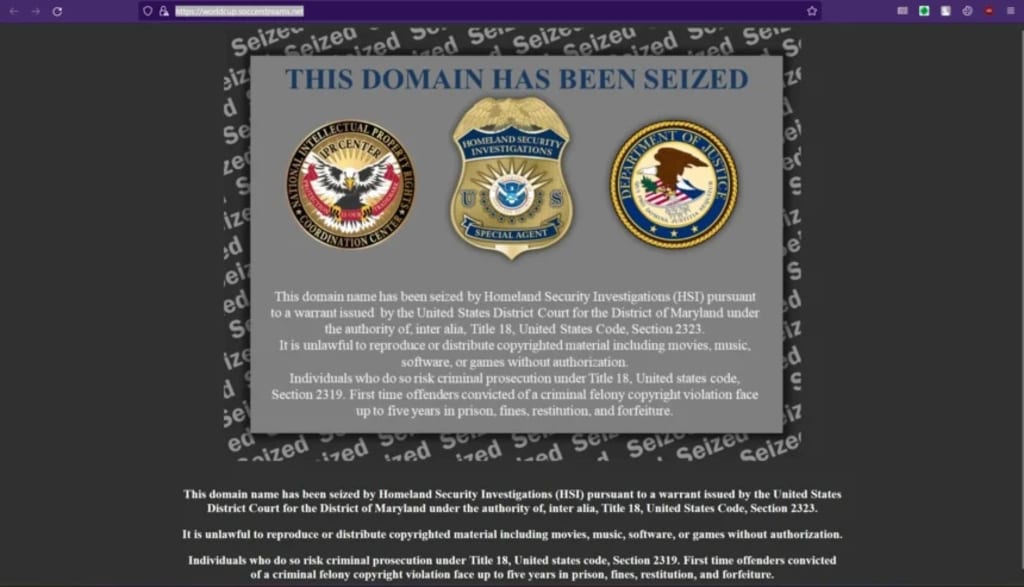
Why Homeland Security Took Down Stream East and Cracked Streams
The recent takedown of Stream East and Cracked Streams by Homeland Security has left millions of sports fans wondering what's next. These platforms, infamous for offering free access to live games, had built a massive following by bypassing legitimate streaming services.
Millions tuned in every month to watch premium sports content without paying a dime. However, their popularity came at a cost—not just to broadcasters but to the broader sports industry.
The crackdown wasn't just about shutting down websites; it was a direct response to the growing impact of piracy on intellectual property and content rights.
Understanding Stream East and Cracked Streams
The recent shutdown of Stream East and Cracked Streams unveiled the immense popularity and influence these platforms had in the world of illegal live sports streaming.
They didn’t just offer alternatives to paid services—they created a worldwide phenomenon centred around convenience and affordability. Here's what made these platforms both revolutionary and problematic.
What Are Stream East and Cracked Streams?
Stream East and Cracked Streams were two of the most recognized names in illegal live sports streaming. These sites catered to millions of users monthly, offering free access to premium content like NFL, NBA, UFC, and European football.
Stream East was known for its clean interface and high-definition (up to 1080p) streams, appealing to users who wanted minimal interruptions. On the other hand, Cracked Streams gained traction for its broader sports offerings and global coverage.
The audience for these platforms primarily consisted of tech-savvy younger males, with a significant chunk aged 25-34. In North America, these platforms were a favourite due to their ability to bypass geographical restrictions and high subscription costs. The platforms’ simplicity—working directly through web browsers without requiring downloads—made them accessible to a wide range of users, from casual sports fans to avid followers.
Factors That Led to Their Popularity
Why did Stream East and Cracked Streams attract millions despite the risks? The answer lies in a mix of accessibility, affordability, and user experience. Here’s a breakdown:
* Cost-Free Access: For many, the appeal was simple—they didn’t want to pay lofty subscription fees. Instead of shelling out for multiple services to watch different leagues, users turned to these free one-stop platforms.
* Ease of Use: Both sites eliminated the hassle of complex logins or lengthy setups. A few clicks, and users had access to live games or past events.
* Unmatched Convenience: With nearly 70% of users accessing these platforms on mobile devices, the ability to watch on-the-go added massive appeal. Popular forums like Reddit often kept links updated, ensuring uninterrupted access to games.
* Global Coverage: Cracked Streams, in particular, attracted international audiences by streaming events from Europe, Asia, and beyond. This variety made it the perfect solution for fans of lesser-broadcasted sports.
* Improved Quality: Over time, the quality of pirated streams improved. Users could stream in high definition with minimal buffering, bridging the gap between piracy and legitimate services.
Ultimately, these platforms thrived by addressing the very pain points legitimate broadcasters struggled to fix: affordability, accessibility, and ease of use.
The Rise of Piracy in Vietnam’s Tech Scene
Vietnam played a pivotal role in the rise of platforms like Stream East and Cracked Streams. The country’s booming tech infrastructure and weaker enforcement of cyber laws created a fertile ground for illegal streaming operations.
Vietnam’s advancements in telecommunications enabled high-speed internet and lower data costs, making it easier for piracy sites to flourish.
Operators used sophisticated tools like proxy servers and encrypted domains to stay undetected, often embedding their servers far from prying eyes. Vietnam’s position as a hub for piracy was further cemented by the lack of immediate legal consequences for digital copyright violations.
Additionally, organized crime syndicates found these platforms lucrative, using them as vehicles to drive traffic to other illicit activities such as gambling sites or malware distribution.
While authorities have stepped up efforts with new laws and increased raids, the legal framework still struggles to adapt to the fast-paced evolution of online piracy in the country.
For years, Vietnamese piracy networks thrived on the demand for free global content, particularly for sports. But with recent shutdowns, the question remains: will this trend subside, or will it find new ways to adapt and continue? Only time will tell.
The Recent Crackdown by Homeland Security
The recent shutdown of Stream East and Cracked Streams signalled a significant escalation in the fight against digital piracy. These platforms catered to millions of sports fans, offering free access to premium content, but their operations came with a steep cost to legitimate broadcasters and the creative industries.
Homeland Security's involvement in dismantling these networks demonstrates how serious the U.S. government is about tackling illegal streaming. Here's how the operation unfolded, the legal framework behind it, and its broader implications for the streaming ecosystem.
Details of the Seizure Operation
The takedown was spearheaded by Homeland Security Investigations (HSI) in collaboration with the Alliance for Creativity and Entertainment (ACE) and Vietnamese law enforcement.
The operation targeted over 138 domains linked to Stream East and Cracked Streams — two of the most prominent piracy networks.
* Homeland Security Investigations: HSI's role was pivotal in coordinating the international effort. Using advanced cyber tools and investigative techniques, they tracked down key operators hiding behind layers of encryption and proxy servers. Their expertise ensured the operation wasn’t limited to domain seizures; it extended to identifying and disrupting the individuals running these networks.
* ACE's Contribution: The Alliance for Creativity and Entertainment, representing some of the world's largest media companies, brought crucial industry resources to the table. ACE provided intelligence, technical expertise, and a deep understanding of piracy trends, which proved essential in pinpointing the networks’ infrastructure.
* Vietnamese Law Enforcement: Authorities in Vietnam played a crucial role in executing on-the-ground actions, including identifying physical server locations and detaining individuals involved in the operations. Vietnam’s growing commitment to addressing piracy marks a significant shift, as the country had previously been seen as a safe haven for such activities.
This level of international cooperation highlights how piracy has become a global issue requiring a unified response. The operation disrupted a network serving millions of monthly users, sending a clear message: piracy operators can no longer rely on anonymity or cross-border complexities to shield them.
Legal Framework Behind the Seizures
The seizure of Stream East and Cracked Streams was governed by an array of U.S. and international laws, with Title 18 of the United States Code standing out as a cornerstone. This legislation addresses various forms of cybercrime, including copyright infringement and wire fraud.
* Copyright Violations: Title 18, Section 2319, specifically criminalizes the unauthorized reproduction, distribution, and public display of copyrighted material. Platforms like Stream East blatantly violated these provisions by streaming premium sports content without licenses.
* Wire Fraud and Money Laundering: Operating piracy networks often involves fraudulent methods to evade detection, including the use of fake identities and encrypted payment systems. These activities fall under Title 18, Section 1343 (wire fraud) and Title 18, Section 1956 (money laundering). The operators behind these platforms exploited these tactics to collect ad revenue and facilitate millions in illegal transactions.
* International Cybercrime Laws: Given the international nature of the operation, laws like the Budapest Convention on Cybercrime also played a role. This treaty, which Vietnam has begun aligning with, facilitated cross-border collaboration, including evidence sharing and coordinated enforcement actions.
This legal framework underscores the risks for operators of piracy sites. Beyond fines, those found guilty can face lengthy prison sentences, especially when charges like wire fraud or money laundering are involved. As for users, many remain unaware that simply accessing pirated streams can also lead to penalties in certain jurisdictions.
Impact on the Streaming Industry
The shutdown of Stream East and Cracked Streams didn’t just affect the millions of users who relied on these platforms. It also created ripple effects across the streaming and sports broadcasting industries.
1. Financial Recovery for Broadcasters: Broadcasters like DAZN, beIN Sports, and Canal+ invest billions in acquiring content rights. Pirated streams undermine these investments by offering the same content for free. The takedown represents a step forward in recapturing lost revenue and protecting the value of these rights.
2. Increased Awareness of Piracy: The operation has shone a spotlight on the scale of illegal streaming, raising awareness among users, regulators, and content creators. For the industry, this is an opportunity to educate consumers about the alternatives and risks associated with piracy.
3. Shifts in Viewer Behaviour: With Stream East and Cracked Streams offline, many users may now turn to legitimate platforms, especially if they find piracy sites increasingly inaccessible. On the flip side, the "Hydra effect" — where new piracy sites emerge to replace shut-down ones — remains a challenge.
4. Push for Innovation: For streaming platforms, this crackdown is a reminder of the need to address consumer pain points. High costs and complicated subscriptions often drive users to piracy. By offering more affordable options, bundled services, or exclusive content, platforms can attract former piracy users and prevent new ones from surfacing.
The operation also sends a broader message about piracy’s impact on the sports ecosystem. Smaller leagues and emerging talent are among the hardest hit, as illegal streams divert funding that would otherwise go toward their development. In this way, tackling piracy isn’t just about protecting corporations; it’s also about preserving the future of sports and entertainment.
The Consequences for Operators and Users
The takedown of Stream East and Cracked Streams wasn’t just about seizing web domains—it carried real-world consequences for the operators and users who participated.
These platforms operated in a legal grey zone at best, and outright defiance of laws at worst, putting both operators and users in precarious positions. Understanding the fallout from such actions helps shine a light on why piracy is a gamble for everyone involved.
Legal Risks for Operators
Running an illegal streaming site isn’t just a risky business model—it’s a direct violation of copyright law, carrying heavy legal penalties. For operators, it’s not just about shutting down a website; it’s about potentially facing life-altering consequences.
1. Copyright Infringement Charges: At its core, operating a piracy platform violates copyright laws by redistributing content without authorization. Operators can face fines ranging from $200 to $150,000 for each copyrighted work infringed upon. Multiply that by the sheer volume of content offered on these platforms, and the financial penalties become astronomical.
2. Felony-Level Offences: The U.S. Protecting Lawful Streaming Act classifies large-scale illegal streaming operations as a felony. That’s a big deal. It transforms these cases from civil disputes into criminal cases, leading to longer prison sentences and heftier fines.
3. Additional Criminal Charges: It’s not just copyright infringement. Many operators are also slapped with charges like fraud, money laundering, and identity theft. These platforms often rely on fake payment systems, encrypted servers, and illegal transactions, which complicates their legal troubles.
4. Global Cooperation: Think hosting servers in another country makes operators untouchable? Think again. International collaborations, like the partnership between Homeland Security and Vietnamese law enforcement during this takedown, have proven that cross-border enforcement is very real. Operators who think they can hide behind borders are finding out the hard way that the law is catching up.
The message is clear: running an illegal streaming site is a high-stakes gamble, with legal consequences that can ruin lives and strip operators of their profits—and freedom.
Risks for Users of Pirated Streams
While the operators face the brunt of the law, users of pirated streaming platforms aren’t entirely off the hook. Many believe watching illegal streams is harmless, but that couldn’t be further from the truth. If it’s “free,” you’re likely paying in other ways.
1. Malware and Viruses: Illegal streaming sites are a haven for malicious software. Nearly 60% of these platforms come with hidden dangers like malware, spyware, or ransomware. Clicking on the wrong pop-up or link could expose personal data, steal passwords, or lock down your computer entirely.
2. Phishing Scams: Ever been prompted to “create an account” or enter credit card details on a sketchy site? That’s how phishing scams work. Users hand over sensitive financial information, only to discover later their accounts have been drained or compromised.
3. Legal Fines or Penalties: In some jurisdictions, even accessing pirated streams can lead to legal repercussions. Viewers might not face jail time, but fines and court appearances are still costly and stressful. Ignorance of the law isn’t a defence when it comes to piracy.
4. Compromised Streaming Experience: The user experience on pirated sites often comes with frustration—think buffering, pixelated video quality, and streams cutting out mid-game. Add the potential to infect devices with malware, and it’s clear the “free” experience comes at a steep price.
5. Data Breaches: Many piracy sites collect and sell user data to third parties. You might think you’re “anonymous,” but your activity can often be tracked, leaving personal information exposed via unsecure systems.
For users, the risks are clear: by avoiding legitimate platforms, they’re putting their devices, data, and potentially their wallets at serious risk. A subscription may seem expensive, but when weighed against malware infections and phishing risks, it’s the safer bet every time.
Illegal streaming may look like an easy shortcut, but in reality, it’s a legal and digital minefield not worth crossing. Operators and users alike pay a hefty price for their involvement—whether they see it immediately or down the line.
Economic Impact of Illegal Streaming
Illegal streaming has evolved into a major issue with widespread economic consequences. Platforms like Cracked Streams and Stream East didn't just cut into broadcaster profits—they disrupted a multi-billion-dollar ecosystem. Here's how the financial toll extends beyond the broadcasters and impacts leagues, teams, and even the behaviour of viewers.
Financial Losses to Broadcasters
The numbers are staggering: piracy costs legitimate broadcasters billions of dollars annually in lost revenue. Estimates suggest that up to $29 billion are drained from the U.S. economy every year due to illegal streaming operations.
For sports broadcasters like DAZN, beIN Sports, and Canal+, this loss directly devalues their expensive broadcasting rights. Each illegally streamed game reduces the ROI from the millions (or even billions) spent on securing exclusive sports deals.
This erosion in value has a domino effect. With diminished revenue, broadcasters may need to cut back on innovation, content production, or even streaming quality.
Consumers end up with fewer options, while subscription fees creep higher to compensate for the losses. In extreme cases, smaller broadcasters could find themselves unable to compete, consolidating the sports streaming market further.
Ripple Effects on Sports Leagues and Teams
The damage doesn’t stop with broadcasters. Smaller leagues, emerging sports, and local teams rely heavily on the revenue generated by legitimate broadcasting deals. Piracy diverts those funds away from the ecosystem, leaving leagues with less money to invest in talent, staff, and infrastructure.
For emerging athletes, the stakes are even higher. Without sustained funding from broadcasting revenue, the opportunities to compete on larger stages diminish.
Picture a young soccer player from a smaller league losing their chance to rise to prominence because the league couldn’t afford to provide proper training facilities. That’s the real-world impact of piracy—it stifles growth and undermines the competitive spirit of sports.
Additionally, weakening the financial base of smaller organizations could result in fewer matches televised, reduced accessibility for fans, and a widening gap between rich, well-funded leagues and smaller, struggling ones. In the long term, the entire ecosystem suffers.
Shifts in Viewer Behaviour
The shutdown of Stream East and Cracked Streams has forced millions of viewers to adapt. While some users are exploring legal streaming services, others are already seeking new piracy domains.
This phenomenon, often referred to as the "Hydra effect," shows how shutting one illegal platform often leads to multiple replacements cropping up.
Interestingly, for some viewers, the inconvenience of finding new sites or dealing with malware risks has pushed them toward legitimate options.
Platforms like DAZN and ESPN+, recognizing this shift, are beginning to offer more tailored and affordable subscription models. It’s a small but promising step to compete with the no-cost allure of piracy.
Still, the broader challenge lies in bridging the gap between cost and accessibility. If legitimate streaming platforms can lower their barriers—whether through better pricing, bundled services, or unique features—they stand a chance of converting pirates into paying customers.
For viewers, the post-crackdown landscape serves as a reminder of the risks tied to piracy. From malware infections to phishing scams, the hidden costs often outweigh the savings. This moment marks a potential turning point in the ongoing battle between convenience and legality. Will fans choose to support the sports industry or continue to drift toward illegal alternatives?
The Role of International Collaboration
International partnerships are becoming the backbone of efforts to combat digital piracy. The recent seizure of Stream East and Cracked Streams demonstrates how collective action between nations can disrupt even the most widespread illegal networks.
Governments, organizations, and private entities are combining their expertise to tackle piracy, setting a powerful precedent for industry-wide cooperation.
Collaboration Between ACE and Vietnamese Authorities
The Alliance for Creativity and Entertainment (ACE) and Vietnamese authorities showcased a textbook example of international collaboration.
Stream East and Cracked Streams were among the largest piracy networks, but their operations relied on the anonymity and technical infrastructure often found overseas. In this case, Vietnam became the focal point due to its advanced tech sector and history of piracy activity.
ACE brought industry knowledge and technical tools to the table, providing intelligence on how these platforms operated. They worked closely with Vietnamese law enforcement, whose role was critical, especially on the ground.
Together, they tracked the origins of these piracy networks, identifying servers, domain registrars, and even individuals operating behind the scenes. This collaboration wasn’t just about reclaiming rights; it was about dismantling a complex web of operations.
Vietnamese authorities executed raids, seized physical assets, and took strong legal actions against operators. By prosecuting violators under intellectual property laws, they sent a clear message that piracy would no longer be tolerated.
These efforts were bolstered by ACE’s access to global resources, including funding, cyber expertise, and intelligence-sharing networks.
Such partnerships reveal a growing trend: piracy isn’t just a local issue—it’s global. Operators often hide behind international borders to avoid detection, but as this operation shows, even these boundaries are no longer safe havens.
When private organizations and governments unite, they gain the ability to neutralize piracy networks at their roots, regardless of geographical barriers.
Challenges in Addressing Piracy Worldwide
While the collaboration between ACE and Vietnamese authorities was successful, it also highlighted the ongoing challenges in combating piracy worldwide. Illegal operators adapt quickly, often relying on a tactic known as the “Hydra effect”—when one site is removed, multiple others emerge to take its place. This constant evolution makes it difficult to shut down operations permanently.
Piracy thrives in areas with weak enforcement of intellectual property laws. Many countries lack the resources or legal frameworks necessary to prosecute offenders effectively.
This creates pockets of safety for operators, who use proxy servers, VPNs, and encrypted payment systems to stay anonymous. Furthermore, the global nature of piracy adds layers of complexity—what’s illegal in one jurisdiction might be overlooked in another.
Another hurdle is public demand. High subscription costs and limited accessibility drive many users toward illegal platforms. As long as there’s significant consumer interest, piracy will continue to find ways to meet that demand. For governments and organizations, the challenge isn’t just stopping the supply—it’s addressing the reasons why people turn to these platforms in the first place.
Moreover, international collaboration has its limits. Each country has its own priorities, legal systems, and enforcement mechanisms, which can sometimes slow down joint efforts.
For instance, extradition laws and differing interpretations of copyright infringement can create roadblocks. Sharing resources and intelligence globally is essential, but the lack of standardized procedures often hinders efficiency.
Despite these challenges, the success against Stream East and Cracked Streams proves that unified global action can work.
By continuing to improve legal frameworks, investing in technology, and fostering public-private partnerships, the fight against piracy can gain more ground. It’s not just a battle for the entertainment industry; it’s a fight to protect creativity, innovation, and the principles of fair access.
The Future of Streaming and Piracy
The battle between streaming services and piracy has entered a critical phase. As legitimate platforms expand their offerings, the persistence of illegal alternatives poses complex challenges for broadcasters and viewers. Striking a balance between accessibility and cost while addressing piracy's evolving strategies is key to shaping the future of online content.
Balancing Affordability and Accessibility
For many viewers, the appeal of illegal streaming sites like Stream East and Cracked Streams was rooted in their simplicity and cost-free access. To compete, broadcasters must focus on two main priorities: affordability and ease of use.
High subscription fees and fragmented content across multiple platforms have pushed audiences to seek cost-saving alternatives. Streaming services that fail to align with consumer needs risk losing potential subscribers to piracy.
What can these services do differently? Here are actionable strategies:
* Flexible Pricing Models: Introduce tiered plans to suit different budgets. Some viewers only want access to specific leagues or events—offering tailored packages can reduce barriers for casual fans.
* Ad-Supported Options: Implement free or low-cost, ad-supported tiers. Platforms like Tubi and Peacock have proven that consumers are open to ads if it means cheaper access to content.
* Bundling Opportunities: Collaborate with other services to create bundles. For example, combining sports streaming with music or entertainment subscriptions could attract more subscribers while streamlining costs.
* Exclusive Value-Added Features: Go beyond live games. Add behind-the-scenes content, live commentary from well-known figures, or interactive fan experiences to make platforms more engaging and unique.
Broadcasters also need to simplify the user experience. The fewer the hurdles in accessing content—whether it's app compatibility, geo-restrictions, or complex sign-up processes—the less likely users are to turn to illegal options. By listening to their audience and addressing pain points, streaming services can create an ecosystem where piracy is the inconvenient option.
The Hydra Effect in Online Piracy
The fight against piracy is often likened to battling a Hydra: shut down one site, and several more spring up. The recent crackdown on Stream East and Cracked Streams underscores this cycle. While millions of users were displaced, new domains and platforms quickly emerged to fill the void, perpetuating the issue.
This "Hydra effect" is fuelled by the decentralized nature of piracy networks. Operators utilize encrypted servers, proxy domains, and international jurisdictions to evade detection. So, how can the cycle be disrupted?
Breaking the Hydra Effect:
1. Tech-Driven Detection and Prevention:
* Use AI to monitor and identify piracy patterns in real time.
* Implement advanced watermarking to track and disable pirated streams.
2. Collaboration Across Borders:
* Foster international cooperation. Sharing intelligence and legal support across countries can remove the safe havens pirates often exploit.
* Example: Partnerships like those between Homeland Security and Vietnam's law enforcement should be expanded globally.
3. Targeting Revenue Streams:
* Most piracy sites rely on advertising or affiliate revenue. Cutting off these financial lifelines can suffocate their operations.
* Work with major ad networks to blacklist piracy-affiliated sites.
4. Educating Consumers:
* Raise awareness about the legal and personal risks of piracy, from malware to data breaches.
* Offer convenient and legitimate alternatives, emphasizing value for money and safety.
As piracy methods evolve, so must the strategies to counteract them. It's not just a technological challenge; it's a human one too. Engaged viewers, cooperative governments, and proactive broadcasters all play critical roles in breaking the piracy cycle and ensuring a sustainable future for online entertainment.
Conclusion
The takedown of Stream East and Cracked Streams by Homeland Security was a decisive move against the growing issue of piracy in sports streaming.
It demonstrated the willingness of authorities to collaborate internationally and enforce copyright laws to protect broadcasters and content creators. These actions are a direct response to the economic and ethical challenges piracy imposes on legitimate industries.
As users weigh the risks of illegal streams, the onus now shifts to legitimate platforms to address accessibility and cost concerns. By choosing lawful streaming options, viewers help sustain the sports and entertainment ecosystem, ensuring quality content for the future.
The battle against piracy is far from over, but every choice made by consumers sends a clear message about the value of fair play in the digital world.
About the Creator
Anna Wong
Anna studied at Chiang Rai Rajabhat University where she earned a degree in Journalism and Mass Communication in 2004. After graduating Anna worked as a journalist for MCOT Radio broadcasting stations company
Oil Prices and the Hidden Struggles Behind Global Energy
Oil prices influence daily life in ways many people rarely notice. From the cost of gasoline at the pump to the price of food in grocery stores, shifts in oil prices ripple through the global economy. A sudden rise can strain family budgets, while a sharp drop can shake entire industries. Behind these changes are complex forces such as political tension, supply shortages, economic growth, and environmental concerns. Yet for many people, oil prices remain a distant headline rather than a personal story. The truth is far more connected to everyday life. Understanding how oil prices move, why they change, and who feels the impact most can reveal a deeper picture of the modern world and the fragile balance that keeps global energy flowing.
By Muqadas khan7 days ago in FYI



Comments
There are no comments for this story
Be the first to respond and start the conversation.