
US Capitol Wasn’t the Only Legislative Invasion -There Were Others
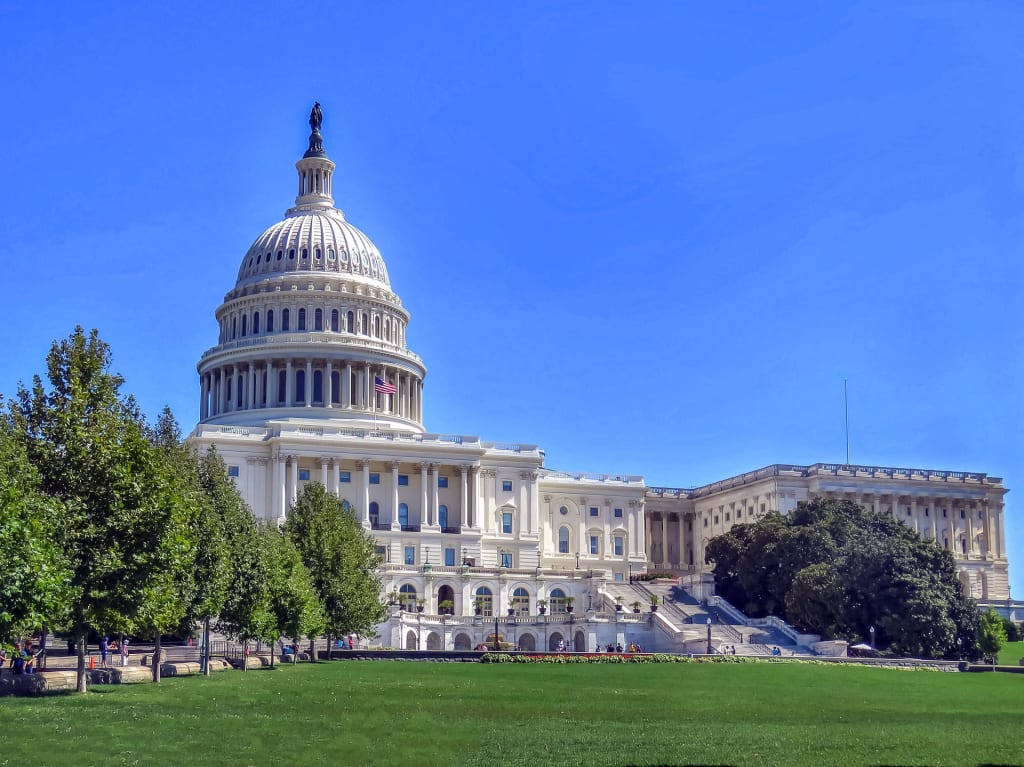
US Capitol and 6 violent legislative invasions that rocked the nations.

Most democracies have survived through the tough years of disagreements through dialogues. But when the authoritative powers try taking over free speech and disregarding the opinion of others, a whirlwind of horrendous events broke in history. Among many such events, legislative invasions were a commonly seen page in history.
Here are 7 legislative invasions in history:
1. US Capitol Attack, 2021
Donald Trump was unhappy with the result of the 2020 Presidential election. He had basically clearly lost the election. He claimed that the democratic party's presidential candidate Joe Biden winning in the five swing states: Arizona, Georgia, Michigan, Pennsylvania, and Wisconsin was voter fraud. Trump filed at least,60 lawsuits to nullify the votes cast in the election. After his legal failures, he tried other tactics.
On 6 January 2021, a mob of supporters of Donald Trump instigated by him attacked the US Capitol while lawmakers were in a joint session of congress voting to certify the winner. This was a final blow attempted by Donald Trump.
The violent mob stormed the US Capitol; vandalized and looted the place. They went inside lawmakers' offices took pictures and threw important papers. Some of the members of the mob went inside Nancy Pelosi's office took away some of her mails. Lawmakers were evacuated. Around 140 people were injured and one woman died on spot.
The US Capitol invasion was wildly covered by the media and condemned by international leaders. The Senate's majority leader Mitch McConnel called the storming a "failed insurrection". Around 400 people are charged with federal crimes post insurrection. The event made Donald Trump the first president to be impeached twice, however, he steers clear of all allegations by a few votes.
2. Salvadoran Political Crisis, El Salvador, 2020
El Salvador a country plagued by crime. To fight this, the newly elected president Nayib Bukele passed a law, “Territorial control plan.”
It aims to increase the funding of the National Civil Police and confront gangs violently. For the same reason, the president hoped to get an international loan agreement worth $109 million to buy security equipment and other support for the president’s anti-crime program.
The controversial loan agreement raised questions about fund allocation and lack of transparency. The long-negotiated bill always ended in gridlock in the Legislature Assembly. The delay in passing the loan was a part influenced by the political disputes with the president.
Finally, on 6 Feb, Bukele used article 167, which allows the president’s Council of Ministers to call the assembly into session in case of a national emergency. The assembly scheduled on 9 Feb was attended by less than half of the members.
On that day, Bukele entered the legislative assembly with forty military personnel and sat on the assembly’s chairman Mario Ponce’s place. He used foul language and urged the lawmakers to pass the bill within a week. Lawmakers condemned the act and stated it a dictatorial attitude. However, surprisingly many people spoke in favor of Bukele and approving of the loan, and protested in the days following to get it done quickly.
3. Russian Political Standoff, 1993
Russian President Boris Yeltsin elected in 1991 was riding high in public eyes for a long period.
However, the public outlook changed when he started giving Russia his shock therapy. Well, shock therapy was the term given for Yeltsin’s market reforms.
His popularity was losing its luster by the spring of 1993. He was at odds with the legislature and the Supreme Soviet, its speaker, Ruslan Khasbulatov, and his own vice president, Aleksandr Rutskoi. The conflict increasingly intensified.
On September 21, 1993, Yeltsin signed “Decree No.1400,” which dissolved the legislature and set elections for a new bicameral parliament for December.
The president based his unconstitutional move on the referendum of April 1993, in which he performed well enough. The parliament has declared the president move to be invalid, impeached the president, and declared the vice-president as an acting president.
To register their protest further, the legislators barricade themselves in Moscow’s White House. Two of the chief rivals of Yeltsin Supreme Soviet speaker Ruslan Khasbulatov and Vice President Aleksandr Rutskoi instigated anti- Yeltin protestors to the Ostankino television studio, the nerve center of Russia’s broadcast media, and the Moscow mayor’s office.
A state of emergency was declared, and Yeltsin cut off the power supply, water, and phone line to the Soviet White House. Rebel lawmakers were arrested. The final events were on the brink of inciting civil war. Reportedly 147 people were killed, and 437 were wounded.
4. Spanish Coup D’état in the Lower House of Parliament, 1981
Spain was transitioning to democracy after the death of the dictator Francisco Franco.
Political violence and conundrum were a thing in the democratization process. Unemployment, inflation, and rebellious sentiments were on the rise involving military and extreme sentiment.
Several attempts to overturn the democracy took place. Operation Galaxia which happened in November of 1978 was one of the coup attempts led by General Antonio Tejero, who was sentenced to seven months.
After a failed attempt Colonel made his mind to work again.
On 23 February 1981, 200 armed civil guard officers led by Lieutenant-Colonel Antonio Tejero barged into the lower house of the Spanish Legislature during a vote while 350 deputies were casting their vote to elect the Prime Minister of the Government. He pointed a pistol at Parliament President Landelino Lavilla; the coup held the ministers and the parliamentarians for almost 18 hours.
It was an attempt to overthrow the civilian government. Deep in the night, King Juan Carlos I denounced the coup in a televised broadcast.
General Alfonso Armada, a confidant of the king, entered the occupied parliament accompanied by the head of the Civil Guard and the chief of the National Police to negotiate a solution to the parliamentary siege. The officers surrendered the next day. Shots were fired, however, nobody was killed. Colonel Tejero and Major Saenz were later found guilty.
5. The Storming of the Macedonian Parliament, North Macedonia, 2017
It was December of 2016 when Nikola Gruevski’s conservative party won elections but not a clear majority. The formation of the coalition came to a dead-end when ethnic Albanians, which represent a quarter of the country’s population, demanded Albanian be recognized as the second official language of the country.
The election of a new speaker of the Assembly of the Republic of Macedonia unleashed turmoil in the country. Talat Xhaferi, an ethnic Albanian who was elected by the opposition Social Democrat Party and others representing Macedonia’s Albanian ethnic minority, voted for a new speaker after months of deadlock to form a new government. 200 masked protesters on 27 April 2017 stormed the parliament, throwing chairs, shouting “traitors,” and attacking the MPs and the opposition leader.
The parliament hallway had spilled blood, and broken glasses littered on the floor after the whole melee. Police had to use stun grenades to end the scuffle.
6. Parliament House Riot, Canberra Riot, Australia, 1996
Before the 1996 Australian federal elections, the Australian council of trade unions leader Bill Kelty warned of an industrial war if the coalition government would change labor laws.
However, the government did bring changes, did extensive budget cuts, and curtailed compulsory unionism by introducing the Workplace Relations Amendment Bill. This angered trade unionists and they held a protest rally called the “Cavalcade to Canberra” on the lawns of federal parliament.
On August 19, 1996, things got out of hand; the protest turned violent when a group of new demonstrators arrived. The protestors stormed through the parliament's gift shop looted the items.
People filled their pockets and whatever they could find. The walls were graffitied. Rioters threw items and books at the police.
The Mob was inside the Democratic seat. It took 200 police two hours to get the mob out of the building. An estimated 90 police and parliament staff were injured. The damage to the forecourt and foyer of Parliament was initially estimated to be $75,000.
7. Assault on the National Congress, Venezuela, 1848
The dispute between the Liberals and the Conservatives in Venezuela dates back to the 1840s.
It all started when the autocrat General José Tadeo Monagas tried to seize absolute power. José Tadeo Monagas in 1847 gave all the positions of power to men loyal to him.
This made the opposition furious. A political dispute unfolded between José Tadeo Monagas backed by the Liberal Party, and José Antonio Páez, supported by the Conservative Party.
On 24 January 1848, a rumor was spread that the minister of interior and Justice Martín Sanabria was murdered while he was in the Congress to present the annual report. The Liberal crowd was infuriated at the news and violence unfolded.
People tried getting inside the National Congress. The Liberals and the Conservatives brawled. Congressmen Francisco Argote, José Antonio Salas, and Juan García lost their lives at the hands of the mobs.
The legislative powers and the judicial powers were seized by the president of the republic after the riot. The autonomy of the parliament was lost. Many members of Congress; largely Conservatives, tried prosecuting the president however it was dismissed.
Later, out of fear they sought asylum or fled to Curacao. One of the main opposition leaders José Antonio Páez rebelled against the government but was defeated twice in war and had to take refuge in the republic of Grenada (modern Colombia).
About the Creator
Ashfia A.
I write what I like | Freelancer


Comments
There are no comments for this story
Be the first to respond and start the conversation.