
Unwrapping Christmas: From Ancient Festivals to Modern Celebrations
Christmas is a grand holiday that is celebrated all over the world.

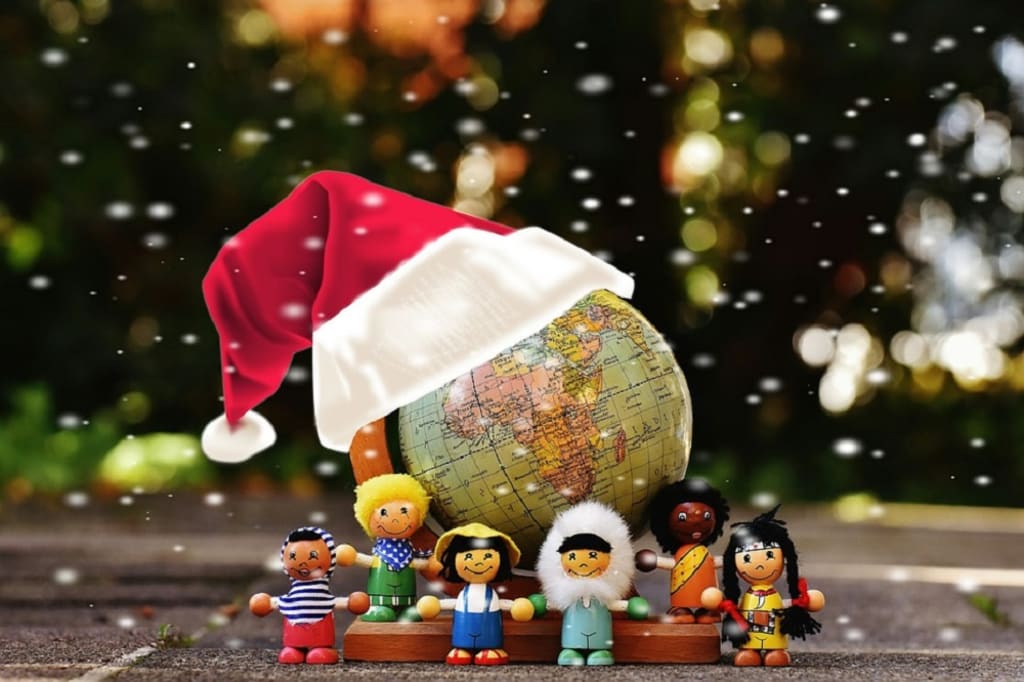
Christmas, with its glittering lights and festive spirit, is a celebration deeply embedded in history, evolving from pagan roots to a major Christian holiday and a global cultural phenomenon. This journey through time reveals how a simple date on the calendar has become the centerpiece of winter celebrations around the world, marked by unique traditions and a spirit of goodwill. Let's delve into the rich tapestry of Christmas, exploring how it has transformed and what it signifies across different cultures.
Ancient Origins and Christian Adoption
Winter Celebrations Before Christ
Long before the advent of Christianity, ancient civilizations marked the winter solstice with festivals that celebrated the rebirth of the sun. The Norse in Scandinavia celebrated Yule, a festival that lasted from late December through January. Families would gather to burn giant Yule logs in honor of their gods and to entice the sun to return.
In Rome, the festival of Saturnalia, held in honor of Saturn, the god of agriculture, was a time of mirth and revelry. Social hierarchies were temporarily dissolved, slaves were given temporary freedoms, and gifts were exchanged among friends and family. This atmosphere of social reversal and festivity would greatly influence the celebrations of Christmas in the centuries to follow.
Christian Transformation
As Christianity began to spread, early church leaders, particularly in Rome, co-opted these popular pagan celebrations by introducing the birth of Jesus Christ as the reason for the season. December 25th was chosen not because it was the true birthdate of Jesus, which remains unknown, but because it aligned with Roman and pagan traditions. By the fourth century, the Church officially recognized December 25th as the date of Jesus' birth, and Christmas was marked by increasing religious significance.
The Middle Ages: Christmas Takes Shape
Feast and Folly in Medieval Times
The medieval celebration of Christmas was a robust confluence of the sacred and the profane. The period from December 25th through January 6th (the Twelve Days of Christmas) saw a series of religious observances interspersed with festivities that often bordered on the riotous. Feasting, drunkenness, and the election of the Lord of Misrule—who oversaw the revelries and inverted social norms—characterized the season.
Nativity Plays and Early Carols
It was also during the Middle Ages that nativity plays began to be performed, dramatizing the story of the birth of Christ. These plays were originally part of the church's efforts to educate a largely illiterate populace about the Bible. Alongside these, the tradition of caroling began as a form of communal song in which the stories of Christ's birth were told through simple, memorable melodies.
The Reformation and its Impact
Protestant Pushback
The advent of the Protestant Reformation in the 16th century brought significant changes to how Christmas was celebrated. Figures like Martin Luther and John Calvin sought to remove what they saw as corrupt and pagan elements from Christian worship. In many parts of Europe, particularly in England and parts of Germany, public celebrations of Christmas were discouraged, and in some cases, outright banned.
Luther's Innovations
Despite his reservations about many traditional aspects of Christmas, Martin Luther introduced the concept of bringing decorated trees into the home, a precursor to the modern Christmas tree. He was also instrumental in promoting the singing of German hymns as opposed to the Latin chants of the Roman Catholic Church, thus democratizing and domesticizing the religious observance of Christmas.
Christmas Goes Global
Colonial Expansion and the Exchange of Traditions
As European nations colonized other parts of the world, they brought with them their Christmas traditions, which were adapted and blended with local customs. In the Americas, settlers from various parts of Europe brought distinct traditions which merged to form the Christmas celebrations we recognize today.
The Victorian Era: A Christmas of Dickens and Decorum
The 19th century, particularly in Victorian England, was a pivotal era for the modernization of Christmas. Charles Dickens' "A Christmas Carol" (1843) played a significant role in reviving and shaping the ideals of Christmas—charity, family, and goodwill. This period also saw the popularization of many traditions such as the Christmas tree, the sending of Christmas cards, and the decoration of homes with festive garlands.
The 20th Century and Beyond: Commercialization and Universal Appeal
The Rise of Santa Claus
In the 20th century, the figure of Santa Claus became standardized as a jolly, bearded man in a red suit, largely due to American advertising. This figure was a blend of various European legends, including St. Nicholas, a generous bishop from Turkey, and Father Christmas, an English figure who embodied the spirit of Christmas cheer.
Global Adoption and Adaptation
Today, Christmas is celebrated in various forms around the world, even in countries with little Christian tradition. Japan, for example, sees Christmas mostly as a time for romantic outings and gift-giving among friends, while in India, it is a public holiday enjoyed by people of all religions, often marked by the decoration of mango or banana trees instead of traditional pines.
The history of Christmas is as diverse as it is long. From pagan festivals to global celebrations, the holiday has adapted to meet the needs and desires of changing times. Its ability to evolve while retaining its core themes of joy, generosity, and community speaks to the enduring appeal of Christmas. As we continue to celebrate, we also continue to create new traditions that honor this ancient holiday's broad spirit of inclusivity and good cheer.
About the Creator
Lawrence Lease
Alaska born and bred, Washington DC is my home. I'm also a freelance writer. Love politics and history.
Keep reading
More stories from Lawrence Lease and writers in FYI and other communities.
Pumpkin Pie vs. Pecan Pie: The Great Thanksgiving Dessert Debate
Thanksgiving always seems to come with at least one friendly argument. Some families go all-in on the stuffing-versus-dressing divide. Others spar over canned cranberry versus homemade. But the debate that quietly simmers beneath it all — the one we pretend isn’t serious but absolutely is — is the dessert showdown between pumpkin pie and pecan pie.
By Lawrence Lease2 months ago in FYI
United States Glass Drinkware Market Size and Forecast 2025–2033
United States Glass Drinkware Market The United States Glass Drinkware Market is expected to reach US$ 7.99 billion by 2033, rising from US$ 3.7 billion in 2024, at a CAGR of 8.93% from 2025 to 2033. Growing consumer awareness of sustainability and reusable materials, the expansion of the hospitality and beverage industries, and the desire for high-end, fashionable glassware in both homes and foodservice settings are the main factors propelling the U.S. glass drinkware industry.
By jaiklin Fanandish7 days ago in FYI



Comments
There are no comments for this story
Be the first to respond and start the conversation.