
Unveiling the Enigma of Mysterious Underwater Sounds
sounds suspected in our oceans
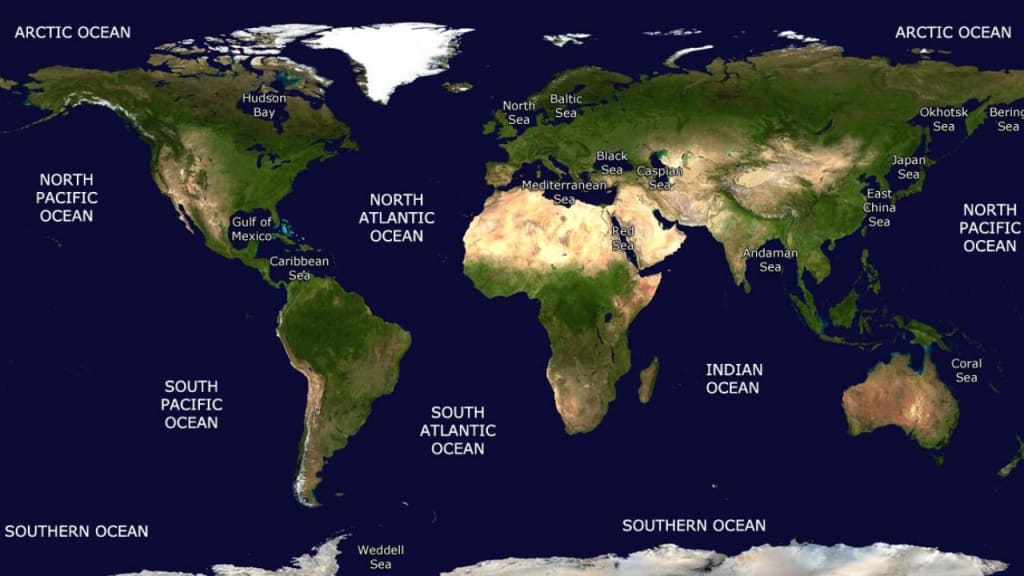
Our planet is home to an enormous, largely unexplored realm - the world's oceans. A staggering 95% of these vast aquatic expanses remains unseen by human eyes, leaving us with an intriguing question: what secrets could be concealed within these uncharted waters? Many experts contend that, given the ocean's immense size, it wouldn't be surprising if some sizeable and enigmatic creatures still elude discovery. When people contemplate the uncharted depths of the deep sea, thoughts often veer towards the possibility of mythical and fearsome sea creatures. While this notion is nothing short of enthralling, it also carries an air of terror.
Throughout the years, underwater recording devices have captured an array of unexplained sounds. To this day, these sounds remain shrouded in mystery. We invite you to listen to these enigmatic underwater recordings. For a more immersive experience, it is recommended that you don headphones. Let's delve into five of the most perplexing underwater sounds ever documented.
The Bloop: Undoubtedly, one of the most renowned underwater sounds ever recorded is the enigmatic "Bloop." Many have likely heard of it, but fewer have had the opportunity to listen to the original, real-time recording. First detected in 1997, the "Bloop" reverberated through hydrophones across the Pacific. What set it apart was its astonishing volume; these underwater microphones picked it up from a distance of roughly 3,000 miles. Most versions available online have been sped up by 16 times to make the sound more discernible, but the original version carries an eerie mystique of its own.
The National Oceanic and Atmospheric Administration (NOAA) eventually pinpointed the source of the sound approximately 650 miles off the South American coast, in a remote expanse of the Pacific Ocean. Interestingly, this region coincides with where H.P. Lovecraft's legendary Cthulhu creature, from the 1928 fictional narrative, was said to dwell. While the NOAA proposed that the "Bloop" resulted from an ice quake, there is insufficient evidence to support this conclusion. Speculations about its origin range from blue whales to unknown, colossal sea creatures. As the sound's exact origin remains elusive, the "Bloop" persists as an unsolved mystery.
Upsweep: Named for its characteristic narrow band up-sweeping sound, the "Upsweep" first made its auditory presence known in August 1991 when the Pacific Marine Environmental Laboratory initiated underwater audio surveillance. This recurring sound follows a peculiar pattern: it intensifies during the spring and autumn and dwindles during the rest of the year. Furthermore, its volume has been diminishing year by year. While the source of this recurrent sound is believed to be near submarine volcanoes, it might be related to bubbles from a submerged cave or overhang.
The Train: Recorded on March 5, 1997, in the Equatorial Pacific Ocean, the "Train" was given its moniker due to its similarity to the noise of train wheels grinding against tracks. Limited information exists about this sound, and several theories have emerged. While some suggest it may result from an iceberg scraping the ocean floor, others entertain the possibility of an unknown, massive sea creature living deep within the ocean's ice-cold depths.
Julia: Since March 1999, a peculiar annual underwater sound has been recorded by the National Oceanic and Atmospheric Administration just off the coast of South America. This sound, known as "Julia," has captured imaginations due to its eerie resemblance to the howls of an enormous underwater sea creature. Some attribute "Julia" to underwater volcanic activity or the impact of a large iceberg against the ocean floor. Yet, with the sound persisting annually, the mystery endures.
The Slow Down: Among these enigmatic sounds, the "Slow Down" stands out as particularly eerie. Recorded in the Equatorial Pacific Ocean off the Antarctic Peninsula on May 19, 1995, it has recurred on multiple occasions. The descending frequency of this sound, which lasts several minutes, resembles something out of a horror movie. It was initially sped up 16 times to make the frequency change more evident. The "Slow Down" has been associated with the vibration produced by ice sheets breaking off thousands of miles away, plunging to the ocean's depths, and creating a sonic disturbance. However, this explanation remains unproven, and NOAA classifies the "Slow Down" as one of their unexplained sounds of the sea.
These underwater sounds captivate the imagination. While scientists offer plausible explanations, many mysteries persist, leaving ample room for speculation and wonder. It's a testament to the vast, uncharted expanses of our oceans that these enigmatic sounds continue to pique our curiosity, reminding us that the depths of our planet remain largely undiscovered."
About the Creator
Ananymus Kelly
meticulous
Keep reading
More stories from Ananymus Kelly and writers in FYI and other communities.
Exploring the Depths: From Sunken Treasures to Ancient Cities
Embark on an underwater journey, delving into the realms of submerged secrets, from treasures worth thousands of dollars to modern gadgets and the remnants of ancient civilizations. Picture yourself at a serene river, relishing a boat ride while capturing picturesque memories. However, one misstep, and your smartphone takes an unplanned plunge. Thankfully, you've safeguarded your gadget in a waterproof bag. But what if your phone, along with its protective case, slips to the riverbed? This unfortunate scenario unfolded for some individuals, including a scuba diver and a YouTuber, who lost gear valued at a staggering $20,000, including brand-new iPhones and precious jewelry.
By Ananymus Kelly2 years ago in FYI



Comments
There are no comments for this story
Be the first to respond and start the conversation.