
Uncovering the Secrets of Stonehenge: A Journey Through Time
Exploring the Mystery and Significance of England's Iconic Prehistoric Monument
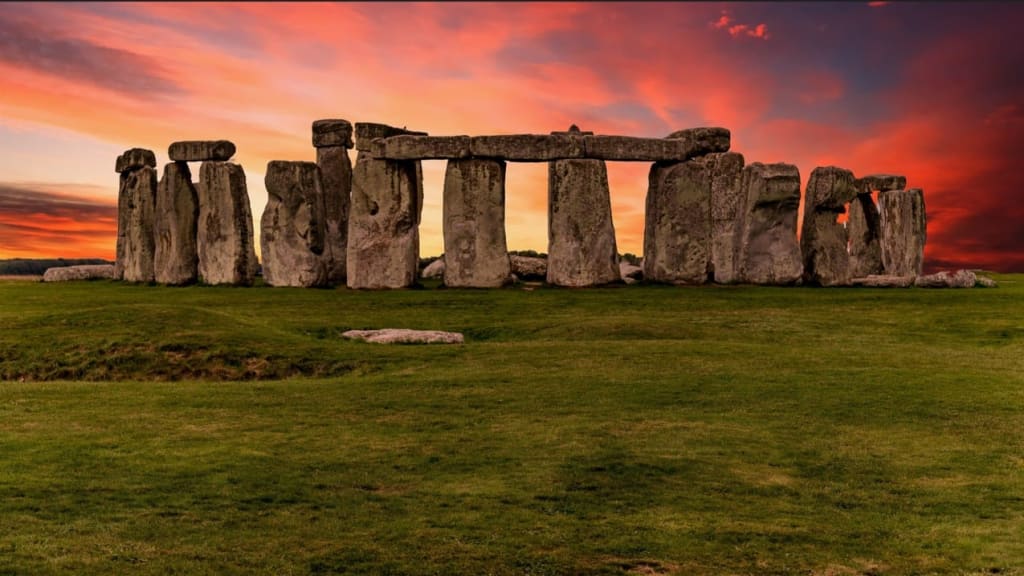
Stonehenge is an iconic prehistoric monument located in Wiltshire, England, and has been a source of fascination and intrigue for generations. This ancient site is believed to have been constructed between 3000 BC and 2000 BC, and its purpose has been the subject of much debate and speculation. Despite numerous studies and theories, the true meaning behind Stonehenge remains a mystery.
History and Construction
Stonehenge is composed of several different elements, including a circular arrangement of large stones called sarsens, smaller bluestones, and other features such as pits, banks, and ditches. The sarsens, which weigh up to 25 tons each, were quarried from nearby Marlborough Downs and transported to the site using a combination of rollers, ropes, and possibly even water. The bluestones, which are smaller in size and come from a quarry in Wales, were transported over 150 miles to the site.
The construction of Stonehenge is believed to have occurred in three phases, with the sarsen circle being erected during the second phase. The third phase saw the addition of bluestones, which were arranged in a horseshoe shape within the sarsen circle. Other features, such as the Heel Stone and Avenue, were added during the final phase of construction.
Purpose and Interpretations
The true purpose of Stonehenge has been the subject of much speculation, with numerous theories being proposed over the years. One of the earliest interpretations of the site was that it served as a temple or religious center, with the stones being used for rituals or ceremonies. This theory was popularized in the 17th century by the English antiquarian John Aubrey, who described Stonehenge as a Druid temple.
Another theory suggests that Stonehenge was an astronomical observatory, with the stones being aligned to mark the movements of the sun, moon, and stars. This theory gained popularity in the 1960s with the work of the astronomer Gerald Hawkins, who proposed that the arrangement of the stones could be used to predict eclipses and other celestial events.
More recent theories suggest that Stonehenge was used for healing rituals or as a place for communal gathering and celebration. One theory even suggests that the site was used as a burial ground for high-ranking individuals, with the stones being used to mark the graves.
Despite these theories, the true purpose of Stonehenge remains a mystery. The lack of written records from the time period has made it difficult to determine the exact purpose of the site, and the lack of conclusive archaeological evidence has led to continued speculation and debate.
Significance and Symbolism
Despite the mystery surrounding Stonehenge, the site remains an important cultural and historical landmark. The monument has been a source of inspiration for artists, writers, and musicians for centuries, and it continues to captivate people around the world.
In 1986, Stonehenge was added to the list of UNESCO World Heritage Sites, recognizing its cultural significance and importance to the world's heritage. The site is also protected under UK law, with strict regulations governing access and use.
The symbolism of Stonehenge has also been a subject of interest, with many interpreting the site as a symbol of human ingenuity and resilience. The monument's longevity and enduring presence serve as a testament to the creativity and determination of our ancestors.
Controversies and Challenges
Despite its cultural and historical significance, Stonehenge has faced a number of controversies and challenges over the years. The site has been damaged by erosion, weathering, and human activity, and there have been numerous efforts to restore and preserve the monument.
In recent years, Stonehenge has also been at the center of a controversy over a proposed tunnel that would run beneath the site. The tunnel, which is part of a larger project to improve traffic flow in the area, has been met with criticism from archaeologists and heritage groups, who argue that it could damage the site and its surrounding landscape.
Another challenge facing Stonehenge is the issue of overcrowding and visitor management. The site attracts millions of visitors each year, and there have been concerns about the impact of tourism on the monument and its surrounding environment. Efforts have been made to manage visitor numbers and limit the impact of tourism, including the construction of a visitor center and shuttle service to the site.
Conclusion
Stonehenge remains one of the world's most enduring mysteries, captivating the imaginations of people around the world for centuries. Despite numerous studies and theories, the true purpose of the site remains unknown, and the mystery of Stonehenge continues to inspire curiosity and intrigue.
As we continue to study and explore Stonehenge, it is important to remember the significance and symbolism of this ancient monument. Stonehenge represents a remarkable achievement of human ingenuity and creativity, and serves as a reminder of the enduring legacy of our ancestors.
As we work to preserve and protect Stonehenge for future generations, it is important to approach the site with reverence and respect, and to continue our efforts to unravel the mysteries of this remarkable prehistoric monument.


Comments
There are no comments for this story
Be the first to respond and start the conversation.