
"Transforming Invasive Water Hyacinths into Fashionable Art: Cambodia's Sustainable Craftsmanship"
"Empowering Women to Tackle an Ecological Menace, One Handmade Bag at a Time"

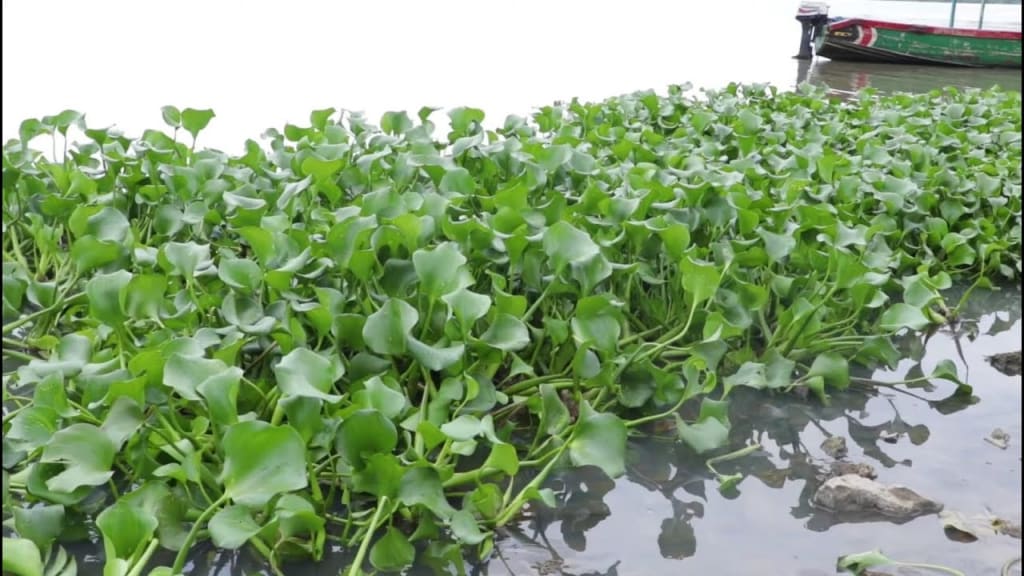
In lakes and rivers across the globe, a voracious invader is wreaking havoc on aquatic ecosystems. Water hyacinths, a once-sought-after ornamental plant from the Amazon, have spread to over 50 countries, including the largest freshwater lake in Southeast Asia, Tonle Sap. These invasive weeds not only hinder local transportation but also threaten aquatic life by blocking out light and oxygen. Eradicating them has proven elusive for the 1.5 million residents of Tonle Sap. In response, communities are embarking on a unique quest, removing these pests by hand and ingeniously repurposing their dried stems into fashionable bags and handicrafts. This inspiring endeavor led us to Cambodia, where local women are turning a global waste problem into opportunities for sustainable craftsmanship.
The Water Hyacinth Predicament: An Amazonian Intruder Gone Rogue
Originally native to the upper reaches of the Amazon Basin, water hyacinths found themselves transported worldwide during the early 20th century, admired for their beauty. However, their journey left behind their natural predators, allowing them to double in size every two weeks, wreaking ecological havoc in their wake. Notably, Tonle Sap's floating villages, a unique ecosystem, fell victim to the adverse effects of water hyacinths. These invasive plants choked waterways, generated vast amounts of waste, and disrupted staple food stocks. Worse still, they turned the tranquil waters of the region into navigational nightmares, leaving many stranded in the labyrinth of hyacinth-covered lakes.
Empowering Women to Weave Environmental Change
Hau Sunstra, the founder of Rocock, embarked on a mission to empower local women while addressing the water hyacinth menace. Her company hires women to manually remove these invasive weeds, which are then transformed into an array of artisanal products, from baskets to rugs. Sunstra's vision encompasses supporting women, who often face societal challenges and early marriages. By offering employment and training opportunities, she aims to elevate their livelihoods and provide them with a sense of financial independence.
The weaving process begins with carefully bundling hyacinth stocks, typically 200 at a time, which are then dried in the sun for up to two weeks. Subsequently, the women wash and steam the fibers to eliminate bacteria and achieve the desired color. The size of the stems determines the product; small ones for coasters, medium-sized for bags and baskets, and the largest for rugs. This weaving style is rooted in tradition, reflecting the rich heritage of Cambodia.
Empowering Women and Preserving the Environment
While millions grapple with the global water hyacinth predicament, diverse solutions have emerged worldwide. In Bangladesh, locals employ hyacinth mats for farming, while Kenya utilizes mechanical harvesters to control plant growth. Innovative entrepreneurs have harnessed the plant to produce biogas for cooking and compost for agriculture in Lake Victoria, Kenya. Nigeria follows a similar path with a startup comparable to Rocock.
However, it is essential to recognize that these solutions may be short-term in nature. Creating an industry around the invasive species could inadvertently stimulate demand. Rocock's weavers believe they are making a positive impact, albeit with a limited workforce. Water hyacinths reproduce at an astonishing rate, outstripping their capacity for harvest.
Nonetheless, Hau Sunstra has achieved a critical aspect of her mission by empowering the women of Tonle Sap. By providing them with opportunities to support their families and fostering independence, she has sown the seeds of transformation within the community. The story of Rocock serves as a beacon of hope, illustrating how environmental challenges can be met with creativity, determination, and the power of women.
In the fight against invasive water hyacinths, Cambodia's resilient women are proving that sustainable craftsmanship can serve as both a lifeline for their families and a beacon of hope for the environment.
About the Creator
Keep reading
More stories from Anu Preethi Danila D and writers in FYI and other communities.
The Price of Luxury: Unearthing Calacatta Marble in Carrara, Italy
In the heart of Carrara, Italy, a centuries-old tradition continues—marble extraction. Yet, not just any marble; we delve into the meticulous and costly process of unearthing Calacatta marble, an extraordinary material cherished for its rarity and beauty.
By Anu Preethi Danila D2 years ago in FYI
A Failed Artist, A Disillusioned Poet, An Underpaid Game Show Host
I took my son and niece to Gori, a small town in Georgia where Joseph Stalin was born. They talked me into visiting the Stalin's Museum, the largest in the post-Soviet space. I had resisted going there because I just can't stand the monster and know enough about him, or so I thought.
By Lana V Lynx26 days ago in FYI




Comments (2)
Thank you very much...
Great environmental article! Very transformative 😀