
Toxic Tango: Unmasking the 5 Deadliest Chemicals on Earth
Unveiling the Lethal Symphony: Exploring Earth's Five Most Deadly Chemicals

Substance N
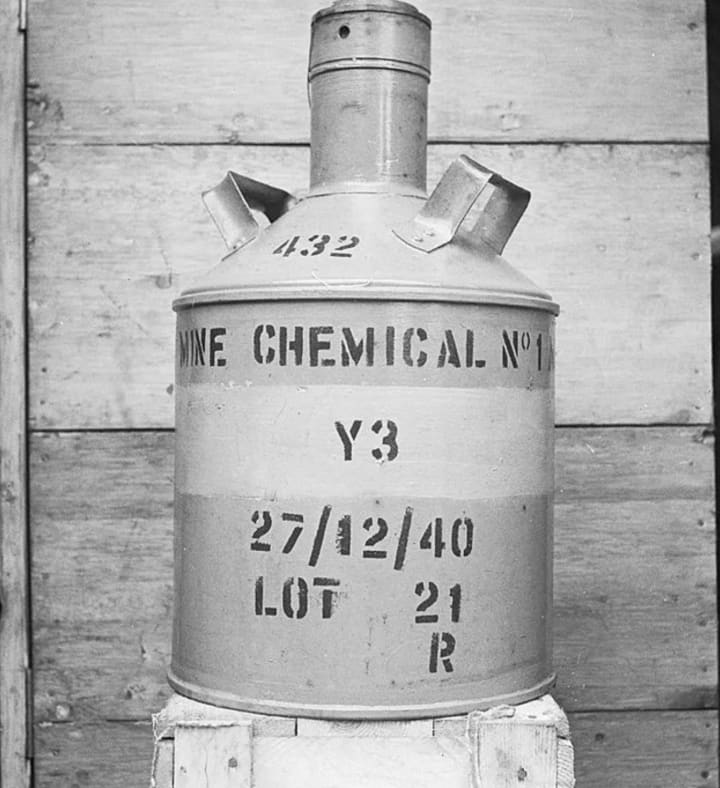
Germany, 1939. Deep within a covert bunker situated on the German-Polish border, Nazi operatives presided over the manufacturing process of a newly unearthed chemical compound known by the codename "Substance N."
When exposed to air, this enigmatic substance would rapidly boil; upon contact with water, it would erupt in a cataclysmic explosion. Inhalation of its vapors proved lethally toxic, while its decomposition emitted deadly hydrofluoric acid. Employing "Substance N" in conjunction with flamethrowers, the Nazis sought to arm their troops with a weapon capable of liquefying Allied fortifications into a scorching slurry.
However, as the German soldiers delved deeper into their study of "Substance N," they themselves recoiled in astonishment. Eventually, the Nazis deemed the experimentation with this perilous chemical too hazardous to continue.
This serves to illustrate the perilous nature of the world's most hazardous substances. Compounds that ignite upon contact, possessing such toxicity that a mere millionth of a gram inhaled could prove fatal. These substances possess a nightmarish aroma capable of incapacitating their victims and even prompting the Nazis, known for their audacious endeavors, to consider them utterly deranged.
Chlorine trifluoride
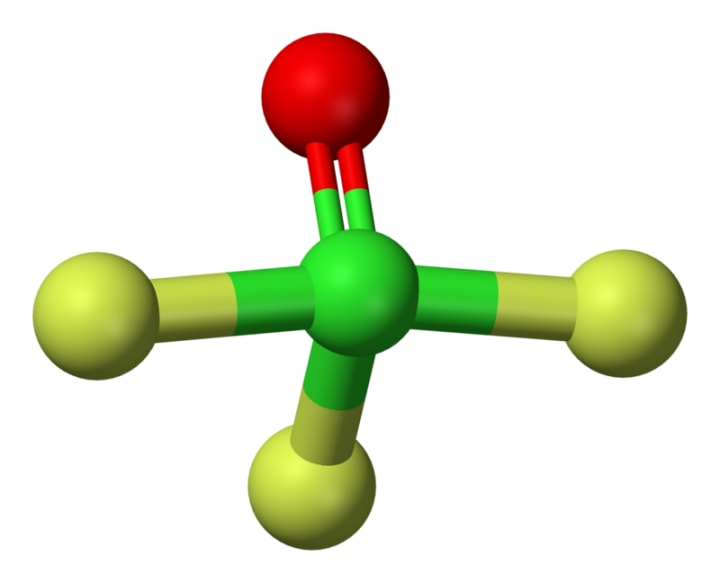
Let's examine the contents of the clandestine weapons bunker utilized by the Germans. Their initial intention was to produce 90 tons of the substance monthly, but throughout the entire war, they managed to manufacture only around 30 tons. The substance in question was chlorine trifluoride, renowned as the most potent fluorinating agent known to humanity.
Fluorinating agents have the ability to dismantle other molecules by replacing their hydrogen atoms with fluorine. The outcome of this process triggers what chemists refer to as a 'violently exothermic reaction,' commonly known as a fluorine fire.
Handling chlorine trifluoride is significantly more perilous than even working with fluorine gas, a statement rarely made, as anyone with a chemistry degree would acknowledge. Moreover, it surpasses oxygen as an oxidizer.
Oxidizers are compounds that seize electrons from other chemicals during a reaction, thereby facilitating combustion. Chlorine trifluoride exhibits such exceptional prowess in this regard that it can ignite materials typically perceived as non-flammable by rational individuals, including bricks, asbestos, or even substances that have already been burned.
Oxidizers are also employed to ignite rocket fuel. However, when rocket scientists briefly considered using chlorine trifluoride as a propellant, they swiftly realized the ill-advised nature of such an idea.
During the early 1950s, when US scientists attempted to transport chlorine trifluoride in bulk for the first time, a steel tank cracked, resulting in the spillage of an entire ton. The resulting fire burned so intensely that the chemical ate through an entire concrete floor, as well as a meter of dirt and gravel beneath it.
One eyewitness succinctly described the incident by stating,
The concrete...was on fire
Despite these hazards, chlorine trifluoride continues to be manufactured and finds application in the semiconductor industry, where it is utilized to thoroughly clean equipment.
On a positive note, chlorine trifluoride can be safely stored in a regular steel drum, provided the container is airtight and extreme caution is exercised. However, it instantly scorches the interior lining of the drum, leaving behind a nonreactive metallic fluoride coating.
Azidoazide Azide
The term "nonreactive" is applicable when discussing the next chemical on on the list: "Azidoazide azide," which holds the dubious distinction of being the most explosive chemical compound ever created.
This peculiar compound belongs to the category of chemicals known as "High nitrogen energetic materials." Its behavior stems from nitrogen's innate desire to remain undisturbed.
When a nitrogen atom bonds with another nitrogen atom, it forms one of the most stable molecules found on Earth. Their electrons establish an exceptionally robust triple bond, a bond typically broken in nature only by the impact of lightning. The strength of this bond implies that when two nitrogen atoms unite, they unleash a substantial amount of energy.
Now, let's examine the molecule of Azidoazide Azide, which I will refer to as AA due to its challenging name. You can observe how it earns its explosive nature. AA contains 14 nitrogen atoms, and due to the molecular structure, none of these atoms are engaged in a triple bond.
Instead, they exist in a loosely bound, high-energy state, yearning to transition to a more stable, lower-energy state. This transition results in the release of a significant amount of pent-up energy. Consequently, AA is both highly reactive and tremendously explosive.
As for its sensitivity, it's difficult to quantify because it is too sensitive even to measure its own sensitivity. In 2010, a team of German chemists, in collaboration with the US army, created AA as part of their quest to develop more energetic compounds. In their initial report on the discovery, they stated,
The sensitivity of C2N14 is beyond our capabilities of measurement... even the smallest possible loadings in shock & friction-tests led to explosive decomposition
To provide an idea of how delicate this substance is, here's a list of actions that can trigger an explosion with Azidoazide: moving it, touching it, dispersing it in solution, leaving it undisturbed on a glass plate, exposing it to bright light, exposing it to X-rays, placing it in a spectrometer, and even turning on the spectrometer.
And here's my favorite: ABSOLUTELY NOTHING! It's as if the mere existence of Azidoazide can prompt an explosive response. They stored it in a shock-proof, explosive case, in a dark, climate-controlled room... and yet, it still detonated! It seems that even a slight disparaging comment about the compound would be enough to trigger its wrath.
The lead scientists involved in its synthesis referred to it as:
A very exciting discovery
If I were to work with Azidoazide Azide, simply waking up each morning and finding all my fingers intact would indeed be a very exciting discovery!!
Dimethylcadmium
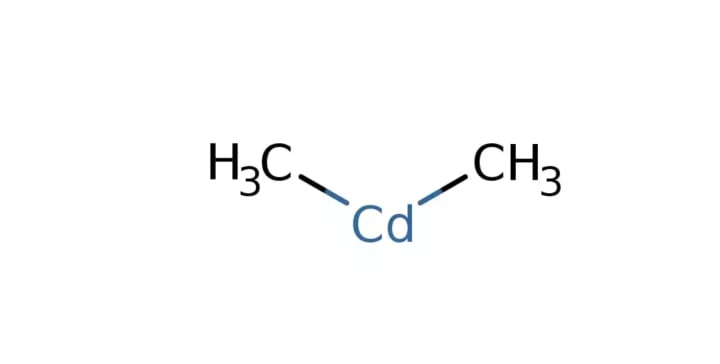
Now, let's jump into the topic of Dimethylcadmium (metaphorically speaking of course!!) This compound falls under the category of organometallic compounds, where carbon forms bonds with a metal. In this case, the metal is Cadmium, which is inherently hazardous. Up until now, I've discussed chemicals that explode or engulf everything in unquenchable flames.
And don't get me wrong, Dimethylcadmium falls into that category as well. However, its true danger lies in its unparalleled toxicity on a gram-for-gram basis, making it quite possibly the most toxic chemical in the world.
Dimethylcadmium exhibits both acute and chronic effects, meaning it can harm you immediately and persistently. It was first synthesized by Erich Krause, a pioneer in metal-organic chemistry, who, coincidentally, hailed from Germany. This breakthrough occurred in 1917.
To give you an idea of Krause's unfortunate fate, he met his demise at the age of 37 in his laboratory after accidentally inhaling a substantial amount of chlorine. But prior to that tragic event, he managed to document his discovery of Dimethylcadmium.
When you inhale this compound, it swiftly enters your bloodstream, acting as a chemical carrier for toxic cadmium compounds to traverse throughout your body. Thanks to its efficient exploitation of your bloodstream, it rapidly affects your organs with rich blood supply, such as the lungs, kidneys, and liver.
It forms compounds that strip electrons from your cell atoms, causing severe damage. If, against the odds, you survive the initial hours following exposure to Dimethylcadmium, don't let your hopes rise too high. It is also highly carcinogenic, meaning it will bring about cancerous conditions just to spite you.
As an airborne vapor, even a minuscule amount, a few millionths of a gram per cubic meter of air, exceeds the legal safety limits. Now, if you were to accidentally spill Dimethylcadmium, how would you clean it up?
- Using water would only result in the production of excessive heat and flammable hydrogen gas, causing it to explode upon contact.
- Perhaps you could attempt sweeping it up? Unfortunately, friction triggers ignition.
- Waiting for it to decompose? It will indeed decompose, forming a layer of dimethyl cadmium peroxide, which is highly sensitive to friction and can explode with a mere shoe-scuff.
Adding to its repertoire of dangers, this chemical emits an odor described as foul, unpleasant, metallic, and disagreeable.
Thioacetone

But that's nothing compared to the next chemical: Thioacetone. It may not explode, cause fires, or induce cancer. Compared to the other chemicals on the list, it's like a cute, fluffy bunny in terms of danger.
Imagine that cute, fluffy bunny emitting the most abominable stench imaginable. That's right, Thioacetone claims the title of the world's smelliest chemical. It belongs to the group of thiols, organic compounds where a carbon atom is bonded to a sulfur-hydrogen pair. They are universally repulsive.
Skunks employ two different thiols in their spray, causing eyes to water and noses to wrinkle. Most sulfur-containing compounds are released by decaying meat, and their unpleasant odor serves as a warning sign rather than a pleasant scent. However, when it comes to foul smells, Thioacetone takes the cake, exuding a seriously unappetizing aroma. Even a single drop of this substance can be detected from half a kilometer away almost instantly.
In the 1960s, a vial of Thioacetone fell off a shelf in a research lab, triggering severe nausea in individuals located 200 meters away. Yet, the most striking example of Thioacetone's silent-but-deadly power occurred in the German city of Freiburg. In 1889, chemists at a soap factory were reportedly working on a larger molecule called tri-thioacetone, used as a flavoring and fragrance.
However, when they inadvertently broke it down into Thioacetone, workers began falling ill, and spontaneous outbreaks of vomiting spread throughout the surrounding neighborhoods. The situation escalated to the extent that the entire city had to be evacuated. While there may be much to learn about Thioacetone and thiols in general, it's understandable that scientists are not eagerly pursuing further investigations into this smelly chemical.
Lastly, we encounter the world's most potent corrosive agent and the most dangerous acid ever concocted by humanity: Fluoroantimonic acid. No list of hazardous chemicals would be complete without a super acid. The defining characteristic of an acid is its ability to donate a proton to nearby molecules.
A proton is essentially a hydrogen atom without its electron, and the process of donating it is called protonation. An acid's strength is determined by its willingness to give up that proton. Weak acids, like acetic acid (undiluted vinegar), are reluctant to protonate other molecules and mostly remain inert. On the other hand, strong acids, such as sulfuric acid, readily release their protons, akin to a beach volleyball soaring through the air during spring break.
Remember how incredible fluorine is, as mentioned in Substance N? Well, fluoroantimonic acid is ten quadrillion times stronger than sulfuric acid. This molecule craves an opportunity to disintegrate. Once it loses its hydrogen atoms, the remaining fluorine and antimony atoms wreak havoc, stripping electrons from nearby molecules and reducing everything in their path to organic goo.
Notably, fluorine has a strong affinity for bonding with calcium. Consequently, once the acid penetrates the fatty organic tissues of your skin and muscles, the fluorine will mercilessly corrode your bones. Storing fluoroantimonic acid is possible only in Teflon containers. It's worth noting that Teflon relies on carbon-fluorine bonds, which are the strongest bonds in organic chemistry.
Knowledge of this acid is limited because conducting experiments with it is extremely challenging. It can't be injected into a syringe or placed on a slide since it effortlessly eats through glass. It even devours fume hoods. The only viable option is to observe it from a significant distance, ideally from...very far away.
About the Creator
Kay
In The Mysterious Mind Dispatch, I share my love for captivating stories, intriguing facts, and deep psychological insights. Discover the quirky tales that didn't make the headlines as we delve into the enigmatic world together!
A Failed Artist, A Disillusioned Poet, An Underpaid Game Show Host
I took my son and niece to Gori, a small town in Georgia where Joseph Stalin was born. They talked me into visiting the Stalin's Museum, the largest in the post-Soviet space. I had resisted going there because I just can't stand the monster and know enough about him, or so I thought.
By Lana V Lynx19 days ago in FYI
Hello You”: The Small Greeting With a Big Human Meaning
“Hello you” is one of the simplest phrases in the English language, yet it carries a surprising amount of emotional, cultural, and social weight. At first glance, it seems informal, even throwaway—something said without much thought. But when examined closely, “hello you” reveals how language adapts to intimacy, technology, and the human need for recognition in an increasingly fast-paced world.
By Salaar Jamali4 days ago in FYI
📢 Raise Your Voice Thread: 01/22/2026
Our “Raise Your Voice Threads” are hosted most alternating Thursdays at 12PM ET to offer creators more avenues to uncover exceptional stories on Vocal. As we are continuously searching for fresh creators and inspiring stories, this thread provides an opportunity to exchange and discuss the stories that have moved and motivated us on Vocal.
By Raise Your Voice by Vocal3 days ago in Resources


Comments
There are no comments for this story
Be the first to respond and start the conversation.