
Today's Lesson Is The Butler
For £50 a Year!
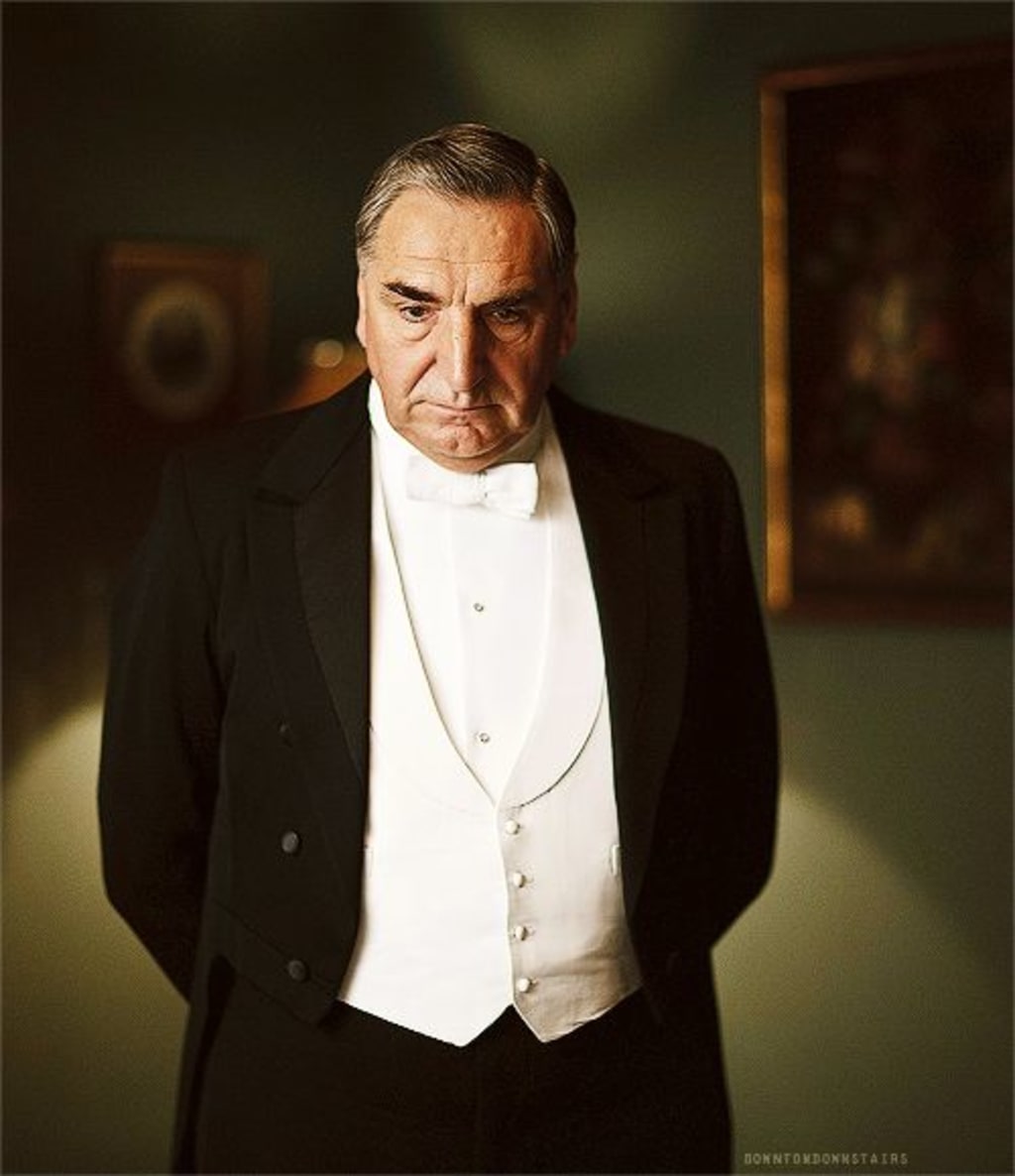
“In my opinion, to misquote Doctor Johnson, if you’re tired of style, you’re tired of life” — Mr.Carson, Butler, Downton Abbey.
They belonged in another time period and were at the top of their careers. Most learnt their trade by “working up the ladder”, which commanded great respect from the other servants who were ‘below’ them. Very few of the upper-classes, who lived in the magnificent houses of the past and who had an army of domestic servants, could manage without them.
The Butler and the Housekeeper had very different duties but they relied on each other completely. As was fitting for their positions, they were always called “Mr” or “Mrs” (even if the housekeeper wasn’t married). They ‘ruled’ the servants with a rod of iron, looking after their physical and moral welfare.
Today, we will be discussing The Butler:
The Butler was the most important male servant who enjoyed having the confidence of the master of the house. He was responsible for all the male staff, being the ‘right-hand man’ of the master. He had (usually) worked his ‘way up the ladder’ (like the housekeeper) and this ‘commanded’ great respect from the other servants, either indoors or outdoors. Again, his duties were endless!
Whereas the housekeeper ordered the food, china and cutlery, and the cook was in charge of the preparation and cooking of the meals, it was the butler who served, being at every meal. His helpers were the footmen. The butler was in charge of: serving the meals and the wine (or any other alcohol) / caring for the wine cellar / checking the lamps and candles (before electricity) / responsible for the Family silver (the silver candlesticks, plate, etc) / and he was “on call” 24/7.
The butler would go through “the house” checking the fires, lamps, candles and generally making sure that everything “was in order”. He would do this in the morning and every night, locking the front door after everyone had arrived home. Sometimes, this would be in the early hours of the morning, catching a few hours sleep before getting up early the next morning to start his duties again. Like the housekeeper, he would have a meeting with the master every morning, to receive his ‘instructions’ for that day.
He would be the one who answered the front door, showing guests in and out, and this meant that the butler was on call all day long. The butler would assign duties to the footmen, remembering that he was once a footman himself. Sometimes he would do the duties of a valet, serving the master of the house or any special male guest who had travelled ‘without his man’.
Unlike the housekeeper, who was allowed to wear her own clothes whilst working, the butler did have a “uniform”. He would wear a formal black suit and was expected to be clean, neat and tidy at all times, setting the example for the other male servants who worked ‘under him’. When serving morning breakfast, the butler wore white linen and dark coloured trousers with a short dinner coat. After luncheon, he changed into a white studded shirt, standing collar with tie and black waistcoat (with the dinner coat) for serving tea and dinner.
Gloves were an important part of the butler’s ‘uniform’. They kept his hands clean as hygiene was a big aspect of the butler’s duties. Usually, the gloves were made of cotton, but for special occasions, he would wear satin gloves. “White gloves were specifically chosen to add a touch of sophistication and to present a cleaner look”. The butler was “immaculately” dressed at all times!
The Butler was the most important domestic servant in the Victorian and Edwardian Eras, and his wages reflected that = £50 a year!
About the Creator
Ruth Elizabeth Stiff
I love all things Earthy and Self-Help
History is one of my favourite subjects and I love to write short fiction
Research is so interesting for me too
Keep reading
More stories from Ruth Elizabeth Stiff and writers in FYI and other communities.
Today's Lesson Is The Housekeeper
They belonged in another time period and were at the top of their careers. Most learnt their trade by ‘working up the ladder’. Very few of the upper-class, who lived in the magnificent “Houses” and who had an army of domestic servants, could manage without them = the Butler and the Housekeeper.
By Ruth Elizabeth Stiff3 years ago in FYI
A Failed Artist, A Disillusioned Poet, An Underpaid Game Show Host
I took my son and niece to Gori, a small town in Georgia where Joseph Stalin was born. They talked me into visiting the Stalin's Museum, the largest in the post-Soviet space. I had resisted going there because I just can't stand the monster and know enough about him, or so I thought.
By Lana V Lynx9 days ago in FYI
Pizza Boxes Market Size and Forecast 2025–2033
Pizza Boxes Market: A Global Packaging Staple in Transformation The global Pizza Boxes Market is expected to reach US$ 3.79 billion by 2033, up from US$ 2.71 billion in 2024, registering a CAGR of 3.81% from 2025 to 2033. This steady expansion is driven by the accelerating demand for takeout and home delivery, rising global pizza consumption, rapid growth of quick-service restaurants (QSRs), and increasing environmental awareness that is reshaping packaging choices worldwide.
By Marthan Sira day ago in FYI



Comments
There are no comments for this story
Be the first to respond and start the conversation.