
Titanic's Sister: A Dark Secret? PART TWO
Did The Titanic Truly Sink?

...CONTINUED FROM PART ONE
Coal Strike/Crew Refusing To Sail On Titanic's Maiden Voyage/Coal Fire
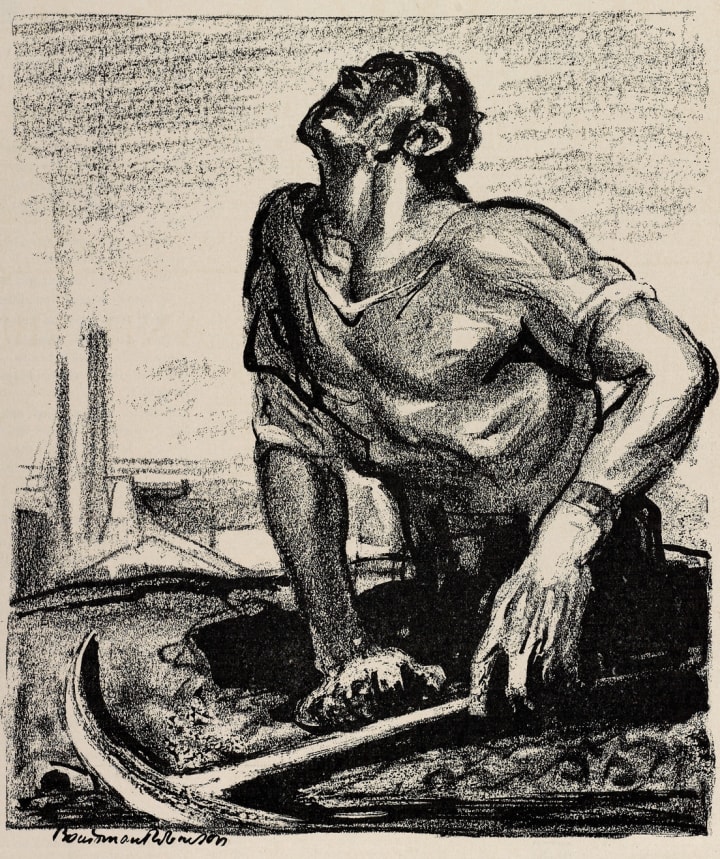
It should be noted that at the time of the maiden voyage of the Titanic, Britain was in the middle of a heavy coal strike thanks to coal miners fighting for minimum wage. Thanks to no coal being mined, train and shipping schedules were dramatically hindered and hundreds of ships were laid up. Due to how desperate White Star Line were to get Titanic's maiden voyage underway, there was only enough coal for her thanks to old coal from other ships being cannibalised of it. Thanks to the coal strike, many of Titanic's passengers were transferred from other ships to her. One such passenger was Millvina Dean and her family, Millvina would become the last living survivor of the Titanic before her death on May 31st 2009, exactly 98 years to the day Titanic was launched.
When Titanic arrived in Southampton to take on provisions for the maiden voyage, the stokers that had been aboard during the sea trials refused to sail on the maiden voyage preferring employment on another ship. What was the problem? If Titanic was their only source of income, why were they refusing to sail on her? The circumstantial factor is that they could tell that the ship was the Olympic and not the Titanic, and that the covered up switch was underway. Is there another explanation?

It has been known that a very heavy fire was smouldering in one of Titanic's coal bunkers, and it had been smouldering since before the sea trials. It was finally extinguished the day before the disaster, but instead of ordering the fire to be extinguished, Mr Ismay ordered the crew to keep quiet and not delay the Titanic's maiden voyage anymore. Thanks to the repairs to Olympic, Titanic's maiden voyage had been delayed by 3 weeks, which was the reason for White Star being desperate to get it underway. Thanks to Ismay ordering the crew to keep quiet, could be the reason why the crew were refusing to sail on Titanic's maiden voyage, instead of finding it wasn't the ship that they were told it was.


It wasn't only the stokers who seemed to not like the Titanic either, Chief Officer Henry Wilde who was to lose his life in the disaster wrote a letter to his sister in which he stated:
"I still don't like this ship, I have a queer feeling about her,".
To say that he had only been on the Titanic for little more than a few days, not liking her seems to be an odd thing to say. As a high-ranking officer, Wilde would have known about the switch if it happened and possibly realized he was actually on the Olympic and not the Titanic. But he was in fact Chief Officer of Olympic during the Hawke collision, and the press were calling the new ships "monster ships", ships which were too big to be handled safely. Given that the Titanic was 1,000 tons heavier than Olympic, she would have needed greater handling. Since Olympic couldn't be handled safely enough in his eyes, it is understandable that he would not have liked the Titanic on this basis, because of her need for greater handling, when the old ship (Olympic) could not be handled safely enough in his eyes.
Cancellations Thanks To A Sinister Feeling?

Among 50, mostly first class passengers cancelled their passage on the Titanic at the final moment. One cancellation was that of Alfred Vanderbilt, who cancelled so late that the White Star Line did not have time to amend the Titanic's passenger lists. As a result, he is listed among those that died. Vanderbilt would later lose his life during the sinking of the RMS Lusitania on May 7th 1915.
According to conspiracy theorists, one cancellation was made by J.P. Morgan himself, but just days after the disaster he was found to be at a luxury resort in France with his mistress. Morgan apparently claimed ill-health as the reason for him cancelling his passage on the Titanic. The conspiracy would suggest that Morgan knew of the switch, and would have cancelled his voyage thanks to this feeling. However, Morgan had actually written to a committee stating he was to be in Venice, Italy by April 23rd. If he had sailed on Titanic, he would not have been in Venice by April 23rd, thanks to voyages from Southampton to New York would take a minimum of 6 days, the same going back.
The only way how cancellations would have been an indication that something sinister was going on, is if Titanic had more cancellations made than Olympic the previous year. But, Olympic had just as many cancellations the previous year. If Titanic's had that amount of cancellations made by first class passengers, people who had money and political power in their pocket, these people would have spoken of such a suspicion later in life. Not a single record of this exists.
SS Californian

The next piece of the puzzle is the Leyland Line Steamship Californian, who is known to have simply sat and watched on while the Titanic was sinking in plain sight. Thanks to the coal strike, Californian was laid up in London, but suddenly on April 5th, she was fully coaled and sped off into the Atlantic, bound for Boston. But then in the evening of April 14th, she suddenly stopped in the middle of the ice field, in a position literally just ten miles north of where the Titanic would sink. That however is not all, her captain Stanley Lord, after ordering her to be stopped, went to bed but was not in his cabin. He was sleeping fully clothed in the chart room, with his cap over his eyes. He also ordered the ship's boilers to be fired up, and her engines on standby. It would seem that Lord was preparing for a sudden call back to the bridge, for a dash into the night. All of these factors do seem to indicate that. But, what would the dash into the night be for?

All the listed factors, coupled with how conveniently close the Californian was from the Titanic seems to possibly indicate that she had been commissioned to rescue the latter's passengers and crew. But only if the Olympic and Titanic were switched. Conspiracy theorists use the factors listed to say that Californian had been commissioned to rescue the passengers and crew from the Olympic (disguised as Titanic), after perpetrating a fake accident and starting the ship to intentionally sink.
Although the circumstance is very strong with the listed factors, is there another possible explanation? In truth, Californian had actually stopped because she was trapped by a massive field of ice, which in Captain Lord's view was too risky to get around in the darkness. So in anticipation of it clearing and wanting to get underway as quickly as possible is the reason for the said factors: Sleeping clothed in the chartroom and keeping the ship's boilers and engines fired up and on standby.
The next factor, which will lead us into the next section, is considering the size and capacity of the Californian. She was not in fact a passenger ship but a cargo ship, she was 447 ft long, 53 ft wide and weighing only 6,223 tonnes. Although she did have passenger accommodation, she could only carry 47 passengers. Fully laden, the Titanic could carry 3,547 people. Therefore, Californian does not seem like a substantial choice of rescue vessel for those on the Titanic, even though the latter was not fully laden during her maiden voyage. Therefore, could more ships have been present?
Titanic Did NOT Hit An Iceberg!? More Ships Involved?
It is here that a very controversial statement comes into play: Titanic did NOT hit an iceberg! But in actual fact, an unnamed rescue vessel that was drifting on station with its navigation lights (navlights) switched off. This statement stems from the such short distance in which the iceberg was seen, because it was actually a darkened ship. The chunks of ice that were found on the Titanic's well deck, were supposedly from the rigging on both her and this unnamed ship. This claim also doesn't hold water, because if it was ice from the rigging of the two ships the chunks would have been smaller than ice cubes, yet they were big enough to be used for football games.
However, the statement that the Titanic did not hit an iceberg is completely false because if another smaller ship had been struck by the Titanic, that said ship would have suffered massive-scale damage, perhaps to the point of being sunk in minutes. If this statement is true, then this unnamed ship would have turned up to a dock some days later badly damaged, and its crew would have spoken about being struck by a massive ship like the Titanic. Yet there isn't a single record of this. If it sank from the damage it suffered from being struck by the Titanic, we would have found another wreck lying near the actual Titanic wreck itself, yet there isn’t. Plus there is ample eye-witness testimony that it was an iceberg.
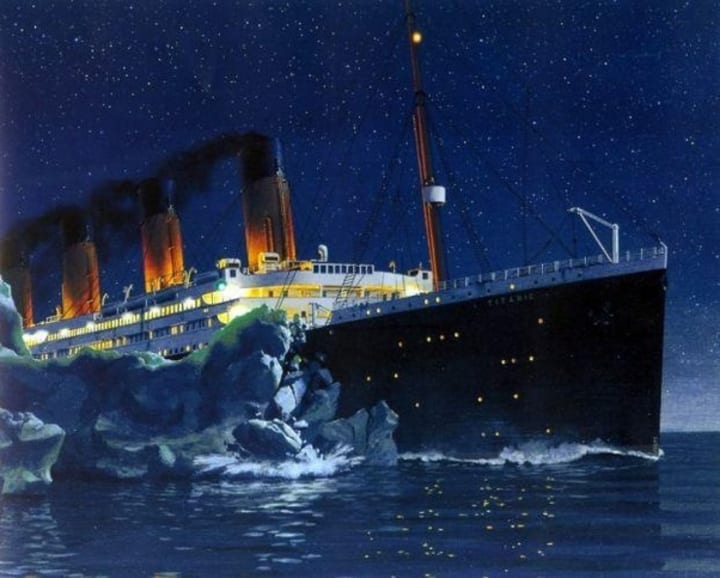


Rowe's assumption that he thought a windjammer was passing alongside the Titanic, is probably where the idea that the Titanic did not hit an iceberg. But this claim can be used to justify the inaction of the Californian, because if the Titanic did not hit an iceberg, this unnamed mystery ship limped away and fired its distress rockets in an effort to summon assistance itself, which caused confusion. However, if the Californian was confused by another ship on the horizon firing distress rockets, one must ask: How would the Titanic and the Californian have communicated if the latter was expected to pick up the former's passengers? If not by distress rockets, it had to be by radio. This leads to another factor against the switch, because the Californian's radio was switched off while the Titanic was sinking.
Radio Communication And Distress Rockets
Before the collision with the iceberg, Californian sent a message to the Titanic informing her that they were stopped and surrounded by ice.
"Say Old Man, We Are Stopped And Surrounded By Ice. Weather Clear.”
However, previously on the Titanic, her wireless machine had broken down and the two wireless operators John Phillips and Harold Bride went against regulations and repaired the machine themselves. As a consequence, there had been a backlog of passenger messages to send out (their main source of income). Californian's message came in so loudly that it nearly blasted Phillips' ears off. Stressed out, exhausted and annoyed, Phillips rudely snapped back:
"Shut up! Shut up! I Am Busy. I Am Working Cape Race."

After receiving the rude rebuke from the Titanic, Cyril Evans the only radio operator on the Californian listened to the many passenger messages that the Titanic was sending for the next half an hour. At the end of this half an hour, he switched off his wireless machine as his shift was over and he went to bed. Surely, if Californian was tasked with rescuing so many innocent and unsuspecting passengers, Captain Lord would have kept Cyril Evans awake, but the fact of the matter is he did not. This is another huge factor against the switch theory.
But one justifiable reason into why Lord did not disturb Evans, could be down to contractual constraints. At the time, Marconi wireless operators on ships were not employed by the shipping lines, but by the Marconi Company itself. They set out the working hours of their radio operators on ships, the crew couldn’t change or control any of the working hours of the radio operators. If an operator was off duty and the crew disturbed them for what could have been an unnecessary reason, they would complain to the Marconi Company. Since this was the case, the White Star Line and the other ships involved wouldn’t want a company with international interests getting the idea that a massive ship was going to be sunk on purpose. So to prevent the Marconi company finding out about this, they would surely have tailored the plan to take place around Evans’ and Phillips’ working schedules, but they clearly didn’t. The schedules of John Phillips and Harold Bride wouldn’t matter because they were on a twenty-four hour contract, both being on the Titanic.
The next matter is distress rockets, which were fired almost an hour after the collision, the same time the wireless operators begin sending CQD distress signals. The exact amount of rockets fired by the Titanic is largely unknown, as well as how they varied in colour. Some survivors described the rockets shooting several hundred feet into the night sky and exploded with an almost deafening bang.
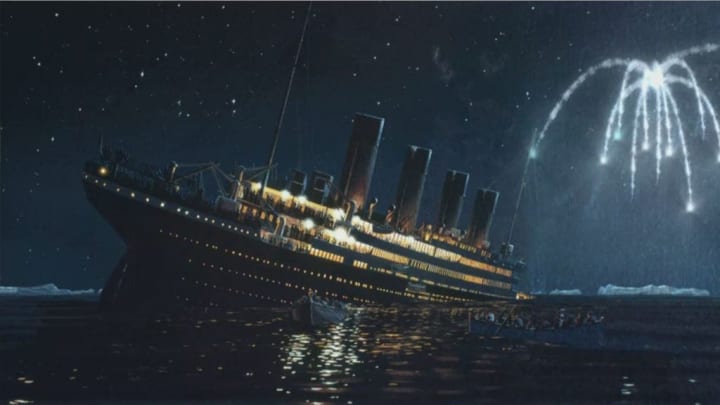
The Californian could see rockets being fired from a ship on the horizon, which could only have been the Titanic. Whenever rockets were seen by the Californian, the crew relayed the message to Captain Lord, who constantly asked what colour they were. The crew of the Californian reported that they only saw white rockets, which were assumed to have been company signals, white for the White Star Line. The problem was, the rockets were not being fired at a rate that indicated distress, the correct way is to fire them in one minute intervals. The Titanic's officers reportedly only fired eight rockets which were all white, but at intervals much longer than one minute. The Californian reported that it only saw eight rockets and were all white. But the problem was, the rockets didn't look like distress rockets thanks to the longer-than-one-minute intervals.
However, if the switch happened and Californian was expecting to rescue those on the Titanic, with her wireless machine switched off, rockets were the only way to communicate with one another. Since the Californian did not respond to the Titanic's rockets, even while her wireless was switched off it does show come out as a huge factor against the switch theory. If she was contracted to participate in the pre-planned rescue of so many on the Titanic, she should have gone to her aid the moment rockets were seen, regardless of whether they looked like genuine distress signals or not.
The Sinking
During the sinking, we are told of the story regarding a steward whose testimony seems to indicate that the ship was the Olympic, which needs investigating. A steward by the name of Edward Wheelton went below to gather supplies from the storeroom, where he met Thomas Andrews on B-Deck, where they saw lifeboats being lowered from above in the extending B-Deck promenade deck that was specific only to the Olympic.

As we can see, conspiracy theorists have distorted his testimony to support the switch. He does mention that he met Andrews on B-Deck, but does not mention seeing lifeboats being lowered from above in an extending promenade deck. Meaning that some conspiracy theorists do admit that Olympic and Titanic were not as similar as some state.
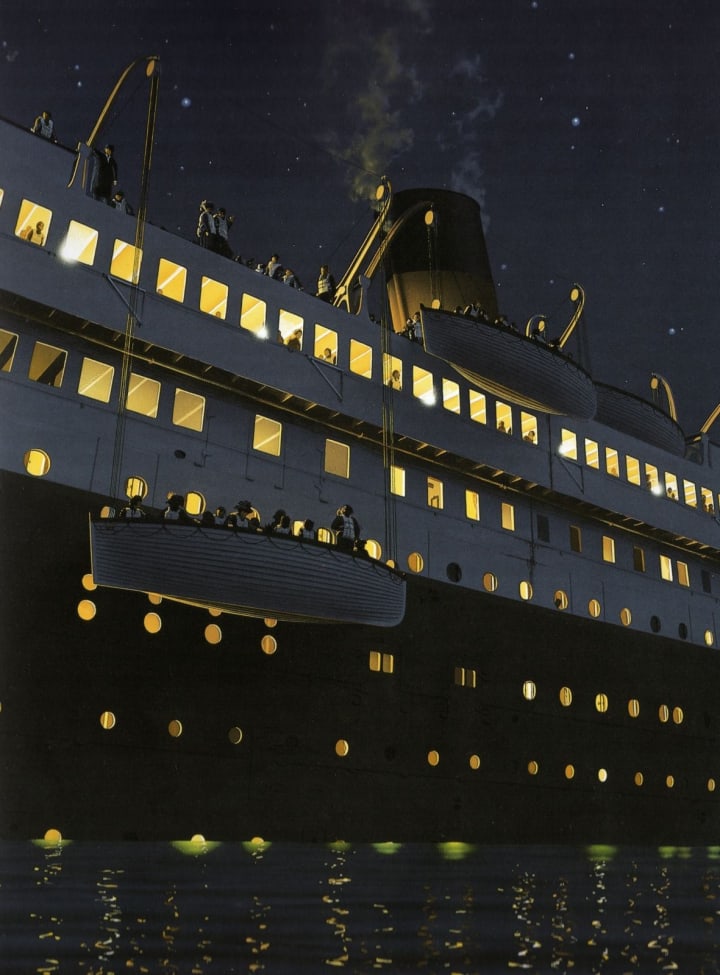
After meeting Andrews, he went down to the storeroom before making his way back to the boat deck, where he was ordered by First Officer William Murdoch to assist in loading lifeboat 11. There is absolutely no mention of lifeboats being seen lowered inside on B Deck. At the point of lowering lifeboat 11, it must have dawned on Captain Smith that the rescue of so many passengers and crew was not going to materialize. By now, lifeboats are being launched almost overfilled and passengers are beginning to panic.

This is where the true reality of the plan to dispose of the damaged Olympic in a human way, was going disastrously wrong. After the last lifeboat had departed after 2am, 1,500 people were still trapped aboard. The Titanic underwent her deaththroes, the bow sank further, the stern rose high and the first funnel collapsed. The stern rose higher until it was like a fall from a tall building, the passengers could not stand on their feet on the deck. Eventually, the weight of water in the bow, the buoyancy in the stern fighting against each other, and the weight of the suspended stern subjected Titanic to the kind of stresses that no structure could withstand. She broke into two pieces, but this is where another false statement comes into play. We are told by some conspiracy theorists that Titanic broke into two pieces where the Hawke struck Olympic. But it has been confirmed that the Hawke struck Olympic level with the aft well deck, and nowadays it's accepted that Titanic broke in the centre (directly in front of the third funnel). Survivor testimony even confirms this:
Jack Thayer: "It seemed to me that she broke in two, just in front of the third funnel,”
Frank Evans: "She parted between the third and fourth funnels,”
George Crowe: "She broke clean in two, probably two-thirds of the length of the ship.”
All these pieces of testimony put the break up of Titanic as being either between funnels 2 and 3 or 3 and 4. Although these statements are conflicting, they are nowhere near where the Hawke struck Olympic. After going vertical, the stern of Titanic stood for a few minutes before finally disappearing into the eternal darkness of the Atlantic Ocean.


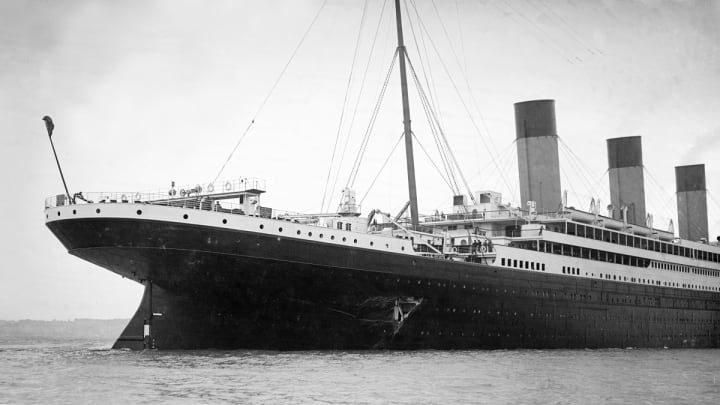
1,500 people were left stranded in the freezing water, it would still be approximately an hour and forty minutes before help arrived. The water temperature was approximately -2 degrees celsius thanks to saltwater freezing at a much lower temperature than freshwater. As a result, hundreds of people froze to death before help arrived. If it was a plan to dispose of a damaged ship to claim the insurance for a new one, it had succeeded on that part, but if it was intended to have everyone saved it had gone terribly wrong. The Titanic had become the deadliest single peacetime shipwreck ever recorded, the maritime industry would never be the same again.
RMS Carpathia
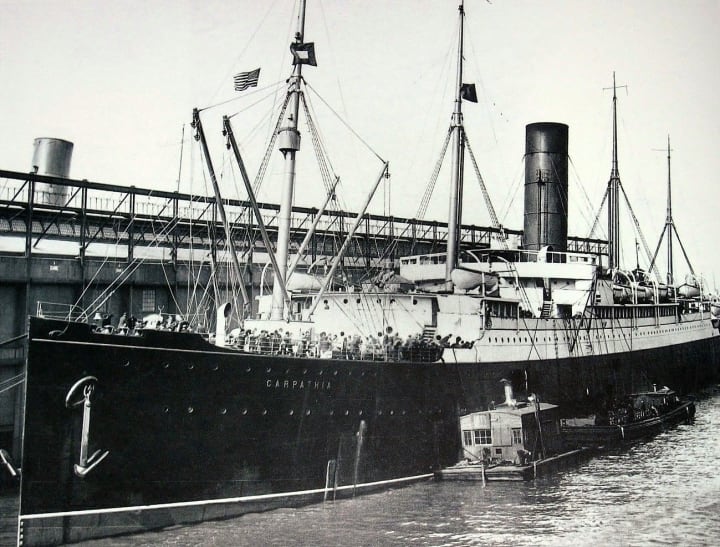
At 4am, Monday April 15th 1912, RMS Carpathia arrived at the scene of the disaster. Where she took aboard only 705 survivors, over 1,500 people had tragically lost their lives. After being admitted to the doctor's cabin, Mr Ismay, who had snuck onto one of the last lifeboats (something that condemned him to eternal shame), ordered a message to be sent to the White Star Line offices in New York, informing them of what had happened. He also ordered several White Star Line ships to be prepared to take the surviving crewmembers back to Britain.
On April 18th 1912, Carpathia arrived back in New York in the midst of a thunderstorm. She was watched by approximately 40,000 people, something unusual for a ship of her size. Grieving relatives of the Titanic's victims were desperate to find out what had happened and whether their loved ones were aboard, but for the majority of them, sadness, horror and despair was about to confront them.
Once the US Senate Inquiry was concluded, the SS Lapland of the Red Star Line began to transport the surviving crew back to Britain, and the rest of the surviving passengers were transported back on the White Star Liner RMS Adriatic.
Official Secrets Act?
However, once the crew had reached Britain, Paddy The Pig claimed that they were not permitted to go back to their wives and children. They apparently were held for 24 hours in a dank railway shed, where they were told to sign an Official Secrets Act for the purpose of keeping the switch secret. If they leaked the information, they would be facing a prison term of around 20 years and once released, would have no chance for employment. Staying quiet all their lives would have had an extremely negative impact on their health and sanity, which is what Paddy The Pig would have suffered from.
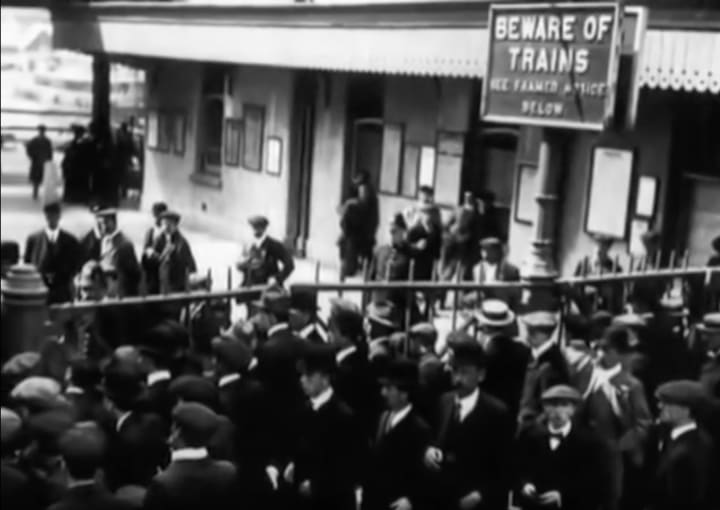
However, there is no evidence of crew members suffering from negative effects on their sanity from keeping a huge secret all their lives. Also, we know that Paddy The Pig was not on the Titanic at all, so there is no evidence that an Official Secrets Act being signed regarding the Titanic disaster. The crew were instructed to give testimony at the British Board of Trade Inquiry, and to not talk about it to the press beforehand. One factor to examine at this part, is that during the British Board of Trade Inquiry, Harold Sanderson, who was representing the White Star Line apparently made the mistake of referring to the Titanic as the Olympic.

Sanderson's testimony is confusing as to which ship he is referring to, but if he did confuse them, it doesn't support the switch. As director of the White Star Line, he would have made sure the switch was kept secret if he knew about it. If the switch happened, and he confused the names, he would have accidentally leaked the answer. He would have revealed that the two ships were switched, and White Star Line would be doomed. Since White Star Line did not get shut down in the immediate aftermath, and since he did give confusing testimony, it means that the two ships were not switched.
Insurance Of Olympic And Titanic
The two sisters cost $7,500,000 each to build, but as confirmed by both the Titanic's insurance certificate and Mr Ismay himself, Titanic was insured for only $5,000,000. This means she was underinsured by a full one third of how much it cost to build her in the first place. If something has its insurance increased by more than its original value, it raises the question of fraud. If the Titanic was insured for more than $7,500,000, the White Star Line would have been questioned about fraud, especially when the ship sank on its maiden voyage.
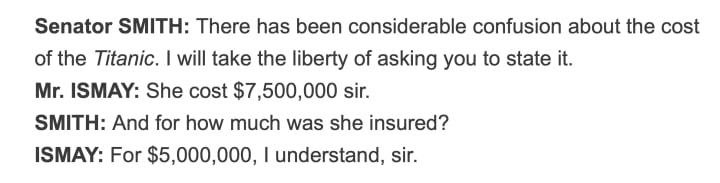

It was later stated by Phillip Franklin, Vice President of the International Mercantile Marine:
"Commanders are reminded that the steamers are to a great extent uninsured and that their only livelihood, as well as the company's, depends upon immunity from accident. No precaution which insures safe navigation is to be considered excessive.”
Although White Star Line did have insurance with Lloyd's of London, which would not pay out for the repairs to Olympic, they also had insurance with IMM. IMM was in fact the White Star Line's holding company, and a holding company is always responsible for the business operations of its subsiduaries, and much of the time the financial provider. Since White Star Line had insurance with IMM, IMM was a financial guarantor for them. The statement by Phillip Franklin tells us that IMM did not insure its ships, and since they were under obligation to the pay for the repairs to Olympic following the Hawke collision, it means they were the ones to lose out. In fact, the sinking of the Titanic is one factor that led to the downfall of IMM.
The Wreck


Although there is very little left of the Titanic, having been on the ocean floor for little more than a century, there is enough left to finally come to conclusion over whether the wreck is the Olympic or the Titanic. The first piece of evidence is what looks like white paint on the wreck's main hull, which appears to form an undercoat. This is however a strong indicator that the wreck is the Olympic and not the Titanic.

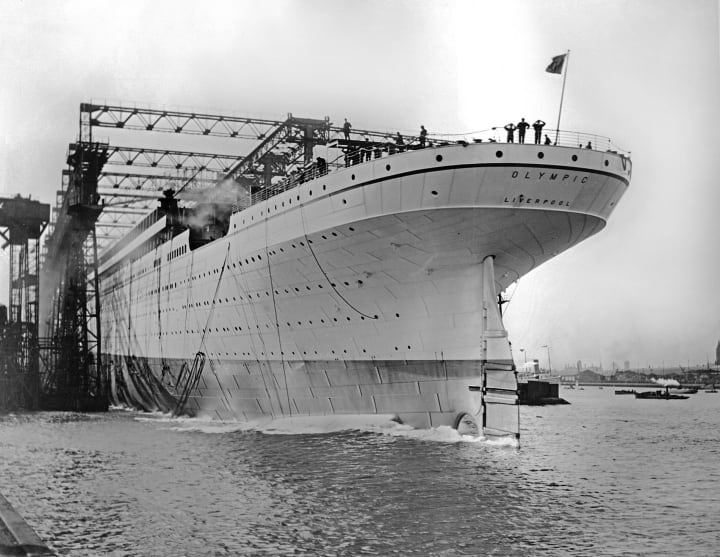

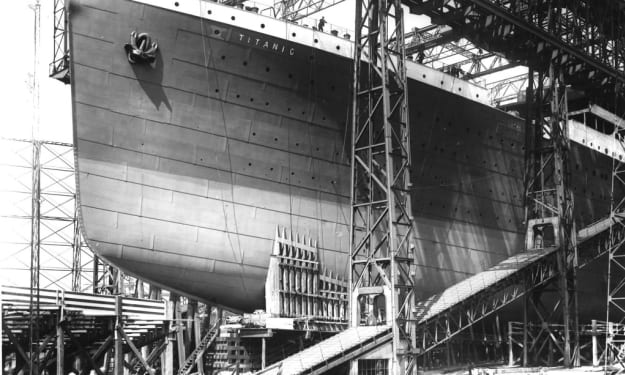
We can see in the photographs above that the Olympic was launched in her white undercoat, and that Titanic was given a black undercoat. However, records from Harland and Wolff tell us that the two ships were given a medium grey primer during their fitting out, then their black topcoats were applied. The black topcoat has clearly flaked away and underneath is the medium grey primer, which has clearly been distorted on video and on photographs by harsh lighting from the submersibles, thanks to the eternal darkness of the Atlantic Ocean's depths. The distortion from harsh lighting has clearly made the medium grey primer look more white.


The next piece of evidence is The Big Piece, a seventeen ton chunk of the outer shell plating, which was risen in 1998. First of all, we can clearly see blotches of black paint on it, standing out over bare steel. Since the rest of the steel is bare, these blotches are remnants of Titanic's original black undercoat that she was launched in. If the ships were switched, these blotches standing out over the bare steel would be white, and yet they are black.
The Big Piece is also evidential in that it houses a feature that was not seen on Olympic until 1928. On the eponymous piece of steel, there are two large portholes and two small ones, and the location of the big piece was on C Deck, where it matches the C Deck plans for the Titanic. On the Titanic, there were two lavatories sandwiching a first class stateroom, where an extra small porthole had been drilled. The Titanic’s plans and the location of the piece on the starboard profile of the Titanic match. On Olympic, there was only one lavatory, near a cloakroom at the exact same location. But on Olympic’s post-1928 plans, the feature pointed out from the Titanic is visible. Therefore, this big piece is from the genuine Titanic.

Examination of the propellers show that on the starboard one the number “01” can clearly be seen, even though the “4” is visible it is obstructed by corrosion. This is where conspiracy theorists tell us that the propeller marked with 401 for the Titanic was fitted to Olympic to speed up repairs. But could this have been so? It could not. Titanic was 1,000 tons heavier than Olympic, and the two sisters were fitted with identical steam reciprocating engines. Therefore to maintain an efficient speed to compare to her sister, Titanic needed something to push her harder through the ocean and this resulted in her propellers needing greater pitch on their blades. This original document shows that Olympic’s propeller had a pitch area of 34.6 feet, whereas Titanic’s were a full 35 feet. This means that the propellers were not interchangeable. If the propellers were interchangeable, why would one be marked for a particular ship? The 401 stamped on the blade means that the propeller was made specifically for the Titanic. This propeller could only have ever been fitted to one ship, the Titanic. Therefore, we see more evidence that tells us the switch is impossible.
fig 79
Therefore the propeller with "401" on its blades could NOT have been fitted to the Olympic.
Going back to the B-Deck differences, where we know that before her maiden voyage, Titanic’s B-Deck was changed from an extending promenade to first class staterooms. Olympic still had the extending promenade at the time of the Titanic’s sinking, which is obvious from these plans. If we move inside the wreck, we can clearly see many staterooms that are compliant with the Titanic’s B-Deck layout. Here we can see features from the millionaire’s suites, which only the Titanic had. To make a switch possible without someone noticing something odd, these would have needed to be ripped out and placed on the other ship: an impossible task to carry out without the greater populace knowing. Therefore, these staterooms show us the wreck is the Titanic.
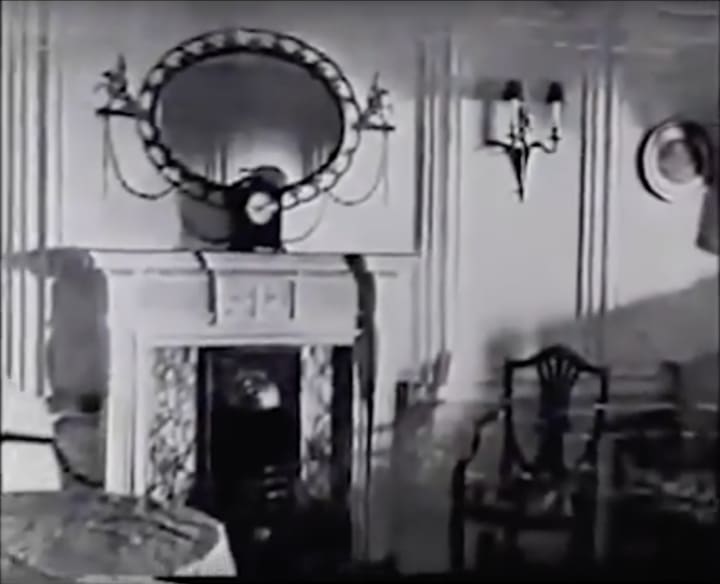

It should also be noted that the windows on the wreck match the ones we see in all photographs and deck plans for the Titanic. When the B-Deck layout was originally in place, the windows on that deck were large and evenly spaced, yet when B-Deck was changed on the Titanic, her windows went from large and evenly spaced to thin and unevenly spaced. Because Olympic still had her extending promenade at the time of the Titanic’s sinking, she still had large and evenly spaced windows on B-Deck. The wreck has thin and unevenly spaced windows, as the Titanic did. The most distinctive difference between the two ships, the A-Deck promenade windows which covered 50% of that deck on the Titanic, is also visible on the wreck. Olympic never had this feature at any point in her existence.

Another difference that makes the switch impossible is the wheelhouse: Olympic’s was curved, Titanic’s was flat. The one we see on the wreck is just a foundation, but it is a perfect match to the Titanic’s plans. As we see Olympic’s plans throughout her career, her wheelhouse never changed at all and it doesn’t match the one we see on the wreck.

Finally, it is now time to examine the most damning evidence of all for the switch. In 1986, Robert Ballard, with the assistance of the French national oceanographic institute, examined the physical name of the ship. As it was with all white star line ships, Olympic and Titanic, both had their names engraved into the shell plating in letters four feet high and half an inch deep. Naturally, the name “Titanic” written in such a way is what they were expecting to find. But according to conspiracy theorists, this examination found the name “Titanic” to be made of raised metal letters which appeared to have been attached or stuck to the shell plating. Over time two of those letters have rusted and fallen off, which naturally turns out to be the “A” and the “N”, because right where these fallen letters once were, engraved into the shell plating are the letters “M” and “P”.

As one can see, if this was true it would cause an uprising of acceptance that the ships were switched, because before the disaster occurred there had been rumours going around that the ships had been switched. Such rumours going around coupled with the “M” and “P” being found, would certainly have convinced the world that the ships had been switched and there would be incontrovertible and world-cemented belief that the ship on the ocean floor is the Olympic and not the Titanic. The world does NOT believe this. Furthermore, there is no testimony from Robert Ballard to corroborate with such a claim.
It may also be noted that in 2013, Robin Gardiner, the author who established the whole switch theory in the first place wrote to a website known as 4biddenknowledge.tv where he admitted that the CGI rendering of the letters “M” and “P” on the wreck above is fake.

When the examination was carried out the team scraped away the rust and paint to reveal the name clearly and filmed it. It’s all in the photo mosaic above, which is made of the said clip.

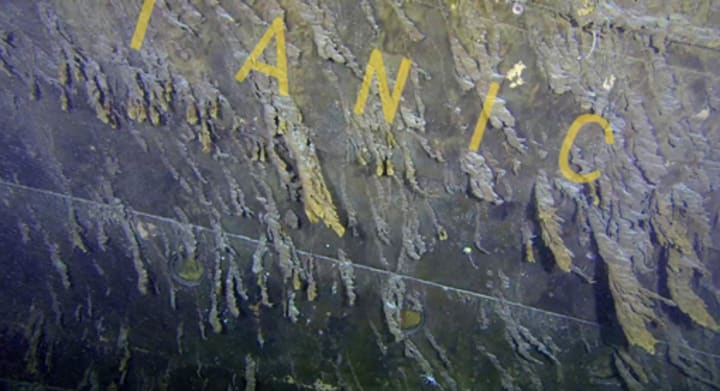
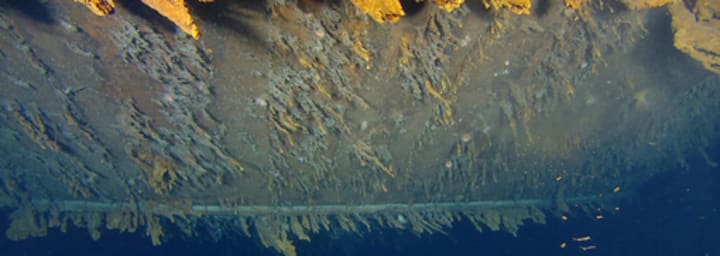
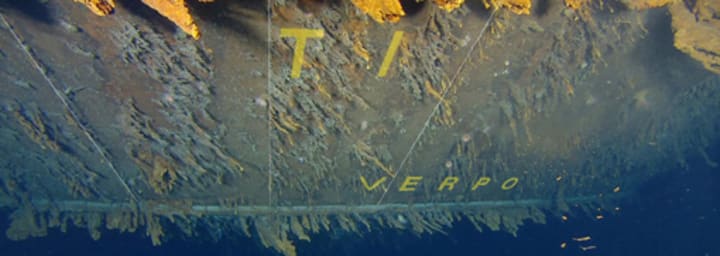
Here we can see the name “TITANIC” visible in the photo mosaic. Furthermore recent hi-def images of the wreck, which have been edited to reveal the name more clearly, also show that there is no “M” or “P” on the wreck and only the name “TITANIC” engraved in the shell plating is visible and this is the wreck’s true identity.
Conclusion
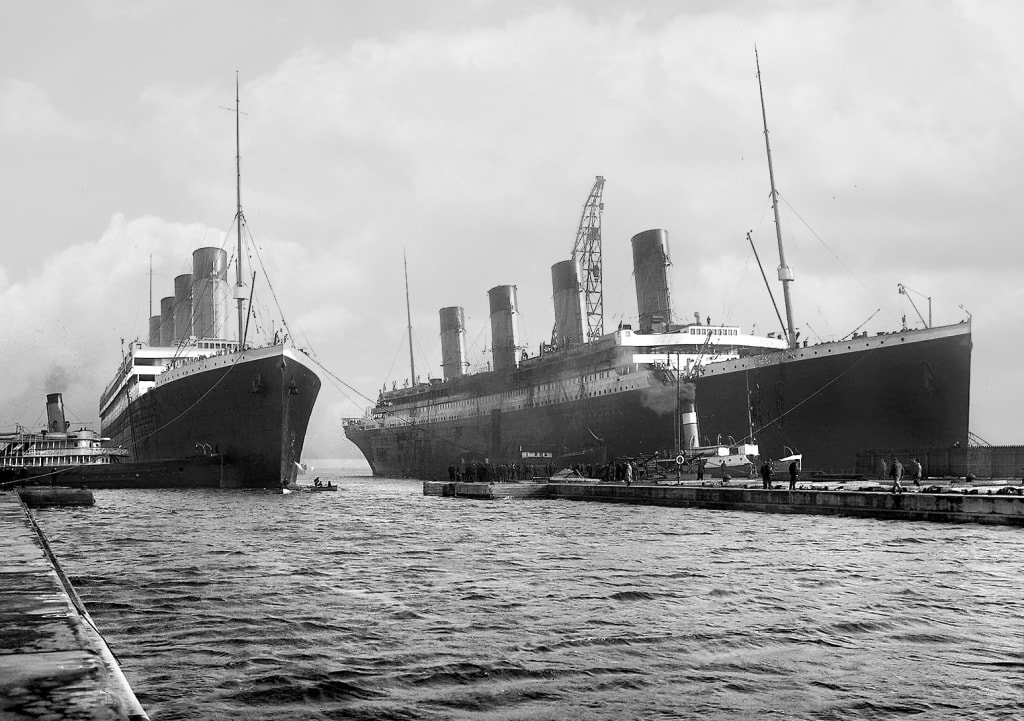
Therefore, to conclude we have looked at a conspiracy theory surrounding the Titanic and its sister ship, the Olympic. The theory stated that the two sisters had been switched and one of them was sunk on purpose as part of an insurance scam. The theory began to pull us in its direction from the aftermath of a collision that Olympic was involved in by stating she had been damaged to the point of becoming an economic write off. However, we have seen that she was not and even if she was, she could have still been repaired when we see that another white star liner had had its bow cut off and a new one fitted to the older structure, before returning to service.
We have seen that the two ships cost seven and a half million dollars each to commission and were insured for five million, meaning that they were underinsured by a full one third of how much it cost to build them in the first place. Therefore, White Star Line would clearly not have benefitted from an insurance scam.
As for the Californian, her involvement and her supposed commissioning to rescue those on the Titanic are clearly based around circumstance and the many factors that go against the conspiracy. If she was expecting a rendezvous with a ship that was destined to be sunk with hundreds of unsuspecting and completely innocent passengers, why did Captain Lord fail to keep his radio operator awake? Why was Californian drifting so conveniently close to the Titanic’s sinking position with her boilers fired up and her engines on standby? Why did she have no passengers aboard but a cargo of woollen sweaters and enough food to feed more than she was designed to carry? All these questions can clearly be used by the available circumstance that surrounds them, which means they can be easily twisted with little difficulty to support a darker version of accepted events.
The statement that the two ships were switched stems from how similar they were in outward appearance, without examining the many interior and differences in structural design and differences in colour schemes. We have seen that there were too many structural differences between the two ships to have switched them without someone noticing, and that anyone involved would have never been able to keep a such secret to themselves to their deathbeds. Fitting out the two ships took between 7 and 10 months each, meaning if they were to be switched it would have taken that long to successfully switch them without someone noticing something odd going on or generations to come finding out. The two ships were never seen together in Belfast for that long.
Furthermore, since Olympic was properly repaired and returned to commercial service before the inquiry into the collision, it raises the question of whether the insurance was needed. Since White Star Line could clearly afford to repair Olympic properly with the money they had in their pocket, it means that the damage was not a life or death situation. In order for the switch to be believed, one must ignore the timing of events, so time is another major factor against the switch.
Many of the structural differences between the two ships that were specific only to the Titanic are all over what is left of her on the ocean floor, as well as the nameplates clearly showing the name “Titanic” all with engraved letters. Therefore we now have seen enough evidence to come to the following conclusion: The Olympic and the Titanic were NOT switched, and there was no insurance scam. The ship that sank on April 15th, 1912 and sits on the ocean floor today is unequivocally the Titanic.
See Bibliography for sources...
About the Creator
Luke Milner
Writer, Maritime History, Travel, and Film enthusiast. Here you can find my many articles on such topics, and learn more. You may also find my recommendations for films, and traveling.
Keep reading
More stories from Luke Milner and writers in FYI and other communities.
Titanic's Sister: A Dark Secret? BIBLIOGRAPHY
This is the bibliography for both portions of the article "Titanic's Sister: A Dark Secret?". This bibliography has been written separately from the two documents as I was having trouble putting it into the official documents due to a persistent parsing problem. At the end of both parts, I have provided a guide to the reader informing them to look at this bibliography for references.
By Luke Milner3 years ago in FYI
Oil Prices and the Hidden Struggles Behind Global Energy
Oil prices influence daily life in ways many people rarely notice. From the cost of gasoline at the pump to the price of food in grocery stores, shifts in oil prices ripple through the global economy. A sudden rise can strain family budgets, while a sharp drop can shake entire industries. Behind these changes are complex forces such as political tension, supply shortages, economic growth, and environmental concerns. Yet for many people, oil prices remain a distant headline rather than a personal story. The truth is far more connected to everyday life. Understanding how oil prices move, why they change, and who feels the impact most can reveal a deeper picture of the modern world and the fragile balance that keeps global energy flowing.
By Muqadas khanabout 6 hours ago in FYI



Comments
There are no comments for this story
Be the first to respond and start the conversation.