
This planet has clouds but no rain. Humans want to explore, but 9 probes have been killed
What did the Soviet Union try in the early Venus exploration?

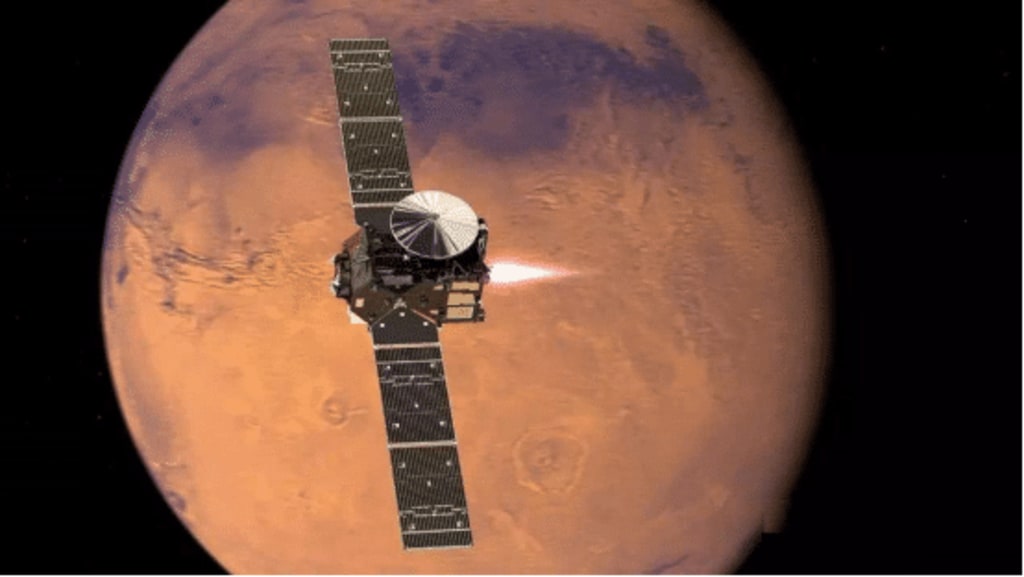
Last summer, China, Israel and the United States all launched rovers to Mars, the first time in human history that three countries launched rovers to Mars in the same year, sparking a worldwide discussion of Mars exploration. When people are talking about the possibility of human immigration to Mars in the future, they never think that there is another planet that has attracted more attention than Mars decades ago, and it is Venus.
In the 1950s, Soviet scientists began to study Venus and came to the preliminary conclusion that Venus is the "sister planet" of Earth. This conclusion makes scientists in other countries excited. If Venus is really like Earth, humans can immigrate to Venus in the future. However, in the 1960s, the Soviet Union began to launch probes to detect Venus, and tried many times to land the probes on Venus. It was found that the real environment of Venus was beyond expectations, and scientists gradually gave up their illusions about it.
So what is the real environment of Venus, so that scientists have dispelled enthusiasm for its exploration?
What did the Soviet Union try in the early Venus exploration?
According to historical records, the Soviet Union began to launch Venus probes in 1961. The first one to be launched was "Venus 1", which was also the first probe to fly to Venus in human history. Before the launch, the Soviets placed a lot of hopes on Venus 1, but in the end Venus 1 failed the Soviets. It lost contact with the earth at a distance of about 96,000 kilometers from Venus. On Venus 1, the Soviet Union's first Venus exploration failed.
Six years later, the Soviet Union launched Venus 4. After several previous tests, the Soviet Union has accumulated a certain amount of experience, so this time Venus 4 successfully entered the orbit of Venus and sent back detection data to the earth for the first time. It is understood that Venus 4 encountered obvious resistance after entering the atmosphere of Venus, and its speed plummeted to 300 meters per second. It traveled through the atmosphere for about 1.5 hours before preparing for a hard landing. Just as Venus 4 was preparing to land, the accident happened again, and it lost communication with the ground.
Later, after the analysis of Soviet experts, it may be that the antenna of Venus 4's landing module failed, resulting in loss of communication. As a result, its landing could not be controlled by ground personnel, and it had a high probability of crashing on the surface of Venus. After many blows, the Soviet Union still did not give up its exploration of Venus. Some experts believe that this may have been caused by the space race between the United States and the Soviet Union at that time. The United States has achieved unsurpassed achievements in landing on the moon, and the Soviet Union has only achieved the same on Venus. Achievement, can be compared with the United States.
So in 1970, the Soviet Union's "Venus 7" came out, and for the first time successfully achieved a soft landing on the surface of Venus. Venus 7 also sent back first-hand data on Venus' pressure and temperature to the ground. The data showed that the atmospheric pressure on the surface of Venus is 90 times that of Earth's, and the temperature exceeds 450 degrees Celsius. In such an environment, Venus 7 did not last long before the communication with the ground was interrupted.
What did the first probe to land on Venus find?
The first successful soft landing on the surface of Venus gave the Soviet Union increased confidence, so the Soviet Union went on to develop Venus 9 and Venus 10. The two probes were launched on June 8 and 14, 1975, and on 10 On the 22nd and 25th of the month, it entered the orbit of Venus and became a pair of detectors to detect Venus and Venus at the same time. The pair of man-made probes took an omnidirectional image of the surface of Venus, but the pictures taken showed that there were thick clouds in the atmosphere of Venus, and it was impossible to see the surface of Venus at all.
In order to further explore the situation on the surface of Venus, Soviet scientists directed Venus 9 to implement a soft landing, and finally Venus 9 successfully placed a 4.3-ton lander on the surface of Venus. According to the introduction of Soviet scientists, the lander has already started the detection work during the landing process. As a result, it detected that the cloud layer of Venus is more than 30 kilometers thick. This thickness is equivalent to spreading to the suborbital region in the earth's atmosphere.
Not only that, the professional instruments carried by the lander detected that the main components in the clouds of Venus are greenhouse gases and various acidic gases, such as hydrochloric acid, hydrofluoric acid, sulfur dioxide and so on. When the lander was about to touch the ground of Venus, its pressure detector showed a significant deflection, and the index showed that the atmospheric pressure of Venus was 92 times that of the earth, which was equivalent to 76 times the pressure of the pressure cooker commonly used at home and 92 times the standard atmospheric pressure of the earth.
In fact, Soviet scientists had obtained these data from Venus 7, so they knew that if the Venus 9 lander was to stay on the surface of Venus for longer, it would have to use special materials to build its outer shell. So the R&D personnel referred to the armor design of the Soviet Type 82 heavy cruiser at that time, and created the same high-pressure and impact-resistant shell for the lander. At the time, some experts believed that the Venus 9 lander used the world's most stress-resistant technology, but it only lasted on Venus for 53 minutes.
After the detection by the Venus 9 lander, 96% of the dense atmosphere of Venus is carbon dioxide, and 3.5% is nitrogen, and the rest of the gas is some gases that are not conducive to biological survival, such as sulfur dioxide, hydrogen Fluoric acid, ammonia, etc. Due to the thick clouds of Venus, many scientists believe that there should be frequent rainfall on Venus. However, the lander found in less than an hour of detection that the surface of Venus is very dry and the air humidity is very low.
This means that Venus is a planet that rarely rains, which is a bit abnormal for a planet full of clouds, what is the reason behind this? Later, when scientists studied the temperature of Venus, they discovered the main reason. It turned out that the temperature of the surface of Venus as high as more than 460 degrees Celsius caused the rainfall to evaporate during the fall. This happens partly because the clouds on Venus are very high, and the rainfall has a fairly long buffering process.
On the other hand, the greenhouse effect of Venus is very serious, causing the entire planet to be shrouded in a high temperature environment. So the question is, how is Venus's greenhouse effect formed?
How is Venus' severe greenhouse effect formed?
There are different opinions in the scientific community on this issue. Some scientists believe that it was caused by the escape of the early Venus atmosphere. Ancient Venus may have had suitable environmental conditions such as liquid water and oxygen like the earth. However, the atmosphere of Venus escaped under the influence of solar activity later, resulting in the oxygen and Water vapor escapes in large quantities, and most of the remaining gas is carbon dioxide.
Another important cause of the Venusian greenhouse effect is the existence of many active volcanoes on the surface of Venus. According to the detection data of the Venus 9 orbiter, the number of large volcanoes on the surface of Venus has reached 167, and their diameters are generally more than 100 kilometers. The largest volcano in the solar system, "Erthemis Volcano", is located on Venus. The diameter reaches 2400 kilometers, which is equivalent to the land area of Australia.
In the 1990s, the Magellan probe launched by NASA found that there are thousands of volcanoes on the surface of Venus, and also discovered some erupting volcanoes. The volcanic eruption further intensified the greenhouse effect of Venus, because the volcanic ash pouring into the atmosphere will further enhance the thermal insulation effect on the ground, and the large-scale lava from the volcano directly increases the ambient temperature.
Most people don't understand this statement now, because Venus' natural environment is so extreme that it's not an exaggeration to describe it as a "hell planet." In fact, the statement that "Venus is Earth's 'sister planet'" appeared very early, and this statement also prompted the Soviet Union to carry out long-term Venus exploration activities. Judging from some detection data, Venus and Earth do have similarities in many ways. First of all, the volume of Venus is similar to that of Earth, and the radius of Venus is only about 300 kilometers smaller than that of Earth.
And Venus is also slightly less dense than Earth, which makes Venus' mass not much different from Earth's. Second, both Venus and Earth have atmospheres. Looking at the entire solar system, there are very few planets with an atmosphere, and the atmosphere is extremely important for the breeding and survival of life, so this is also an important reason why Venus was considered to be similar to the earth in the early days. Furthermore, both Venus and i Earth have an equatorial inclination, which is something other planets do not have.
In addition, Venus and Earth are the closest planets in the solar system, and this series of circumstances led early scientists to speculate that Venus may be Earth's "sister planet."
Is phosphine really a sign of life on Venus?
It stands to reason that such a hellish natural environment on Venus is definitely unable to breed life, let alone the possibility of life, but a research paper in "Nature Astronomy" last September once again attracted people's attention to the topic of life on Venus . The paper notes that two telescopes in Hawaii and Chile have detected the presence of phosphine in Venus' clouds. This gas has also appeared on Earth, but it is generally only related to life, that is, microorganisms produce phosphine through physiological reactions.
Therefore, after the news of "the existence of phosphine in the atmosphere of Venus" was issued, many scientists raised questions: Are there microorganisms in the atmosphere of Venus? In fact, the authors of the paper and some scientists believe that the presence of phosphine does not fully explain the existence of microbes on Venus. Later, a scientific team pointed out that the data in the research paper may be biased. In other words, the existence of phosphine in the atmosphere of Venus cannot be completely determined, and the topic of life on Venus has dropped again.
About the Creator
dardani lennon
The question mark is the key to any science
Keep reading
More stories from dardani lennon and writers in FYI and other communities.
The Psychology of Unboxing: Why Thailand is Obsessed with Mystery Boxes
There is a specific kind of dopamine rush that comes from opening a package when you don’t know exactly what is inside. In Thailand, a nation famously obsessed with social trends and digital shopping, this psychological thrill has transformed into a massive economic engine. The "subscription box"—once a niche Western concept—has evolved into a mainstream retail habit, reshaping how Thais discover everything from skincare to gourmet snacks.
By Sam walter6 days ago in FYI



Comments
There are no comments for this story
Be the first to respond and start the conversation.