

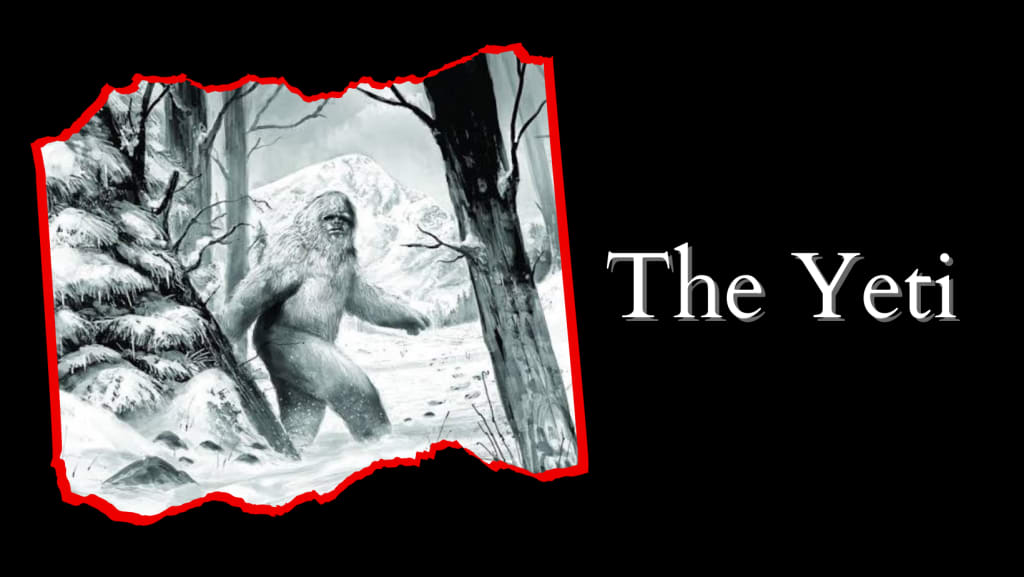
The Yeti, also known as the Abominable Snowman, is a legendary creature that has captured the imagination of people all over the world. This creature described as a large, ape-like creature that roams the mountains of the Himalayas, the Yeti, has been the subject of countless sightings, stories, and expeditions. But what is the truth behind this elusive creature, and where does the legend come from?
The Origins of the Yeti Legend
The origins of the Yeti legend can be traced back to the Sherpa and Tibetan people who have lived in the Himalayas for centuries. In their mythology, the Yeti are a mystical creature that is said to possess great strength and wisdom. The Sherpas and Tibetans also believe that the Yeti is a protector of the mountains, and that encountering one is a sign of good luck. There are people who say this creature is so intelligent and they don't like to interfere in the human world or society, so they live in the mountains secretly.
In the 20th century, the legend of the Yeti began to spread beyond the Himalayan region, thanks to a number of high-profile sightings and expeditions. In 1921, a British explorer named Charles Howard-Bury reported seeing large footprints in the snow that he believed belonged to a "metoh-kangmi," or "man-bear snow creature." Since then, there have been numerous accounts of sightings, footprints, and even hair and scat samples that have been attributed to the Yeti.
The Scientific Search for the Yeti
Despite the many sightings and stories, there is still no conclusive evidence that the Yeti actually exists. But there are countless stories, sightings and also too many people, who believe it exists.
In 1951, the famous mountaineer Sir Edmund Hillary led an expedition to find evidence of the Yeti, but he came up empty-handed. Subsequent expeditions have also failed to find any definitive proof of the creature's existence.
In recent years, however, there have been some intriguing discoveries that have reignited interest in the Yeti. In 2017, a team of researchers led by Oxford geneticist Bryan Sykes conducted DNA tests on hair samples that were believed to have come from a Yeti. The tests revealed that the hair actually belonged to a type of bear that is native to the Himalayas. but the discovery has led some to speculate that the Yeti legend may have been inspired by encounters with this bear.
Separating Fact from Fiction
So, what can we conclude about the Yeti? While there is no conclusive evidence that the creature actually exists, it's hard to say this creature is real or fake. But it's clear that the legend has captured the imagination of people all over the world.
The stories and sightings of the Yeti may be based on misidentifications of other animals, such as bears or large primates, or maybe real; or they may be the result of hoaxes or exaggerations.
However, the fact that the Yeti remains a popular and enduring legend speaks to the power of human imagination and the allure of the unknown. Even if the creature exists or doesn't exist, the idea of a mysterious, powerful being that roams the mountains is a compelling one that has inspired countless stories, movies, and works of art.
In conclusion, the legend of the Yeti is one of the most enduring mysteries of our time. While there is no definitive proof that the creature exists, the stories and sightings continue to captivate and fascinate people all over the world. Whether the Yeti is a real or simply a creation of the human imagination, it remains a testament to the power of myth and the enduring appeal of the unknown.
About the Creator
PP
Psychology, Horror, fiction, education, poet, and about many crazy topics; I love to create content.
Reader insights
Outstanding
Excellent work. Looking forward to reading more!
Top insights
Compelling and original writing
Creative use of language & vocab
Easy to read and follow
Well-structured & engaging content
Excellent storytelling
Original narrative & well developed characters
Expert insights and opinions
Arguments were carefully researched and presented
Eye opening
Niche topic & fresh perspectives
Heartfelt and relatable
The story invoked strong personal emotions
Masterful proofreading
Zero grammar & spelling mistakes
On-point and relevant
Writing reflected the title & theme
Future of Digital Procurement in the US Aerospace and Defense Industry
The aerospace and defense industry in the United States is entering a new era defined by digital transformation. Procurement, once reliant on manual paperwork, phone calls, and fragmented databases, is rapidly evolving into a technology-driven ecosystem. As supply chains become more complex and regulatory standards grow stricter, digital procurement systems are emerging as a strategic necessity rather than a competitive advantage.
By Beckett Dowhanabout 21 hours ago in FYI


Comments
There are no comments for this story
Be the first to respond and start the conversation.