
The world's first! 430 km of road only running driverless trucks, reliable?
Driverless
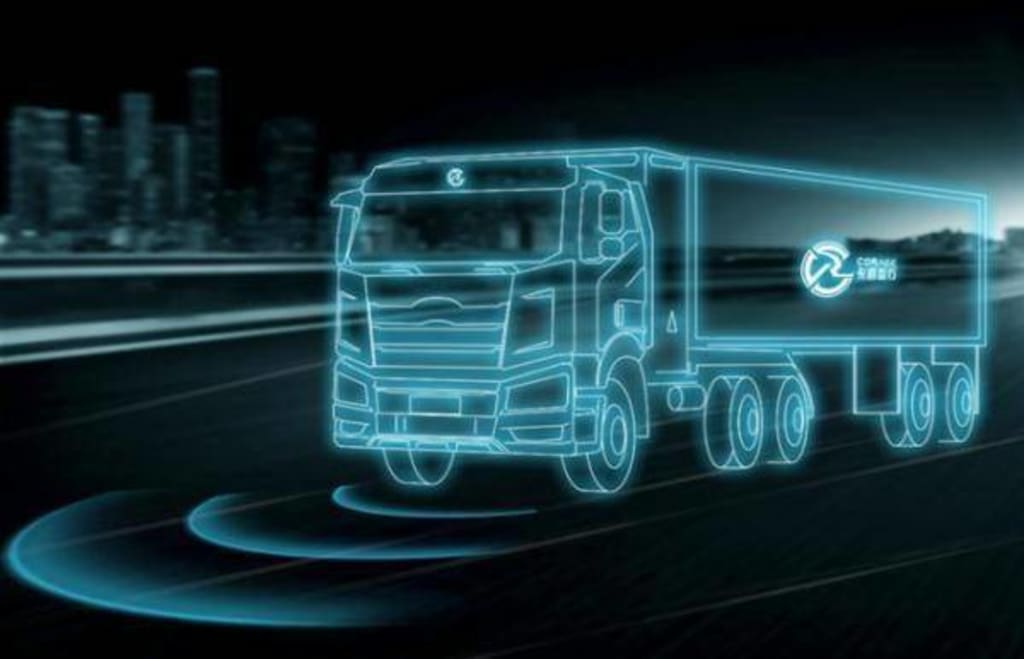
Hundreds of hydrogen-energy driverless heavy-duty trucks, transporting goods on special roads 24/7 on schedule, which seems like a movie-like scene, will soon come into reality.
In recent years, with the rapid development of artificial intelligence, 5G communication, big data and other new technologies, self-driving vehicles have accelerated their promotion and application, and gradually moved from R&D testing to actual operation. Recently, Corage, a commercial vehicle self-driving company, announced that it has participated in the construction of the world's first dedicated self-driving trunk logistics road "Jiuquan-Mingshui Green Digital Highway" and will soon carry out long-distance road tests and prepare for operation of self-driving trunk logistics.
What changes can this special highway bring to highway logistics? How to avoid road safety hazards?
Why do we need a digital highway?
According to the technical team of the First Highway Survey and Design Institute of China Communications Construction Group, the Jiuquan-Mingshui Green Digital Special Highway is about 430 kilometers long and is a highway designed to meet the transportation of goods for trunk logistics.
The special highway is located in the hinterland of Hexi Corridor, and all along the route are desert uninhabited areas with flat terrain. It is in a position to adopt the design of fully enclosed, full path and full cross-section dedicated to self-driving new energy freight vehicles. In response to the natural environment, logistics needs and technical requirements of the Jiaming Highway, CardInfoLink has designed and developed a corresponding low-energy, low-cost heavy-duty truck autopilot solution.
What are the technical differences between commercial heavy trucks responsible for transporting goods and self-driving cabs such as Robotaxi? The biggest difference between road transport and Robotaxi is the difference between carrying people and cargo, according to Tong Xianqiao, founder and CEO of Karvy Smart. The most important thing for the former is to get from point A to point B safely, and the most important thing for cargo is to get from point A to point B efficiently, although "from the same school", but the focus on self-driving technology is different.
Recently, the Ministry of Transport on the "self-driving car transportation safety service guidelines (for trial implementation)" for public comment, which mentioned that, under the premise of ensuring transport safety, encourage the use of self-driving cars in point-to-point trunk road transport, with relatively closed roads and other scenarios engaged in road general cargo transportation business activities.
Wang Bin, president of the First Highway Survey and Design Institute Research Institute of China Communications Construction Group, said bluntly that there are many pain points in the development of road trunk logistics transportation today, such as logistics costs and the high dependence on and excessive consumption of fossil energy, which can cause unnecessary waste of resources.
"China's highway mileage has ranked first in the world, it is impossible to build more than 100,000 kilometers of highway again without limit and in a large area, more mainly around the existing highway to improve quality and efficiency." Wang Bin added that the introduction of self-driving technology to reduce logistics costs and improve logistics efficiency is the original intention of planning and designing self-driving trunk logistics special roads.
How to solve the road safety hazards?
Are there any safety hazards on the self-driving trunk logistics road? Wang Bin said that the current trunk logistics line road does not serve public transportation, nor does it serve people, but serves freight, and the main service object is the logistics transportation of bulk mineral resources.
Thanks to the road infrastructure hardware facilities, 5G digital technology, intelligent control equipment and other areas of deep integration of technology, it is relatively easy to achieve high-level driverless in the freight closed road scenario, so there is no need to worry about the existence of subjective reasons for road safety hazards.
In response to the potential road safety hazards due to objective reasons, i.e. traffic accidents caused by unfavorable vehicle, road and environmental conditions, Wang Bin pointed out that, unlike ordinary roads where emergency lanes are set on both sides, the emergency lane of the self-driving trunk logistics line is in the middle of the road. There are 600 hydrogen heavy trucks planned for the first phase of the road. Once the heavy trucks have vehicle problems, the heavy trucks will temporarily stop at the emergency lane located in the middle.
The logistics line is also equipped with a 5G network, which allows engineers to manually control it through remote operation. "If the vehicle problem is serious, we are also equipped with rescue vehicles that will ensure the overall smooth flow of the self-driving trunk line logistics line."
Heavy-duty trucks are not "carbon emission monsters"
Road traffic is responsible for more than 70% of the freight volume of the whole society. China Association of Automobile Manufacturers data show that the current national commercial vehicle fleet is about 40 million, accounting for 10.9% of the total number of vehicles in the country, but its carbon emissions account for nearly 65% of all vehicle carbon emissions. Heavy-duty trucks account for 83.5% of the carbon emissions, is the key model of all carbon emission reduction vehicles.
Heavy-duty trucks how to "reduce pollution and carbon"? Wang Bin introduced that the Jiuquan-Mingshui Green Digital Highway is a product of the new and old dynamic energy conversion in China's highway trunk logistics. The Jiuquan area is known as the "Three Gorges on land" and is rich in wind power and clean energy generation resources, which can realize low-cost manufacturing of green hydrogen. This low-priced clean energy will be used to produce hydrogen by electrolysis, and then hydrogen will be used as the energy supply for the future green digital highway.
The technical team of China Communications Construction Group's First Highway Survey and Design Institute says that medium and heavy trucks, an important component of the road freight industry, are at a critical moment to decarbonize and apply autonomous driving for potential economic benefits. The project plans to use hydrogen-powered heavy-duty trucks on this road, and to build hydrogen refueling stations and transfer yards at the end of the road. The hydrogen-powered heavy trucks will take about 10-15 minutes to refuel and will only need one fuel refill a day to effectively achieve a satisfactory range.
"This participation in the design of the world's first self-driving new energy logistics line road opens up a brand new route for China's commercial vehicle self-driving 'walking with new energy', a route that will truly realize the precise landing of self-driving technology in the field of trunk logistics while accelerating the popularization of new energy commercial vehicles. Keeping up with the process of new energy for commercial vehicles, we will eventually achieve a win-win situation of new energy for commercial vehicles and autonomous driving."
About the Creator
Keep reading
More stories from [email protected] and writers in FYI and other communities.
Greenland is unstable! New York, USA to disappear as sea levels rise?
The problem of glacier melting caused by global warming is becoming more and more serious, and the Arctic region is one of the larger areas of the global glacier coverage, but in recent years, the warming of the Arctic region is already "beyond expectation" state.
By [email protected]3 years ago in Earth



Comments
There are no comments for this story
Be the first to respond and start the conversation.