
“The Women Time Tried to Erase: True Stories from the American Frontier”
They rode through storms, broke the rules, and built a nation that refused to remember them — until now.
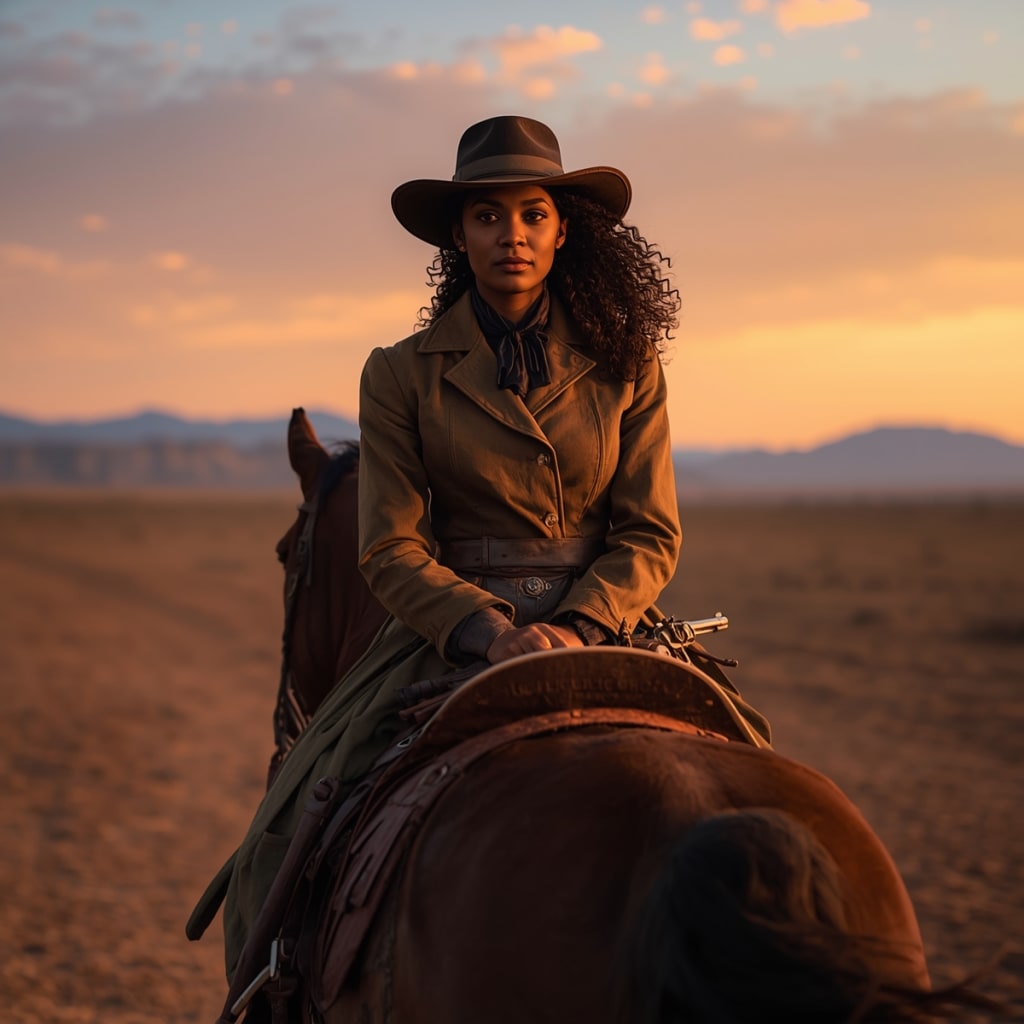
When we think of the American frontier, we often picture dusty saloons, weathered sheriffs, and rugged cowboys riding into the sunset. Hollywood made sure of that — spinning tales of John Wayne and the Marlboro Man until the myth became the memory. But what if I told you that some of the most fearless figures of the Wild West wore skirts instead of spurs, and bonnets instead of cowboy hats?
Their names were whispered, if remembered at all — Stagecoach Mary, Cathay Williams, Clara Brown, and Mary Fields — women who lived in a world determined to forget them. They broke laws, broke molds, and broke every expectation set for their gender and their race. This is their story — the story time tried to erase.
Mary Fields: The Gun-Toting Mail Carrier
In 1895, in the tiny town of Cascade, Montana, locals knew to clear the boardwalk when Mary Fields came to town. Standing six feet tall and weighing over 200 pounds, she was as intimidating as any gunslinger in the territory.
Born into slavery in Tennessee, Mary gained her freedom after the Civil War and worked her way west. She took odd jobs — stagehand, janitor, caretaker — but found her calling when she became the first African American woman to carry U.S. mail on a star route contract.
Every day, Mary hitched her horses and drove her stagecoach through snowstorms and rocky mountain passes. When wolves or bandits threatened her route, she met them with the .38 revolver she kept strapped beneath her apron. Locals called her “Stagecoach Mary,” a nickname that carried both respect and fear.
She drank whiskey with the men, smoked cigars, and could outshoot most of them. In a time when women were expected to be silent, Mary Fields thundered through history with the force of a cannon — and though few history books mention her name, she remains one of the most remarkable figures of the West.
Cathay Williams: The Soldier Who Hid Her Gender
If you think serving in the army was forbidden to women in the 19th century, you’d be right — but Cathay Williams didn’t care. She wanted freedom and stability after the Civil War, and if that meant breaking the law, she was willing.
Born a slave in Missouri, Cathay was “confiscated” by the Union Army during the war and served as a cook and washerwoman for the troops. But when the war ended, and Black men were allowed to enlist in the newly formed Buffalo Soldiers, Cathay wanted in.
So she disguised herself as a man.
She cut her hair, changed her name to “William Cathay,” and passed the Army medical exam without suspicion. For two years, she served as a Buffalo Soldier — marching, drilling, and enduring harsh conditions without revealing her secret.
When she finally fell ill and was discovered, she was discharged — but not disgraced. She went on to live independently, supporting herself as a seamstress, the only known female Buffalo Soldier in history.
In a world that denied women even the right to vote, Cathay Williams fought in uniform — not for glory, but for her own place in a country that never planned to give her one.
Clara Brown: The Angel of the Rockies
Not all heroes wore guns. Some wore compassion.
Clara Brown, born enslaved in Virginia, earned her freedom at age 56 and headed west with a wagon train, settling in Colorado during the Gold Rush. There, she became a laundress and cook — one of the first Black women pioneers in the Rocky Mountains.
But what made Clara legendary wasn’t her work ethic — it was her generosity. She used her earnings to build a small fortune, and instead of keeping it, she spent it helping others. She housed newly freed slaves, paid for church construction, and helped many Black families reunite after the Civil War.
Locals called her “Aunt Clara,” but among the freedmen of the frontier, she was “the Angel of the Rockies.”
Her name doesn’t appear in most textbooks, but her legacy echoes in the foundations of Colorado communities she helped build — not through gunfire or gold, but through grace.
Forgotten by History, Remembered by Heart
These women were not supposed to exist. Not in the history books. Not in the legends. The frontier story we inherited was written by men — mostly white, mostly wealthy, and almost entirely uninterested in women who didn’t fit their narrative.
But these women — and countless others whose names we’ll never know — lived, fought, worked, and thrived anyway. They drove wagons, delivered mail, mended towns, and even carried rifles when needed. They were Black, Indigenous, immigrant, widowed, and brave beyond measure.
They built the West — not from behind the scenes, but in full daylight, dust on their boots and strength in their spines.
The Legacy Lives On
When you look past the myths of cowboys and outlaws, the American frontier becomes something much richer — a story of resilience, diversity, and defiance.
So the next time you hear tales of the “Wild West,” remember that it wasn’t just wild — it was wide. Wide enough for women who refused to bow, who rode, fought, healed, and loved on their own terms.
The women time tried to erase are still here — in our stories, in our spirits, and in every woman who dares to carve her own frontier.
About the Creator
fazalhaq
Sharing stories on mental health, growth, love, emotion, and motivation. Real voices, raw feelings, and honest journeys—meant to inspire, heal, and connect.
“The Art of Starting Over (Without Losing Yourself)”
There’s a strange kind of silence that follows the moment your life falls apart. It isn’t the loud crash of endings people imagine — it’s quieter, heavier, almost polite. Like life clearing its throat before saying, “Now what?”
By fazalhaq3 months ago in Motivation
Center Stage with Paul Stewart
*** I'm keen to republish the interviews I did for my series with Vocal creators. It's been a few years and I thought it might be nice to revisit these wonderful conversations. I'll be releasing them one at a time for a few weeks/months.
By Heather Hubler5 days ago in Interview


Comments
There are no comments for this story
Be the first to respond and start the conversation.