
THE WICKED BURKERS OF VICTORIAN LONDON
Soon, demand outstripped supply, and the Burkers went a step further and murdered people to supply even more dead bodies to their customers.

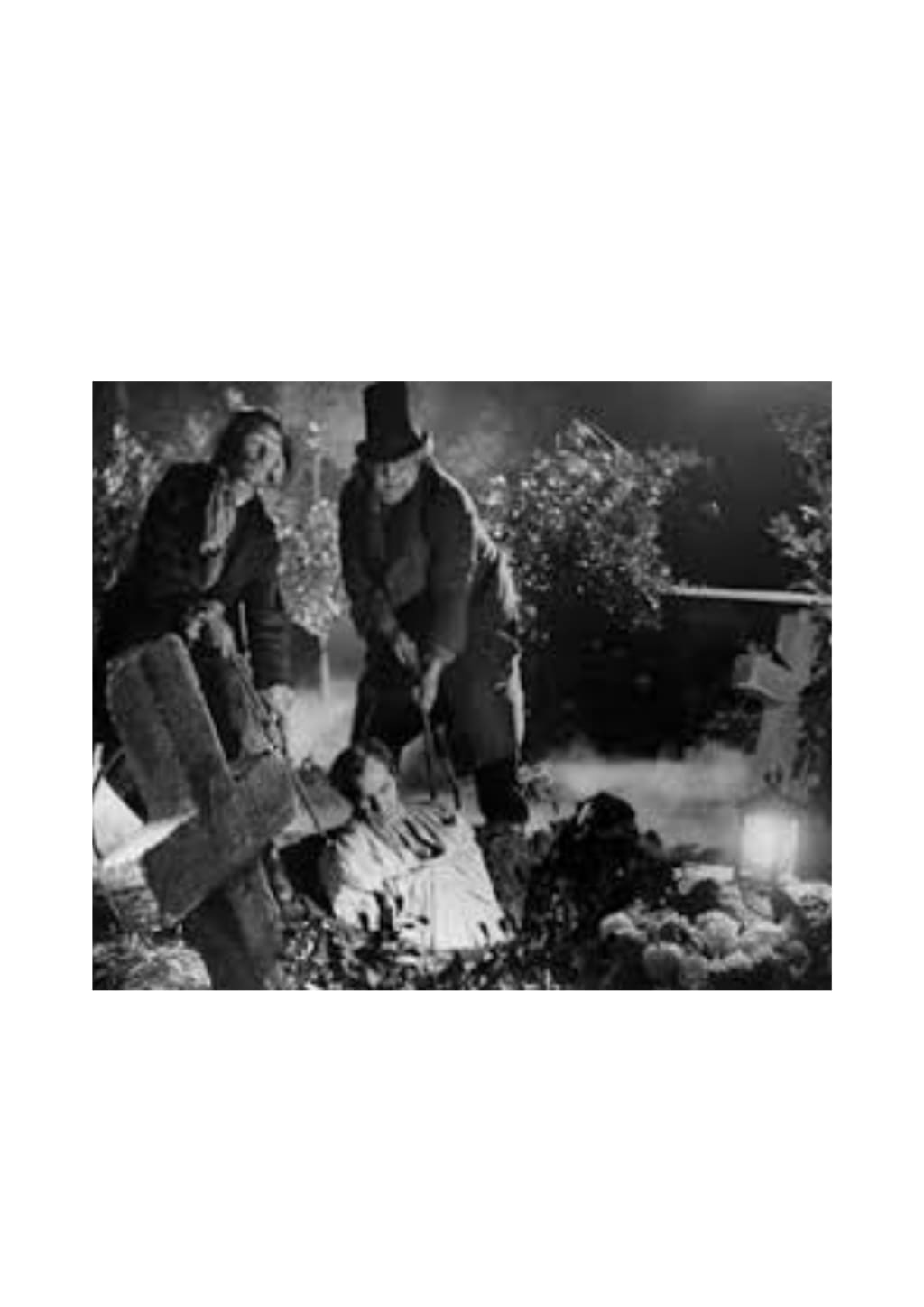
The London Burkers were a gang of body snatchers who functioned in London in the 1830s and came to notoriety in 1831. They worked as a team thieving and selling dead bodies to big London hospitals, including St. Bartholomew’s Hospital and St. Thomas’ Hospital.
Medical pupils in Victorian times had very few prospects to dissect bodies in their studies. So, the Burkers carried out their crimes to allow surgeons and medical students to dissect and scrutinise the bodies, and to learn more about human anatomy. The Burkers included four men: John Bishop, Thomas Williams, Michael Shields, and James May.
The location of the horrifying murders by Williams and Bishop was in London’s East End, near to St. Leonard’s Church, Shoreditch. In an area known as Nova Scotia Gardens.
During this period, people didn’t donate their bodies to medical science. So, hospitals and colleges could only use the bodies of executed criminals. Because London was getting to be more law-abiding, fewer criminals were being executed. Students needed hundreds of corpses for their study each year, but less than a hundred bodies were provided annually.
The Burkers started by digging up moist bodies from cemeteries, selling them to colleges and hospitals. But this got dangerous. The families of people who had been recently buried mounted vigils at the gravesides, to put off the body snatchers.
Soon, demand outstripped supply, and the Burkers went a step further and murdered people to supply their customers. This also allowed the body snatchers to create their own supply of bodies, rather than waiting for people to die.
Burke and Hare, who worked in Edinburgh, were the most well-known body snatchers. The London Burkers were a group from Shoreditch in London, including John Bishop, Thomas Williams, Michael Shields, and James May. They were to become the London Burkers after Burke and Hare.
The murder of a young boy gained them infamy. In 1831, they attempted to sell a corpse that was a little too moist. After they tried to sell the boy’s body, later nicknamed ‘The Italian Boy’ to King’s College School of Anatomy, the College realised he’d been murdered. In the end, Bishop admitted to drugging him with laudanum and abducting the boy, who was fourteen years old.
Joseph Sadler Thomas, a Metropolitan Police superintendent, had searched the cottages at Nova Scotia Gardens, Shoreditch, and found clothing items in a well in one garden and one of the toilets, suggesting multiple murders.
The two main London Burkers were found guilty of murder in 1831 and sentenced to death. Bishop and Williams’s confession after their trial cleared the other gang members and saved them from execution, at least, as they had not been involved in the murders themselves.
In the end, Bishop confessed to stealing and selling more than five hundred bodies over a twelve-year period. They appeared at the Old Bailey and were found guilty. They hung Bishop and Williams at Newgate on 5th December 1831 for murder, before over thirty thousand onlookers.
Extraordinarily, the police opened up the house at Nova Scotia Gardens in Shoreditch for the viewing public. Charging five shillings at a time. They then allowed the public to take away the furnishings of the house as souvenirs!
Police cautiously identified the corpse as Carlo Ferrari, an Italian lad from Piedmont. After the trial, Bishop denied this, stating the body was a Lincolnshire farmer on his way to Smithfield.
The killings led to the Anatomy Act of 1832, which finally delivered a legitimate supply of bodies for medical research schools.
About the Creator
Paul Asling
I share a special love for London, both new and old. I began writing fiction at 40, with most of my books and stories set in London.
MY WRITING WILL MAKE YOU LAUGH, CRY, AND HAVE YOU GRIPPED THROUGHOUT.
paulaslingauthor.com
Keep reading
More stories from Paul Asling and writers in FYI and other communities.
LONDON’S VILE VICTORIAN BABY FARMERS
In the days when it was considered a disgrace to have a child out of marriage, unmarried mothers would regularly pay an older woman to raise their child. In lots of cases, the mother would have no further contact with the child. This permitted some dreadful crimes to be committed by evil baby farmers.
By Paul Asling4 years ago in FYI



Comments
There are no comments for this story
Be the first to respond and start the conversation.