
The Voynich Manuscript: A Mystifying Artifact That Continues to Baffle Researchers and Historians Alike
The History, Content, and Attempts to Decode the Elusive Voynich Manuscript: A Comprehensive Overview

Introduction
The Voynich Manuscript is an enigmatic and mysterious book that has fascinated scholars and researchers for centuries. The manuscript is written in an unknown language and contains strange illustrations, leaving those who have attempted to decode it scratching their heads in puzzlement. This article will explore the history, theories, and attempts to decipher the Voynich Manuscript, shedding light on this fascinating artifact that continues to captivate people to this day.
The Origins of the Voynich Manuscript
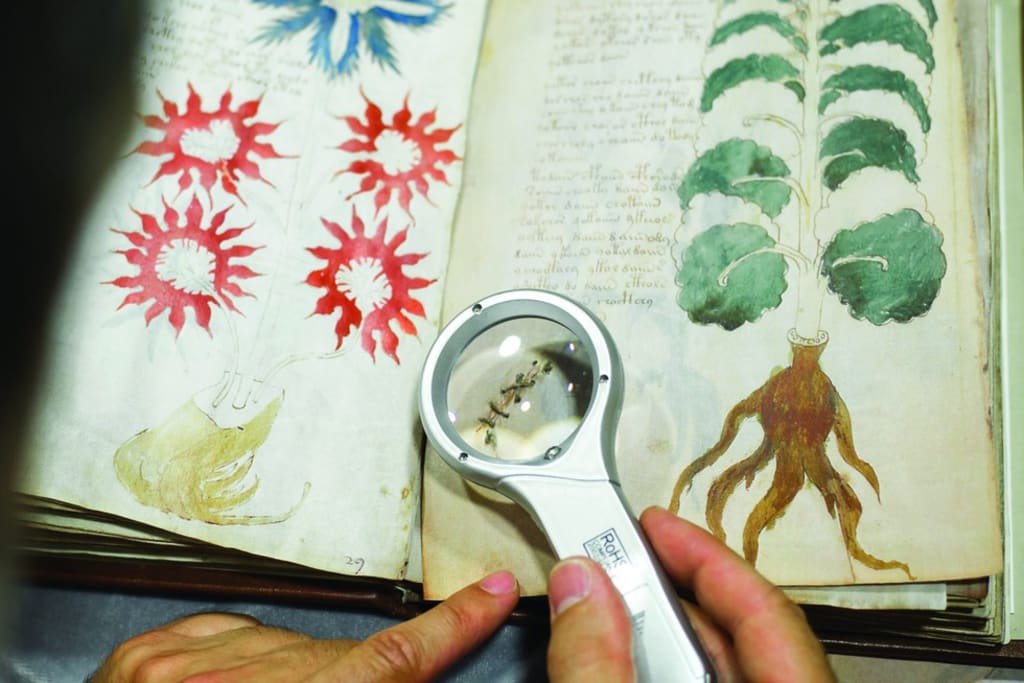
The Voynich Manuscript was discovered in 1912 by Wilfrid Voynich, a Polish book dealer who had acquired the book from a Jesuit college in Frascati, Italy. The manuscript is believed to have been created in the early 15th century, and is made up of 240 pages of vellum. Each page contains a mixture of text and illustrations, with the illustrations depicting a range of subjects, including botanical drawings, astrological charts, and human figures in strange, otherworldly landscapes.
The text in the Voynich Manuscript has confounded scholars and cryptographers for centuries. The language in which it is written has yet to be identified, and despite many attempts to decode it, the text remains a mystery. The text is written in a flowing, cursive script that is difficult to read, and many of the words are abbreviated, making it even more challenging to decipher.
Theories and Speculations Surrounding the Voynich Manuscript
Over the years, many theories and speculations have been put forward to explain the origins and purpose of the Voynich Manuscript. Some researchers believe that the book was created by a 15th-century alchemist who was attempting to create the Philosopher's Stone, a substance believed to be capable of turning base metals into gold. Others have suggested that the book was used by a secret society, such as the Rosicrucians, for the purpose of communicating in code. Still others believe that the book was created as a hoax or a forgery.
One of the most interesting theories regarding the Voynich Manuscript is that it was created as a form of steganography, the art of hiding messages in plain sight. This theory suggests that the text and illustrations in the book are part of a hidden code that can only be deciphered by those with the key. Supporters of this theory point to the fact that the text contains many patterns and repetitions, which they believe are part of a larger code.
Despite these theories, however, no one has been able to definitively identify the purpose of the Voynich Manuscript. The text remains unreadable, and the illustrations remain inscrutable. Some have even suggested that the book is simply a work of art, created for its own sake, with no underlying meaning or purpose.
Attempts to Decode the Voynich Manuscript
Despite the lack of progress in deciphering the Voynich Manuscript, researchers have not given up hope. Over the years, many individuals and organizations have attempted to decode the book, using a range of techniques and methods.
One of the earliest attempts to decode the Voynich Manuscript was made by William Romaine Newbold, a professor of philosophy at the University of Pennsylvania. In 1921, Newbold published a paper in which he claimed to have discovered a hidden code in the text of the manuscript. Newbold believed that the code was based on the use of shorthand, and that by reading the text backwards and forwards, and by counting the number of times certain letters and words appeared, he was able to decipher the hidden message. However, Newbold's theory was later debunked, and his attempts to decode the manuscript proved unsuccessful.
In the 1940s and 1950s, a team of researchers at the U.S. Army's Signal Intelligence Service attempted to decode the Voynich Manuscript. The team used a variety of techniques, including frequency analysis and statistical analysis, but they were ultimately unable to make any significant progress.
In more recent years, researchers have turned to computer analysis in an attempt to decode the manuscript. In the 1990s, computer scientist Gordon Rugg developed a technique called the "Verifiable Absurdity" approach, which involves generating random text in a similar style to that of the Voynich Manuscript and then comparing it to the original text to see if any patterns or structures emerge. While this approach has yielded some interesting results, it has not led to a definitive solution.
Another researcher, Stephen Bax, has attempted to decode the Voynich Manuscript using a combination of linguistic analysis and visual interpretation. Bax has suggested that the text in the manuscript may be written in a language from the New World, and that the illustrations may contain clues to the meaning of the text. While Bax's approach has garnered some attention, it remains controversial, and many scholars remain skeptical of his findings.
Conclusion
The Voynich Manuscript is a remarkable artifact that has captured the imaginations of scholars and researchers for centuries. Despite numerous attempts to decode its mysterious text and illustrations, the manuscript remains as enigmatic as ever. While theories and speculations abound, no one has yet been able to definitively identify the purpose of the manuscript or the meaning of its text. Nevertheless, the quest to decipher the Voynich Manuscript continues, and it remains a fascinating mystery that continues to captivate people to this day.
About the Creator
Paul Andrew
I'm a storyteller & content writer with 2 years of experience. Crafting engaging articles & blog posts on a variety of topics. Let's explore the world through my words!
Keep reading
More stories from Paul Andrew and writers in FYI and other communities.
"Mastering the Wicket: Unraveling the ICC Cricket World Cup 2023 - A Quiz Journey Through Cricket's Grand Spectacle"
Cricket, often hailed as a gentleman's game, transforms into a battlefield of skills and strategy during the ICC Cricket World Cup. The 2023 edition was no exception, with thrilling encounters, record-breaking performances, and unforgettable moments etching themselves into the annals of cricket history. In this quiz journey, we delve into the heart of the tournament, exploring key players, stats, and moments that defined the spectacle.
By Paul Andrew2 years ago in FYI




Comments
There are no comments for this story
Be the first to respond and start the conversation.