
The United States Debt Ceiling: Implications, History, and Political Complexities
Exploring the Consequences of Default, Presidential Influence, and the Challenges of Raising the Debt Limit
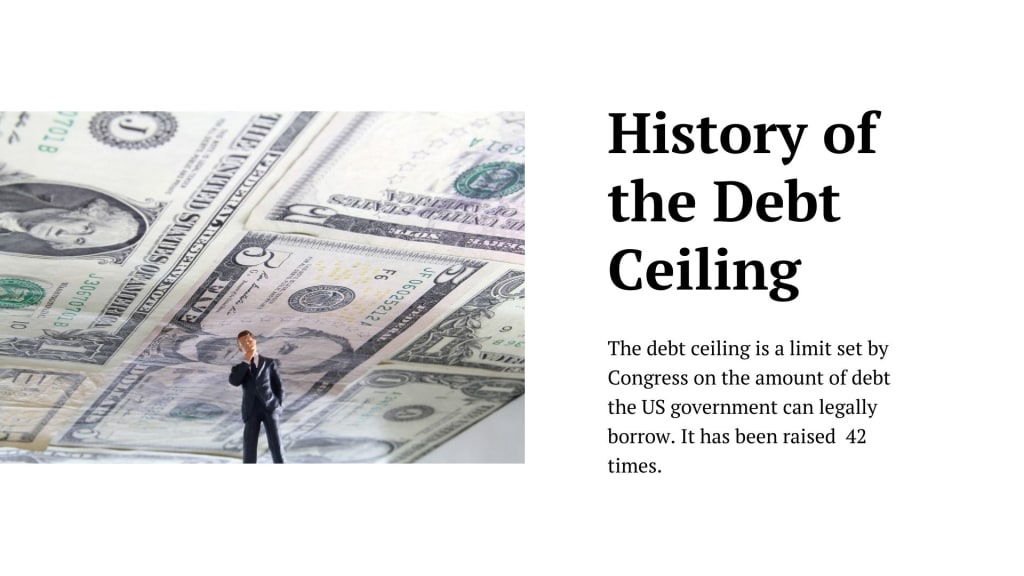
The United States debt ceiling has been raised 42 times since 1981. However, if the debt ceiling is not raised, the United States could go into default, which would have severe consequences for the economy and global standing. Default means that the United States may not be able to meet its financial obligations, such as paying government employees or providing Social Security benefits on time. This would cause the stock market to decline, impact the U.S. credit score, and potentially jeopardize its global power status.
While the U.S. has never defaulted on its debt, it is considered one of the safest investments in the world. The government has tools, like borrowing and the power to print its own currency, to avoid default in most circumstances. However, understanding how the debt ceiling works and its impact is crucial.
The U.S. Treasury is responsible for managing the country's finances, but it doesn't make decisions on raising the debt limit or determining spending. Its role is to facilitate the inflow and outflow of funds. The government spends money in two major categories: government payroll and programs. Programs include Social Security, Medicare, and other initiatives. To generate income, the government relies on taxes such as payroll, sales, and corporate taxes. However, taxes alone often fall short of covering government spending, leading to the accumulation of debt.
To fund this debt, the government sells bonds, which are considered safe investments backed by government assets. In some cases, the government may resort to printing cash as a secondary option. However, there are times when taxes and debt are insufficient to cover spending. In such situations, the government must raise income through taxes, reduce spending, or raise the debt limit.
Raising the debt ceiling sounds simple, but it becomes complicated due to politics. The president and Congress are responsible for making decisions regarding spending and raising taxes. The president proposes a budget that outlines ways to raise income and new spending programs, but it requires Congress' approval. If Congress doesn't approve, including decisions to raise the debt ceiling, complications arise.
To put it into perspective, imagine managing personal finances. If expenses exceed income, you either reduce spending or take on debt to maintain your lifestyle. However, your significant other, like Congress, has the final say in allowing you to take on more debt. If they disagree, you must cut spending or, if heavily indebted, default on your credit cards, impacting your credit score and potentially leading to bankruptcy. This analogy reflects the challenges faced when raising the debt ceiling.
Looking at the history of raising the debt ceiling, recent presidents have done so multiple times. Donald Trump raised it twice, resulting in a debt increase from $19.9 trillion to over $27 trillion during his tenure. Bill Clinton raised it four times, with a modest increase from $4.1 trillion to $5.95 trillion. George W. Bush raised it seven times, leading to a jump from $5.95 trillion to $11.315 trillion. Barack Obama also raised it seven times, resulting in an increase from $11.3 trillion to $18.1 trillion. However, the president who raised the debt ceiling the most since the 1980s was Ronald Reagan, who did so 18 times, taking the debt from $935 billion to $2.8 trillion.
The consequences of a U.S. default would extend beyond Social Security and other payment delays. The economy would face significant risks, including job losses and skyrocketing interest rates on credit cards and mortgages. The stock market would experience a sharp decline, potentially over 45%. Moreover, the United States' credit rating, which has always been highly regarded, would likely be downgraded, adversely affecting both Republicans and Democrats.
One might wonder why the U.S. doesn't eliminate the debt limit or set it so high that it poses no threat to the economy. The issue lies in the fact that if Congress and the president wanted to take on debt, they would need to restructure taxes or reduce spending. However, political complexities often lead to negotiations on raising the debt limit going down to the wire.
In conclusion, the United States has a history of raising the debt ceiling to avoid default. The consequences of a default would be severe, impacting the economy, job market, stock market, and credit rating. While the U.S. government has tools to prevent default, the decision-making process involving the president and Congress can be complex due to politics. Understanding the workings of the debt ceiling is essential to comprehend its potential implications.
About the Creator
Keep reading
More stories from Andre Coore and writers in FYI and other communities.
Maximizing Battery Life
Have you ever felt a pang of helplessness in an alien city without access to your digital navigation, or experienced your phone shutting down at a concert, right before your favorite band began playing your most loved tune? Life presents numerous scenarios where you desperately need your phone to stay functional, yet often the device's battery falls short of your expectations. How can you navigate this issue?
By Andre Coore3 years ago in Geeks




Comments
There are no comments for this story
Be the first to respond and start the conversation.