
The Tomb of Amphipolis: A mystery to be solved?
How an astonishing archaeological discovery near Ancient Amphipolis continues to puzzle historians and archaeologists alike.

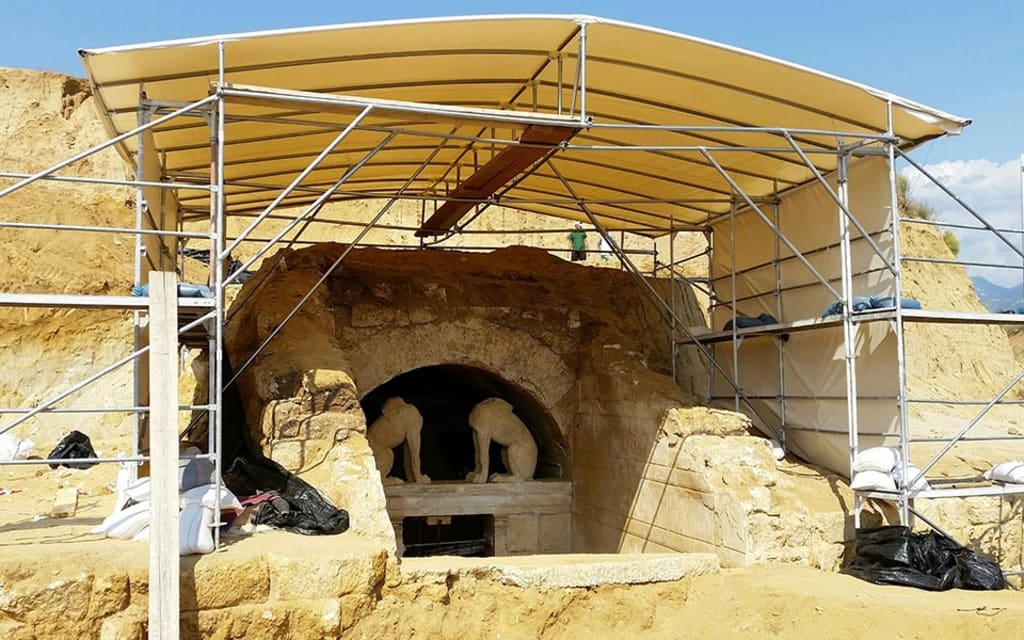
The Discovery of the Tomb
Excavations outside the ancient Greek city of Amphipolis began as early as the 1960s. However, archaeologists initially uncovered only a perimeter wall and a few archaic tombs from the Greek Bronze Age. It was not until 2012 that another team of archaeologists made a groundbreaking discovery, a massive Macedonian tomb on a hill close to the legendary Lion of Amphipolis. The tomb was officially excavated in 2014, marking one of the most significant archaeological findings in modern Greek history.
In this article, I will review the discoveries made so far and explore what they may reveal about the tomb’s unknown occupants.
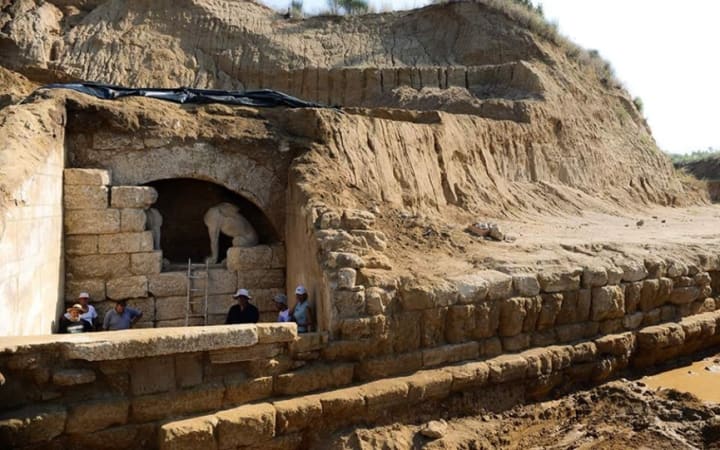
The hill that covered the mystery.
The site is situated approximately 10 kilometers north of the ancient city of Amphipolis, a location once at the heart of conflicts between Athens and Sparta during the Peloponnesian War. The area later became central to Ancient Macedon, playing a crucial role in the years following Alexander the Great’s death. It was here that his wife, Roxana, and their son, Alexander IV, were exiled and eventually murdered.
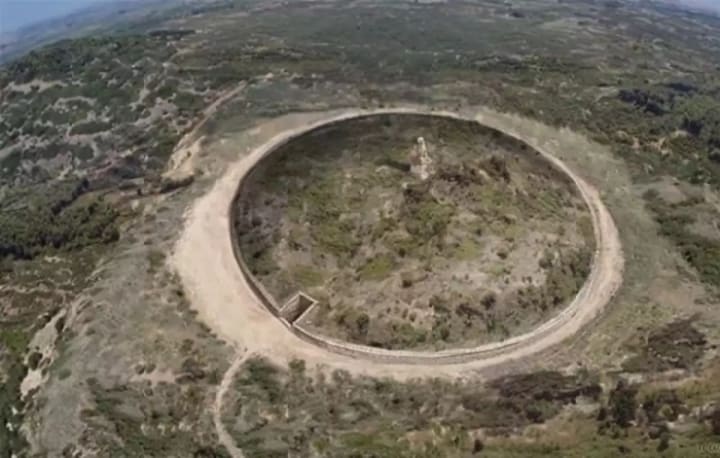
The burial mound itself measures 158 meters in diameter and stands 25 meters high. Scientific dating places its construction in the mid-4th century BCE, aligning it with the era of Alexander the Great. The first excavations uncovered what initially seemed to be just an outer wall, but as more details emerged, archaeologists noticed striking similarities to the architectural style of Dinocrates of Rhodes, Alexander's chief architect.
So it was clear that the mound contained a tomb not long before what historians and archaeologists understood that it was the date of death of Alexander the Great.
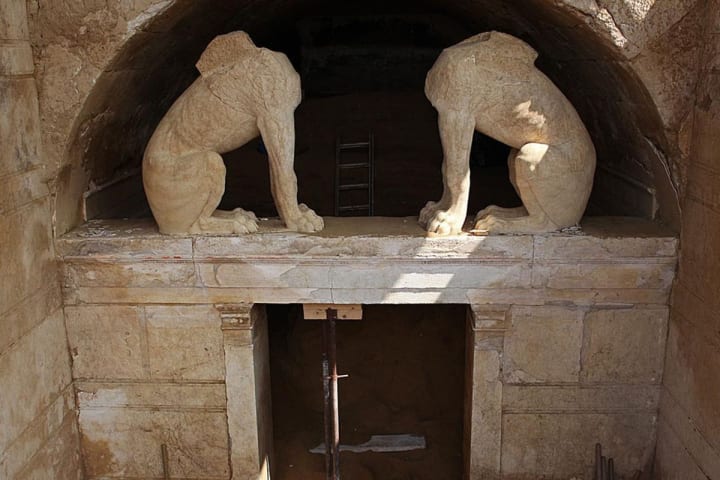
The headless sphinxes
The theories, of course, started to spin about who was in the grave and if it could be Alexander himself. Excavations began in 2014 and revealed a staircase that led down to the ground, and soon, two headless marble sphinxes were uncovered over what was the entrance to the tomb. The first chamber had two sphinxes sitting, one on each side facing the other. These are exquisite sculptures with beautiful lines, with musculature and meticulous details in the claws and feathers of the wings that once adorned them. The sphinxes are now head and wing, sitting on top of a fresco mimicking an Ionian peristyle. Later, the head of the rightmost sphinx together with fragments of the wings was found inside the third chamber, pointing to the fact that the tomb had been opened at some point in history
The Karyatis Sculptures and the Mosaic of Persephone
Beyond the sphinx-guarded entrance, archaeologists discovered a second doorway flanked by two monumental female Caryatid statues. These statues, standing as graceful sentinels, still bore traces of their original painted surfaces, hinting at the tomb’s once-vibrant appearance.
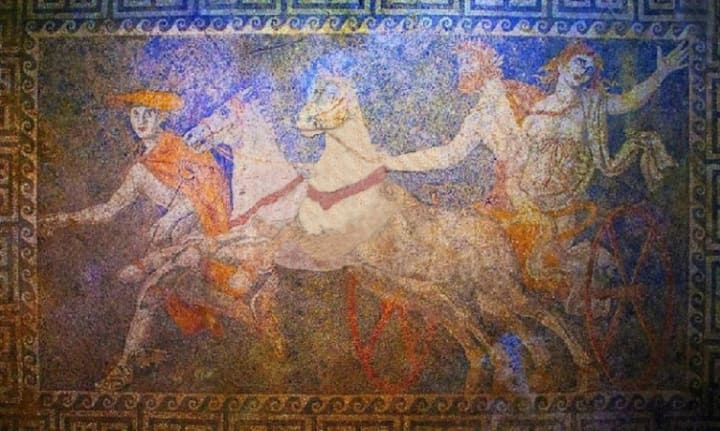
Perhaps the most breathtaking find was the mosaic adorning the floor of the second chamber. Measuring 3 by 4.5 meters, it depicts the abduction of Persephone by Hades, the god of the underworld, with Hermes guiding the chariot. This powerful imagery—often associated with royalty and the afterlife—suggests that the tomb’s occupant was someone of great significance.
The entrance to the next chamber was originally sealed with a marble door, which had collapsed by the time archaeologists arrived. Signs of looting were evident, raising concerns that whatever treasures or inscriptions once lay within had long since been removed.
Inside the Grave.
Upon entering the final chamber, archaeologists found an 8-square-meter burial space with bare marble walls—strikingly simple compared to the elaborate outer chambers. Beneath the stone floor lay a sunken tomb, containing not one, but five separate skeletons:
- A woman over 60 years old.
- Two men, aged approximately 35 and 45 (the younger man showed signs of unhealed wounds).
- A cremated adult.
- A newborn infant.
DNA analysis is still underway to determine whether these individuals were related, adding another layer of mystery to the site.
Separating Fact from Speculation
Theories abound regarding the identity of the tomb’s occupants. Some have suggested it belongs to Philip II, Alexander the Great’s father, or even Alexander himself. However, historical sources suggest that Alexander was buried in Alexandria, where several Roman emperors later visited his tomb.
Another theory posits that the grave belonged to Olympias, Alexander’s mother. The presence of an older woman’s remains supports this hypothesis, as does the Persephone mosaic—symbolizing a woman’s journey into the afterlife.
Adding further intrigue, archaeologists uncovered three inscriptions within the tomb referencing Hephaestion, Alexander’s closest companion and general. This has led some to speculate that the tomb was either built for Hephaestion or dedicated in his memory. However, critics argue that there is no definitive evidence linking him to the site.
One possibility is that the tomb was initially intended for Olympias, but later repurposed to house the cremated remains of Hephaestion, who was originally buried in Babylon. For now, the true purpose of the tomb remains unresolved, pending further DNA analysis and historical research.
A Glimpse into the Future: When Will the Public See the Tomb?
Some of the artifacts uncovered at the site are now housed in the Archaeological Museum of Amphipolis. The tomb itself has been opened to limited groups of researchers and students, with plans for a public opening in 2027, according to Greece’s Minister of Culture.
The Tomb of Amphipolis continues to be one of the most fascinating and enigmatic archaeological discoveries of the modern era.
Written and Published by Sergios Saropoulos on the platform Vocal Media
About the Creator
Sergios Saropoulos
As a Philosopher, Writer, Journalist and Educator. I bring a unique perspective to my writing, exploring how philosophical ideas intersect with cultural and social narratives, deepening our understanding of today's world.
Keep reading
More stories from Sergios Saropoulos and writers in FYI and other communities.
The Lost Art of Political Cinema: A Reflection on the Past and Present.
As you may have guessed from the cover image, I recently watched Don't Look Up. I personally believe it was a well-scripted and well-directed film, featuring an impressive cast and a solid sense of humor. However, after scrolling through social media, I noticed many viewers and writers describing the movie as a groundbreaking satire—one that elevates political humor to a new level.
By Sergios Saropoulos4 years ago in FYI



Comments
There are no comments for this story
Be the first to respond and start the conversation.