
The Secrets Within
Exploring the Fascinating Remains of Ethiopia's Lost Civilization

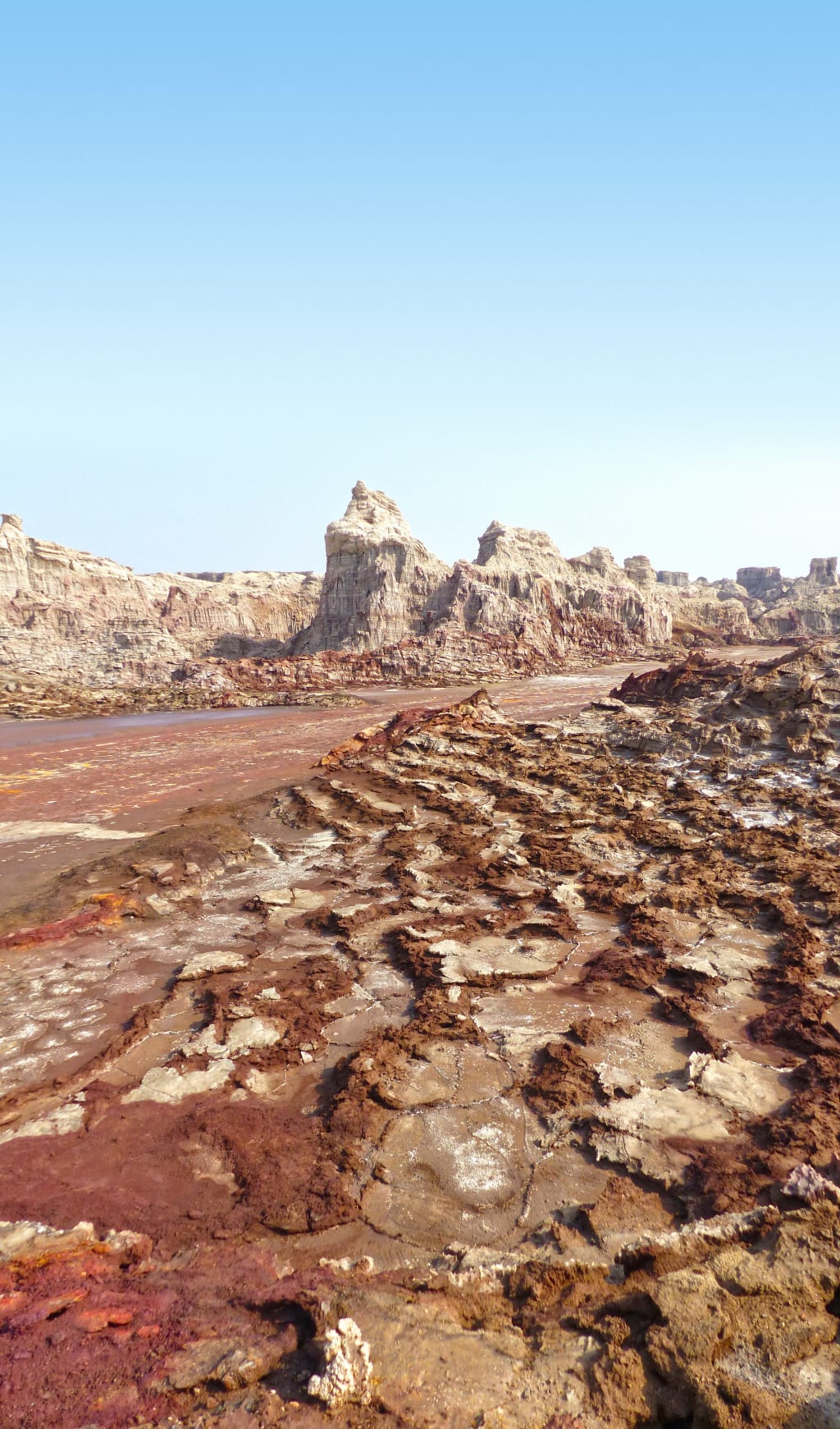
In a recent excavation in Harlaa, Ethiopia, archaeologists led by Timothy Insoll from the Institute of Arabic and Islamic Studies at the University of Exeter uncovered what is believed to be a long-lost city once inhabited by giants. While few archaeological studies had previously been conducted in the area, most of them focused on finding ancient human remains. This time, however, the team was determined to locate ancient settlements that could indicate the existence of giants in the city. According to locals, there were numerous legends and stories of giants inhabiting the region in the past. The team found supporting evidence for these stories in some of the massive stone buildings in the area, which could only have been lifted by giants or people with extraordinary strength.
Although no other evidence of giants has been discovered in the region, the excavations have shown that Ethiopia was much more connected to the rest of the world than previously thought. Evidence of Islamic burials, headstones, a 12th-century mosque, and artifacts from places such as Madagascar, the Maldives, Yemen, China, and Egypt were found in the area, indicating that Harlaa was likely a rich trading hub with close ties to many other countries between the 10th and 15th centuries.
Insoll believes that the evidence found so far indicates that Harlaa was the center of trade in the region, a rich and cosmopolitan center for jewelry-making, and that its residents were a mixed community of foreigners and locals who traded with others in the Red Sea, Indian Ocean, and possibly as far away as the Arabian Gulf. Further investigations are ongoing in the city to learn more about its people and origins, including the analysis of around 300 people from the city's cemetery to understand more about the people who lived in Harlaa earlier in history.
While no solid evidence of giants has been found yet, the supporting evidence from buildings and stories from the region, combined with other legends and stories from around the world, may suggest the existence of these creatures at some point in ancient history.
In conclusion, the recent archaeological findings in Harlaa, Ethiopia, provide fascinating insights into the rich history of this region. While the discovery of a long-lost city once inhabited by giants has captured the attention of the media, the broader implications of these findings are equally significant. The evidence of Islamic burials, headstones, a 12th-century mosque, and a range of artifacts from around the world suggests that Harlaa was a thriving center of trade and commerce, with close connections to other regions and countries.
Furthermore, the ongoing investigations in the city, including the analysis of human remains from the cemetery, are likely to yield further insights into the lives and culture of the people who lived in this ancient city. As the evidence continues to accumulate, it is clear that Harlaa played a crucial role in the history of Ethiopia and the wider region, and its legacy continues to resonate today.
While the question of whether giants truly existed in the city remains unresolved, the legends and stories from the region, combined with other ancient myths and folklore, suggest that these creatures may have been a part of the ancient world. Ultimately, the findings from Harlaa offer a compelling window into the mysteries and complexities of the past, and remind us of the enduring power of archaeology to uncover new insights and perspectives on the human experience.
Thank you to all the readers for taking the time to engage with my content. We appreciate your support and hope that our work has been informative and valuable to you.
About the Creator
Bob Oliver
Bob is a versatile writer & communicator passionate about exploring diverse topics & perspectives. I have written for various media outlets. And I believes in using words to inspire positive change. #writing #communication #passion
Keep reading
More stories from Bob Oliver and writers in FYI and other communities.
A Mystery of the Ancients
When it comes to explaining life on Earth and human history, scientists and historians can provide some answers, but not all. Although great at their jobs, they are sometimes left stumped by something that defies explanation. Some of the most mysterious and wonderful places worldwide that remain impossible to understand, even for scientists. Among them is the famous two-in-one tree in Casorso, Italy, where a mulberry tree grows under a cherry tree, a rare and unusual sight.
By Bob Oliver3 years ago in FYI
Water wells the key of our future
The average lifespan of a water well ranges from 25 to 40 years if it has carbon steel piping. Other steel alloys can increase the well's durability; however, a crucial point is sustainability. This means that over the years, the well continues to provide a constant and sustainable flow of water. To achieve this, it largely depends on the underground aquifers not being overexploited and on the recharge rate being greater than or equal to the extraction volume. However, today most aquifers are overexploited due to the large amount of water extracted each year. Another important factor that will ensure the sustainability of water wells is the periodic maintenance that the user must perform to keep them free of sediment and at their full depth. This includes minimizing corrosion of the steel casing pipe, thus extending its lifespan. Continuous monitoring of static and dynamic water levels in the well is also crucial, as is annual water quality analysis to identify any potential partial or total aquifer contamination.
By Ximena Ramireza day ago in FYI




Comments
There are no comments for this story
Be the first to respond and start the conversation.