
The Secrets of Antarctica, the Sphinx, and Cursed Objects
Exploring the Enigmatic Wonders That Captivate Humanity
Antarctica: A Frozen Enigma
At the bottom of our planet lies the frigid land of Antarctica, the coldest and most inhospitable continent in the world. Stretching over 5 million square miles, Antarctica is covered in ice sheets that breach more than a mile deep. With an average daily temperature of negative 49 degrees Fahrenheit and wind speeds that can reach over 100 miles per hour, it's no wonder that the only inhabitants of this barren landscape are scientists who work in research stations scattered across the continent. Mainstream geologists have long believed that ancient humans never settled on Antarctica due to its hostile climate. However, in 2016, satellite images revealed a curious formation emerging from the ice that some researchers believe could be a man-made pyramid.
The Antarctic Pyramids: A Controversial Discovery
Recently, there have been a number of reports of pyramids, huge Great Pyramids, in Antarctica. These structures jut out of the ice and snow, resembling the ones found in Egypt, but on a much grander scale. One pyramid, in particular, stands out with its perfectly square base, measuring two kilometers on each side. Could it be possible, then, that our ancestors did reach the Antarctic continent and perhaps even settle there? The notion of a man-made pyramid beneath the Antarctic ice raises intriguing questions about how such a massive structure could have been built, when it was constructed, and by whom.
Ancient Connections: Polynesian Stories and Climate Clues
While geologists argue that Antarctica has been under ice for millions of years, there is evidence to suggest that parts of it could have been ice-free until around 4000 BC. Stories from Polynesia, told by the so-called culture heroes, describe a strange land with white rocks emerging from the water, accompanied by icebergs, seals, and penguins. These tales align with the area we now know as Antarctica. The Polynesian people believed this was the place of their ancestors, sparking the question: Why would they believe this if it wasn't true? Could it be possible that the coldest place on Earth was once warm enough to be inhabited by humans?
Unveiling Antarctica's Climate Secrets
In 2017, German geologists collected core samples from deep within the frozen Antarctic seafloor to analyze the continent's climate thousands of years ago. The results were astonishing. The sediment samples revealed more than 60 different taxa of plants, similar to those found in a rainforest with a temperature regime akin to Northern Italy. The implications of finding such vegetation on the Antarctic continent, where no plants can survive today, are significant. It suggests that Antarctica holds secrets that could offer profound insights into Earth's history.
The Sphinx: Ancient Riddles and Enigmatic Origins
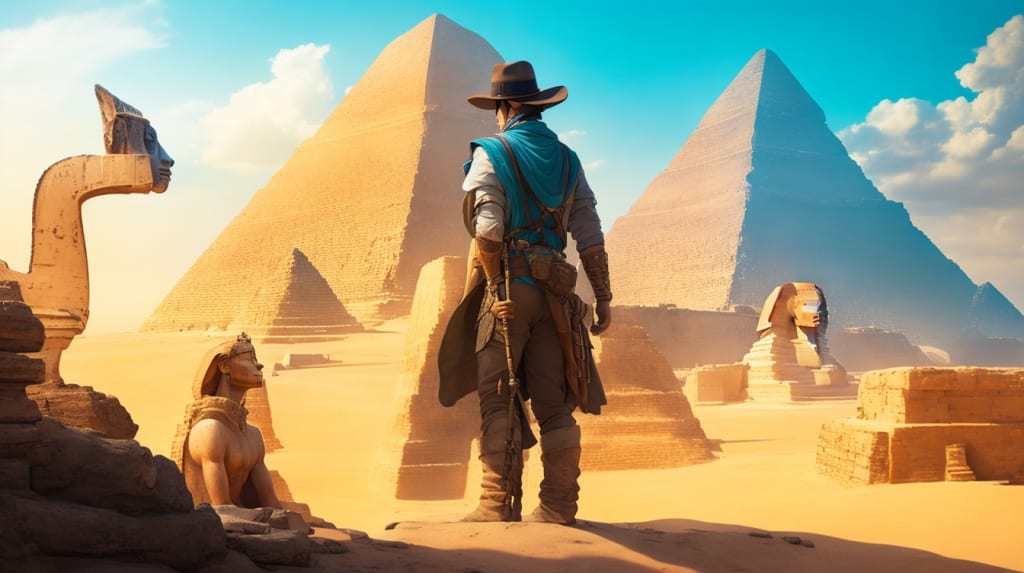
Cairo, Egypt, boasts the Giza necropolis—a collection of ruins believed to have been constructed during ancient Egypt's fourth Dynasty, around 2550 BC. Among these monumental structures, the Great Sphinx stands as an enigmatic sentinel. Carved from a single piece of stone, the Sphinx captivates with its immense scale and mysterious presence. For centuries, it has been an object of fascination and wonder, yet its true meaning remains elusive. The Sphinx was buried up to its neck in sand for most of its history, only revealed in the 1920s by a team of archaeologists. The debates surrounding its age and purpose continue to intrigue scholars.
The Sphinx's Hidden Secrets
While most archaeologists believe the Sphinx was sculpted around 2500 BC by King Khafre, the inventor's stele—an ancient commemorative stone tablet found near the Sphinx—offers a different perspective. Inscribed on the stele is a text attributed to Thutmose IV, who ruled Egypt during the 18th Dynasty. According to the inscription, Thutmose IV recounts a dream he had in which the Sphinx spoke to him, promising to make him the pharaoh if he cleared the sand that engulfed the statue. This account suggests that the Sphinx predates the reign of Khafre by several hundred years.
This alternative theory has sparked numerous speculations about the true origins and purpose of the Sphinx. Some researchers propose that it could have been crafted by an even earlier civilization, possibly dating back to the pre-dynastic period or beyond. These theories connect the Sphinx to ancient cultures that thrived long before the conventional timeline of ancient Egypt.
Another intriguing aspect of the Sphinx is the erosion patterns on its body. Geological analysis indicates that the weathering on the Sphinx's enclosure walls and body is not consistent with the pattern of wind and sand erosion typical of the region. Instead, the erosion patterns resemble water erosion, suggesting that the Sphinx might have been subjected to heavy rainfall at some point in its history. This finding has led to the hypothesis that the Sphinx might be much older than initially believed and could be a remnant from a time when the climate in Egypt was significantly different.
Cursed Objects: Unexplained Phenomena and Dark Legends
Throughout history, there have been tales of cursed objects that bring misfortune, illness, or even death to those who possess them. These objects, often shrouded in mystery and surrounded by eerie stories, have captivated the imagination and sent shivers down the spines of many. From cursed diamonds and haunted paintings to ancient relics and mysterious artifacts, the list of allegedly cursed items is extensive.
One such infamous object is the Hope Diamond, a large blue diamond believed to carry a curse that brings tragedy to its owners. Legend has it that the curse originated with the theft of a sacred gem from an idol in India. The diamond, said to be the same gem, eventually made its way to Europe and passed through the hands of various owners, many of whom met unfortunate fates. While skeptics dismiss the curse as mere superstition, the eerie stories surrounding the diamond continue to fuel its mystique.
Another notorious example is the allegedly cursed painting known as "The Anguished Man." According to the story, the artist mixed his own blood with the paint to create the artwork, and soon after completing it, he committed suicide. The painting has since been associated with paranormal occurrences, including strange sounds, ghostly apparitions, and unsettling experiences reported by those who possess it.
Whether these cursed objects possess a genuine supernatural power or if their effects are simply products of coincidence and human psychology remains a subject of debate. Yet, their stories persist, captivating those who dare to explore the realm of the unknown.
In the realm of ancient mysteries, the secrets of Antarctica, the enigmatic origins of the Sphinx, and the legends of cursed objects continue to intrigue and bewilder us. These enigmas remind us that there is much more to our world's history and the forces that shape it than meets the eye. As exploration and research progress, new discoveries may shed light on these mysteries, allowing us to unravel the hidden truths that lie beneath the surface of our collective fascination.
About the Creator
Raphael Achanga
Meet Raphael Achanga, the master weaver of tales and the sorcerer of screens. With a twisted imagination. Prepare to be bewitched, befuddled, and thoroughly entertained.
Keep reading
More stories from Raphael Achanga and writers in FYI and other communities.
Unveiling the Wondrous Mysteries of the World and Universe
From ancient treasures to natural phenomena, alongside intriguing enigmas, these are some of our favorite topics to explore. Welcome back to another thrilling adventure as we embark on a journey through ten wondrous mysteries of the world and universe. Get ready to be amazed and captivated as we delve into the secrets that have baffled scientists, historians, and stargazers alike.
By Raphael Achanga3 years ago in FYI
Why Local Sports Matter More Than Global Leagues
Local sports often exist in the shadow of global leagues, which dominate media coverage and attract enormous fanbases. Yet despite the allure of international tournaments and superstar athletes, local sports hold a unique and irreplaceable value. They are not measured by scale or revenue, but by the connections, identity, and meaning they create within communities. Understanding why these smaller, community-centered competitions matter helps reveal what global leagues cannot provide: a sense of belonging, shared history, and tangible impact on everyday life.
By Gus Woltmannabout 13 hours ago in FYI



Comments
There are no comments for this story
Be the first to respond and start the conversation.