
The Rustless Blade That Time Forgot
How a 2,500-Year-Old Chinese Sword Still Looks Brand New in 2026

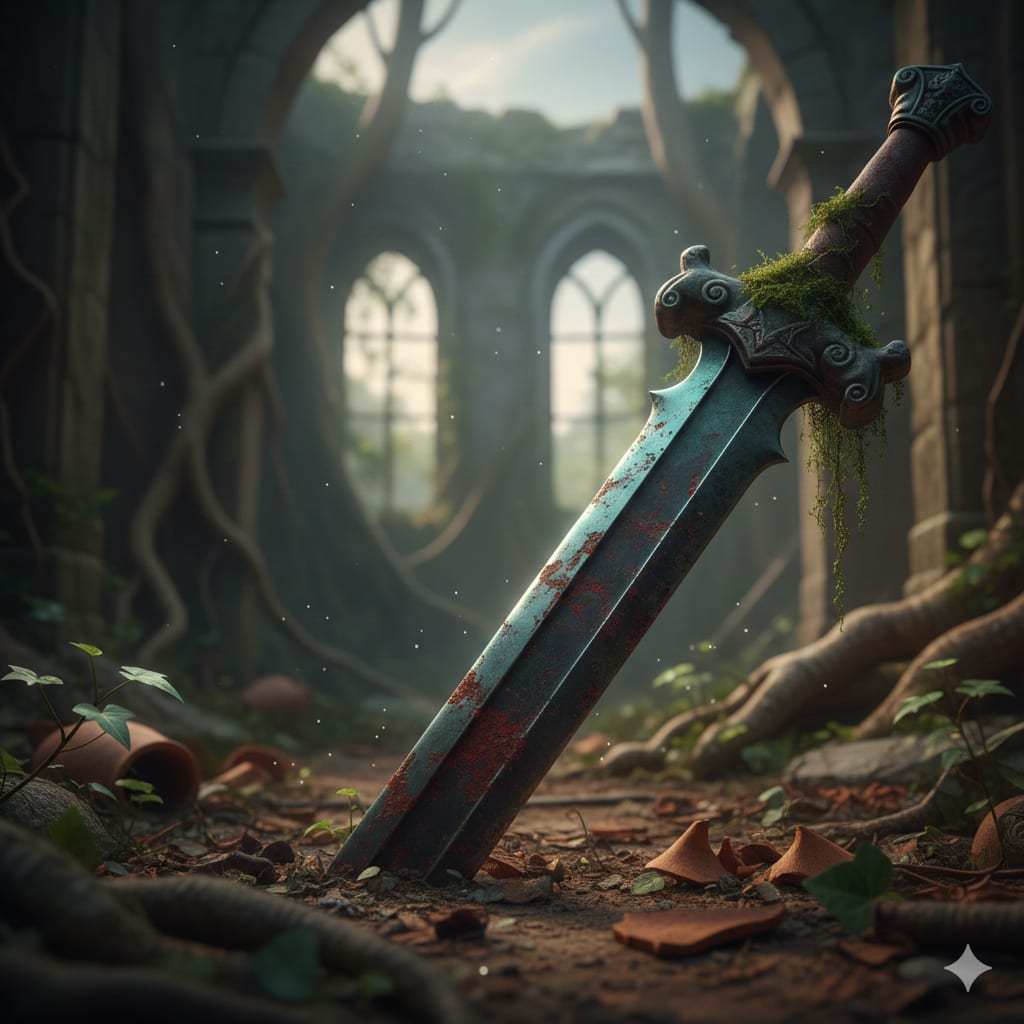
A Discovery That Shouldn’t Exist
Over 50 years ago, archaeologists in China uncovered something that honestly feels more like fantasy than history, a perfectly preserved bronze sword buried for over 2,000 years in a damp ancient tomb. No rust. No corrosion. Still sharp enough to draw blood.
This legendary weapon is known as The Sword of Goujian, and even today in 2026, it remains one of the most mysterious and impressive artifacts ever discovered.
Let that sink in:
A sword forged before the Roman Empire existed… still sharp… still shining… still intact.
That’s not normal. That’s historical madness in the best way possible.
The Tomb That Changed History
In 1965, during an archaeological survey near the Zhang River Reservoir in Hubei Province, researchers began excavating ancient tombs from the Chu State, a powerful civilization from the Spring and Autumn Period.
Inside one sealed tomb, they found:
- A skeleton
- A near air-tight wooden box
- And inside that box… a bronze sword in its scabbard
When they pulled it out and unsheathed it, the blade looked brand new.
No tarnish.
No corrosion.
No decay.
Even more shocking?
Tests showed the blade could slice through 20 sheets of paper with ease.
This wasn’t just a relic; it was a fully functional weapon.
Built Like No Other Weapon on Earth
The Sword of Goujian isn’t just old, it’s scientifically advanced for its time.
What Makes It Special:
- High copper content → flexibility, less breakage
- Tin-edged blade → extreme sharpness retention
- Sulfur compounds → natural rust resistance
- Air-tight scabbard → long-term preservation
- Advanced metallurgy → oxidation resistance
Basically, ancient Chinese swordsmiths created a natural anti-rust alloy centuries before modern metallurgy understood how.
This wasn’t luck.
This was ancient engineering genius.
A Weapon That’s Also a Work of Art
This sword isn’t just strong, it’s beautiful.
Design details:
- Black rhombic patterns etched into the blade
- Turquoise and blue crystals are embedded in the handle
- Silk-bound grip
- Pommel with 11 concentric circles
- Perfect symmetry and balance
It looks like something forged for a king, because it was.
The Inscription That Solved the Mystery
Etched into the blade were ancient characters written in Bird-Worm Seal Script, a decorative, almost artistic writing style used in early China.
The inscription translates to:
“King of Yue made this sword for his personal use.”
After years of scholarly debate, historians confirmed the owner was King Goujian, ruler of the Yue State (496–465 BC).
That makes the sword around 2,500 years old.
The King Behind the Blade
King Goujian wasn’t just a ruler; he was a legend of resilience.
After being defeated by the rival Wu State, he was forced to live as a servant for their king for three years. When he returned home, he spent a decade rebuilding his kingdom, reforming the economy, strengthening the military, and preparing for revenge.
He lived in hardship on purpose.
Ate simple food.
Lived like a peasant.
Even tasted bile daily to remind himself of humiliation.
Eventually, he led his army to victory and destroyed the Wu State.
His story became a symbol of:
- Perseverance
- Discipline
- Mental strength
- Strategic patience
And his sword?
It became a symbol of unyielding power and endurance.
Why It Never Rusted
Scientists later analyzed the sword and discovered the secret:
✔ Sulphation layer on the surface
✔ Oxidation-resistant alloy
✔ Sealed scabbard environment
✔ Advanced ancient metallurgy
Together, these created a natural preservation system that protected the blade for over two millennia.
This wasn’t magic.
This was ancient science ahead of its time.
Where the Sword Is Today
Today, the Sword of Goujian is considered a national treasure of China and is preserved in the Hubei Provincial Museum. It was once displayed in Taiwan until 2011 and remains one of the most protected artifacts in Chinese history.
It’s often compared to Excalibur in Western mythology, not because it’s mythical, but because it feels too legendary to be real.
Final Thoughts
The Sword of Goujian isn’t just an artifact; it’s proof that ancient civilizations were far more advanced than we give them credit for.
It represents:
- Lost technology
- Forgotten metallurgy
- Ancient engineering mastery
- Human resilience
- Cultural legacy
In 2026, with all our technology, machines, and science, we still struggle to create metal that lasts 2,500 years without corrosion.
Yet they did it… with fire, bronze, and knowledge passed through generations.
That’s not just history.
That’s timeless genius.
.
.
.
.
.
.
.
.
.
.
Sword of Goujian, ancient Chinese sword, rust-free sword, legendary Chinese artifacts, King Goujian, Yue State sword, ancient metallurgy, Spring and Autumn Period, Hubei Provincial Museum, ancient weapons China, rust-proof ancient sword, archaeological discoveries China, ancient Chinese technology, historical mysteries, legendary swords, ancient engineering marvels
About the Creator
Areeba Umair
Writing stories that blend fiction and history, exploring the past with a touch of imagination.
Keep reading
More stories from Areeba Umair and writers in FYI and other communities.
NASA Finds Massive Ice Sheets on Mars: What It Means for Future Colonization
For a long time, we’ve looked at Mars as a dry, dusty desert, a place where water was a relic of the ancient past. But thanks to some incredible high-resolution photography from the Mars Reconnaissance Orbiter, that image is changing. Researchers have officially spotted massive, exposed ice sheets that are far larger and "cleaner" than anyone expected.
By Areeba Umair7 days ago in FYI
A Failed Artist, A Disillusioned Poet, An Underpaid Game Show Host
I took my son and niece to Gori, a small town in Georgia where Joseph Stalin was born. They talked me into visiting the Stalin's Museum, the largest in the post-Soviet space. I had resisted going there because I just can't stand the monster and know enough about him, or so I thought.
By Lana V Lynx17 days ago in FYI


Comments
There are no comments for this story
Be the first to respond and start the conversation.