
The Quiet Weight of Disaster: Reflections After the Maine Plane Crash
A small-town tragedy reminds me how fragile ordinary days really are—and how the line between routine and catastrophe is always thinner than we think.

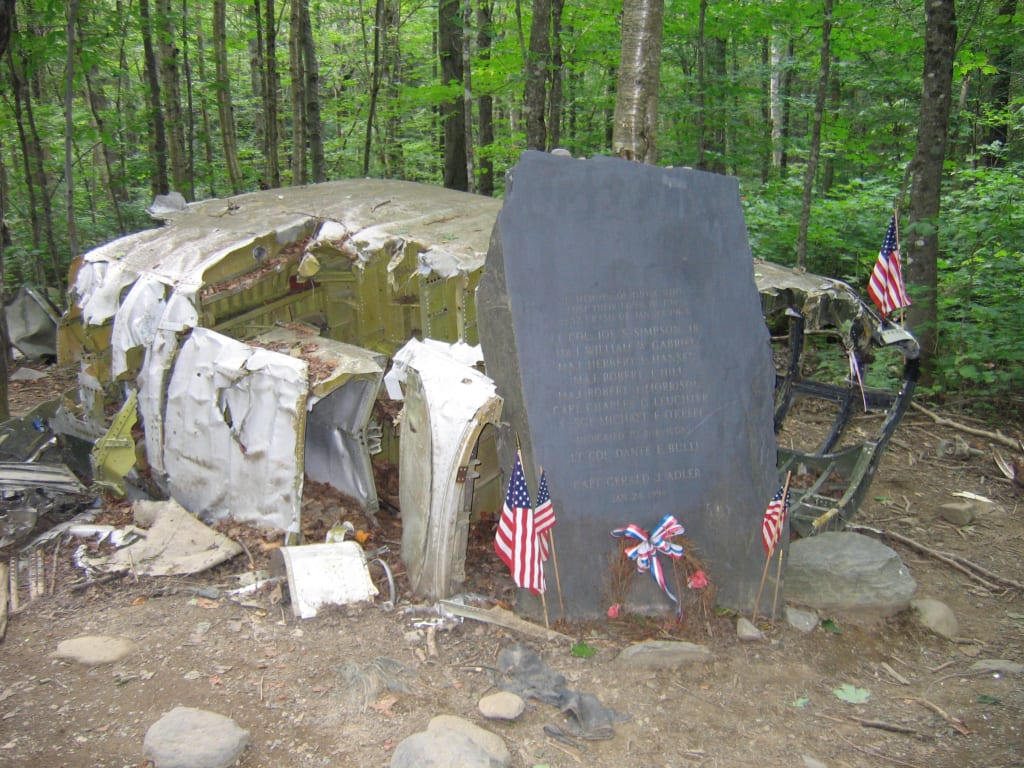
I was making coffee when the news alert flashed across my phone about a small plane crash in Maine. No location, no names—just a handful of words that rearranged the air around me. A single-engine aircraft had gone down, and the authorities were confirming fatalities. For a moment, nothing seemed particularly remarkable about the headline. Maine, with its lean population and wide stretches of wilderness, hides plenty of quiet places where tragedy can settle unnoticed. But for some reason, the words anchored in my chest, and I couldn’t shake them.
I’ve driven through those small Maine towns often enough to know their stillness. The kind of silence that hums—not hollow, but watchful. You stop at a diner, and there’s a rhythm to life that feels apart from the rest of the world, as if people there guard something sacred just by living slowly. When something like a plane crash interrupts that rhythm, the loss rings louder. It’s not just the wreckage—it’s what it does to the sky above a place that wasn’t built for spectacle.
As I watched footage later that evening, I kept catching glimpses of things that didn’t belong in scenes of devastation—icy tire tracks, the glint of a mailbox, a scattering of snow over flattened grass. Those details affect me more than the twisted metal itself. Because they’re reminders that tragedy always unfolds in the middle of something familiar. Someone not far away had probably been chopping wood or walking their dog when they heard it—a sound out of place, the world suddenly tearing in half.
There’s an unspoken etiquette about how we engage with tragedy that doesn’t directly touch us. We scroll, we sigh, we whisper how awful, and then we carry on. But sometimes, a random headline refuses to let go. Maybe it’s proximity. Maybe it’s the ordinariness of it. I’ve never been in a plane crash; I don’t know the particular terror of that descent. Yet I understand the illusion that we control what happens next—the same illusion I indulge every time I buckle a seatbelt or check the weather before driving home.
The older I get, the more I see how fragile “normal” is. It takes nothing—a wrong angle, engine failure, an unexpected gust—to rearrange not only a day but a lifetime. The fragility doesn’t frighten me anymore, not exactly. It humbles me. It makes me look differently at the quiet things—the way snow piles against windowpanes, the sound of tires on slush, the faint hiss of the kettle before it boils. We only recognize how alive we are when something interrupts the pattern.
In the days after the crash, as investigators traced the flight path and headlines named the victims, I thought about how small places absorb loss. In cities, tragedy is diffused by scale; there’s always another siren, another story. But in Maine—in those towns stitched together by memory and geography—loss becomes communal. Everyone shares it, even those who didn’t know the names. A volunteer firefighter who arrives first on the scene probably went to high school with someone who lost a cousin that day. The local diner might dim its lights at sunset, not because anyone asked, but because grief doesn’t need an invitation in places that are close-knit.
That intimacy of loss changes how people move forward. It softens the edges between them. When the news cycle forgets, they still see the scar in the treeline, the disturbed snow where the wreck landed. There’s no escaping the geography of memory.
I sometimes envy the way small communities handle heartbreak. Not with spectacle, but with presence. Cities create ritualized distance between ourselves and misfortune—emergency alerts, traffic reroutes, hashtags. In smaller towns, grief still shows up in person, at someone’s door, with a casserole dish and silence. I don’t think one way is better than the other, but they reflect different contracts with mortality. One looks away to survive, the other looks closer to endure.
When I revisited the crash coverage a week later, the article had fallen into the lower half of the page, overtaken by politics and weather. The clean-up was complete, the site cleared. But I kept thinking about the pilot—the last few minutes of their flight, the stubborn faith in an engine, the calculations made between hope and altitude. There’s something almost unbearably human about that moment, the one where belief collides with physics.
And then I think of the people on the ground—the ones who keep living after disaster turns surreal. They’re not just witnesses; they’re carriers of memory. Long after the last TV crew leaves, their version of the story will persist in conversation, growing softer and more human with each retelling. That’s how places hold onto the past: not through headlines, but through the quiet practice of remembering.
Whenever something like this happens, I’m torn between the instinct to look away and the deeper pull to look closer. Disasters remind me that empathy is a choice, one we exercise—or neglect—every day. Maybe that’s what I’m chasing when I read about crashes and floods and random acts of chaos: the chance to remind myself that the world is still breakable, and so am I.
Maine will heal, in its way. The forest will slowly reclaim the clearing where the debris once lay. Tourists passing through this summer won’t know what happened there, and maybe that’s mercy. But somewhere, just beyond their sight, the memory will linger—steady, ordinary, waiting for the next person to look up and realize how briefly we get to stay aloft.
About the Creator
Trend Vantage
Covering the latest trends across business, tech, and culture. From finance to futuristic innovations, delivering insights that keep you ahead of the curve. Stay tuned for what’s next!
Keep reading
More stories from Trend Vantage and writers in FYI and other communities.
Understanding the CPI Inflation Report: A Deep Dive into Consumer Price Index Data
In the realm of economic indicators, few reports garner as much attention from policymakers, investors, and the general public as the Consumer Price Index (CPI) inflation report. This report provides a snapshot of the average change over time in the prices paid by consumers for a market basket of goods and services. Understanding the CPI inflation report is crucial for grasping the current state of inflation, its implications for monetary policy, and its impact on everyday life.
By Trend Vantage6 months ago in FYI
A Failed Artist, A Disillusioned Poet, An Underpaid Game Show Host
I took my son and niece to Gori, a small town in Georgia where Joseph Stalin was born. They talked me into visiting the Stalin's Museum, the largest in the post-Soviet space. I had resisted going there because I just can't stand the monster and know enough about him, or so I thought.
By Lana V Lynx20 days ago in FYI
TUS NUA - ch 49
TUS NUA – ch 49 New Beginnings – Mia and Midnight (*)(*)(*) As Mia spoke on the phone to Ali’s sister, Ellen, Finola slipped quietly away and walked to the stream behind Tus Nua. Carefully, she put a block on her family so no one could know what she was about to do.
By Margaret Brennanabout 18 hours ago in Fiction



Comments
There are no comments for this story
Be the first to respond and start the conversation.