
The Professor and the Madman
Who were the men behind the story?

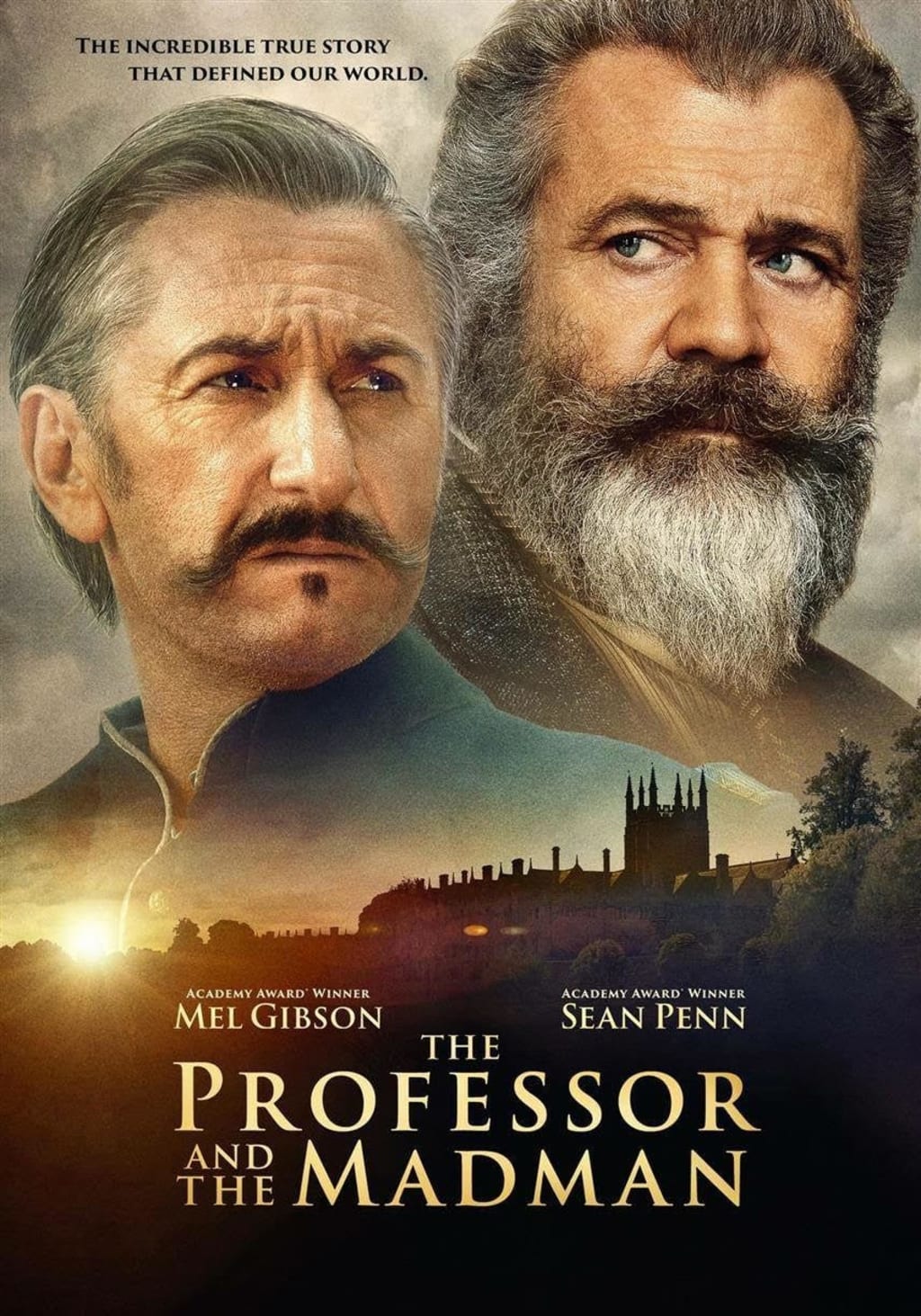
What a minute! Why did no one tell me about The Professor and the Madman on Netflix? We have been binge watching shows like Radioactive and The Trial of the Chicago 7, but we forgot to mention this movie? I am shocked. I am stunned. I am going to watch the movie again!
It has everything to keep you enthralled- the creation of the Oxford Dictionary, murder, English corruption, war, the history of words, love, insanity, Mel Gibson with a Scottish accent!
And then…. the truth comes out- the movie is based on a book on real people! Oh, the heavens have opened up and shined down on me. Not only is this a great movie, but it is true story!!!!!!
Google here I come….it is time for research!
So many topics to talk about! Where to start?
The book- (also considered to be a biography) was writing by Simon Winchester and first published in England in 1998 under the title- The Surgeon of Crowthorne: A Tale of Murder, Madness and the Love of Words. Editor Larry Ashmead convinced Simon to call the U.S. edition The Professor and the Madman, because let’s face it- no one in the U.S. knows what a Crowthorne is.
By the way, Crowthorne is not a ‘is’, it is a ‘where’. Crowthorne is a village in Berkshire, England that is home to the Broadmoor Criminal Lunatic Asylum. Now the Americans are shaking their heads in understanding! We all know about Broadmoor!
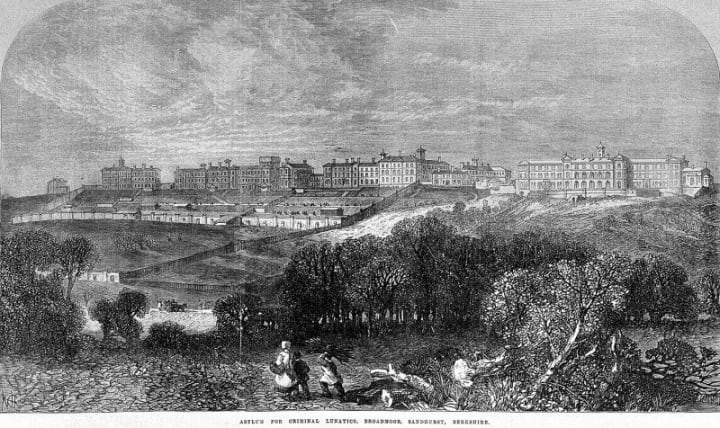
Side note, did you know that the Broadmoor was opened in 1863 and covered over 290 acres. It was the first institution in England that was built specifically for the ‘Criminally Insane’ after the 1860 ‘Act for the Better Provision for the Custody and Care of the Criminal Lunatics’.
The book explores the relationship between Sir James Murray (he was also a Dr., but for this blog I will refer to him as Sir as he was Knighted in 1908), the most notable figure in the creation of the Oxford Dictionary and his ‘pen pal’ Dr. William C. Minor, who was instrumental in the forward progress of defining words and their history. Plot twist- Dr. William C. Minor is institutionalized at the Broadmoor Criminal Lunatic Asylum for murder!
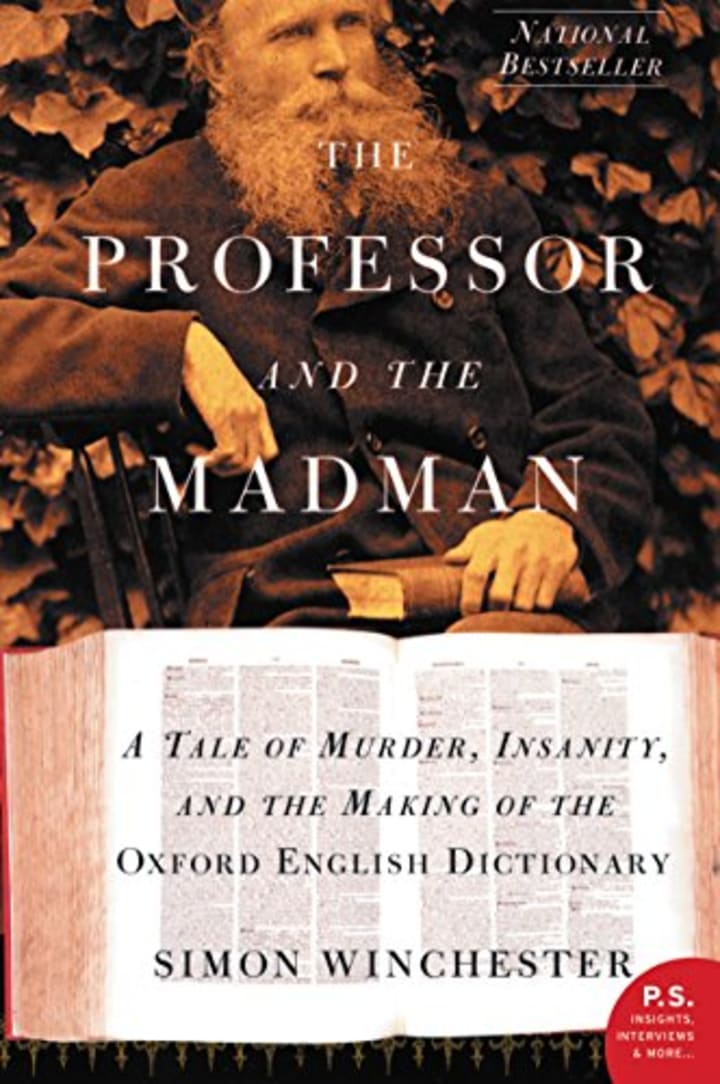
Another side note, I was just able to find this book at Barnes and Nobel after a very long Easter egg hunt involving two employees and the store manager. They filed the book under classics…sitting right next to Dracula and the Catcher in the Rye. I had asked them why the book was under ‘classics’ if it was written in 1998, and I got blank stares back at me. Maybe because it is about people who lived in the 1800’s? This is a mystery to me! So, while I have started the book, I have not completed it just yet, so the majority of the overview is from the book reviews that I have found online and they may not be complete. Please forgive me.
However, the rest is all my own research….
History of the Oxford Dictionary:
In 1830, the Philological Society was established and is the oldest ‘learned society in Great Britain devoted to the scholarly study of language and the languages’ according to their website at The Philological Society. In 1857, the Society makes the decision to that there needs to be a complete re-examination of the English language from the Anglo-Saxon time (410A.D.) and onward.
At first there is slow process on this grand adventure, because how does one even define each word from 410 to 1857A.D.? Seriously, take a moment to think about this- how many words have been created in just the last 10-15 years? Words that never existed before- but now are used on a consistent bases with acknowledged of meaning. Words like:
Tweep: "A person who uses the Twitter online message service to send and receive tweets." This word was added to the Merriam-Webster’s Collegiate Edition in 2014.
Gassed: "Drained of energy: spent, exhausted." This word was added to the Merriam-Webster’s Collegiate Edition in 2012.
Frenemy: "One who pretends to be a friend but is actually an enemy." This word was added to the Merriam-Webster’s Collegiate Edition in 2009.
Helicopter Parent: "A parent who is overly involved in the life of his or her child." This word was added to the Merriam-Webster’s Collegiate Edition in 2011.
Air quotes: "A gesture made by raising and flexing the index and middle fingers of both hands that is used to call attention to a spoken word or expression." This word was added to the Merriam-Webster’s Collegiate Edition in 2008.
Ginormous: "Extremely large: humongous." This word was added to the Merriam-Webster’s Collegiate Edition in 2007.
D’oh: "Exclamation used to comment on a foolish or stupid action, especially one’s own." This was added to the Oxford English Dictionary 2001.
Grrrl: "A young woman regarded as independent and strong or aggressive, especially in her attitude to men or in her sexuality." This was added to the Oxford English Dictionary 2009.
Muggle: "A person who is not conversant with a particular activity or skill." This was added to the Oxford English Dictionary 2003.
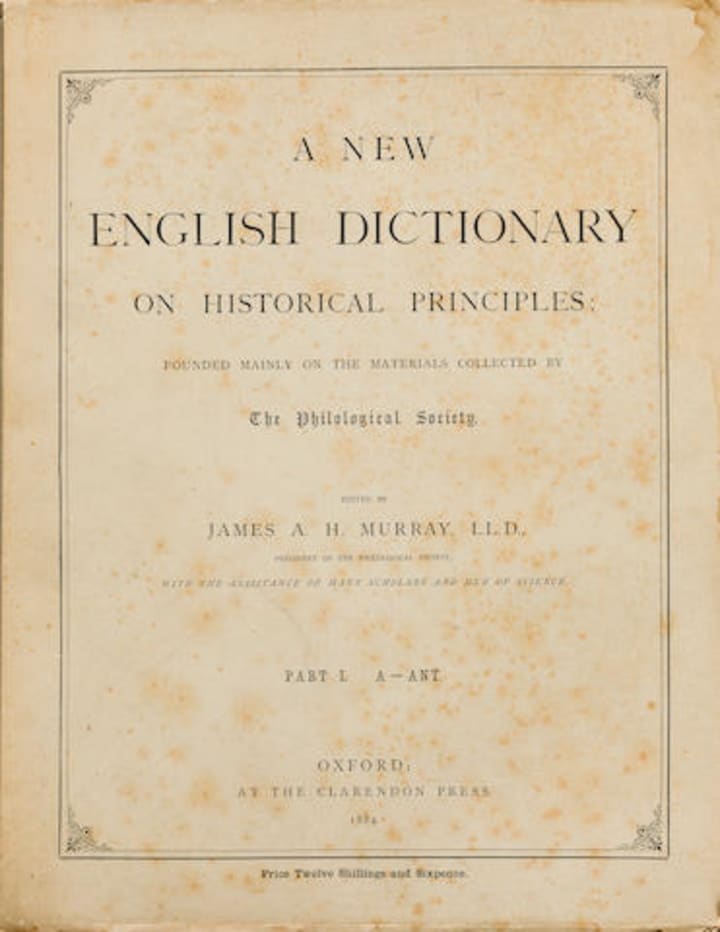
It was not until August 14, 1879, that the Society comes to agreements with Oxford University Press and James Murray to start working on the dictionary after very a sluggish process . The book was originally planned to be a 4-volumne, 6,4000-page work from the Early Middle English period (1150AD) to their current time. It was thought that the process would take 10 years, but 5 years into the project- Murray and his staff were at the word Ant (Ant- noun. A small insect that lives in highly organized groups. There are many types of ant. See also anthill, fire ant. Word Origin: Old English ǣmete of West Germanic Origin; related to German Ameise.).
Sir James Murray- James is an interesting figure. He was born on February 7, 1837 in Denholm, Scotland and was considered to be a self-educated country boy. According to the websites (and a very amusing part of the movie), James had ‘mastered Spanish, French, Catalan, Italian and Latin and, “to a lesser degree”, Portuguese, Vaudois, and Provençal, as well as other various dialects. He also acquired a working knowledge of Gaelic, Dutch, German, Danish, Slavonic and Russian. He knew Hebrew and Syriac well enough to sight read the Old Testament and picked up to a lesser degree Coptic, Phoenician and Arabic.’
According to landmarkevents.org, James Murray was married, never mentioning to whom, and had 11 children that all lived to adulthood. However, as with most of my research- it is easy to find conflicting stories. According to reference.rank.org and other websites- he was previously married to a school teacher by the name of Maggie Scott in 1861 who suffered from Tuberculosis and would eventually die of the disease in 1865. There are a couple of websites that also mentioned that they had a daughter together in 1863 who died shortly also from Tuberculosis.
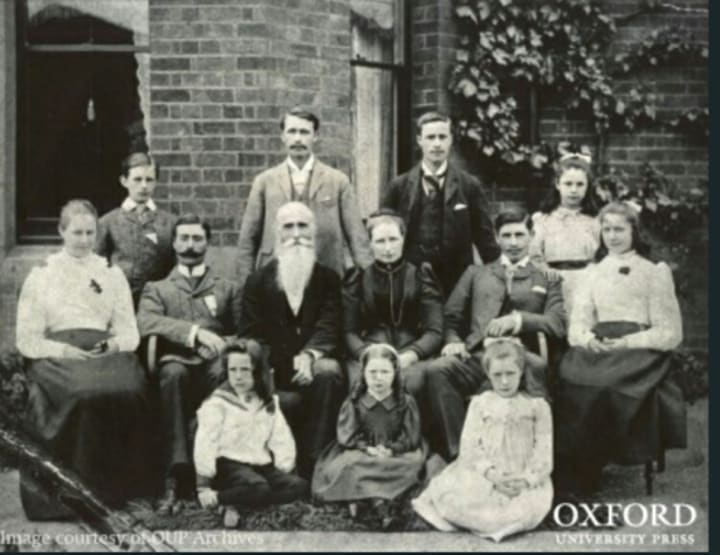
A year after Maggie’s death- James is engaged to Ada Agnes Ruthven and in 1867 they were married. And according to all websites, he did have 11 children all who lived to adulthood and that the children and their children would all play some part in the formation of the Oxford Dictionary.
Now, something that I found interesting- his best man at the wedding was Alexander Graham Bell. Sir James had met Alexander Bell through Alexander’s father- who was Sir James’ teacher in an elocution course. According to documents, Sir James at one point built the young Alexander Bell a small battery and encouraged him to experiment with sound and its electronic transmission. Alexander Bell would later call Sir James the ‘Godfather of the Telephone’ because of his encouragement.
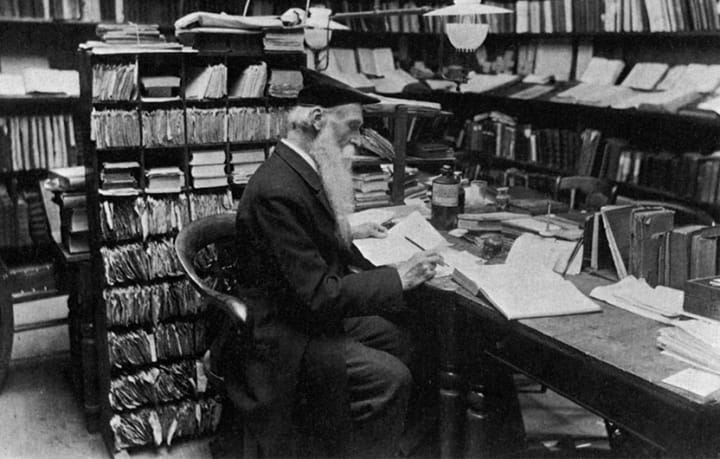
Sir James’s development was historical in orientation, as it was to be a study of the English language as well as a resource for word definitions. He would place the earliest known definition in the beginning so that readers could grasp how the meaning of the word did or did not change throughout history. It was because of this in-depth and overwhelming attention to detail, that James was required to enlist the help of everyday people from across the world. He sent out a letter for volunteers to supply quotations to illustrate the definitions of words. This is how he meet up with Dr. William C. Minor whose faithful correspondence represented more than 10,000 entries. (Entry-noun. Going in. Word Origin: Middle English: from Old French Entrée, based on Latin intrata, feminine past participle of intrare, from intra ‘within’.)
In 1885, the second volume was completed, ending in the word Batten (Batten-noun. A long narrow piece of wood that is used to keep other building materials in place on a wall or roof. Word Origin: late 15th cent.: from Old French batant, present participle (used as a noun) of batre ‘to beat’, from Latin battuere).
Sir James worked from 1885 until his death on July 26, 1915 (age 78), on this wonderful project. He was able to complete sections A-D, H-K, O, P, and T. During his life time he was awarded honorary doctoral degrees by nine different universities, but was never really fully involved in the Oxford University academic and he never was made a Fellow of Oxford. Ironically, Oxford didn't even award him a honorary doctorate until the year before his death. For Shame! Not to start anything, but do you think it was because he was a Scotsman? We all know that Mel Gibson never has had the luck when it comes to the Scottish defending themselves against the English.
Dr. William C. Minor- If Sir James Murray was an interesting figure, Dr. William Minor is a case wanting to be examined and understood. He was born on June 22, 1834, and was the son of New England missionaries to Ceylon - now known as Sri Lanka (which is a small island country in South Asia and has been called the pearl of the Indian Ocean). His mother died when he was only three years old, and his father quickly remarried another young woman who was also a missionary. It was because of his education in the missionary school that William and his siblings had an education that included the opportunity to learn several languages.
When he was 13 it is claimed that he started to have ‘lascivious thoughts’ about the local girls, which is a big no-no for a missionary’s family, so he is shipped off back to the United States to live with his uncle in New Haven, Connecticut when he was 14. By the time he was in his late 20’s, he graduated with a degree in medicine from Yale University (1863), with a specialization in comparative anatomy. It is noted that he was a sensitive man who loved to read, paint watercolors, and could play the flute.
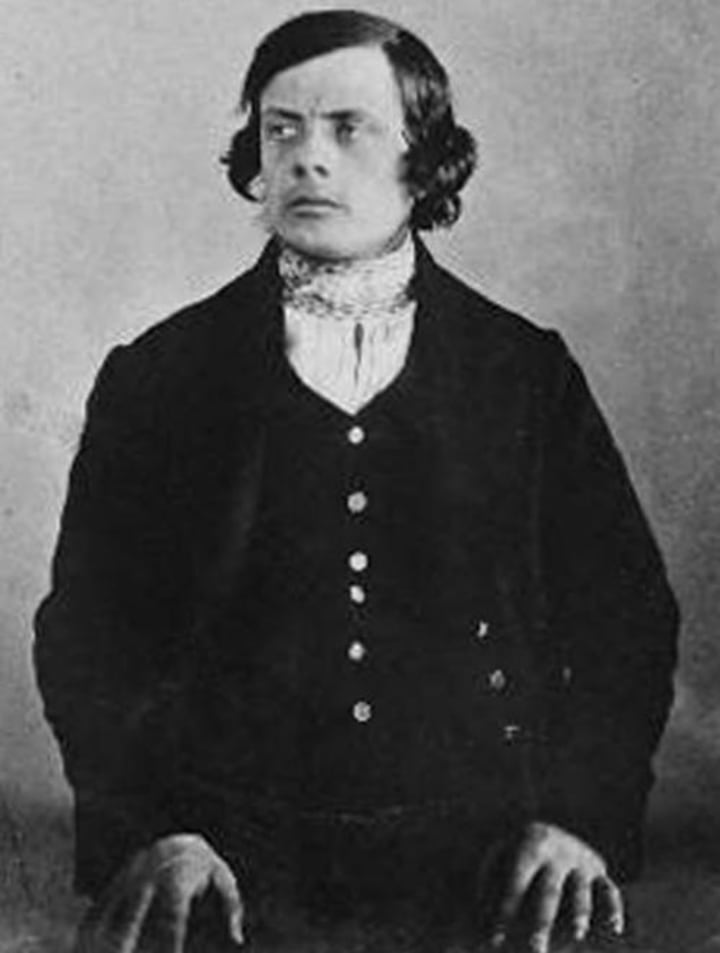
This background, in the midst of the height of the Civil War, led Dr. William to enlist in the Union Army serving as a surgeon at the Battle of Wilderness. This particular battle fought over a 3-day period is considered to the be 4th bloodiest battle of the Civil War, ranking only behind Gettysburg, Chickamauga and Spottsylvania. Most agree that Federal casualties were from around 17,700 to 18,400, with around 2,250 killed, 10,200 wounded, and 2,900-3,400 captured or missing. Confederate casualties are put as high as 11,400, with the most detailed estimates of around 1,500 killed, 8,000 wounded and 1,700 captured or missing.
The battle ground was not an open field, but dense and tangled undergrowth of a Virginia Forest which made the fighting a 'close encounter' battle. There was no choice but to see the whites of the eyes of the man you were about to kill. Adding to the environment, was the fact that fire and condensed smoke ran through the tree branches as the dead leaves and thick underbrush caught on fire from the battle.
“Ammunition trains exploded; the dead were roasted in the conflagration,” wrote then-Lieutenant Colonel Horace Porter. “[T]he wounded roused by its hot breath, dragged themselves along with their torn and mangled limbs, in the mad energy of despair, to escape the ravages of the flames; and every bush seemed hung with shreds of blood-stained clothing.”
It was a horrific place to be, and Dr. William was knee deep in the death, despair, and blood. He was also assigned the task of punishing an Irish solider within the Union Army that had deserted by branding him on the face with a ‘D’. It was event that led to, in my opinion of the research, a final break in his already troubled mind.
Now, Dr. William does distinguish himself at the L’Overture Hospital in Alexandria and receives a promotion to Assistant Surgeon in the U.S. Army and is stationed to Governor’s Island, New York where is treats cholera patients. It is here that he starts spend a lot of time and money at the Red-Light District (event contracting a STD that he tried to cure with white Rhine wine in his urethra) and by 1867, because this behavior is frowned upon by the Army, he is shipped off to a remote post in the Florida Panhandle called Fort Barrancas. There is a report that he got engaged to a woman in New York, who was believed to be an entertainer, but the mother pressured her daughter to call off the engagement. However, I believe that proof of this is in the Berkshire Record Office under the William C. Minor case log, but I have not been able to access it just yet. So, we will leave it as a possibility of happening, likely, but not proven.
This is when Dr. William’s life gets really sad. In 1868, he was diagnosed as delusional and was considered to be a homicide and suicide risk, he is relieved of all of his medical duties and is resigned from his commission. Dr. William willingly admitted himself to the Government Hospital for the Insane in Washington, D.C., which is now known as the St. Elizabeth Hospital, and spends a little over 2 years there and is discharged with signs of improvement. In 1871, he boards a ship headed to London.
Unfortunately, his illusions follow him across the ocean and he is convinced that he was being followed and that there would retribution for his ‘filthy’ behavior. Ironically, he truly believed that it was the ghost of the Irish-American that was haunting him, and he had placed himself in an area of London that was a majority of Irish descent. It is recorded that Dr. William did visit Scotland Yard on numerous occasions to report break-in to the police and other suspicious behavior…but the claims were never proven and they brushed off the lines of the crazy American.
That is, until February 18, 1872 when Dr. William shot and killed George Merrett who was walking in the early morning hours to his job at the Red Lion Brewery. Dr. William was caught right away, due to gun fire in London was not a norm and it easily drew the attention of the Constables on duty. Dr. William did not deny the charges; however, did truly believe that the attack was in self-defense of a perceived attack against him.
The trial only took 7 weeks, Dr. William C. Minor was found Not Guilty by reason of insanity and he was sentenced to Broadmoor. There is not much that I can find at this point about the 7 years that Dr. William was at the Broadmoor before he finds out about Sir James Murray’s project; however, that is not because the information is hiding---it is just that you have to request the information and due to time constraints, I will not have enough time to get and review all the information for this particular piece. I do hope to one day write a further piece on Dr. Williams’ life in the Broadmoor and the treatment plan that he was on.
Nevertheless, it was not a horrible place to be as far as Criminal Lunatic Asylums in the 1800’s would go! He had two rooms to himself, one that he made into a library. During the day, he was the model prisoner. He painted, read, gave flute lessons, and seemed to be in control of his thoughts and speech. At night, he was a mess. He believed that men were watching him, breaking into his room and torturing him, it is reported that at he would fashion traps using string and furniture in a type of alarm. As portrayed in the movie, sleep was always out of Dr. William's hand....lending to his further slip into insanity. Imagine with me, sleepless nights, always on guard, coupled with the illusions of being 'hunted' by the men who you branded? It had to have been pure misery.
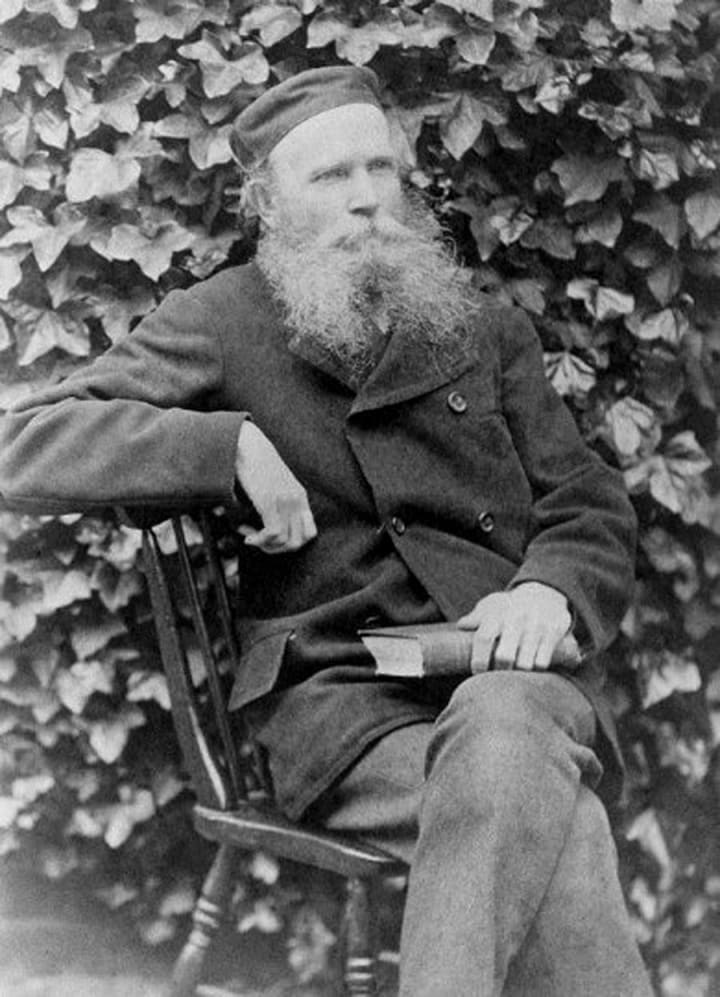
Then he discovers the call to action for the Oxford Dictionary. A plea for help from common men and women to discover and define words. And who better than to help, than a man who needed to keep his demons at bay? It was the list of words that Sir James published that gave Dr. William the most amount of joy from what I am understanding. He was not willy-nilly (Willy-Nilly- Adverb. Whether you want to or not, in a careless way without planning. Word Origin- early 17th cent.: later spelling of will I, nill I “I am willing, I am unwilling’) about his submissions in that he made a work list for each individual book and would index the location of almost every word that he came across. These hand-written catalogues made him into a living, breathing, 1800’s Google search engine.
In the 1890’s Dr. William sent in at least 20 words/quotations a day, resulting in submissions so accurate that he was added in the recognition line of the 1888 published A New English Dictionary.
In the preface of the fifth volume of the OED, Dr. Murray again published a note of acknowledgment: “Second only to the contributions of Dr. Fitzedward Hall [one of the OED’s earliest major contributors], in enhancing our illustration of the literary history of individual words, phrases, and constructions, have been those of Dr. W. C. Minor, received week by week….”
Years later, Dr. Murray wrote: “So enormous have been Dr. Minor’s contributions during the past 17 or 18 years, that we could easily illustrate the last four centuries [of each word] from his quotations alone.”
The meeting of the minds- As with all great movies that are locked into a certain time frame, the movie brushes over the first meeting between Sir. James and Dr. William. They actually add in a love story between the widow of the man Dr. William shot and Dr. William, and I am not really sure if that is the artistic liberations or if they found some hidden diary somewhere written by the widow herself. This is highly unlikely, but it is a known fact that she did visit him in the Broadmoor, that he did give her money to support her and the children, and she did supply him with books that he requested at their meetings.
Back to the meeting of the minds! I would like to think that the meeting between both men would have been a mutual understanding of insanity. One a bit more than the other, but both achieving and envisioning something that one else could see or imagine. One, a gathering of all English words together with its history, and the other of spirits of those men reenacting their past. It may be a far stretch, but I feel that this was a meeting of kinder spirits as strange as that sounds.
It appears Sir James originally thought Dr. William was a medical man connected with the asylum, but that his suspicions were aroused in the late 1880s, the librarian of Harvard College thanked him for his kindness to the "poor Dr Minor". Dr. William’s troubled history was exposed, and Sir James was astounded.
It would still be many years before he visited Broadmoor, but in the intervening years Murray took care to write to Minor with sensitivity, never making it known that he was aware of his mental illness. The meeting, when it finally happened, proved the start of a lasting friendship: Sir James visited Dr. William at Broadmoor on many occasions over 20 years.
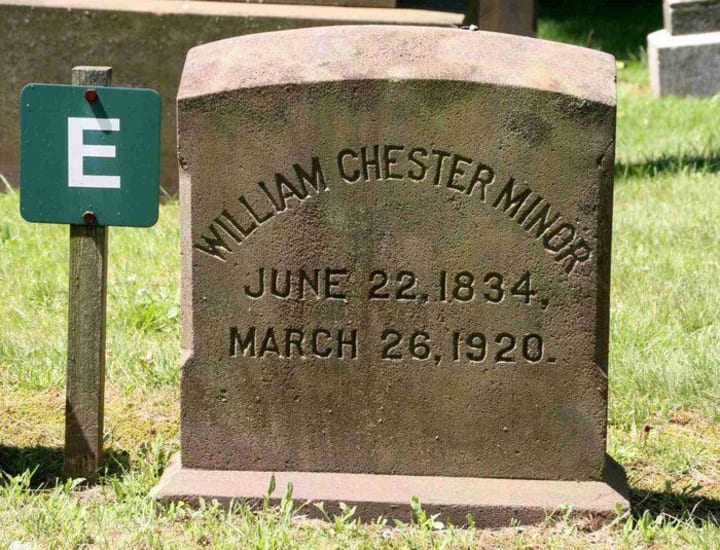
In 1910, 28 years after arriving at Broadmoor, Home Secretary Winston Churchill released Dr. William and returned him to custody to America, where he died on March 26,1920. He is buried at the Evergreen Cemetery in New Haven, Connecticut.
Side Note: The autopeotomy that Dr. William did do to himself, as portrayed in the movie, was not because of the poor widow’s love for him, but because he had a delusion that he was being abducted from his rooms and taken to far off places and forced to commit sexual assaults on children. Unable to live with that belief, he castrated himself using a knife that he had in his rooms. I suppose that it would have been very difficult for the producers to recreate that type of delusion....so I have to give them props for mentioning the incident, but making it more PG.
Dr. William existed half his life shut away from the world in an era when his condition was seen as untreatable. An interesting side note, I have found numerous occasions where it is stated that Dr. William was also involved in the 1864 revision of the Webster’s Dictionary, while working as an instructor at the Russell Military Academy, and it was most likely that experience that helped streamline his processes and abilities with the Oxford Dictionary
The books that Dr. William had acquired over his years at Broadmoor are now located Bodleian Library at Oxford University.
The movie, the book, the research….it will open the world to you of insanity and hope. A world of mutual understanding and redemption. There is so many things that you can take away from this story that I would hate to be the one to point of what I have found- but I think that what made the story real to me was the depth of pain and need to forgiven for past sins, to be remembered and understood, and above all…. the need to feel wanted and needed.
As always friends, I invite you to do more research on your own as I can never tell all the thousand different side stories that need to be told.
Be Great and what you are Good at!
About the Creator
Rose Loren Geer-Robbins
One does not simply become a famous writer! It takes many hours before the sun comes up and even more when the sun sets. I am never sure what world I am living in, the one that I am writing about or reality.
Keep reading
More stories from Rose Loren Geer-Robbins and writers in FYI and other communities.
In 1908 a school fire cost the lives of 175
One of my favorite things to do in the morning when I am trying to convivence myself to get on the treadmill is to drink coffee and look up what happened today in history. A lot of things I have no idea ever happened, mostly because the world is very old and I am only a little old, but it is fun to research some of the notables. Today’s stories, in one way or another, change the history of the U.S., fire departments and school safety codes, and it is with this mind that I want to talk about un-known moments in our history:
By Rose Loren Geer-Robbins5 years ago in FYI
A Transparent Look at Vocal Challenges and Top Stories
Almost three years ago, we shared a resource article that served as a place for people to suggest new challenge prompts. We thought it would be a good idea to refresh that thread, and take the opportunity to answer a few common questions about top stories, how challenges are judged and how submissions are reviewed.
By Vocal Curation Team4 days ago in Resources


Comments
There are no comments for this story
Be the first to respond and start the conversation.