
The Power of First Principles: Lessons From Elon Musk’s Journey to Success
The Revolutionary Approach of First Principles Thinking: Insights from Elon Musk’s Remarkable Success Story

Introduction
Elon Musk is widely recognized as one of the most innovative and successful entrepreneurs of our time. With a string of groundbreaking companies, including Tesla, SpaceX, and Neuralink, Musk has made significant contributions to fields ranging from electric vehicles and renewable energy to space travel and brain-computer interfaces. But what sets Musk apart from many other successful entrepreneurs is his approach to problem solving and innovation: first principles thinking. In this article, we'll explore the power of first principles thinking and how Musk has used this approach to achieve remarkable success in his various ventures. We'll also examine the potential for this approach to drive innovation and problem solving in the future.
What is First Principles Thinking?
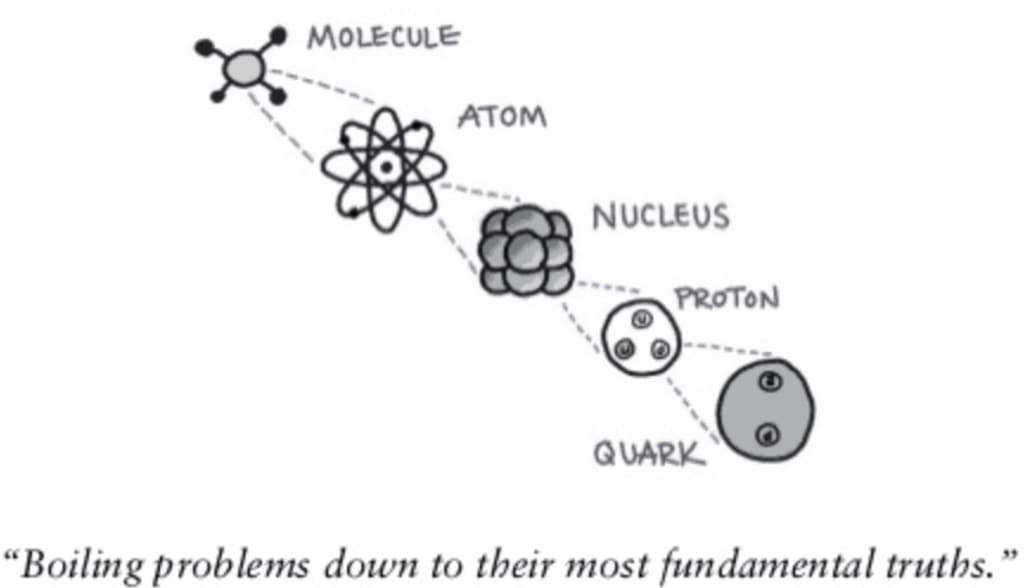
First principles thinking is a method of problem solving and innovation that involves breaking down a complex problem into its most fundamental elements and then reassembling those elements from the ground up, using logic and reasoning to arrive at new solutions. Rather than relying on pre-existing knowledge or assumptions, first principles thinking requires questioning everything and examining each component of a problem on its own merit.
First principles thinking has its roots in philosophy and science, where it is used to develop new theories and models based on fundamental truths about the universe. For example, Isaac Newton used first principles thinking to develop his laws of motion by breaking down the concept of motion into its most basic components and then building up a comprehensive theory based on those components.
In recent years, first principles thinking has gained popularity as a tool for innovation and problem solving in fields like engineering, design, and entrepreneurship. By breaking down problems into their most basic components and building solutions from the ground up, individuals and organizations can arrive at entirely new ideas and approaches that might not have been possible otherwise.
The Power of First Principles Thinking in Innovation
One of the most notable examples of the power of first principles thinking in innovation is Elon Musk's approach to developing electric cars through his company Tesla Motors. When Musk first entered the electric car market, most existing electric vehicles were expensive, had limited range, and were perceived as being less powerful and less stylish than traditional gasoline-powered cars.
To overcome these limitations, Musk used first principles thinking to rethink the entire concept of an electric car from the ground up. Rather than relying on existing technologies or assumptions about what an electric car should be, Musk and his team examined each component of a car - from the batteries to the motor to the body design - and asked themselves what the ideal solution would be if they were building the car from scratch. By doing so, they were able to develop a car that was not only more efficient and cost-effective than existing electric cars, but also sleek, stylish, and powerful enough to appeal to a broader range of consumers.
Other examples of first principles thinking in innovation include the Wright Brothers' approach to flight, in which they used a deep understanding of the fundamental principles of aerodynamics to design and build the first successful airplane, and the development of the Segway personal transporter, which was based on a completely new approach to transportation rather than an iteration of existing technologies.
By using first principles thinking, innovators can identify new and unique solutions that challenge existing assumptions and push the boundaries of what's possible.
First Principles Thinking in Problem Solving
In addition to its power in driving innovation, first principles thinking is also a valuable tool in problem solving. One of the most striking examples of this is Elon Musk's SpaceX program, which was founded with the goal of reducing the cost of space travel and enabling humans to eventually settle on other planets.
To achieve this goal, Musk and his team used first principles thinking to identify and address the most fundamental challenges of space travel. They broke down the components of a rocket and examined each one separately, asking themselves what the ideal solution would be if they were starting from scratch. By doing so, they were able to identify areas where cost savings and efficiencies could be achieved, such as by designing reusable rockets and using more cost-effective materials.
This approach has enabled SpaceX to achieve a number of breakthroughs in space travel, including becoming the first privately-funded company to send a spacecraft to the International Space Station and launching reusable rockets that have the potential to drastically reduce the cost of space travel.
Other examples of first principles thinking in problem solving include the Apollo 13 mission, in which NASA engineers used first principles thinking to develop a solution to the problem of a damaged spacecraft that was leaking oxygen. By breaking down the problem into its most basic components and using only the materials available to the astronauts on the spacecraft, the engineers were able to develop a solution that ultimately saved the lives of the astronauts.
By using first principles thinking in problem solving, individuals and organizations can develop solutions that are more effective, efficient, and innovative than those based on existing knowledge or assumptions.
Overcoming Biases and Assumptions with First Principles Thinking
One of the key benefits of first principles thinking is that it allows individuals and organizations to overcome biases and assumptions that can often limit innovation and problem solving. When we rely on existing knowledge or assumptions, we are often restricted by the constraints of those beliefs, and it can be difficult to see beyond them.
First principles thinking challenges these biases and assumptions by breaking problems down into their most basic components and examining them on their own merit. By doing so, we can identify flaws in our existing assumptions and develop new, more effective solutions that are not limited by preconceived notions.
For example, when Elon Musk was developing Tesla Motors, he recognized that the existing assumptions about electric cars were limiting their potential. By breaking down the problem of electric cars into its most basic components and using first principles thinking to develop new solutions, Musk was able to create a car that was more efficient, cost-effective, and appealing than any existing electric vehicle.
Similarly, first principles thinking can help individuals and organizations overcome biases and assumptions in areas like politics, economics, and social issues. By breaking down these complex problems into their most basic components and examining each component on its own merit, we can identify flaws in existing beliefs and develop more effective solutions that are not limited by the constraints of those beliefs.
Overall, first principles thinking is a powerful tool for overcoming biases and assumptions and driving innovation and problem solving in a wide range of fields. By questioning everything and examining each component of a problem on its own merit, we can develop new and effective solutions that challenge the status quo and push the boundaries of what's possible.
The Future of First Principles Thinking
As we continue to face increasingly complex problems and challenges, the need for innovative and effective solutions becomes more pressing. In this context, first principles thinking is likely to play an increasingly important role in driving innovation and problem solving.
One area where first principles thinking is already having a significant impact is in the field of artificial intelligence (AI). By breaking down the fundamental principles of intelligence and examining them on their own merit, researchers and developers are able to develop new and more effective AI algorithms and systems that can learn and adapt to new situations.
Another area where first principles thinking is likely to play an important role is in addressing the challenges of climate change. By breaking down the components of our current energy systems and examining each one on its own merit, we can identify new and innovative solutions that can help us reduce our reliance on fossil fuels and transition to more sustainable energy sources.
Additionally, as more individuals and organizations become aware of the power of first principles thinking, we are likely to see increased adoption of this approach in a wide range of fields. This could lead to a new era of innovation and problem solving that is not limited by existing knowledge or assumptions.
However, there are also challenges to adopting a first principles thinking approach. It requires a willingness to question existing beliefs and assumptions, and to approach problems with an open mind. It also requires a significant amount of time and effort to break down problems into their most basic components and examine each one on its own merit.
Despite these challenges, the potential benefits of first principles thinking make it a valuable tool for driving innovation and problem solving in a wide range of fields. As we continue to face complex challenges and opportunities, it is likely that this approach will play an increasingly important role in shaping the future.
Conclusion
First principles thinking is a powerful tool for driving innovation and problem solving in a wide range of fields. By breaking down problems into their most basic components and examining each one on its own merit, we can identify flaws in existing assumptions and develop new and more effective solutions.
Elon Musk's journey to success with SpaceX and Tesla Motors provides a compelling example of the power of first principles thinking. By using this approach to identify and address the most fundamental challenges of space travel and electric cars, Musk was able to achieve breakthroughs that had previously been thought impossible.
Moving forward, first principles thinking is likely to play an increasingly important role in driving innovation and problem solving in areas like artificial intelligence, climate change, and more. While there are challenges to adopting this approach, the potential benefits make it a valuable tool for pushing the boundaries of what's possible and shaping the future.
About the Creator
Samuel
I write about Science/Tech/Business & Anything that can give value to people ❤️
I'm on YouTube too guys feel free to check out my channel here: www.youtube.com/@sambladeco


Comments
There are no comments for this story
Be the first to respond and start the conversation.